2026 Triumph Thruxton 400 Review
Words: Amber Eramus | Photos: Amber Eramus
Cafe racers can be an acquired taste, though the Thruxton 400 proves they don’t have to be expensive. Is there substance to go with the style?
There is something inherently appealing about a café racer. The low bars, sculpted tank and unapologetically nostalgic styling suggest a motorcycle built less around practicality and more around the simple pleasure of riding. Triumph’s new Thruxton 400 brings that philosophy into a far more accessible part of the market, combining the familiar foundations of its successful 400 platform with a sportier chassis, a more committed riding position and a little extra performance.
Priced from $9,995, the Thruxton sits alongside Triumph’s expanding small-capacity range but offers a noticeably different experience from the Speed 400 and Scrambler models.
I have spent a considerable amount of time with Triumph’s 400cc platform, including nearly 5500 kilometres touring the South Island earlier this year. Climbing aboard the Thruxton therefore felt immediately familiar… but it did not feel identical.
Sharper personality
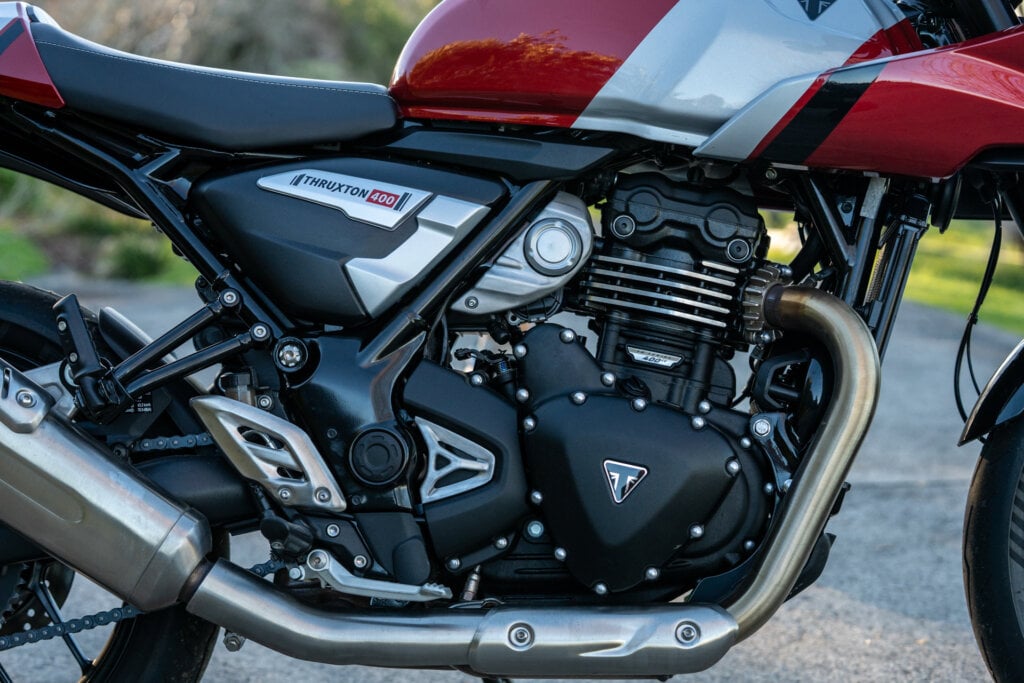
The Thruxton uses an updated version of Triumph’s liquid-cooled 398cc TR-Series single-cylinder engine. Peak output has risen to 30.9kW at 9000rpm, five per cent more than the engine used in the Speed 400 and Scrambler 400 models. The increase comes from a revised camshaft profile, new internal components and updated engine tuning. Torque remains at 37.5Nm, with 80 per cent available from 3000rpm.
On paper, that additional power sounds almost insignificant. On the road, oddly enough, it is noticeable.
The Thruxton feels more eager during the initial throttle response and slightly more determined as the revs climb. It still has the accessible, torque-rich nature that makes the original Triumph 400 engine so easy to enjoy, but there is a little more urgency at the top. It felt as though it would happily continue pulling for that bit longer, had speed restrictions and common sense not intervened.
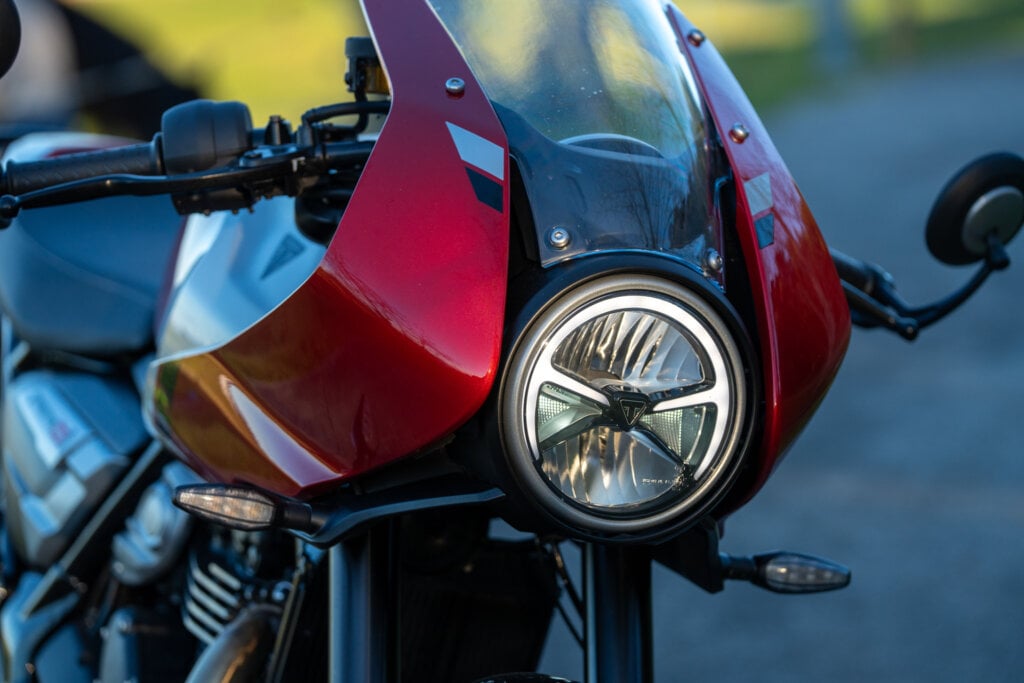
This is not a motorcycle that overwhelms its rider with outright acceleration. Instead, it encourages you to use what it has. You can open the throttle, work through the rev range and enjoy the engine without immediately travelling at ridiculous speeds. The result is a motorcycle that feels lively and engaging rather than intimidating.
The six-speed gearbox is exactly as expected: smooth, light and uncomplicated. Gear changes require very little thought, while the torque-assist clutch keeps the lever action friendly. It is the sort of transmission that suits experienced riders looking for an easy ride just as well as it suits someone still building confidence.
The soundtrack has also gained some character. Compared with the other Triumph 400 models I have ridden, the Thruxton sounded fuller and more entertaining, with a few more burbles appearing on downshifts and a more noticeable exhaust note accompanying the ride. It still sounds like a small single-cylinder motorcycle, but it has enough personality to make changing down through the gearbox enjoyable.
Naturally, there is vibration as the speed and revs rise. That is part of the reality of a 400cc single and should not come as a surprise. It is more apparent during sustained higher-speed riding, but around town and while carving through corners, it never detracted significantly from the experience.
Designed to flow
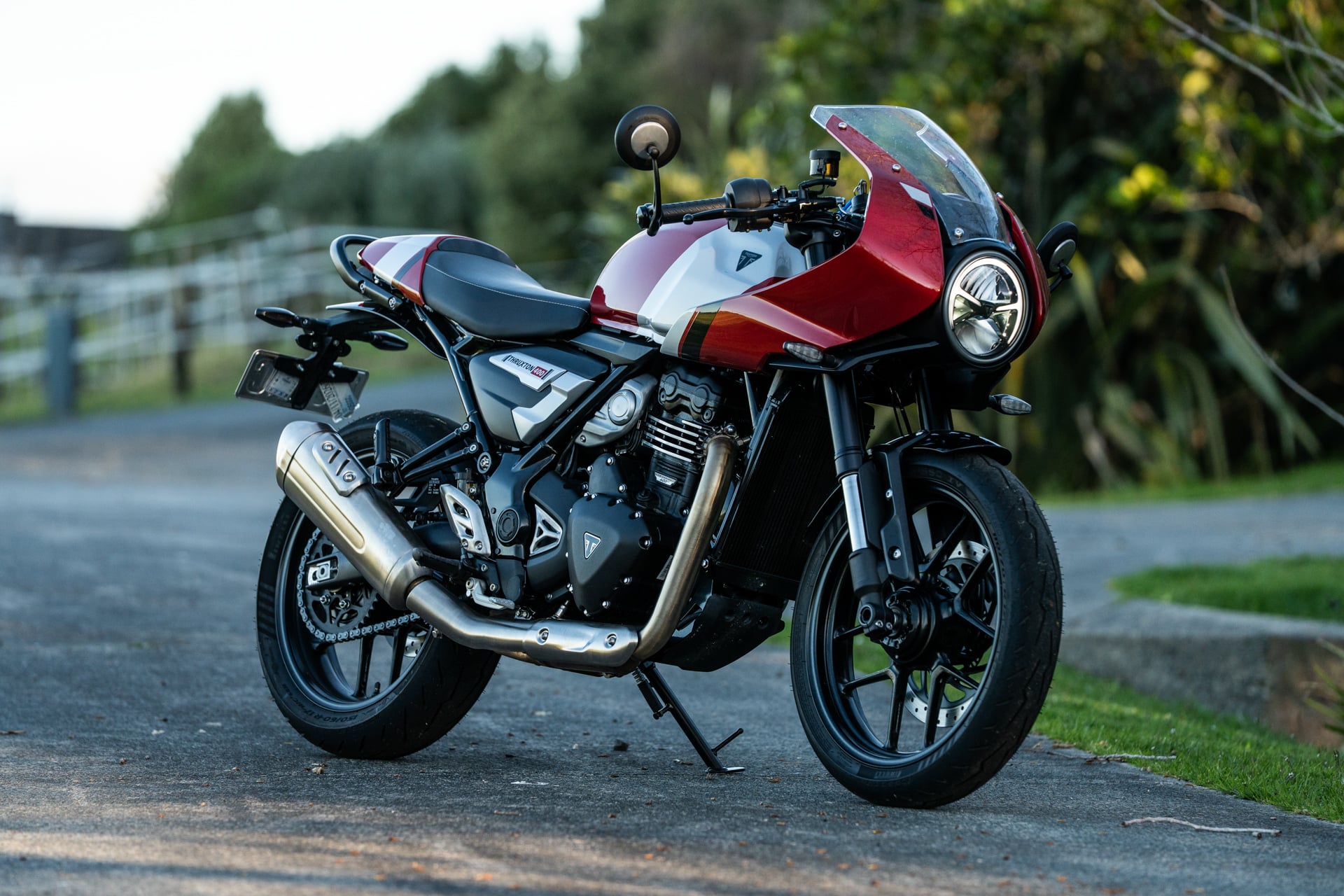
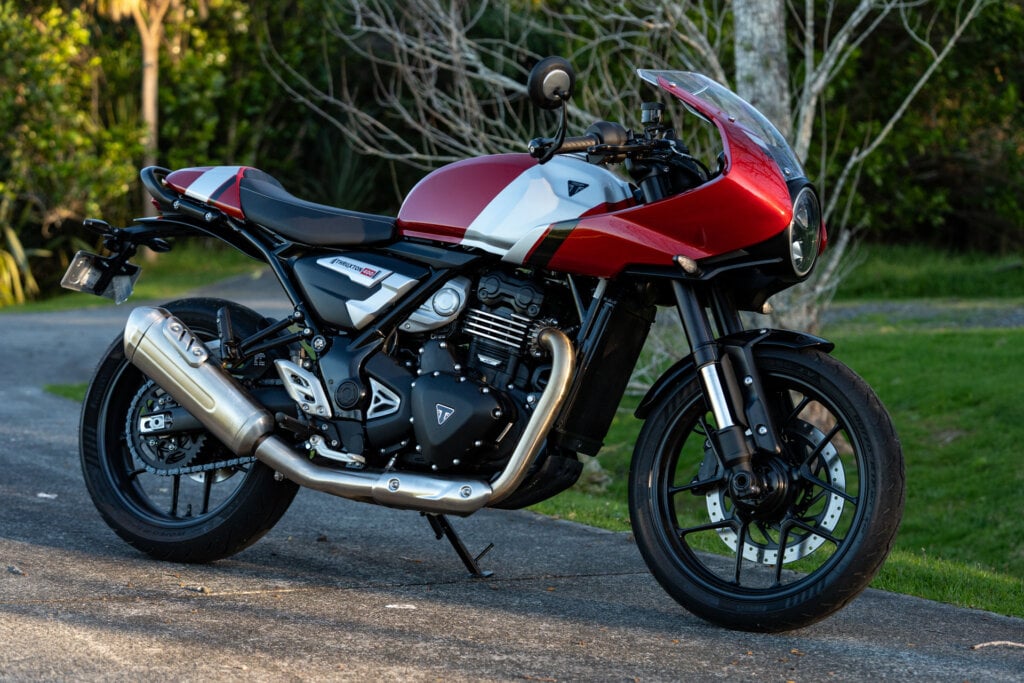
The biggest difference between the Thruxton and its 400cc siblings is not necessarily the extra power. It is the way the motorcycle positions its rider and responds through a corner. The clip-on handlebars are 40mm narrower and 246mm lower than those fitted to the Speed 400. Its rear-set footpegs are also 86mm further back and 27mm higher, rotating the rider forward into a genuine café-racer stance.
As someone who cannot claim to have spent much time riding café racers, I initially found the position surprisingly aggressive. There is a definite reach across the tank, and your upper body is positioned further forward than it would be on a conventional naked bike. Interestingly, my taller better half found it comfortable, which suggests that body proportions will play an enormous role in how riders experience the Thruxton. In other words, the riding position cannot be judged from the specification sheet alone. A proper test ride is essential.
Once moving, however, the ergonomics begin to make sense. This is a bike that wants to flow through sweeping corners. It tips in without effort, holds a line confidently and makes linking one bend to the next feel natural. Rather than needing to be wrestled or deliberately positioned, the Thruxton simply follows the rider’s intention.
That easy, flowing quality was one of the strongest impressions it left on me. The bike felt light beneath me and never noticeably top-heavy. Even when conditions changed between wet and dry, it remained predictable and confidence-inspiring.
Triumph equips the Thruxton with Pirelli Diablo Rosso IV tyres as standard, which is a genuinely impressive inclusion on what will likely be considered an entry-level motorcycle. The Pirellis supplied plenty of grip and feedback, helping the bike remain composed in both damp conditions and on dry, sweeping roads. Triumph claims the tyres were selected to provide a sporty, grippy feel, and on the road that description proves accurate.
The suspension consists of 43mm upside-down big-piston forks offering 135mm of travel, paired with a preload-adjustable gas monoshock providing 130mm of rear-wheel travel.
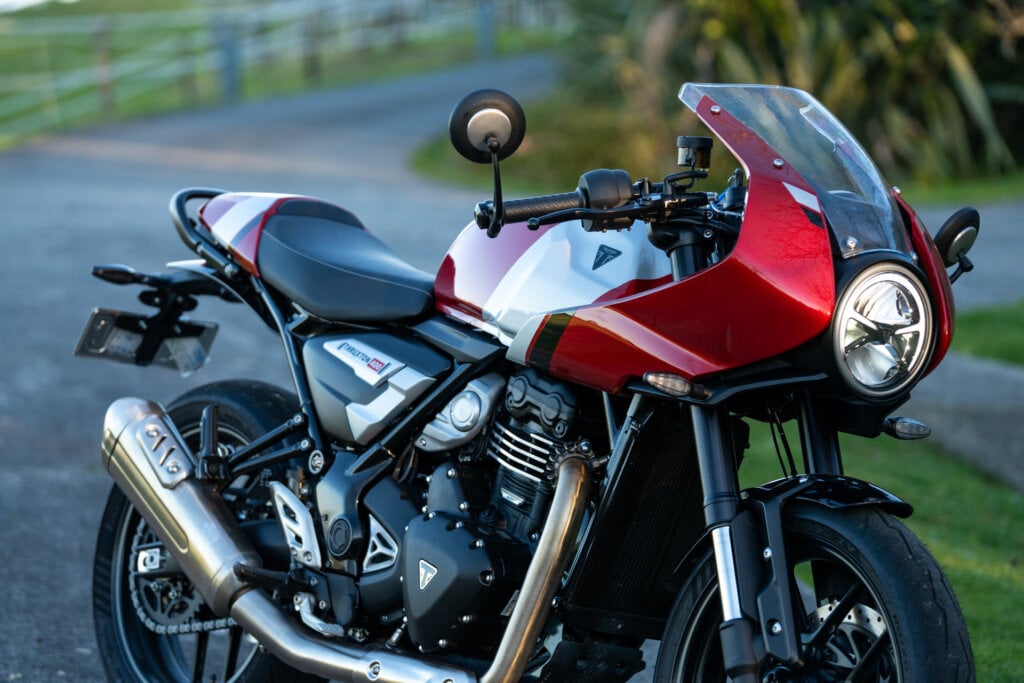
In ordinary road riding, the setup performs well. It absorbed imperfect surfaces comfortably enough without making the motorcycle feel vague or overly soft. It is not highly adjustable, nor does it pretend to be a miniature track machine, but it feels appropriate for the Thruxton’s price and intended audience. That conclusion is echoed elsewhere: the suspension and braking are competent and reassuring for the motorcycle’s likely rider, even if neither is going to redefine the class.
For a newer rider, that balance is arguably more valuable than an aggressively firm suspension package. The Thruxton feels controlled without punishing its occupant, and responsive without becoming nervous.
Braking is handled by a four-piston radial front calliper with ABS. The initial response is manageable rather than abrupt, with enough stopping power for the performance available. Switchable traction control is also standard, adding a useful safety net without burying the motorcycle beneath complicated electronic menus.
Simple tech, strong presentation
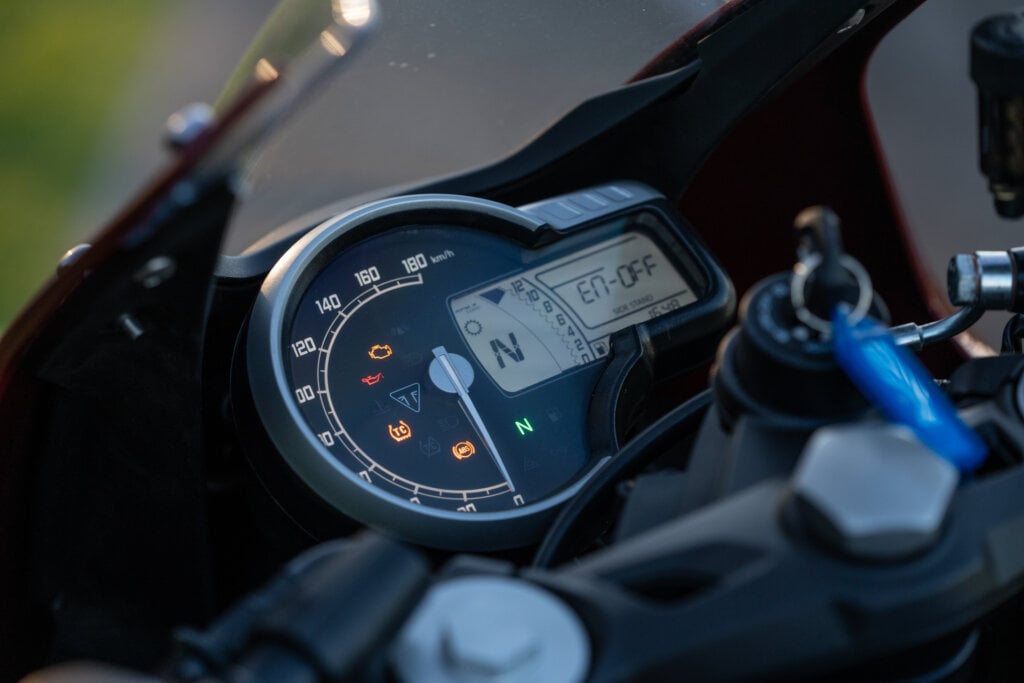
The Thruxton retains the traditional instrument arrangement used across Triumph’s 400 range: an analogue speedometer combined with a small LCD display incorporating the tachometer and other essential information. There is also a USB-C charging port.
It is nothing particularly flash. There is no expansive colour screen, elaborate connectivity system or long list of riding modes. It simply gets the job done.
The lighting is LED, which is always a win in my book. Beyond the improved visibility, the compact headlight and rear lighting contribute to the bike’s clean, modern-classic appearance.
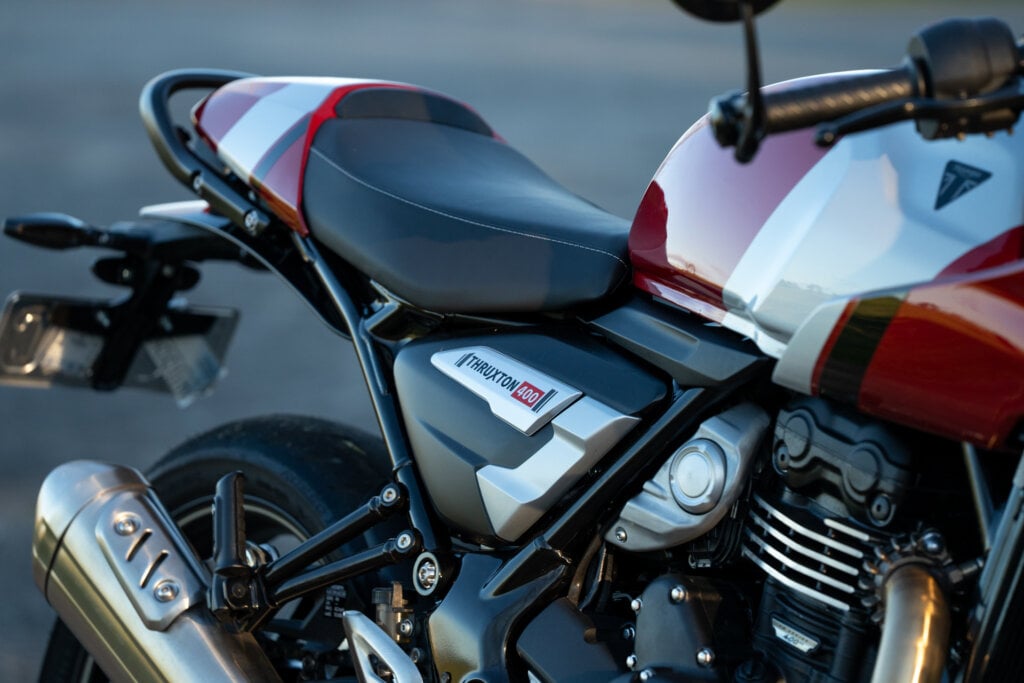
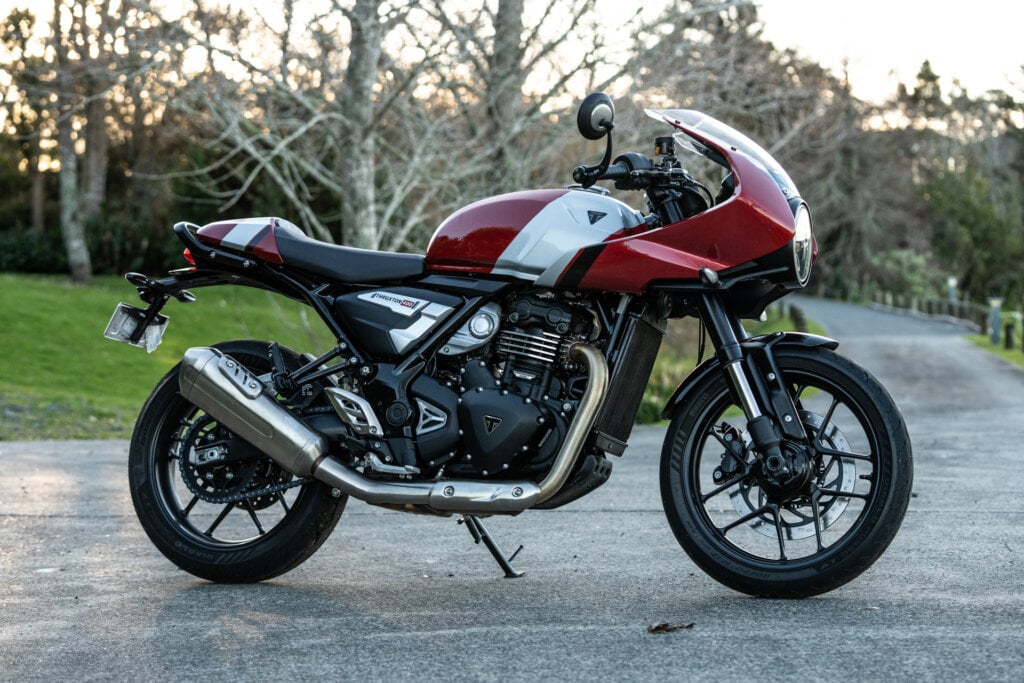
Styling was something I initially felt uncertain about. The elongated tank, small front fairing, clip-ons and bullet-style seat cowl create proportions that are very different from the motorcycles I normally gravitate towards. Yet the longer I spent with it, the more it grew on me.
It also attracts attention. During the test ride, the Thruxton turned several heads as it passed, which is not something every small-capacity motorcycle manages.
Verdict
The Triumph Thruxton 400 is proof that an accessible motorcycle does not need to feel bland or purely functional.
Its engine remains friendly and familiar, but the additional top-end energy, sharper throttle response and improved soundtrack give it a more playful personality.
The riding position will be the deciding factor. It is committed enough that some riders may find it uncomfortable, particularly during slower riding or longer journeys. What impressed me most was the Thruxton’s sense of flow. It did not demand huge speeds or advanced riding ability to become enjoyable. It simply encouraged me to lean forward, look through the next corner and continue carving.
Yes, it vibrates when pushed. Yes, the technology is fairly basic. And yes, beneath the styling it remains a modestly powered 400cc single. But that is also its charm.
The Thruxton 400 is light, approachable and easy to ride, while still offering enough character to entertain someone with substantially more experience.
At the price, Triumph has produced an entry-level café racer that does not feel like a compromise. It may take a moment to grow on you, but once the road begins to bend, it makes a convincing argument for itself.
Triumph Thruxton 400
$9,995 / 3.6L/100km / 83g/km
0-100 km/h 6.7s
Engine 398cc single
Max power 30.9kW@9000rpm
Max torque 37.5Nm@7500rpm
Drivetrain 6-speed, chain final drive
Weight (claimed) 176kg