View all
2 more images
2014-2018 BMW M3 – ReView
Words: Richard Edwards | Photos: Alex Schultz
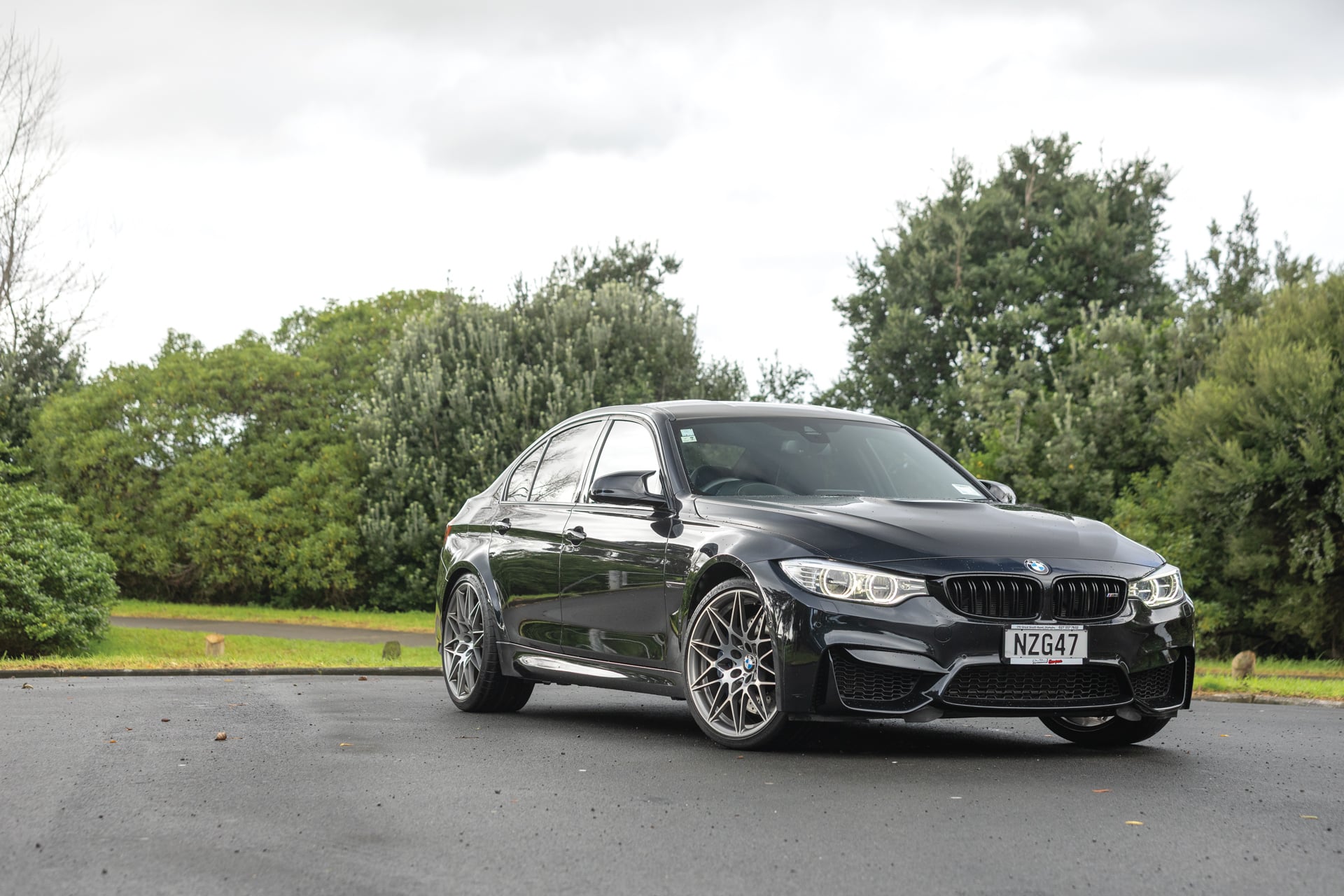
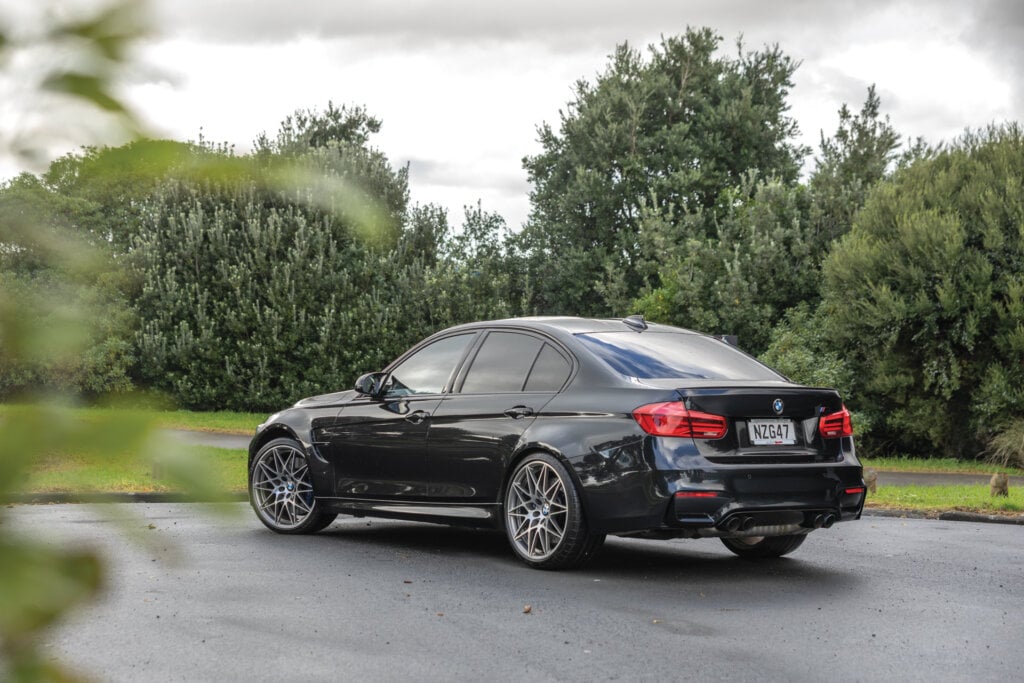
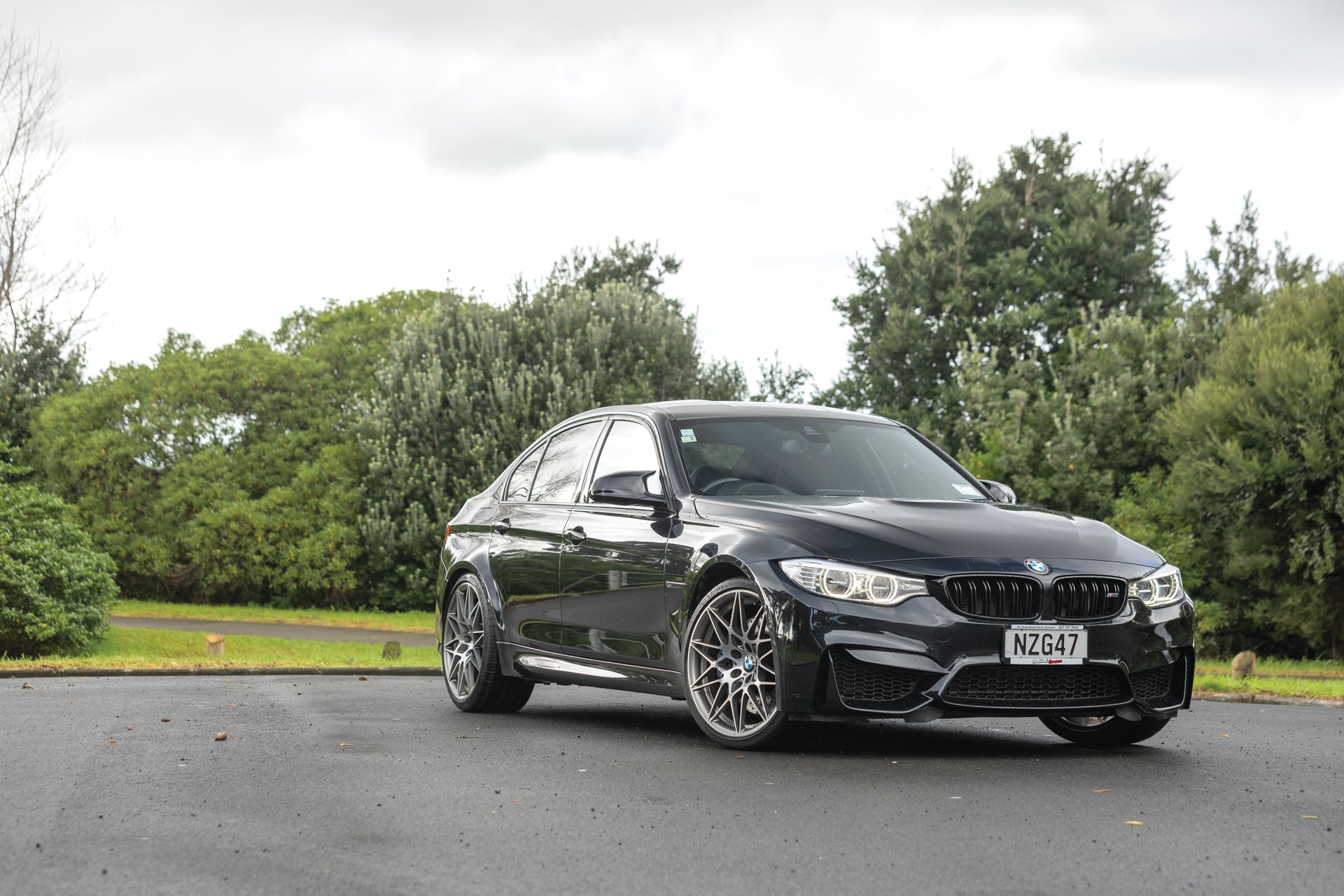
The F80 M3 arrived with a lot to prove. It replaced the E90’s screaming 4.0-litre V8 with a 3.0-litre twin-turbo six, and plenty of people decided in advance they would hate it. Then they drove it. More power, far more torque, a lot less fuel used, and the M3 went back to being a four-door family car that embarrasses sports cars.
BMW New Zealand launched the sedan in mid-2014 at $159,900. That bought the seven-speed M DCT, carbon roof, adaptive M suspension, head-up display and 19-inch wheels as standard. A decade on, the same car costs about a third of that.
What you get
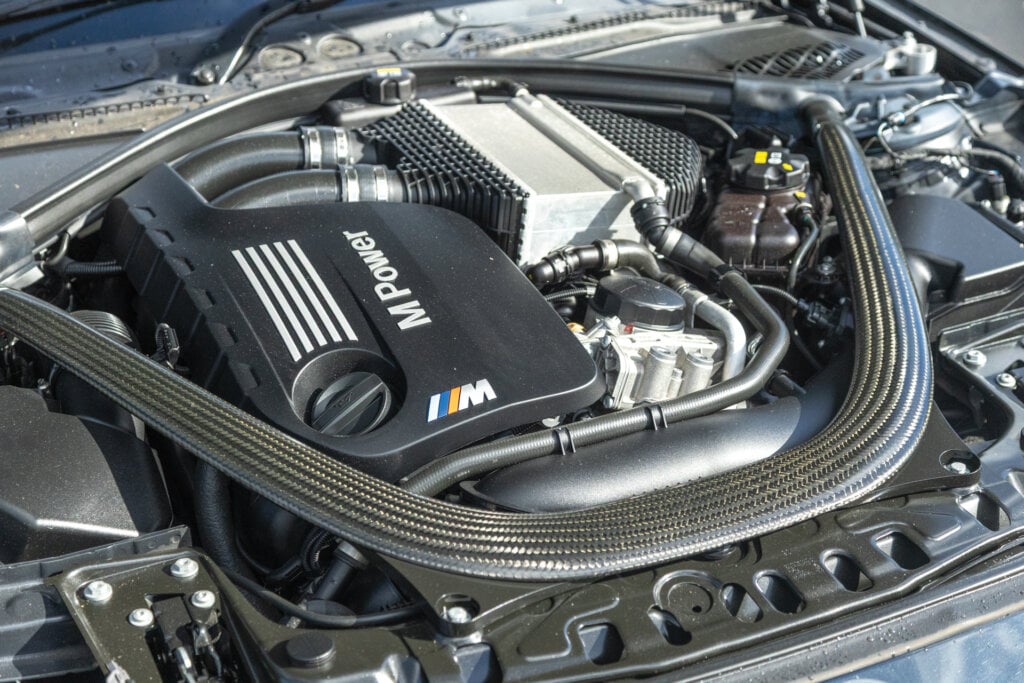
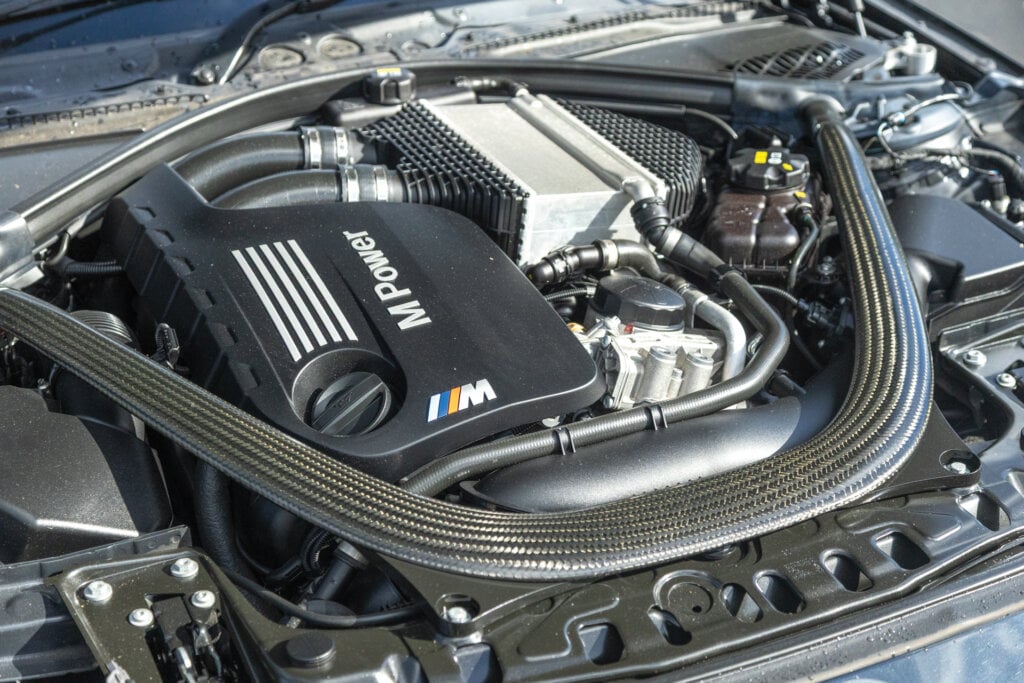
Every F80 runs the S55 3.0-litre twin-turbo six. Standard cars make 317kW and 550Nm, good for 0-100km/h in 4.1 seconds with the DCT or 4.3 with the six-speed manual, which was a no-cost option few Kiwis took. Claimed fuel use is 8.3L/100km. Expect 10 to 11 in mixed driving, and far worse if you use the thing properly.
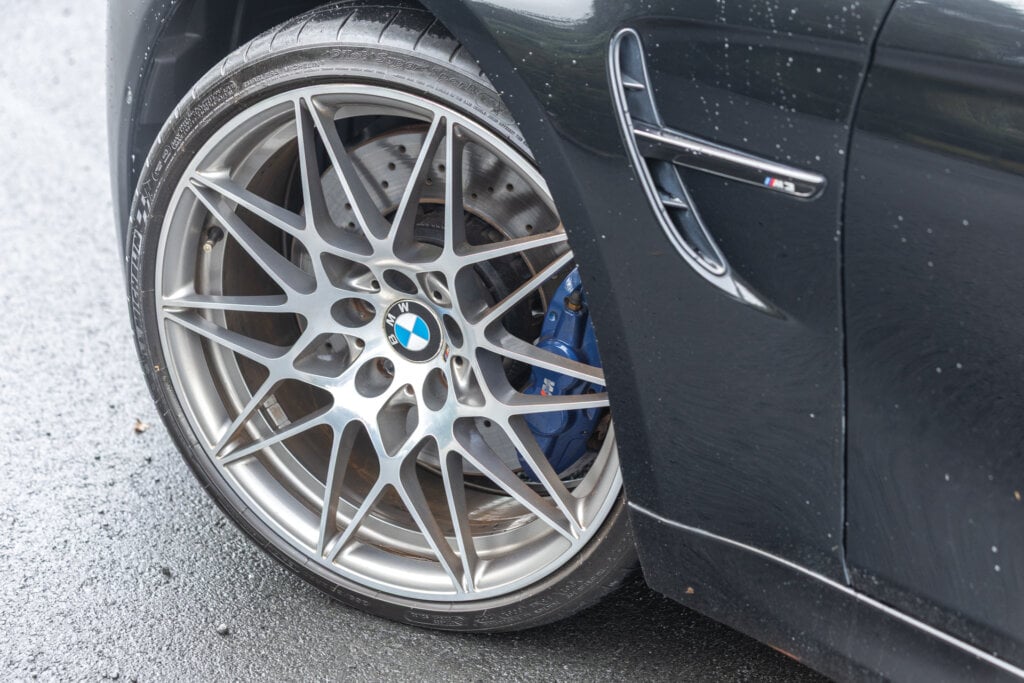
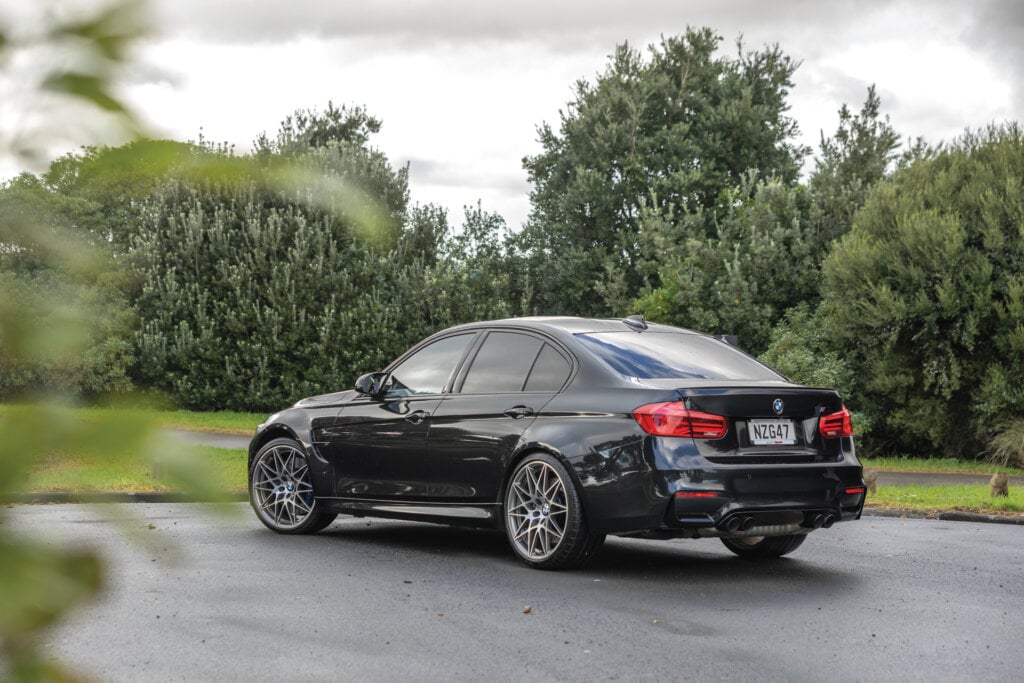
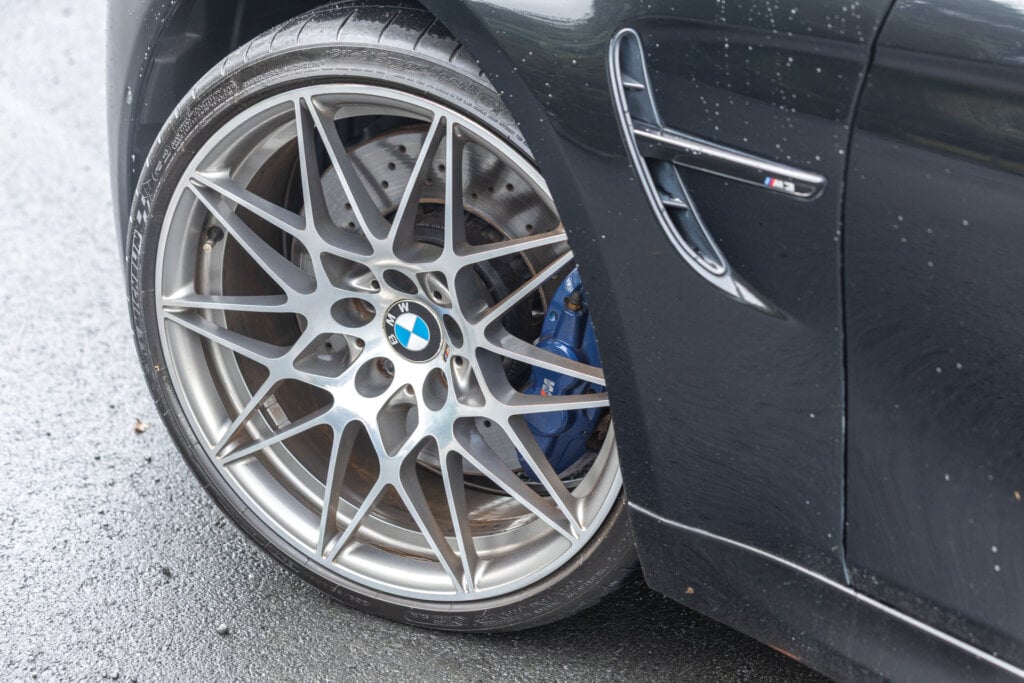
The Competition Package landed in 2016 and lifted output to 331kW, with stiffer springs, retuned adaptive dampers, a recalibrated Active M Differential, lightweight seats with cut-outs, 20-inch forged wheels on wider Michelins and a louder sports exhaust. The bigger gain was a more settled rear end. Most 2016-on cars here carry it.
A 2017 facelift brought LED tail-lights, a mild interior refresh and updated iDrive. The M3 CS arrived in 2018 as a limited run with 338kW, a carbon bonnet from the M4 GTS and Michelin Cup 2 tyres. It is rare here and priced accordingly.
How does it drive?
Very quickly. Lag is barely noticeable and the mid-range shove makes overtaking easy. The DCT is sharp in Sport Plus and a little jerky at parking speeds, which is normal for the breed.
Early cars had a reputation for a nervous rear axle, especially in the wet. That 550Nm arrives at 1850rpm and a damp Kiwi road will find the limit of the rear Michelins quickly. The Competition Package tidied that up considerably.
The steering is quick and accurate rather than talkative. The ride on 20s is firm in Comfort, properly hard in Sport Plus, and coarse chip seal can make it tiring. If you cover a lot of rough rural road, a 19-inch standard car is the more liveable choice.
Living with it
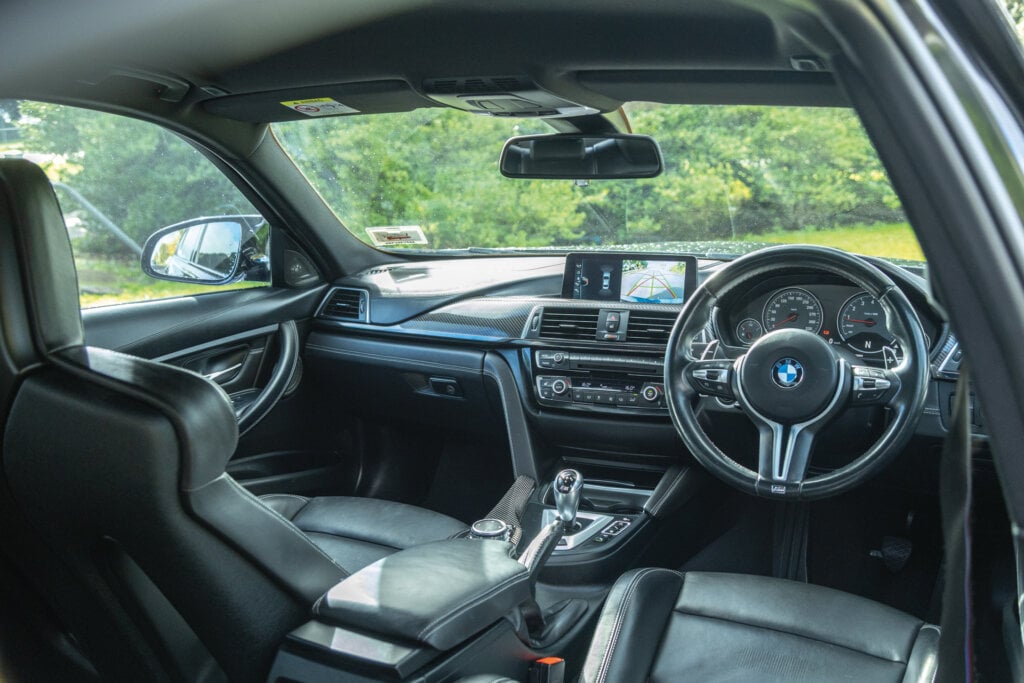
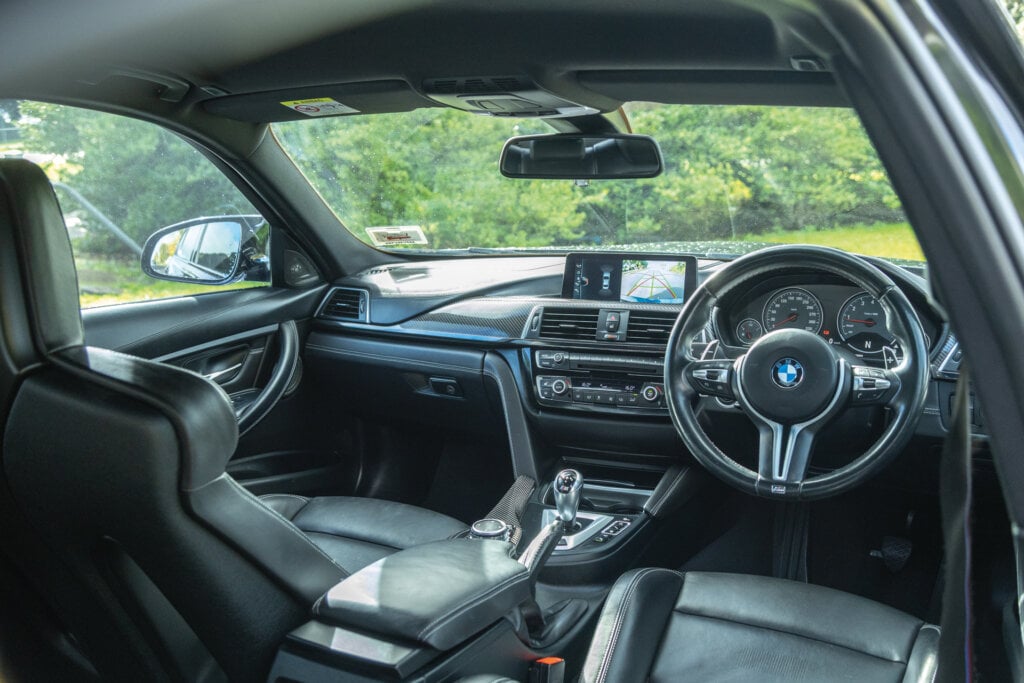
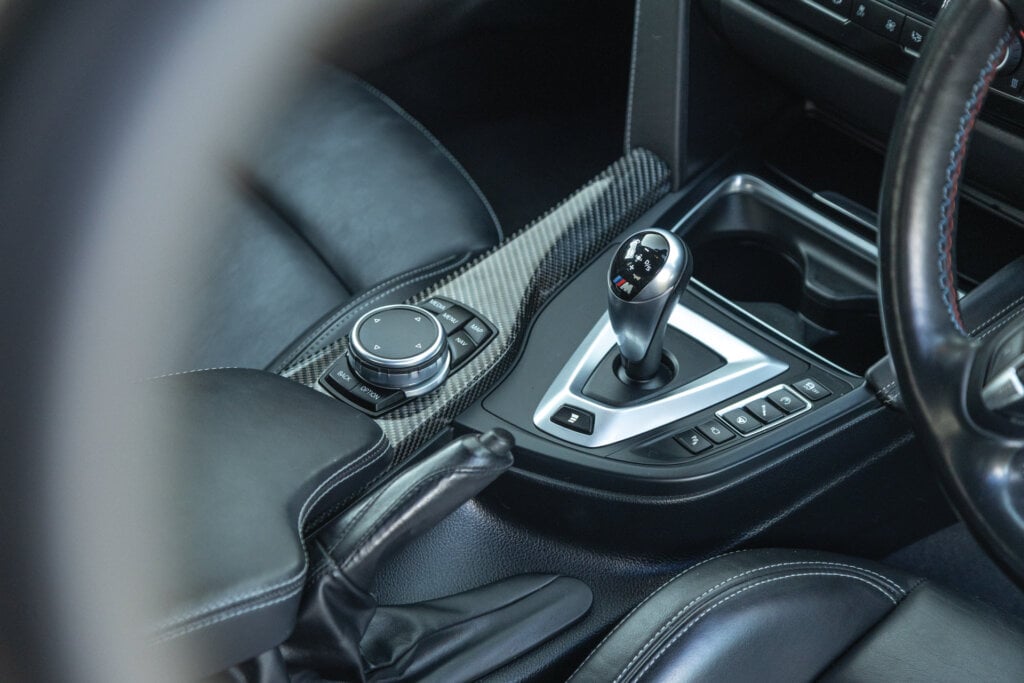
This is the practical M car. It has a 480-litre boot, split-folding rear seats and genuine room for two adults in the back. The cabin is F30 3 Series fare with better seats and a thicker wheel, so it has aged well without ever being exciting. NZ-new cars got Harman Kardon audio, heated seats, navigation and a head-up display. The Competition seats hold you tight but are heavily bolstered, so try before you buy if you are broad across the shoulders. Apple CarPlay was not standard on any F80. Retrofit kits are common and cheap.
What to look out for
The S55 is a strong engine but there are a few known items. First, the crank hub. The debate rages online, but failures are overwhelmingly on tuned cars and those driven hard from cold. A stock car with a full service history is a low risk. Walk away from anything with an unknown tune.
The plastic charge pipe cracks on higher-mileage cars, announced by a boost leak and a limp-mode warning. Aluminium replacements are cheap and many cars already have one. Oil filter housing gaskets and the cooling system, particularly the expansion tank and hoses, are the other regular leaks. Check for weeping at the front of the engine and a coolant smell after a run.
The DCT needs a fluid change every 60,000km. It is not cheap, and a car that has skipped it will tell you with a rough low-speed shift. The carbon roof is hard to repair if damaged, so look at it closely. Rear tyres last 10,000 to 15,000km if you are gentle.
Finally, imports. Japanese and UK examples are both around. Japanese cars usually need an iDrive language and map conversion and some lack the Harman Kardon system. UK cars often carry extra options but check underneath for corrosion. NZ-new cars command a premium for a reason.
What will it cost?
AutoTrader listings currently run from around $45,000 for early 2014 and 2015 cars with 80,000km or more, up to the mid $50,000s for tidy lower-mileage examples. A 2016 or 2017 Competition Package car sits between $58,000 and $75,000 depending on kilometres and history, with 2018 Competition cars nudging $80,000. A genuine CS is a different conversation, typically well over $120,000.
That lines a Competition M3 up against a similar-age Mercedes-AMG C63 S and undercuts a Giulia Quadrifoglio by a fair margin. The M3 is the most practical of the three and generally the cheapest to keep going.
Verdict
Buy a 2016 or later Competition Package car with a stamped service book, a stock engine and a DCT fluid change on record. It is faster, better balanced and more resolved than the early cars, and still a sensible five-seat sedan when it needs to be. The standard car is the quieter bargain if you want a softer ride and can find one that has been looked after.
Thanks to Auckland European. Find more of their cars at www.aucklandeuropean.co.nz
Search for a used BMW M3 on autotrader here