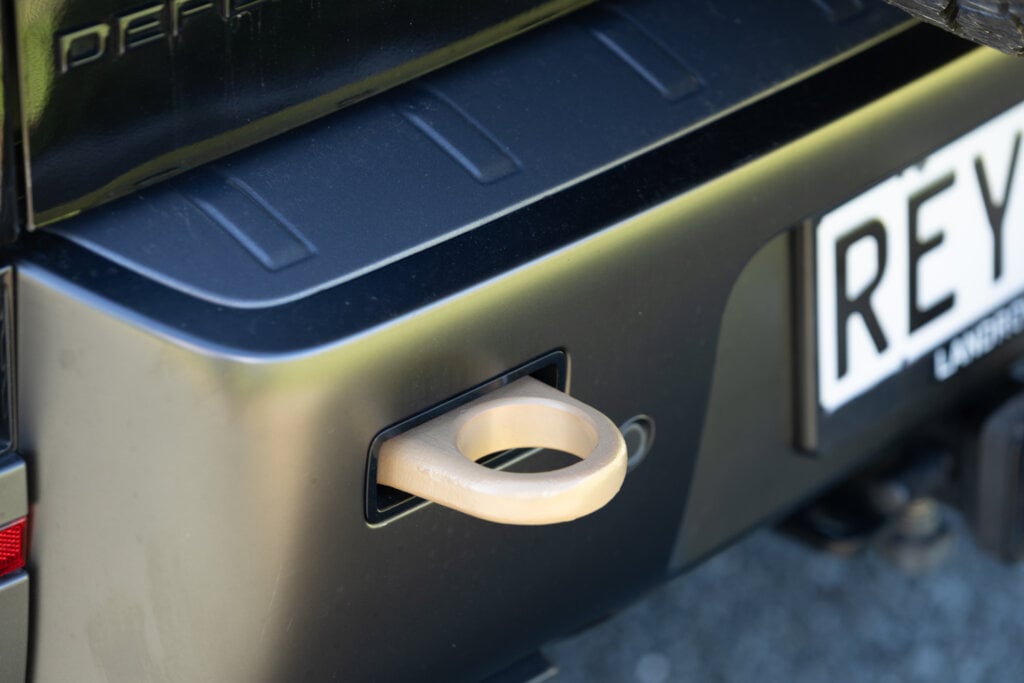
View all
21 more images
2026 Aston Martin DBX S vs Land Rover Defender Octa Review
Words: Andrew Sluys | Photos: Alex Schultz
Luxurious, fast, big and frightfully expensive the Super SUV is a favourite of upper society. They come in different flavours too, and here we look at two that fit the description but are rather different in their execution.
Us Kiwis seem to like the finer things in life. Despite the fact our country’s economy has technically been in a recession for the last year or so, it hasn’t stopped some from shelling out on luxury cars. Last year, premium vehicle sales accounted for 9.2 per cent of sales, with almost 8,500 of these leather-clad machines finding new homes.
Why is this important? Well it brings more context as to why these two vehicles that we’re looking at have found their way to little old Aotearoa.
Super SUV Serendipity
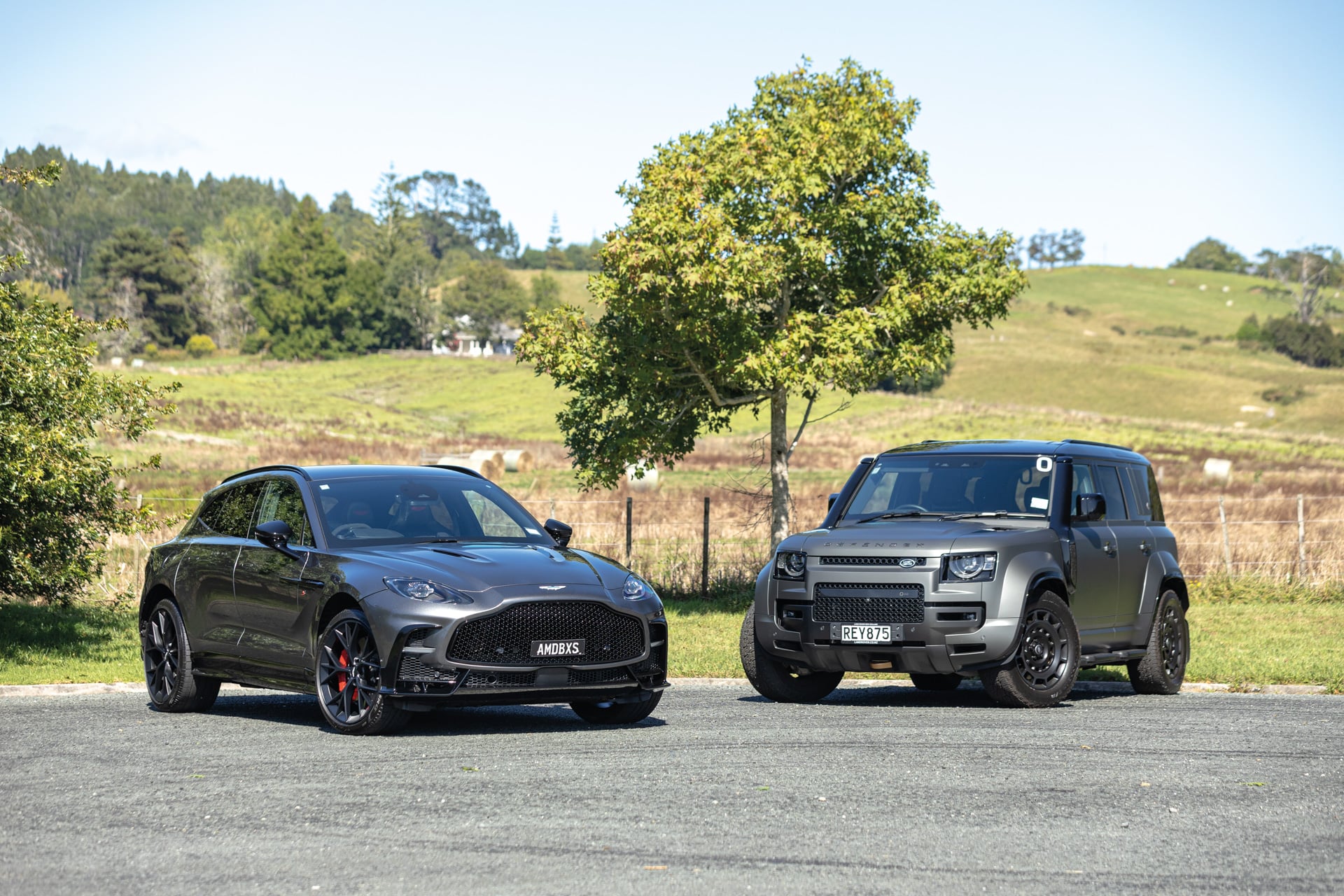
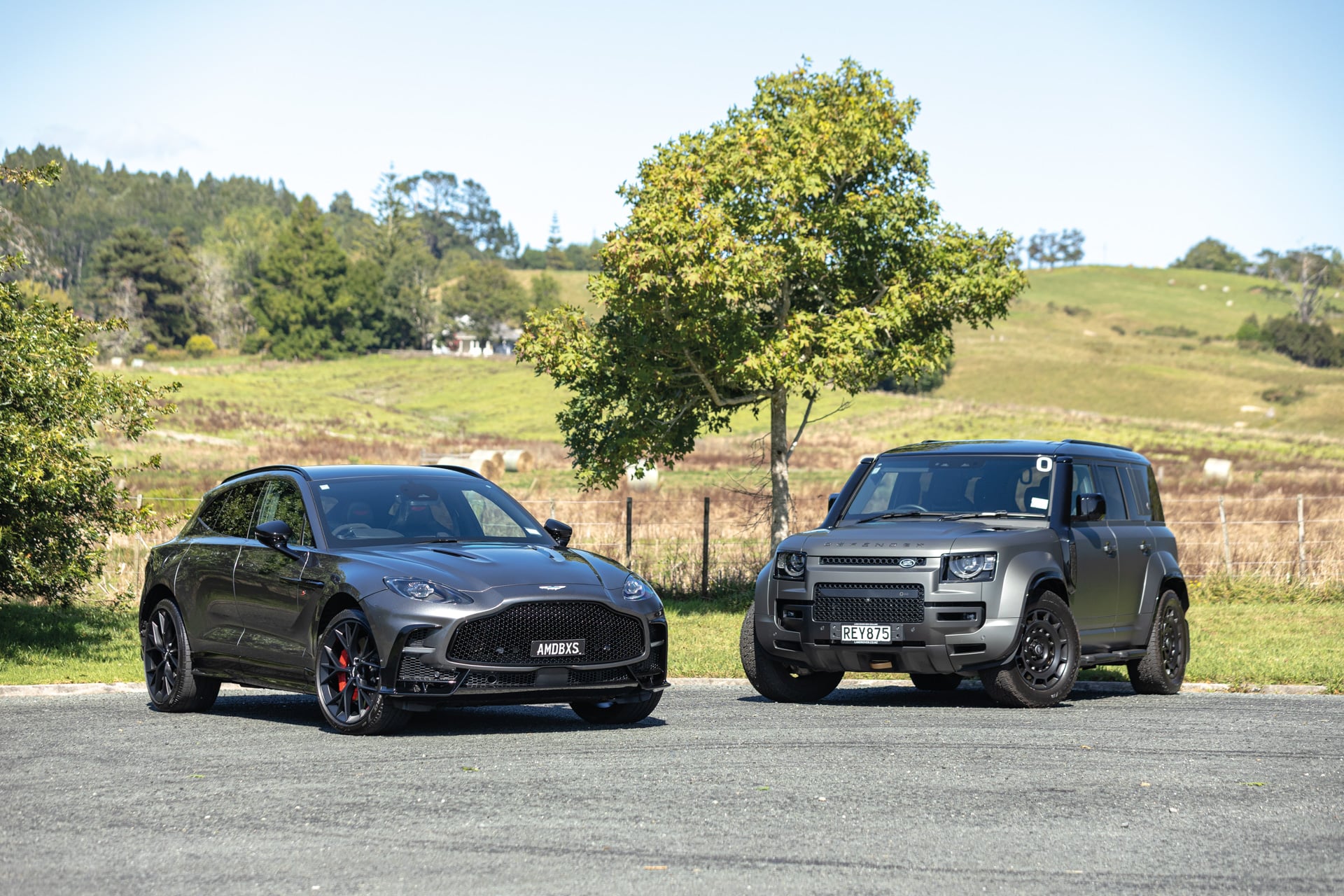
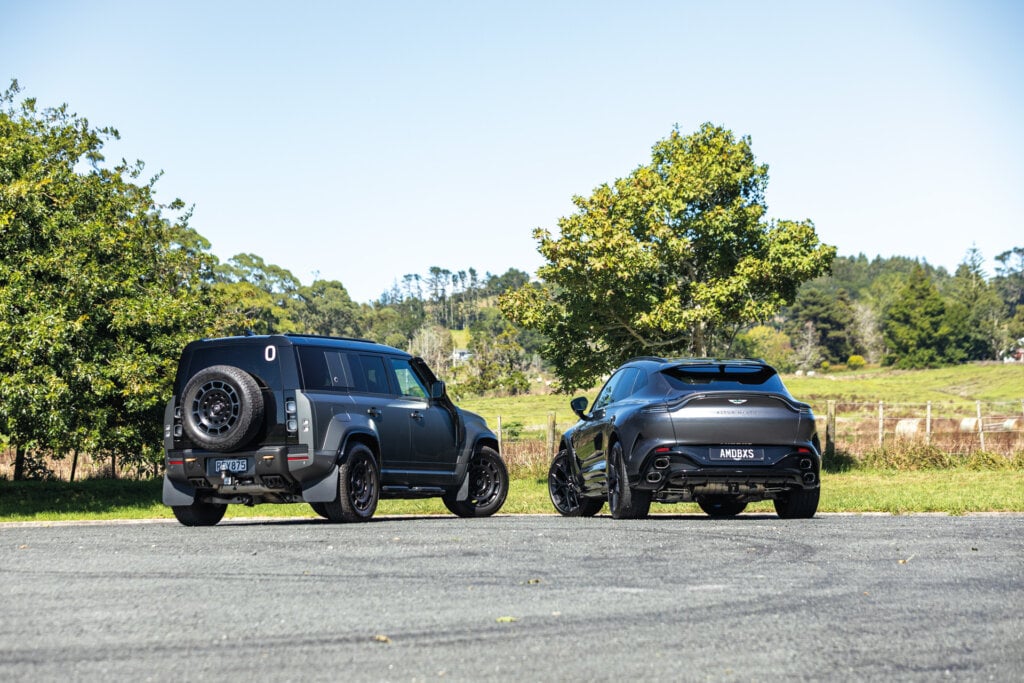
While the Land Rover Defender Octa and the Aston Martin DBX S might look like two entirely different vehicles on paper, they share a few uncanny similarities, hence why we decided to pair them together.
First of all, they’re both very expensive. The Defender Octa is more than $300k, and the DBX S basically doubles that with its starting price in the region of $600k.
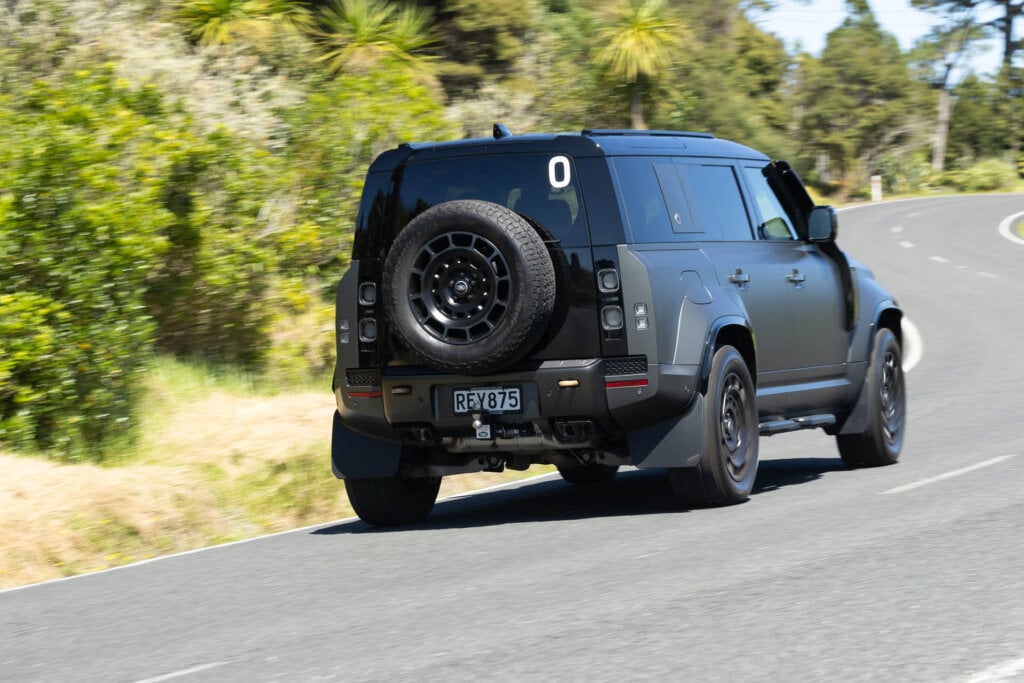
They were also both designed in England, but are built elsewhere. The Octa is Slovakian, while the Aston is built in Wales. And lastly, they are both powered by a V8 engine sourced from a far bigger German brand. The Defender makes use of a twin-turbo 4.4-litre BMW V8, while the Aston is fitted with Mercedes-AMG’s boosted 4.0-litre engine.
I guess you could also make the connection on sheer levels of grunt, as they both pump out at least 450kW, and can hit 100km/h far quicker than you’d ever expect an SUV to be capable of.
The Octa Effect
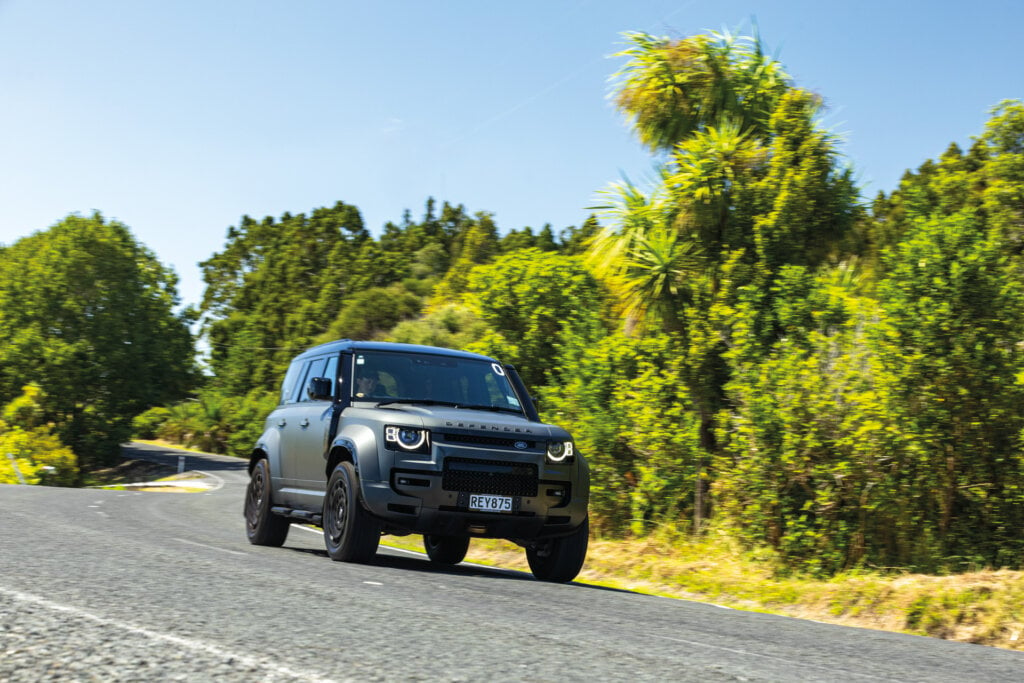
The Land Rover Defender has been a staple in the off-road world for decades now. Once a farm tool, this new generation is more a luxury item, and it has made them far more desirable for the urban dweller. They aren’t cheap, either, with the base model Defender 90 starting from $128,900.
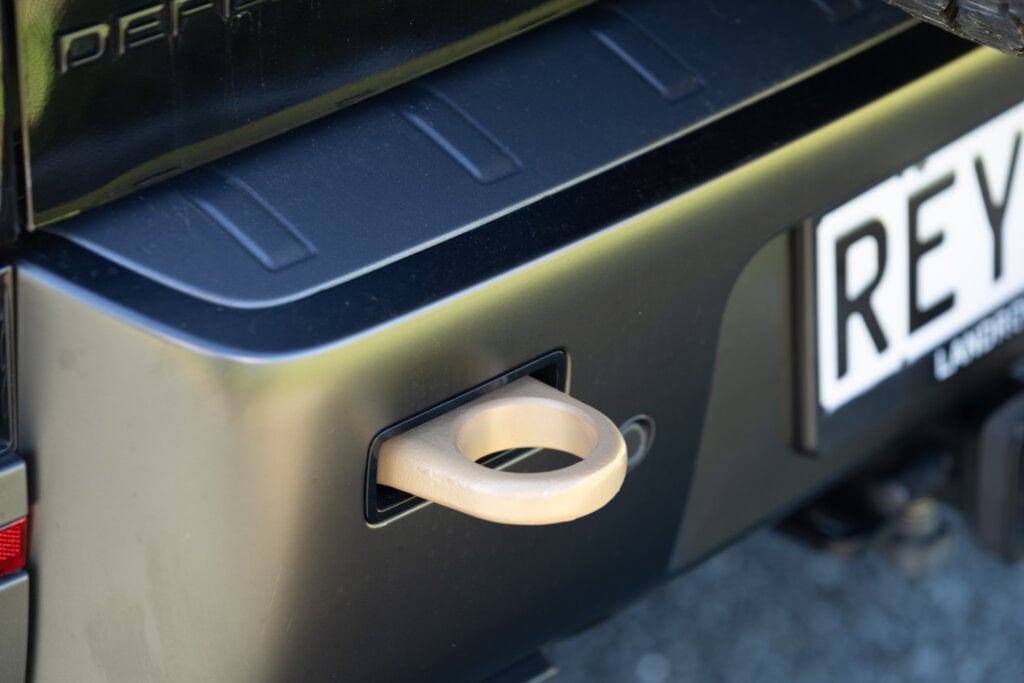
Despite this six-figure entry price, there is no shortage of choice in the local Defender range, with 110s, 130s, diesel, petrol, and hybrid options all available, it’s just a matter of pocket depth.
At the top of the line-up is the Defender Octa, which has its own section entirely on Land Rover New Zealand’s website. This is because it starts from a hefty $314,900, meaning once you add a few options, you could have bought three regular Defender 110s for the same amount.
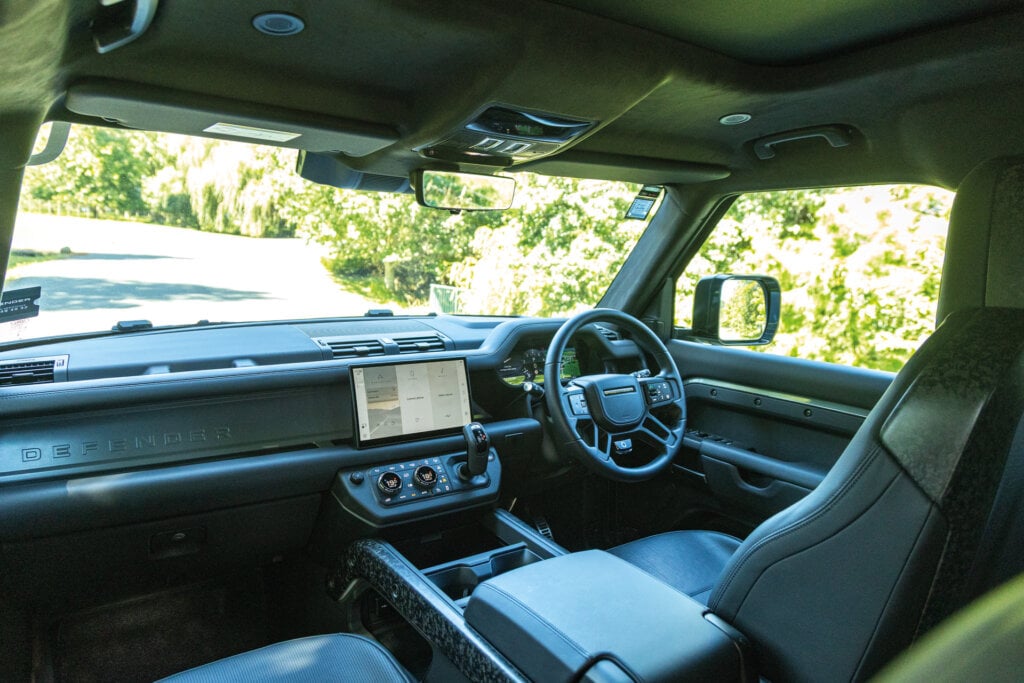
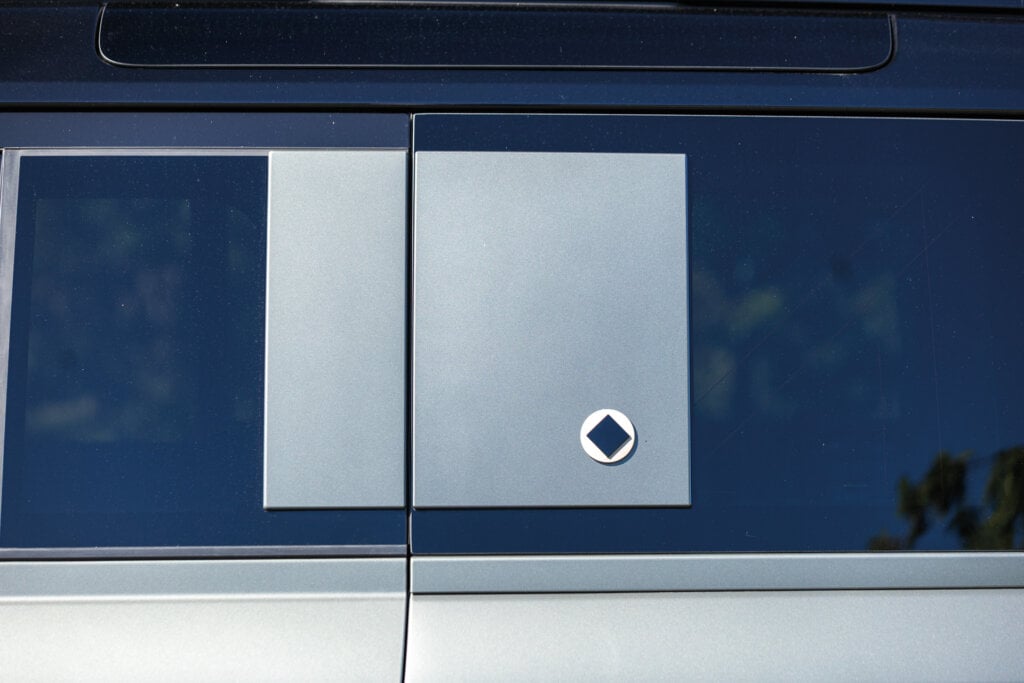
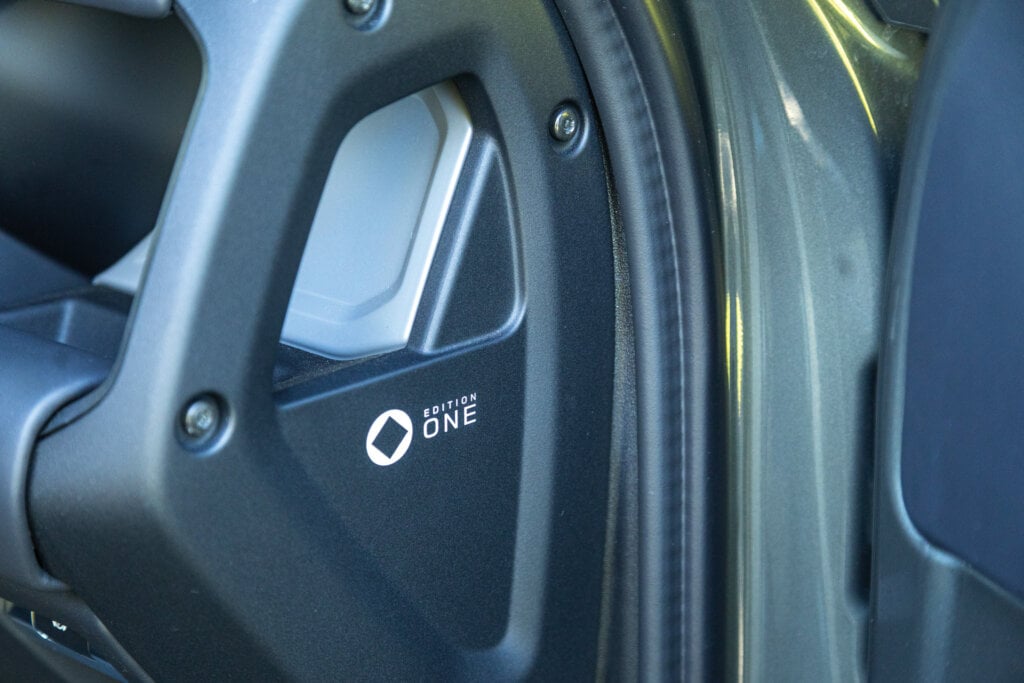
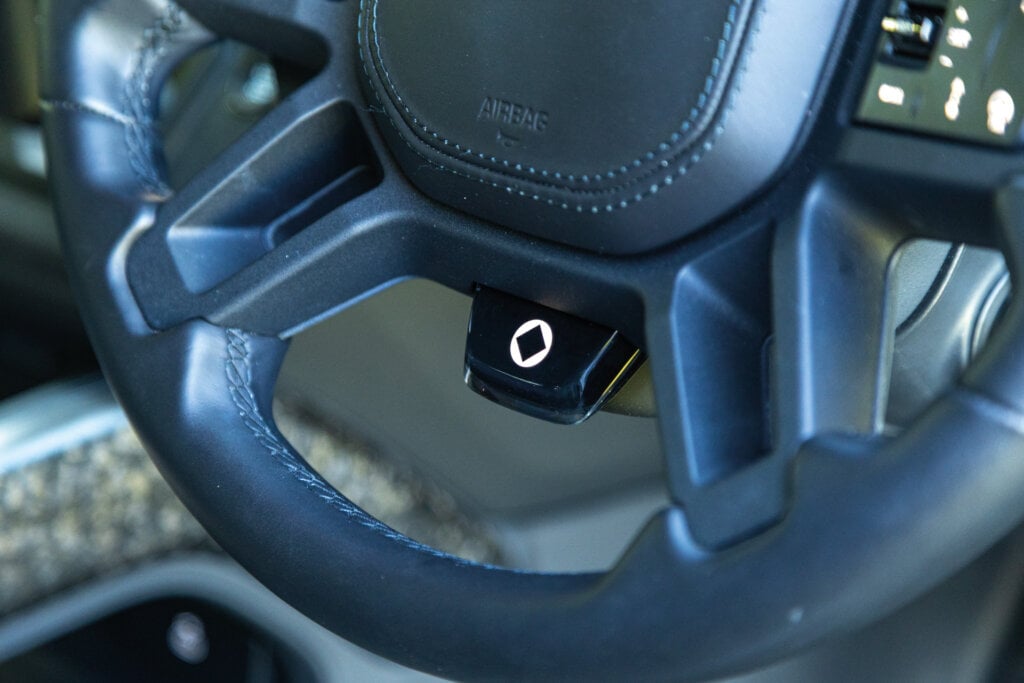
So what makes it so expensive? The name should give you a hint. According to Land Rover, the Octa takes its name from an eight-sided (or octahedral) diamond that represents “the vehicle’s rare, tough, and desirable nature.”
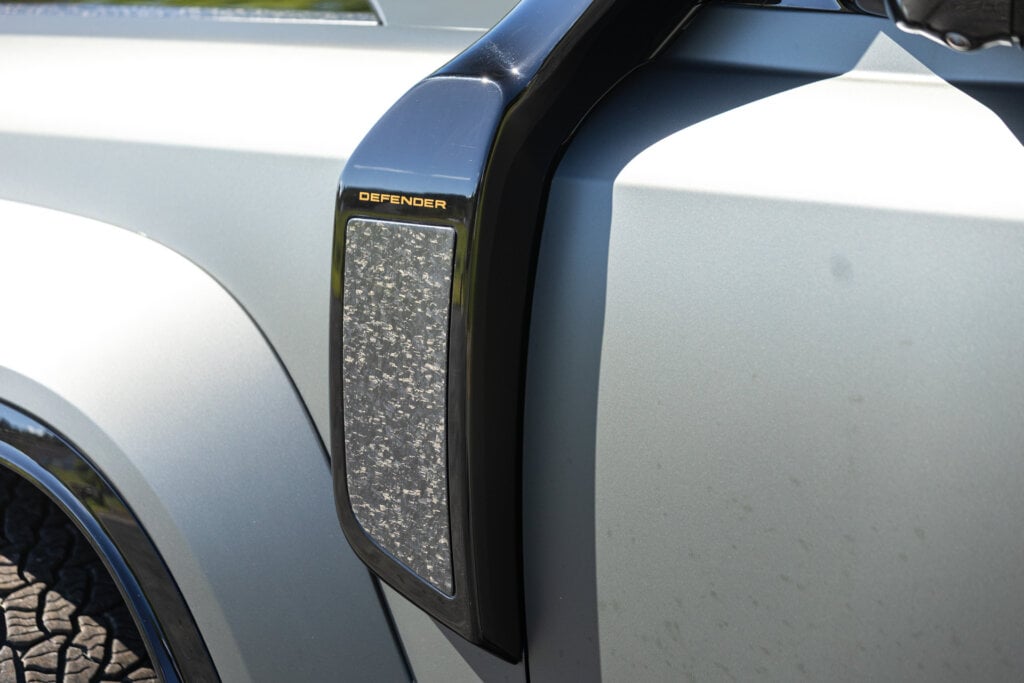
As you’d expect, Land Rover isn’t just charging an extra $200k for a fancy name, as this Defender is a bit of an engineering marvel. We’re told this Octa is an extensively re-engineered Defender that took around three years to develop. Almost 14,000 additional tests were carried out on the project, ranging from ice tests in Sweden, to dune bashing in Dubai, and rally raid testing at Château de Lastours. It’s also the first Defender to reportedly conquer everything at JLR’s Eastnor Castle location.
On top of this, we’re told Land Rover benchmarked the Octa against Ford’s F-150 Raptor during this test phase, which is known as one of the most capable off-road all-rounders ever made.
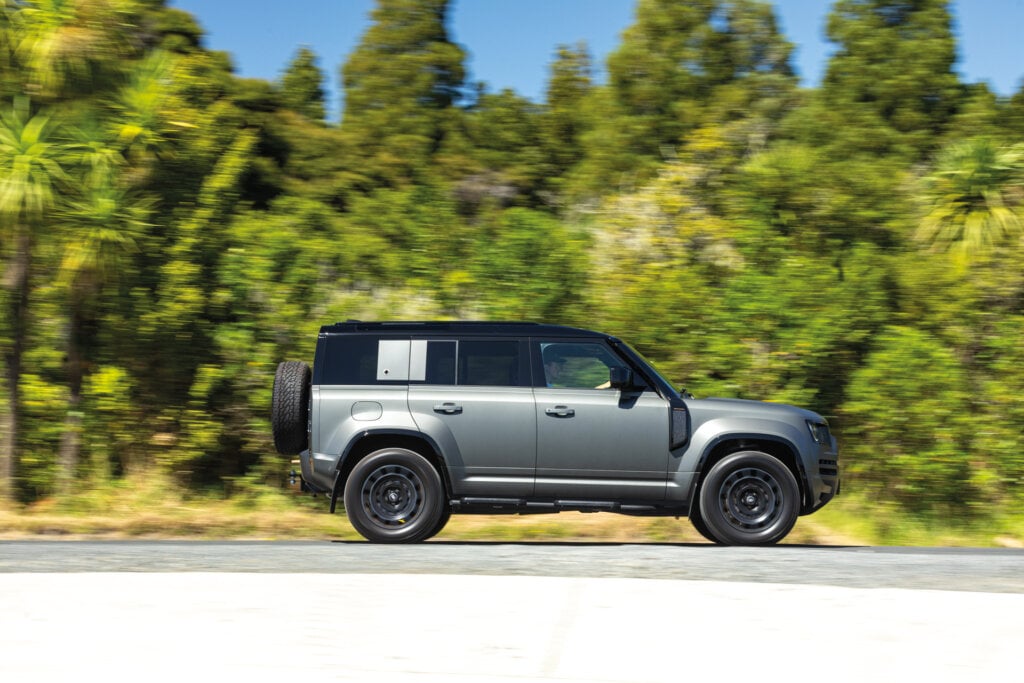
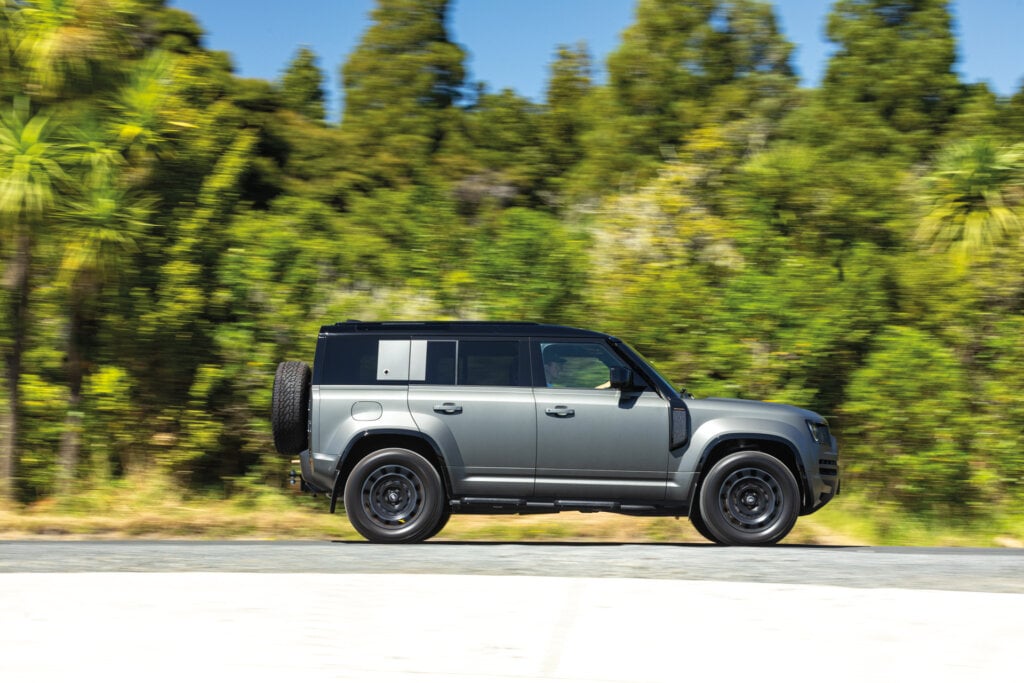
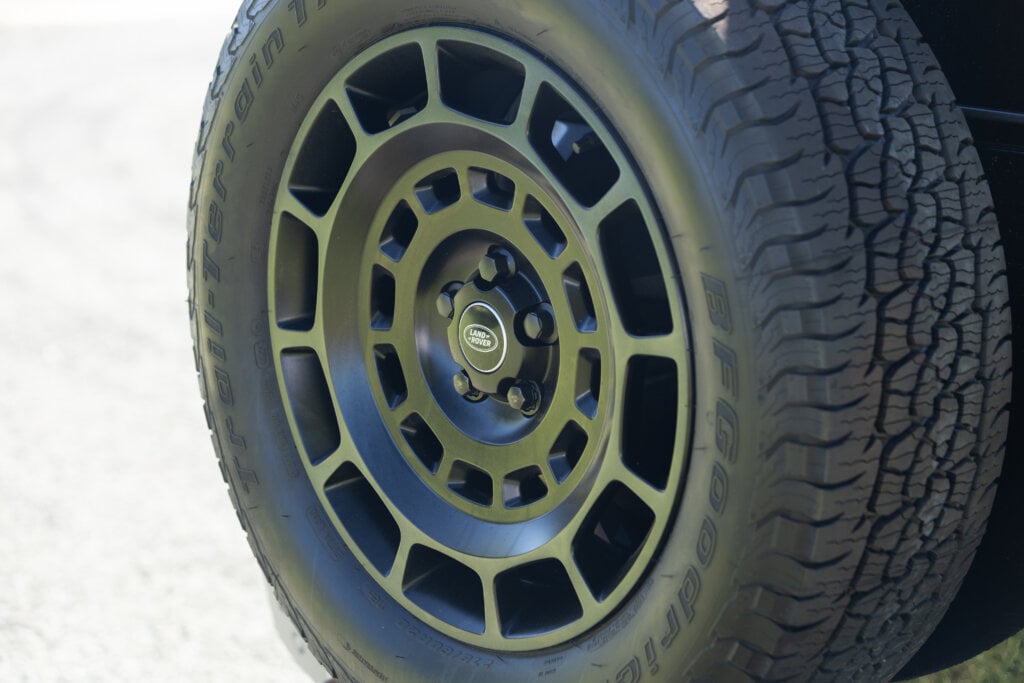
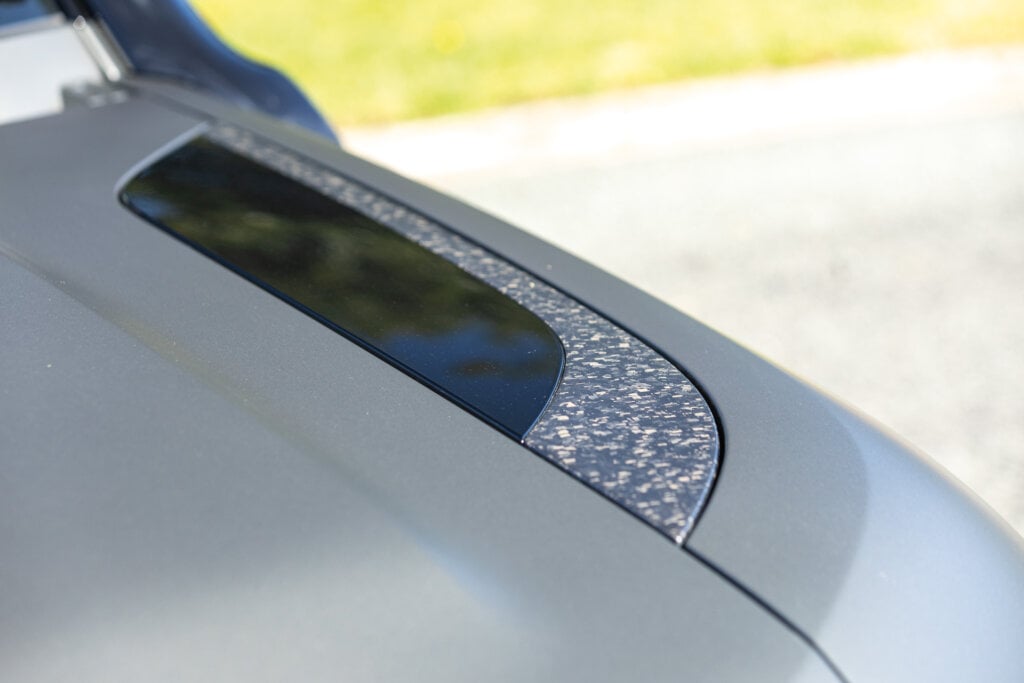
Like a diamond, the Octa is tough to its core, with a raft of changes also taking place beneath its rugged exterior. The front and rear axles have been moved forward to accommodate the large 20-inch wheels wrapped in all-terrain rubber. It seems keeping the internals cool was a priority, with a bigger air intake, auxiliary radiators, and a large heat shield around the fuel tank. It also gets triple insulated fuel lines, and beefy underbody protection to keep all the expensive stuff safe while off-roading.
The Octa’s off-road ability was also improved upon the standard Defender, with approach and departure angles increased, and a 400mm improvement on wheel articulation.
Aside from all the technical engineering stuff, the biggest change for this Octa is the BMW-sourced V8 that’s found its way beneath the bonnet. It’s the twin-turbo 4.4-litre engine BMW uses across its burly M-badged vehicles, and is paired with a mild hybrid system. Peak outputs sit a hefty 467kW and 750Nm, which will send the 2.5-tonne SUV to 100km/h in four-seconds flat.
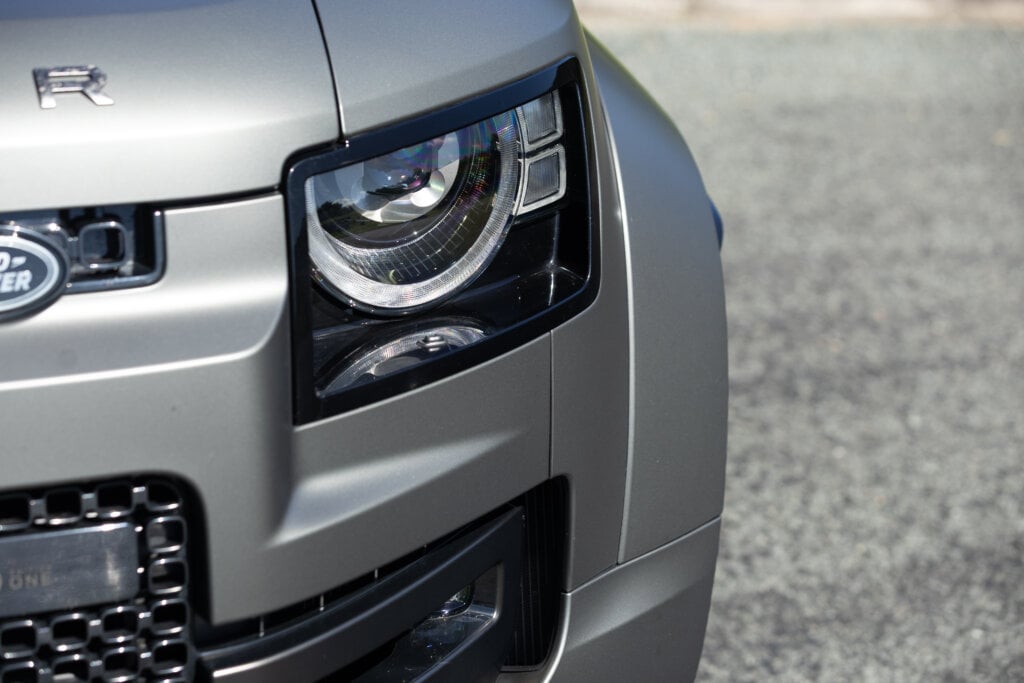
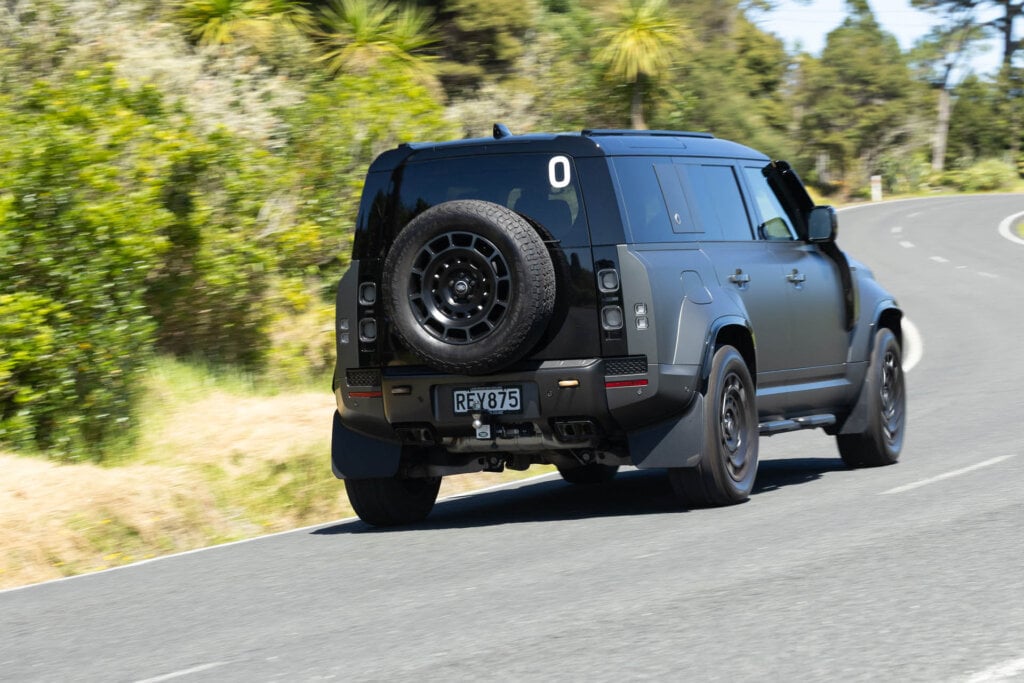
Putting all this torque to work and moving that much weight is no small task, so Land Rover has given the Octa a reinforced transmission cradle, larger diameter driveshafts, and reinforced joints. The rear differential is also made from high-tensile steel to handle the extra grunt. Finally, the exhaust system has also had its back pressure optimised in order to allow the huge 1-metre wading depth.
The Excessive DB
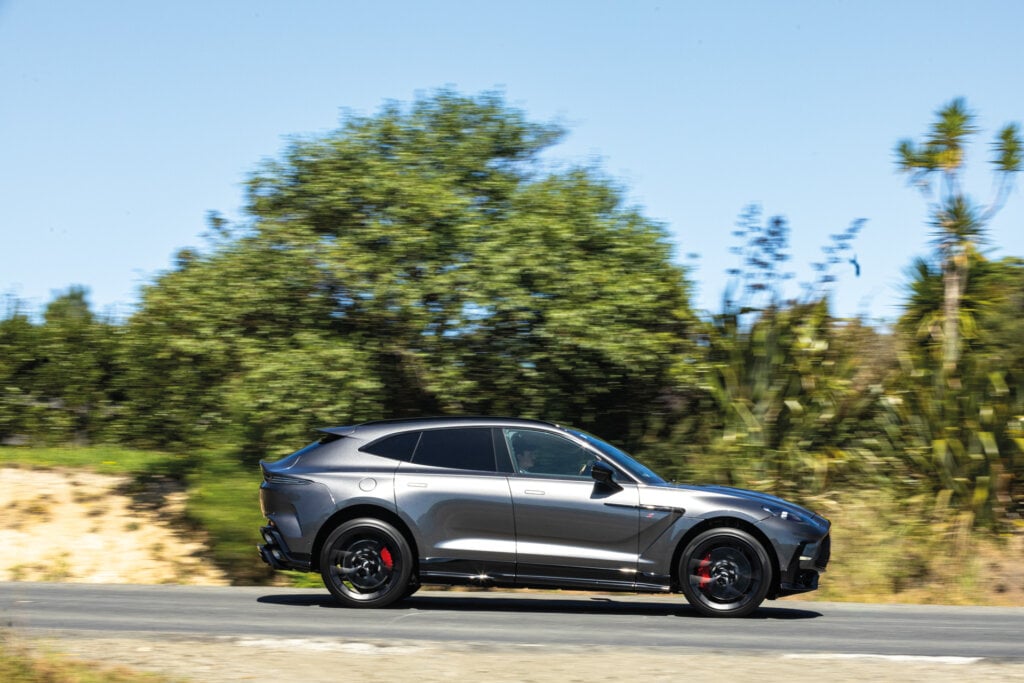
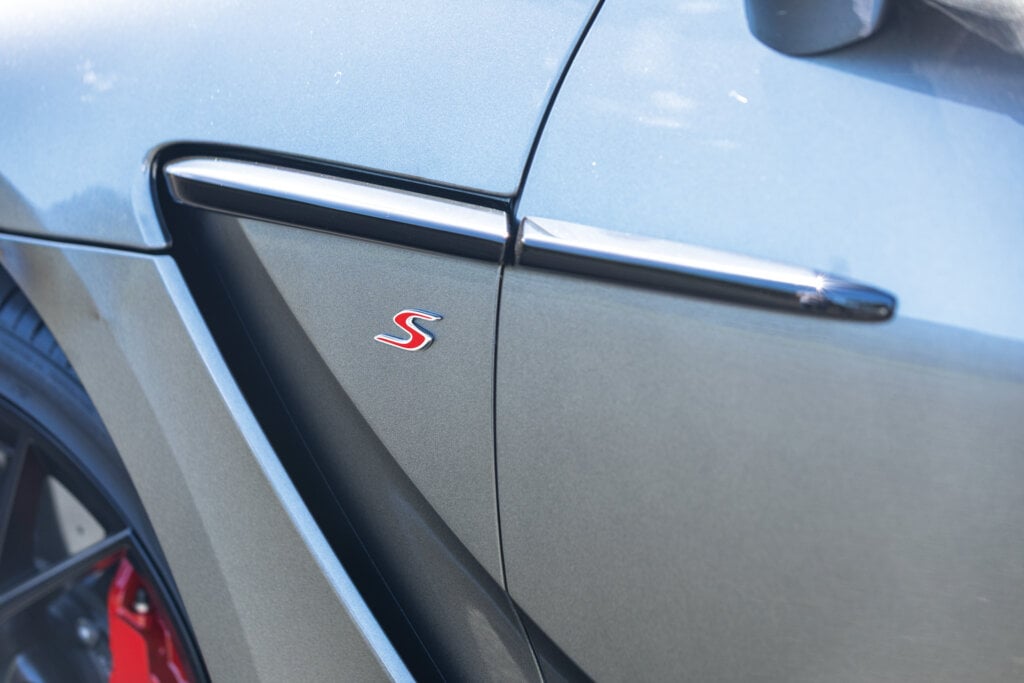
Things are a lot more simple when it comes to the DBX S, as it’s currently the only new SUV offered by Aston Martin. After the DBX was first introduced by the British brand back in 2020, it has been updated twice. The first with the 707, which bumped its power output to 707hp, and then now with the S, which has bumped power again to 717hp or 520kW.
Unlike the Octa, this V8 is an old fashioned petrol burner, without any sort of hybrid assistance. This comes as somewhat of a surprise considering its main rivals in the Porsche Cayenne Turbo e-Hybrid and Lamborghini Urus SE both have some sort of electric power.
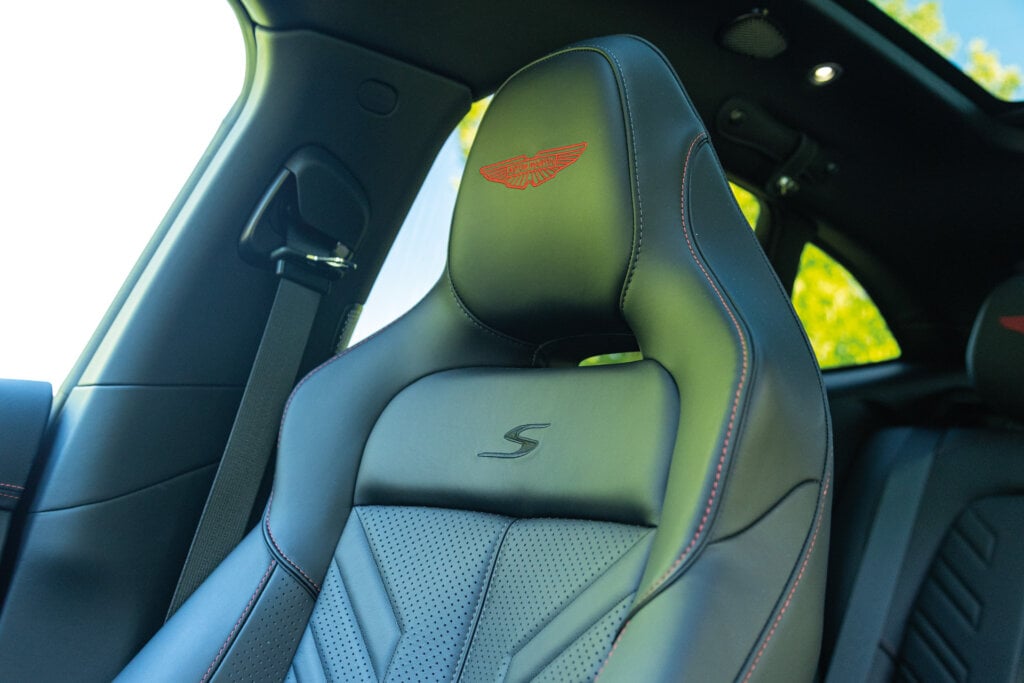
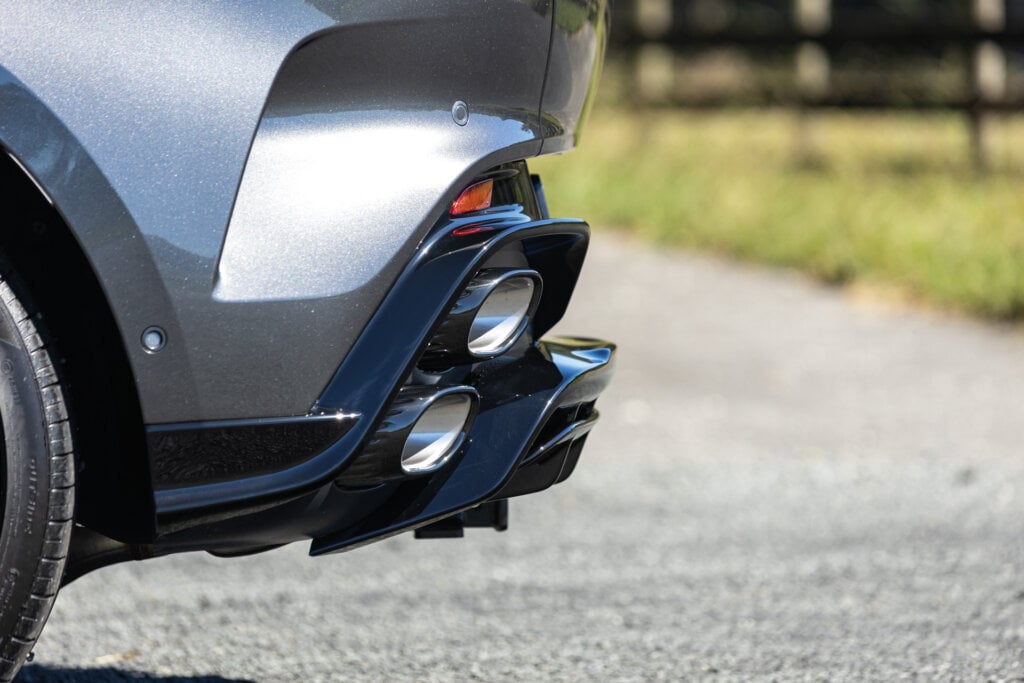
Aside from this small increase in power, the DBX S also improves on the 707 through shedding a few kilos. With a carbon roof optioned, and the magnesium wheels selected, the S can drop 50kg, which puts it under 2.2-tonnes. And for a SUV of this size, that’s a pretty impressive effort.
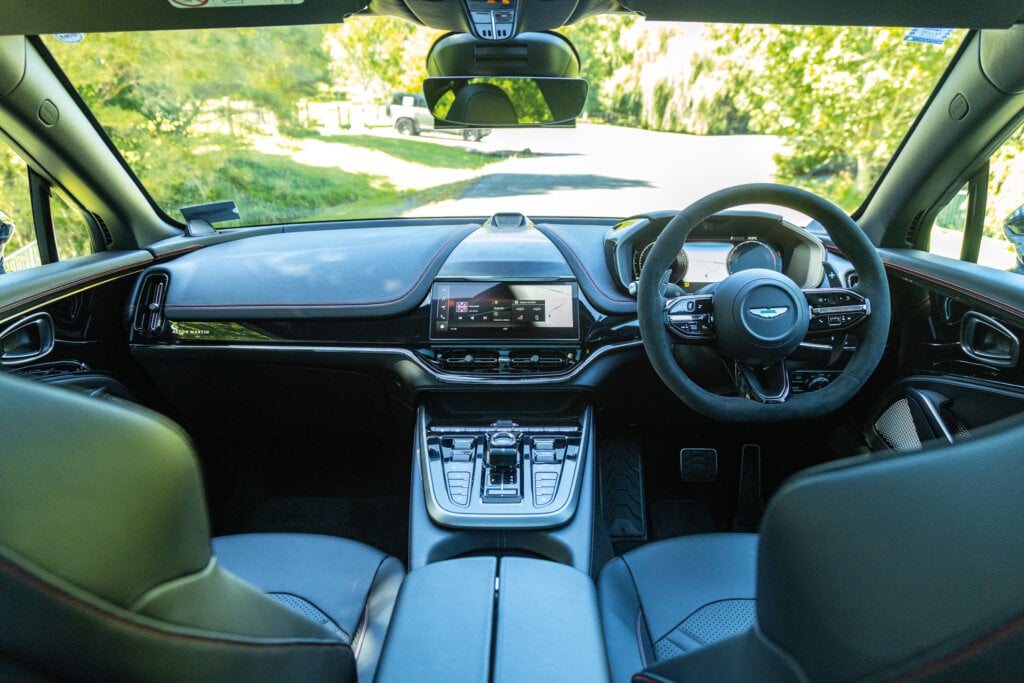
On the inside, things are also quite familiar, with Aston’s in-house operating system available on the digital displays. There’s also the option to use CarPlay Ultra, which will take control of all the vehicular tech functions in Apple’s own UI.
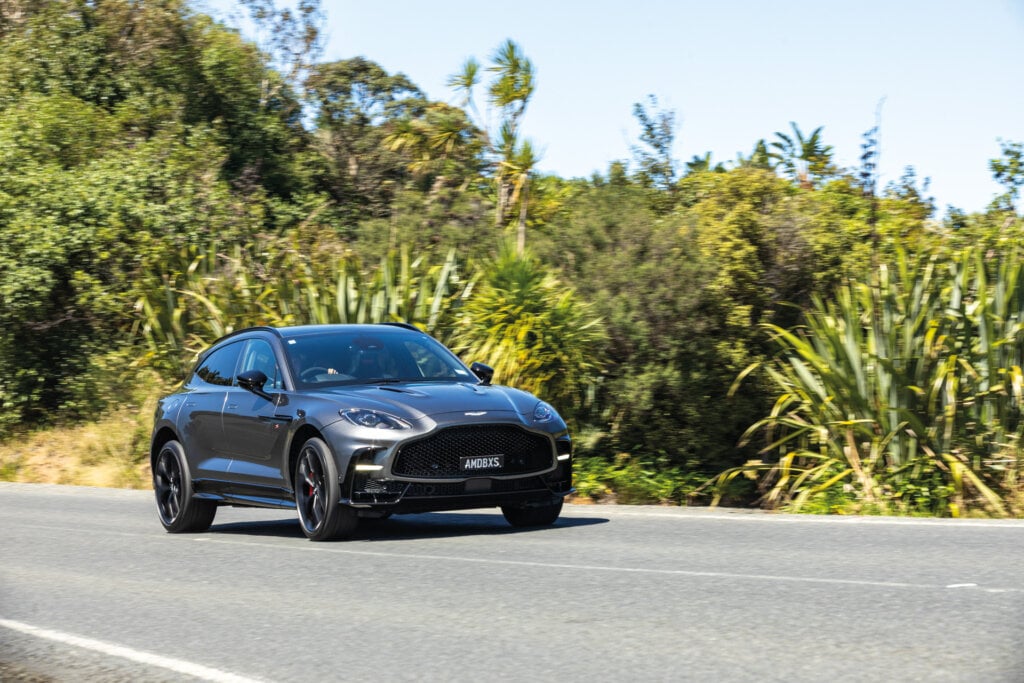
Plethora of Power
As we have previously taken the Defender Octa off the beaten track, where it impressed in every facet, we decided to get it on the tarmac for this test. It would also be unfair to the Aston, as it has to be one of the least off-road friendly SUVs I have ever come across.
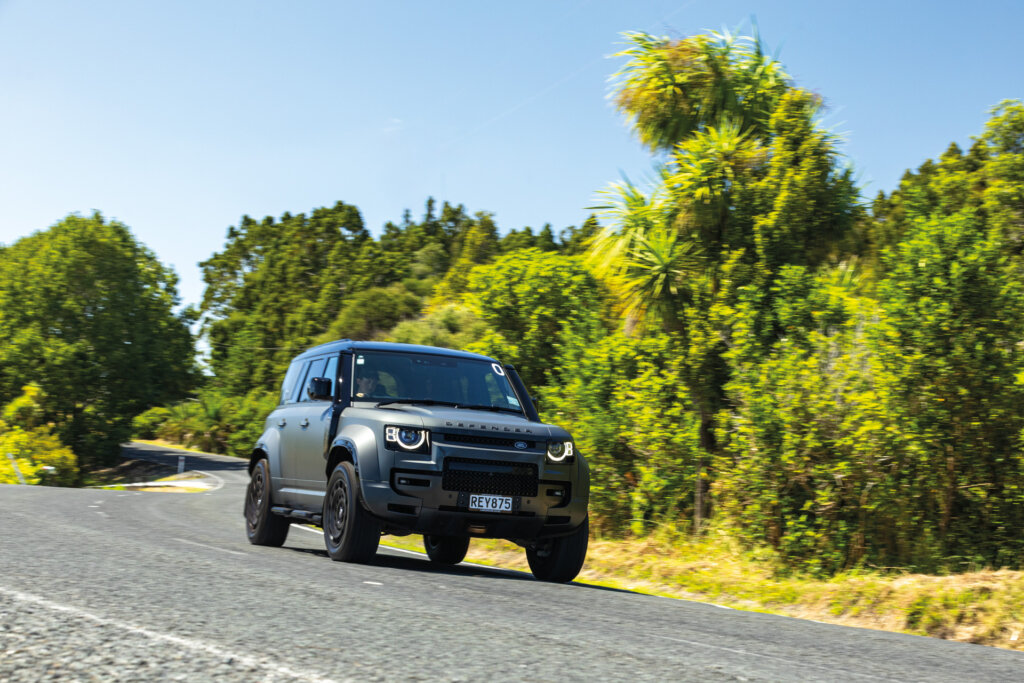
Considering how much of a riot the old Defender V8 was with its supercharged 5.0, I have to say I was a little disappointed by how quiet the BMW engine is. As it’s far more compliant with emission regulations, I’m guessing BMW has corked the living daylights out of this engine, and the result is very neighbour-friendly. In saying this, it makes for a very livable SUV, which won’t bark and shout about its power levels if you’re going about everyday business.
Pressing the Octa button, which is located at the bottom of the steering wheel, turns it into a bit more of a performance machine, but it still isn’t crazy. The exhaust opens up and the eight-speed auto will hold gears for longer, which lets drivers explore the abilities of the turbocharged V8.
Aside from its incredible off-road capabilities, I’d say the Octa’s most impressive party trick is how it goes around corners. This Octa uses an incredibly complex suspension system with triple valve dampers that are hydraulically linked, in place of traditional anti-roll bars. It’s a similar system to that of a McLaren 750S, and the result is an incredibly planted off-roader in the turns. Land Rover states a body roll improvement of 67 per cent over the standard Defender for this system.
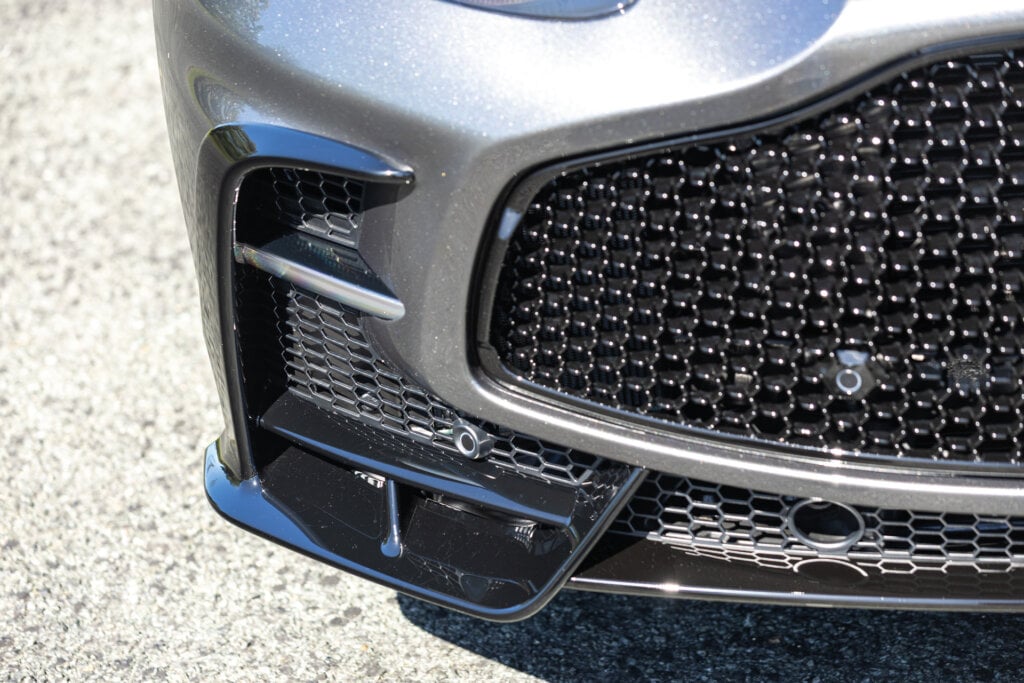
Aston Martin, on the other hand, missed the memo about building an understated SUV, as this DBX S is an exercise in extroversion. Its AMG-sourced V8 is vocal enough in its standard GT mode, let alone when it’s shifted into Sport or Sport + mode.
Its 0-100 time of 3.3-seconds is blisteringly quick, but it doesn’t feel much more impressive than the Octa. I assume this is down to how much more heft the Octa has to shift in doing so.
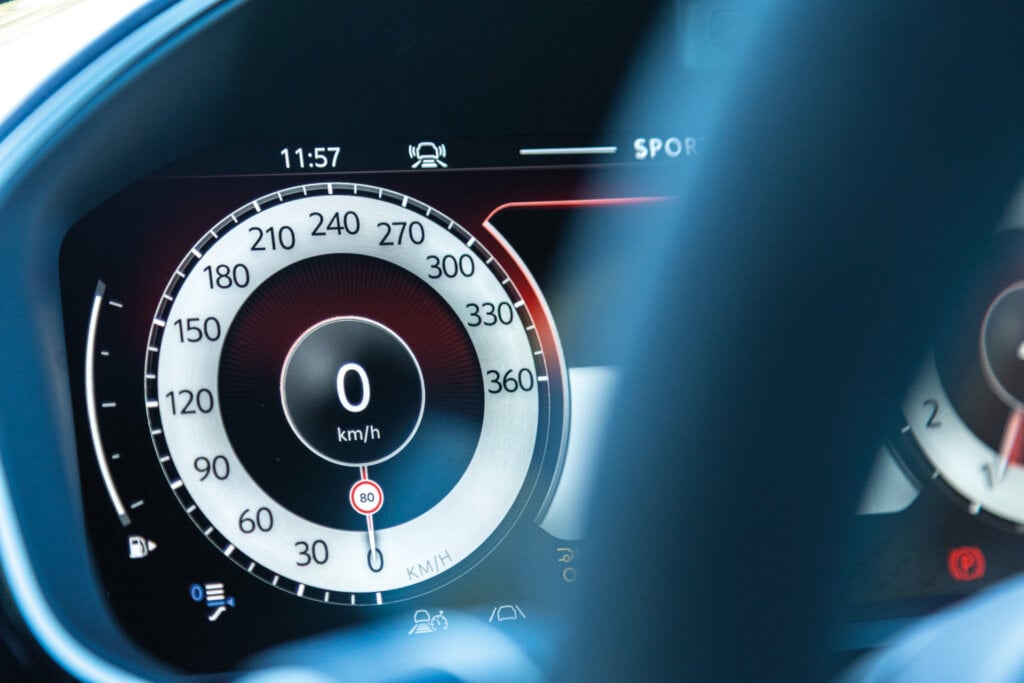
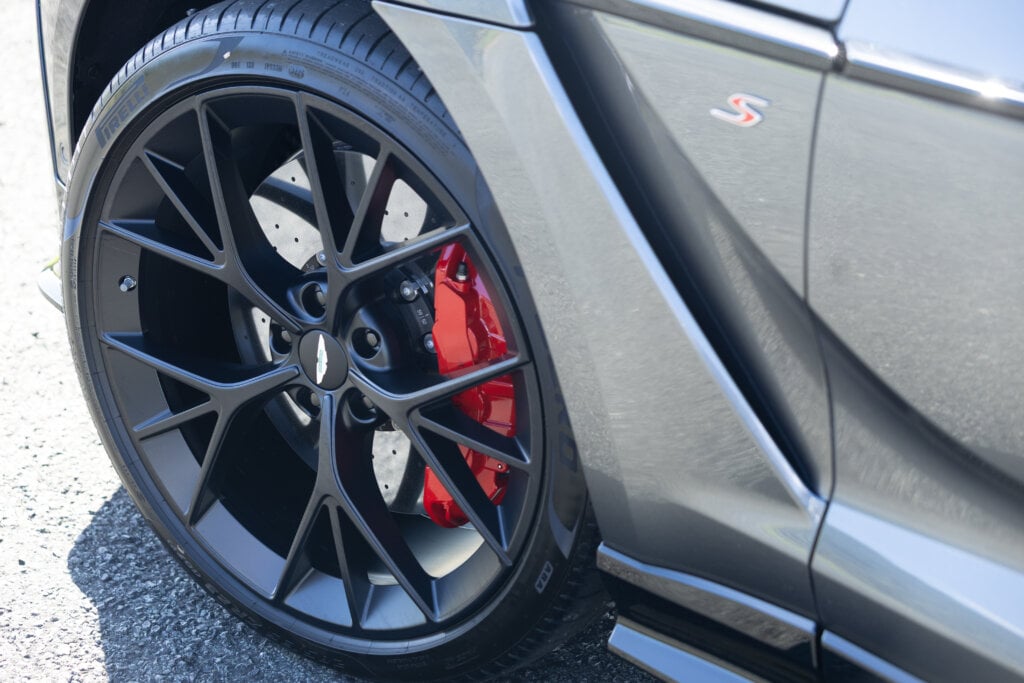
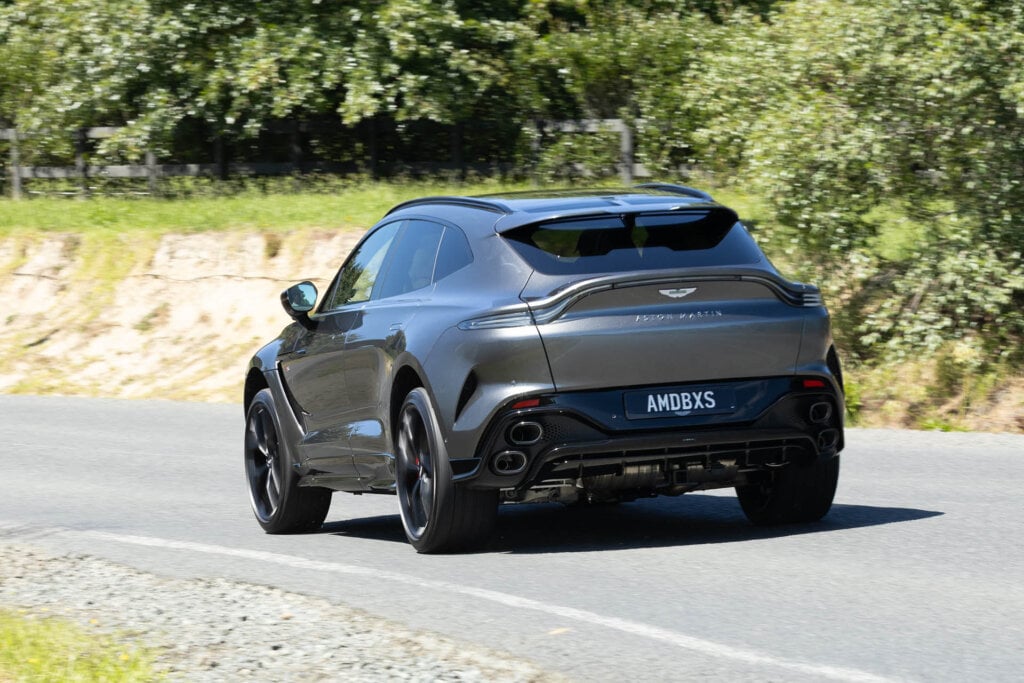
While the DBX is a big vehicle, its stretched out stance gives it the aesthetic of a much smaller vehicle, and the impeccable driving dynamics back this up. I’d be more inclined to compare it to a hot hatch than any other SUV, as it’s just so agile in the corners. I feel like the DBX S is far closer (dynamics-wise) to a Mercedes-AMG A45 than the old GLC 63S with which it shares a fair bit of hardware. The steering is quick, and has a heft to it that provides confidence at speed. The ride is stiff on Kiwi backroads, but communicates a lot of information through the seat.
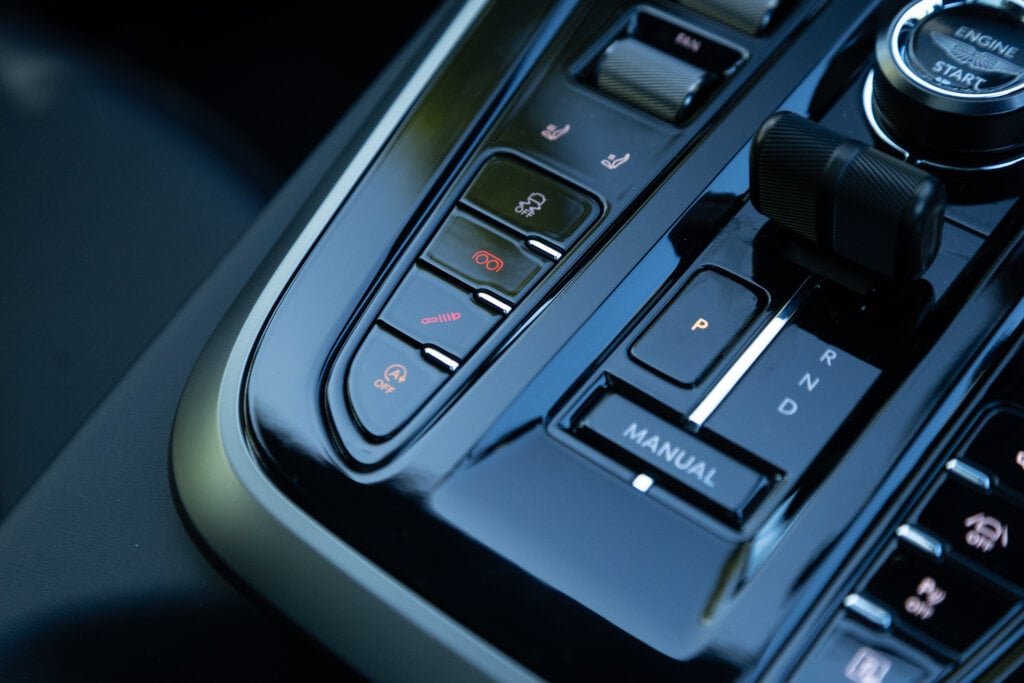
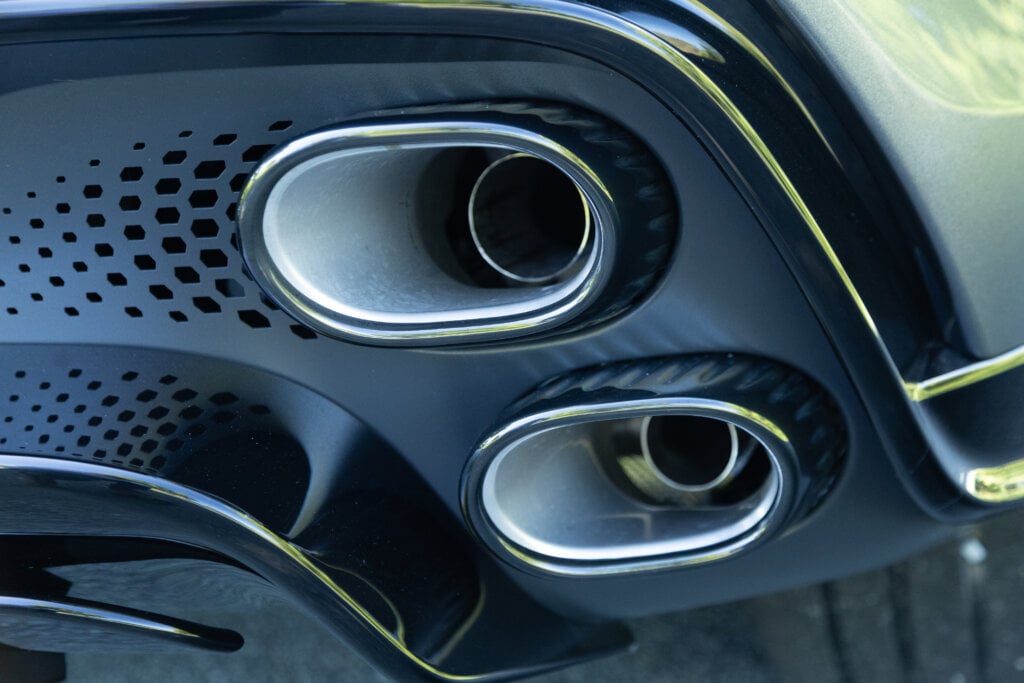
In GT mode (which is the standard drive mode) the transfer case will split power delivery 47/53 front-to-rear for a balanced drive. Switching this to Sport + turns the DBX into a rear-driven machine, and things get a bit more theatrical at the rear. I didn’t turn traction control off during my drive through winding back roads, meaning I faced a fair bit of intervention from the system. I was entertained by the limited amount of slip I was getting at the rear, but I can imagine turning everything off at a racetrack would make for a good time.
Fun for a Select Few
When it comes down to it, both of these SUVs are toys for the wealthy, and with a $300,000 price difference, there won’t be much cross-shopping done between the two.
If I had to pick between the two, my money would be going to the Defender Octa, as it is one of the best all-rounders I have had the pleasure of driving. It’s fast, capable, practical, and if you can afford one, I doubt you’ll be too worried about its fuel consumption.
Aston Martin DBX-S
$613,885 / 14.3L/100km / 323g/km
0-100 km/h 3.3s
Engine 3982cc / V8 / T / DI
Max power 520kW@6250rpm
Max torque 900Nm@3000rpm
Drivetrain 9-speed auto / AWD
Front suspension Wishbones / swaybar
Rear suspension Multilink / swaybar
Turning circle 12.0m (2.5 turns)
Front brakes Carbon discs (390mm)
Rear brakes Carbon discs (390mm)
Stability systems ABS, ESP
Safety AEB, ACC, BSM, LDW, RCTA, ALK, AHB
Tyre size f-285/30R23 r-325/30R23
Wheelbase 3060mm
L/W/H 5039 / 2175 / 1600mm
Track f-1698mm r-1664mm
Fuel capacity 85L
Luggage capacity 630L
Tow rating 750kg (2700kg braked)
Warranty 3yrs / unlimited km
ANCAP rating Not rated
Weight (claimed) 2245kg
Land Rover Defender Octa
$314,900 / 13.8L/100km / 313g/km
0-100 km/h 4.0s
Engine 4395cc / V8 / T / DI
Max power 467kW@5855rpm
Max torque 750Nm@1800rpm
Drivetrain 8-speed auto / AWD
Front suspension Wishbones
Rear suspension Multilink
Turning circle 12.8m (2.7 turns)
Front brakes Ventilated discs (400mm)
Rear brakes Ventilated discs (365mm)
Stability systems ABS, ESP
Safety AEB, ACC, BSM, LDW, RCTA, ALK, AHB
Tyre size f-275/60R20 r-275/60R20
Wheelbase 3022mm
L/W/H 5018 / 2105 / 2000mm
Track f-1722mm r-1769mm
Fuel capacity 90L
Luggage capacity 1826L
Tow rating 750kg (3500kg braked)
Warranty 3yrs / 100,000km
ANCAP rating Not rated
Weight (claimed) 2585kg