View all
11 more images
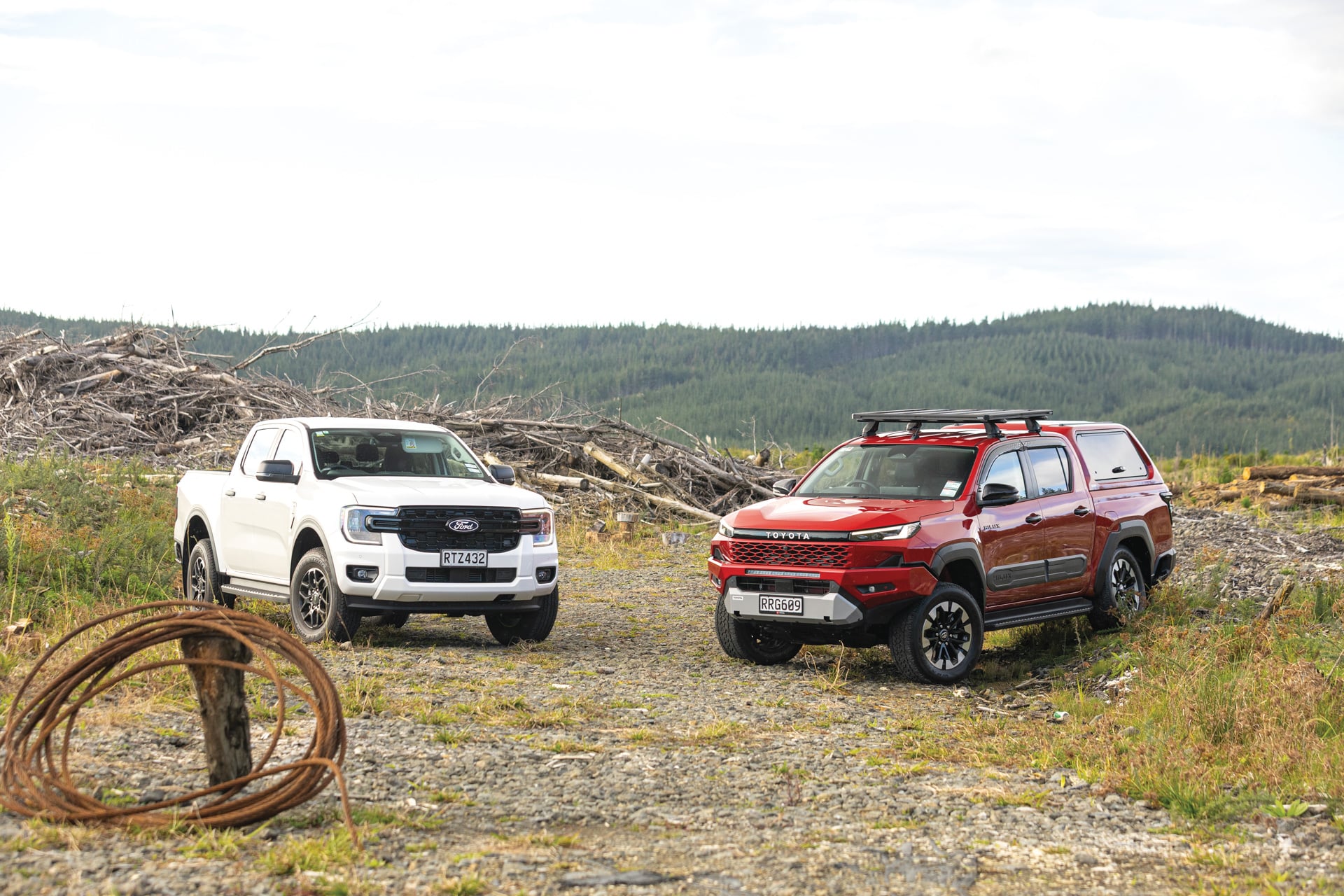
2026 Ford Ranger XLT 2.0 4×2 vs Toyota Hilux SR5 limited Review
Words: Kyle Cassidy | Photos: Alex Schultz
Hilux and Ranger have been at it for the past decade, duking it out for supremacy in the commercial sector. Hilux has been given a renewal while Ranger has had yet another update. So what does it all mean for the race to number one?
There are plenty of new ute nameplates in the market, yet two models still completely dominate. The combined sales of Ranger and Hilux account for 43 per cent of the commercial market so far this year. For every GWM Cannon sold, Toyota sells 10 Hilux. And for every Tasman Kia has sold, Ford has managed to move 17 Rangers.
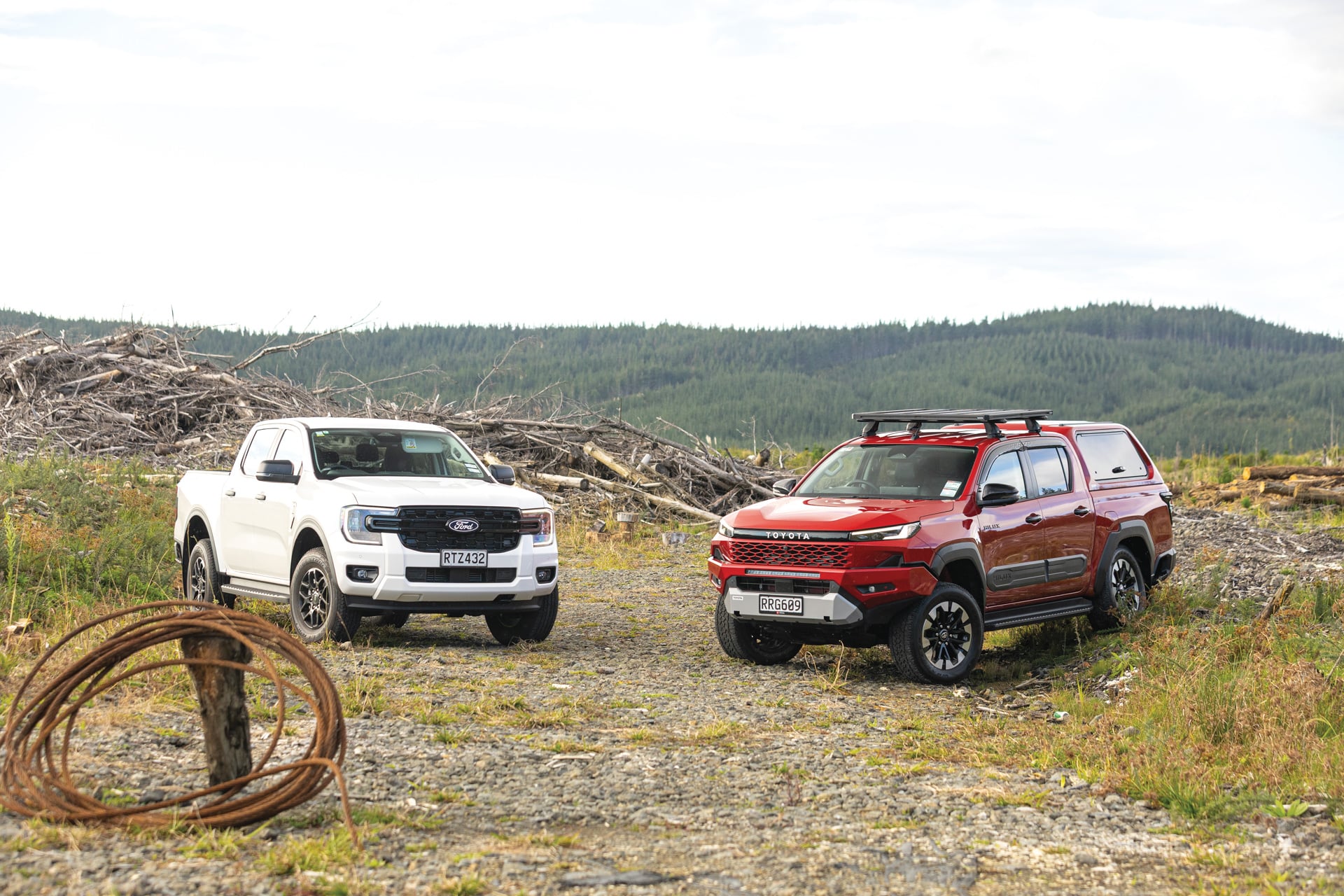
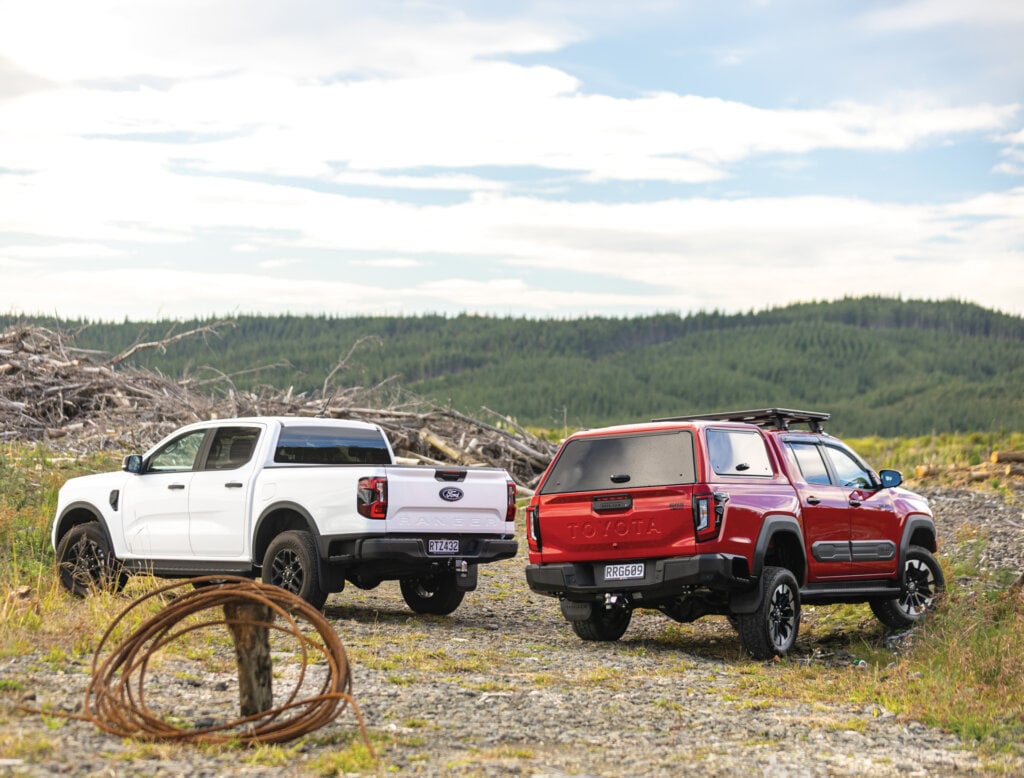
Hilux has just enjoyed a rare generational change, while Ranger has undergone another mid-cycle update. Here we have the SR5 Limited 4×4, while the Ranger XLT we have is rear-drive variant. So not a like-for-like comparison, but it gives you an idea of where the two are at in this latest round of their constant duel.
The ninth Hilux
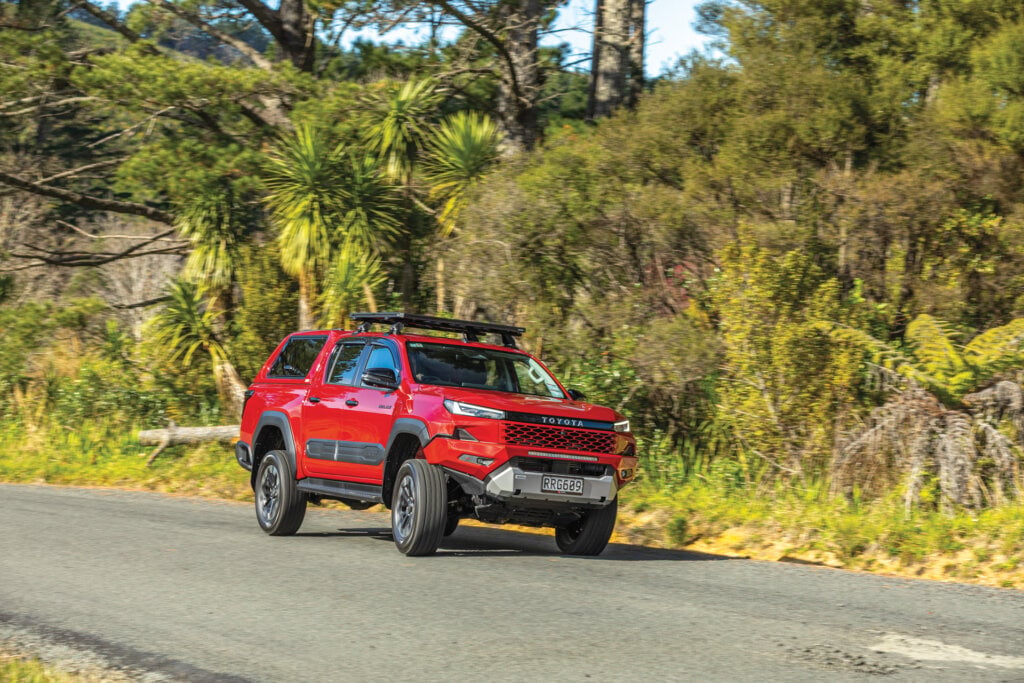
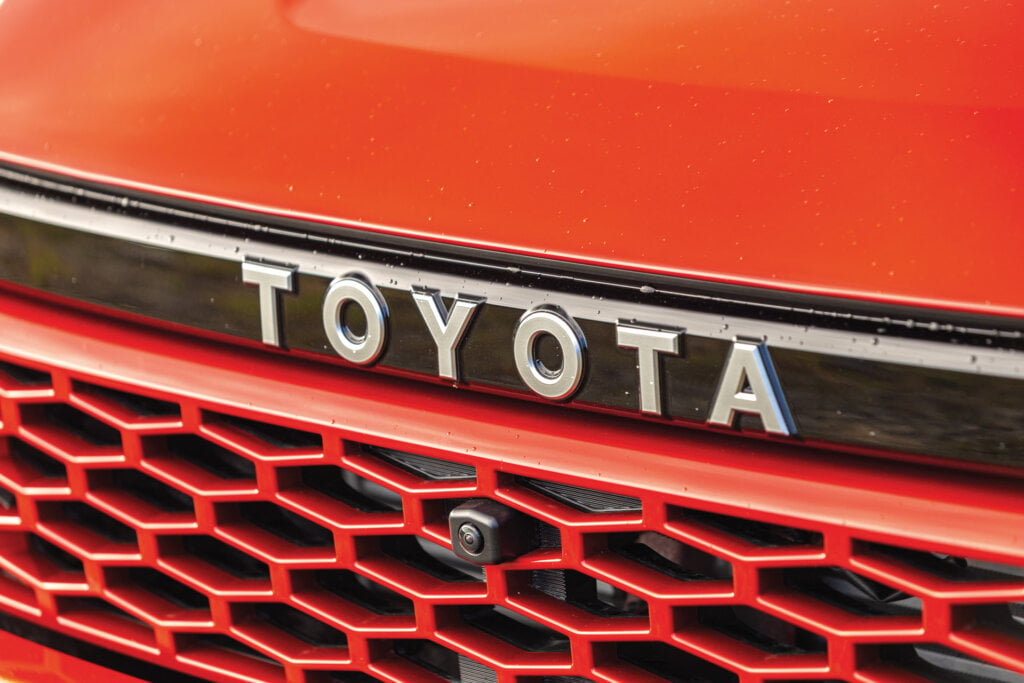
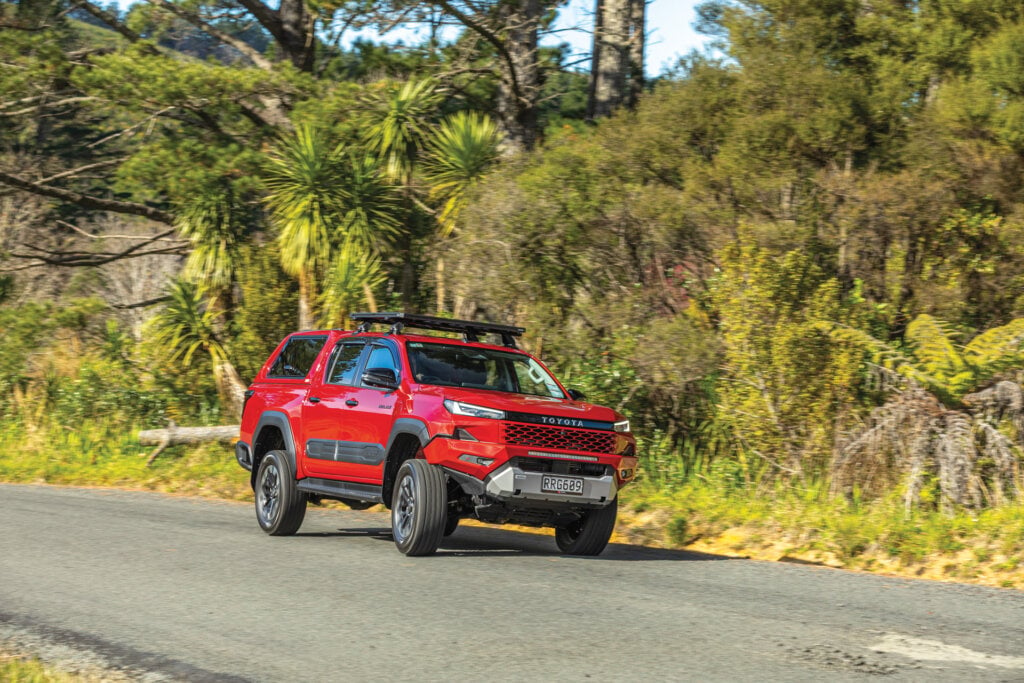
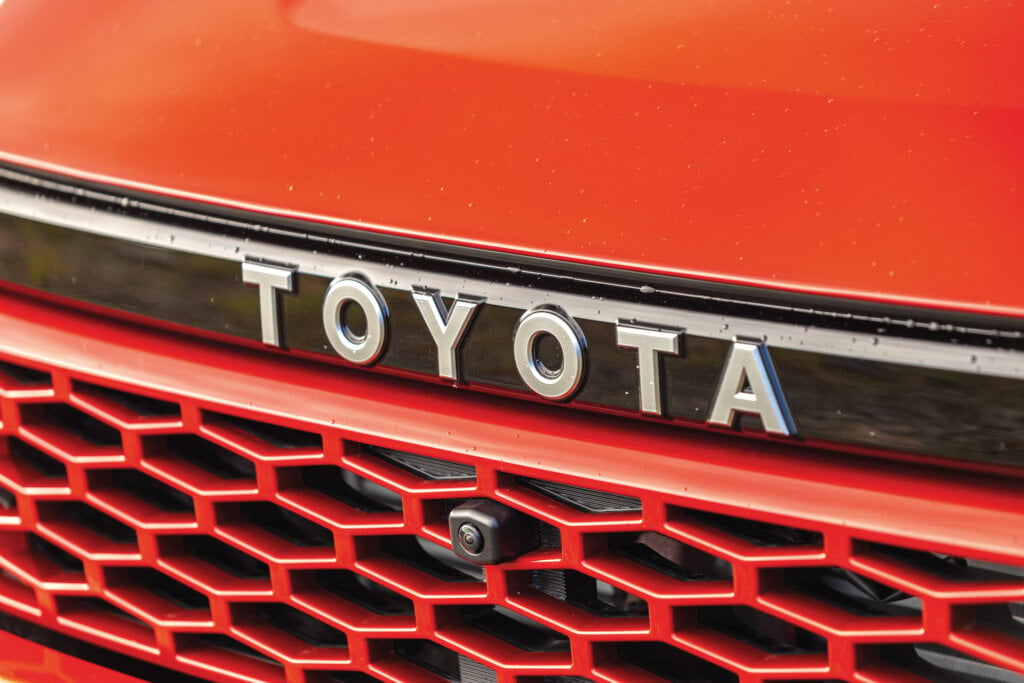
Toyota is a believer in continuous improvement, and the ‘new’ Hilux is testament to that. While they are calling it a new generation, there’s still plenty of the previous model left in this ninth gen offering. As we’ve covered off the update before, here’s a quick recap; there’s a new look but Hilux rides on the same chassis. On the outside, the cab, doors, roof, and glasshouse are all the same, and the overall footprint is similar. The wheel arches have been reshaped and the rear bumper now incorporates a step. The cabin has had a thorough refresh with a heavy Prado influence. The ‘1GD’ 150kW/500Nm 2.8-litre four-pot turbodiesel carries over, complete with its 48v mild-hybrid assistance, as does the six-speed auto. A manual is available in select trims and makes do with 420Nm.
New is an electric power steering set-up, while there are improved engine and cabin mounts for refinement, extra reinforcing for crash protection along with revisions to the front cross member. The suspension set up retains the usual leaf-sprung solid axle at the rear, though Toyota has introduced a more comfort oriented tune for higher grade models with different spring rates for an improved, unladen ride quality.
Although it’s a rehash of the old generation, that’s not such a bad thing. It helps keep the price in check, this SR5 Limited 4×4 being $62,990, while they’ve added a few features and improved the things they needed to. And it still does what a ute needs to; tow (3500kg), haul (940kg payload) and go places (4×4 with low range and a locking rear diff) in relative safety (five star crash rated). There are 15 variants including electric models, although there are no longer any 4×2 models or low riders.
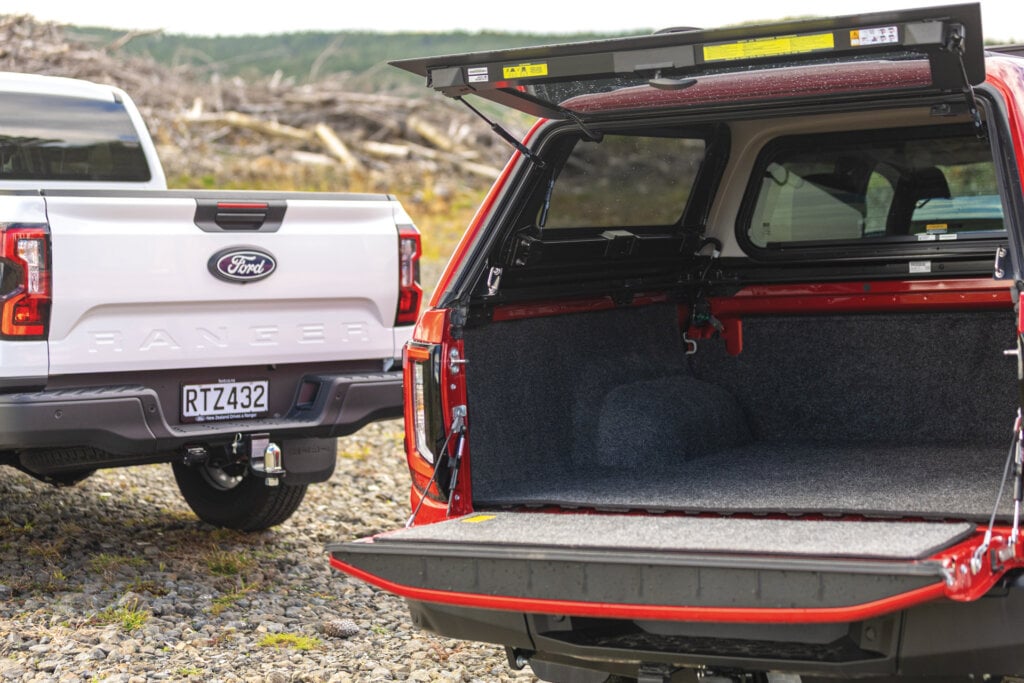
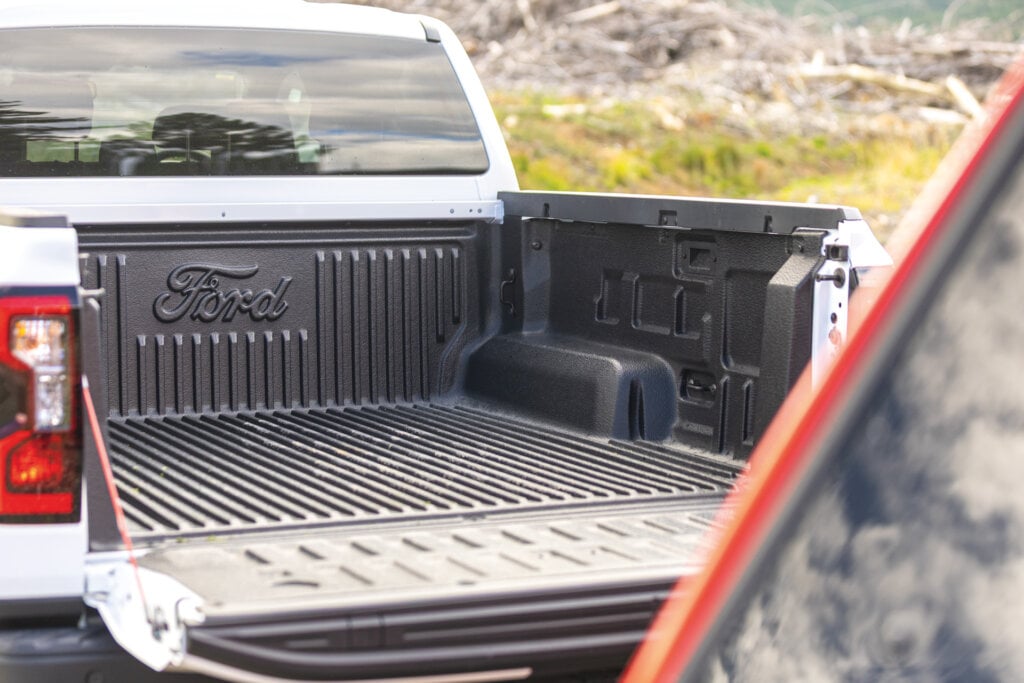
Meanwhile Ranger has had another update, they’re calling this the MY2026.50. There have been a few minor cosmetic updates, some spec changes, and new variants added but the major change relates to the engine line-up. The 2.0-litre bi-turbo is gone, replaced by a single turbo unit that is down on output but hopefully lasts longer and costs less to maintain with its steel timing chain. The move has seen Ford offer the 3.0-litre V6 across all models including XL and XLT for those that want maximum pull. But it’s expensive, the XLT 3.0 asking $72k. Meanwhile the 2.0-litre is available on four XL models, on XLT in both 4×2 (featured at $55,990, and the lone RWD model in the line-up) and 4×4 guise ($65,990) and an option for Wildtrak buyers ($75,490). In total there are now 22 Ranger options.
Spruced up inside
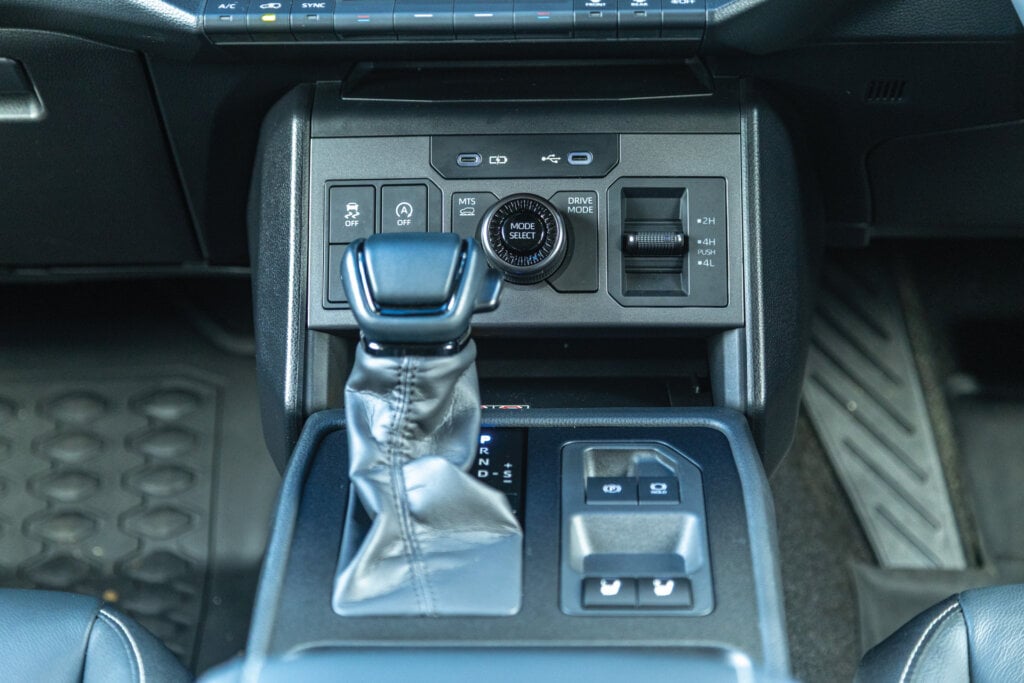
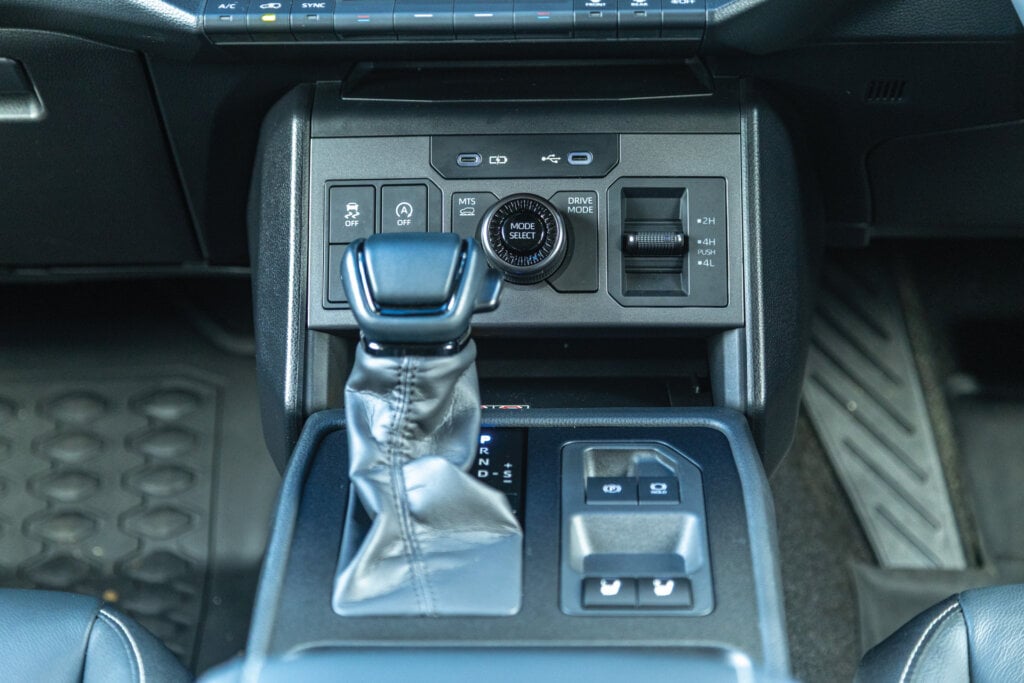
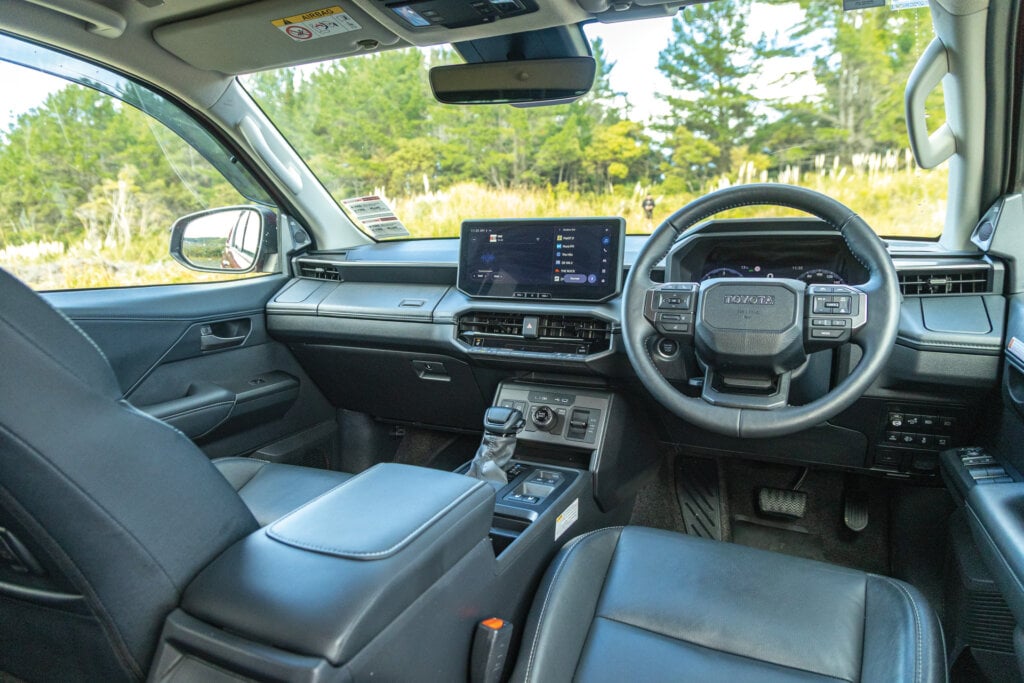
While the Hilux’s exterior styling has not been met with universal admiration (I don’t mind it), the interior has had a welcome boost. It’s still the same architecture underneath, but they have significantly upgraded the fit out. Hilux adopts a digital dash with a few different view options, there’s a 12.3-inch touchscreen with new software, wireless CarPlay and Android Auto, sat nav and voice control. You’ve still got a row of buttons for the ventilation and off road functions. Our favourite activates the heated steering wheel. The big chunky drive mode selector is a bit overdone, but easy to use on the go.
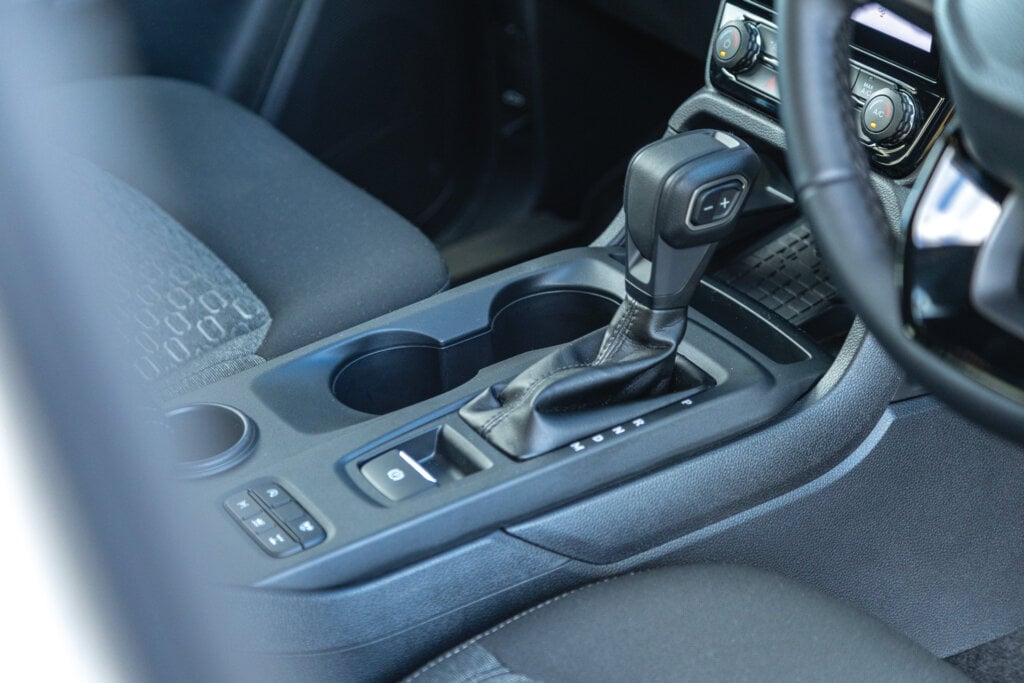
As is the conventional gear shifter, while the electric parking brake is a nice addition too. Along with its Prado-esque wheel and a few more soft surfaces, it feels like a genuine upgrade. Storage has improved and there are more places to secure a beverage. The seats get a pass mark, lined in leather in the SR5 Limited, heated and powered too, while there’s enough adjustment at the wheel to get comfy.
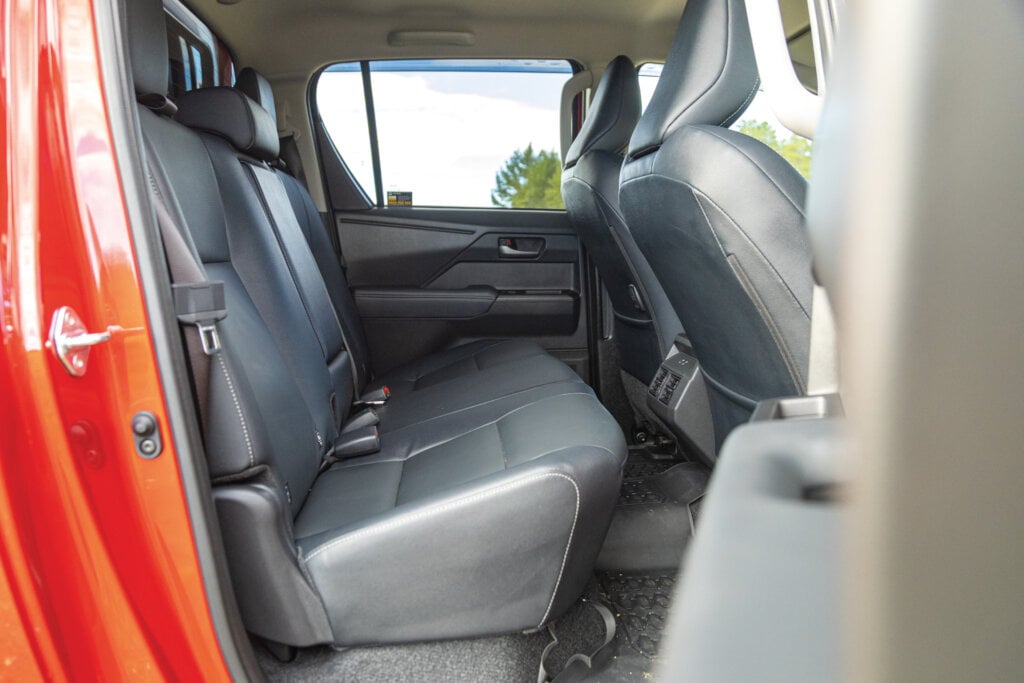
While there’s not oodles of space in the back, there’s a comfy bench, with just enough of a recline to the seat back.
The Ranger has only a minor interior update in the form of a larger screen, and this XLT grade has a more utilitarian fit out for the money, with more hard surfaces around and cloth trimmed, manually adjusted seats. While you get a surround view camera in the Hilux there’s just a reversing image for the XLT. But like Hilux you get a charge pad, smart key and reversing sensors.
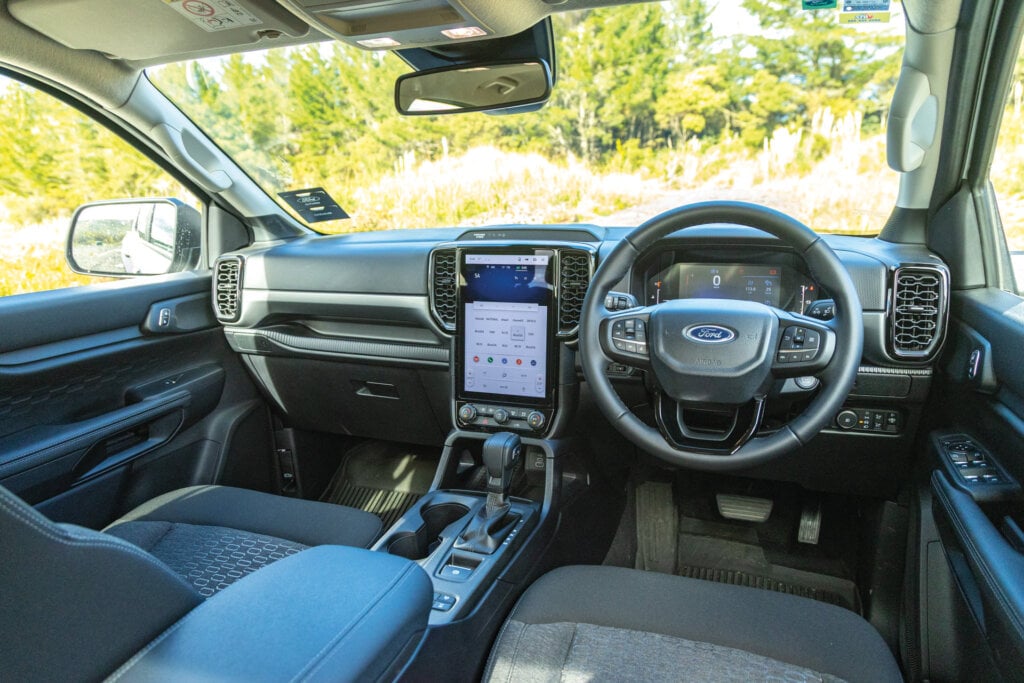
While we said the XLT was all the truck you’d ever need when it launched a few years ago, you miss a few of the niceties the SR5 Limited offers for similar money (or less when comparing 4×4 models).
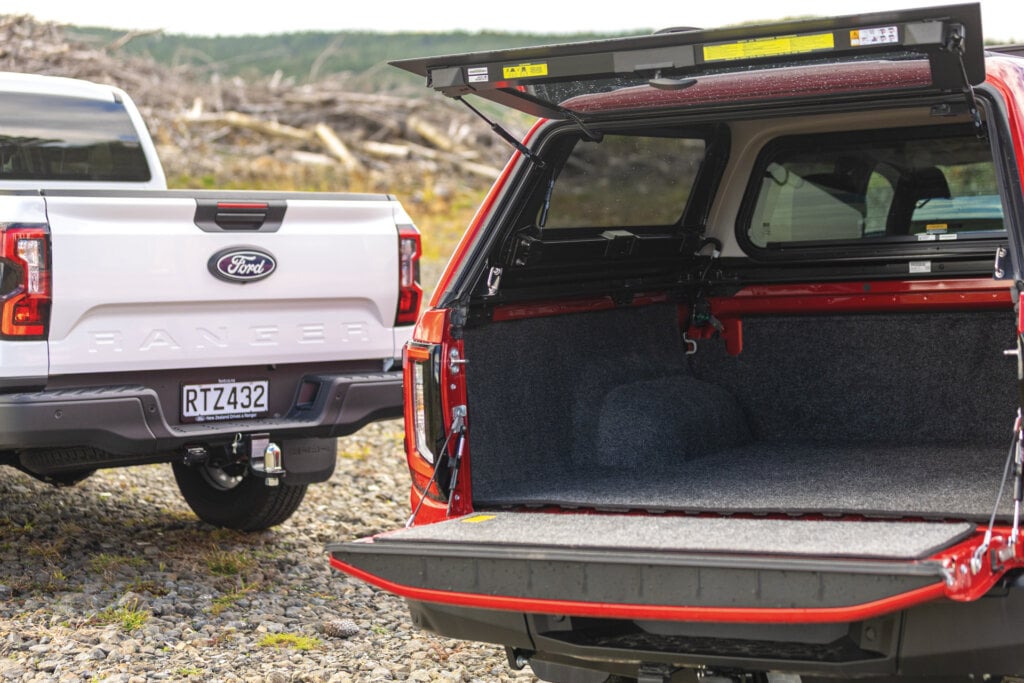
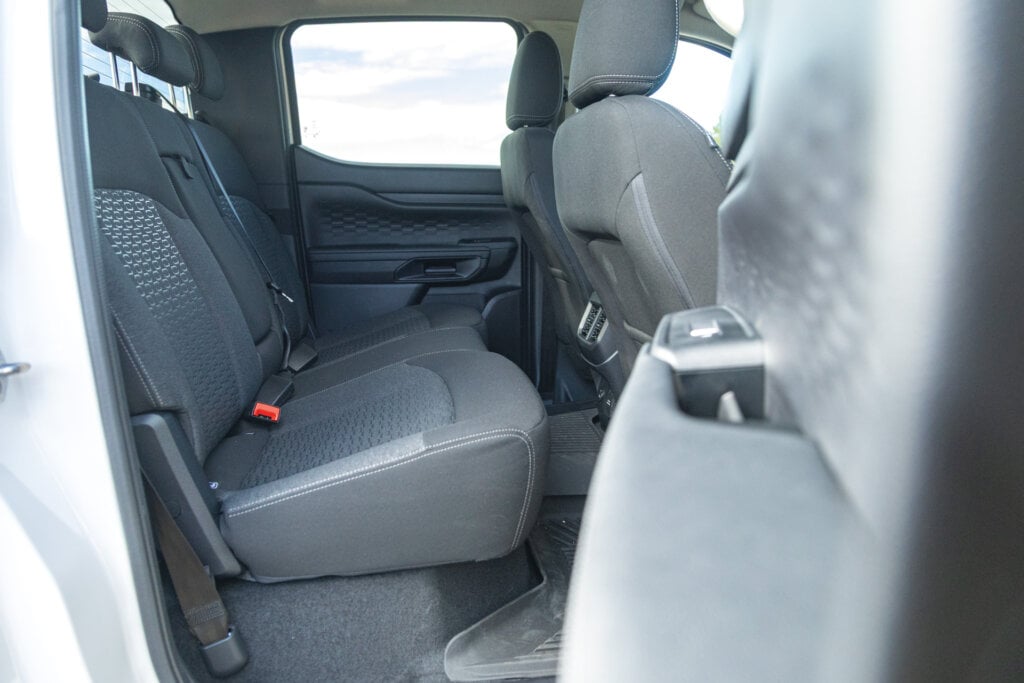
There’s a smidge more leg room in the back of Ranger, while further out back there’s not much between them when it comes to tray dimensions, the Hilux a little wider. The Ranger comes with a liner as standard and a tow bar (both accessories on Hilux).
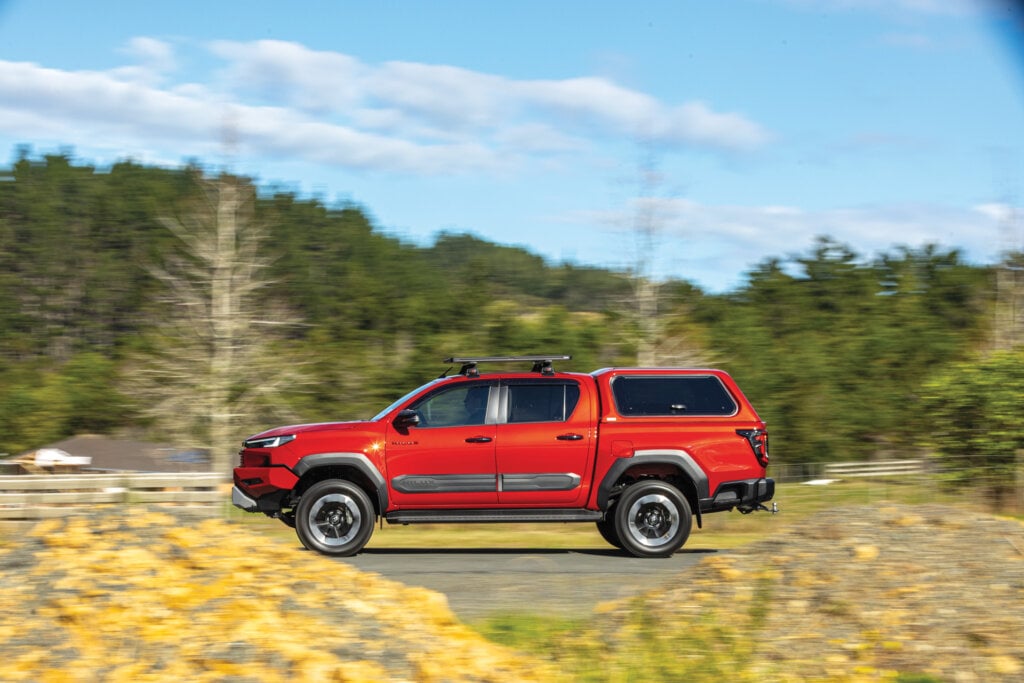
This Hilux is sporting a few genuine Toyota accessories. The steel bumper is well-integrated, improving that approach angle, but also adding weight to the nose. The large roof platform makes securing things easier but there’s noticeable wind noise at speed. The canopy is a slick number, with its three doors opening and closing easily, and all locking via the key fob. And inside, it’s cosy with a bed rug liner. All these bits can be ordered and fitted by Toyota so your rig is ready to go from the dealership.
What about that 2.0?
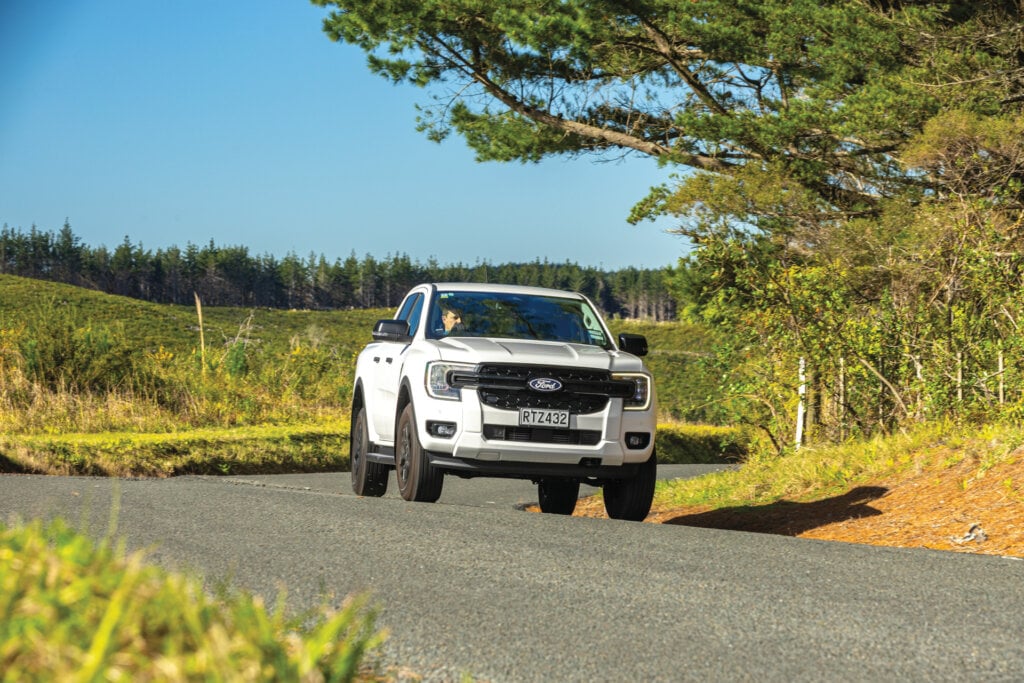
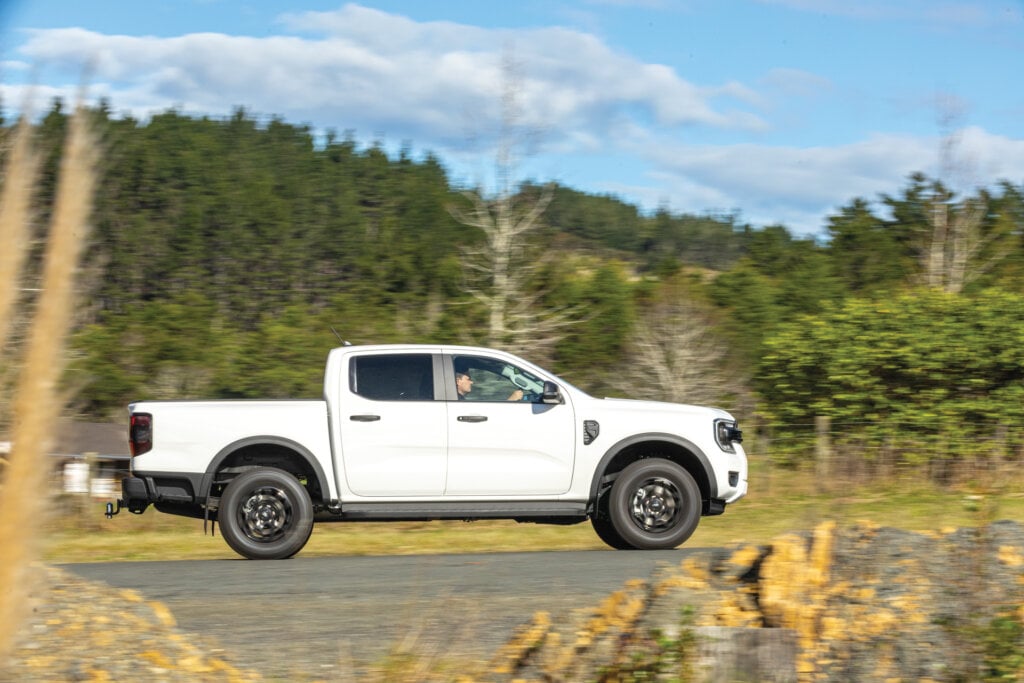
While the 2.0-litre’s output is down from the bi-turbo’s 154kW/500Nm to 125kW and 405Nm, Ford says it has tuned this single turbo unit for maximum response and calibrated the ten-speed auto to make the most of its output. And it’s whipped along well by the trans, its protocols quick-witted and the changes slick. Does it feel underdone? Compared with the Hilux, the midrange hasn’t the same authority, most noticeable when going for the overtake or hauling up a hill. Against the clock it managed 100km/h in 10.9s, slower than the 9.2s we registered in the old bi-turbo XLT, which was a heavier 4×4 model too. The lack of pull is more obvious on the overtake, 80-120km/h taking 9.5s, 2.3s slower than the bi-turbo.
For general tooling around, it’s not so noticeable. The 2.0-litre is quickly on boost, and the auto makes sure it’s always ready to pull. For those that really do use a ute’s full capability, especially those that tow heavier loads regularly, the 3.0-litre is going to serve these owners better.
The Hilux, with its larger 2.8-litre engine, doesn’t suffer much from turbolag either, helped a little by the mild hybrid assistance. Its mid-range pull is meatier, helping it gather momentum more easily (0-100 in 9.8s, the overtake done in 7.8s). The auto feels a little old-fashioned, and not due to its cog count, but rather the protocols. While it shifts smoothly, it’s a little slow to stir things up, though it’s a bit better in Sport mode. You have to be in the manual mode for it to hold gears, which helps. And the 1GD is noisy, the Ford’s 2.0-litre more refined with fewer vibrations and is quieter both at idle and under the pump.
As to consumption, the 2.0-litre Ranger is rated at 7.9L/100km (rightcar) while we saw 11, the Hilux being thirstier at 13L/100km (8.3L/100km officially) but probably not helped by all the accessories hanging off this one.
Hilux any better?
Toyota’s move to electric power steering is a boon for everyday driving, turns taken with much less effort required. The turning circle is still truck-like however. The steering gets a little vague at higher speeds; there’s not quite the same sense for what the wheels are up to. But otherwise the overall grip and stability of the Hilux is sound. The front end of this Hilux felt slightly corrupted with the non-standard steel bumper hanging off the front end, bumping around more than usual. Although it didn’t affect the front-end grip, Hilux resistant to excessive push. We suspect some targeted brake inputs help the cause. No problem with the rear end either, which felt rather compliant. Guess that’s the tweaked suspension then. Generally speaking, the ride quality in both is good for the sector, comfortable enough at all speeds and on varying surfaces.
The Ranger still steers well, with more clarity to its action than Hilux, its rear as compliant as the Toyota’s though the front doesn’t quite hold on as tough, narrower tyres perhaps influencing that.
Both have just the right amount of safety items with speed recognition that doesn’t sound off, no driver monitors to annoy you and lane keeping systems that are generally well-behaved. Both have active cruise control with lane centring too.
As the XLT 2.0 in 4×4 guise asks $65,990, the SR5 Ltd at $62,990, is the better buy. You can always twist the Ford dealer’s arm on pricing, whereas Toyota is firm, but includes all on road costs, even a tank of fuel, and floor mats. For those willing to spend more, the 3.0-litre Rangers like Tremor and Wildtrak are another level again.
Ford Ranger XLT 2.0 4×2
$55,990 / 7.9L/100km / 207g/km
0-100 km/h 10.91s
80-120 km/h 9.51s (284m)
100-0 km/h 37.9m
Speedo error 98 at an indicated 100km/h
Ambient cabin noise 71.9dB@100km/h
Engine 1996cc / IL4 / TDI
Max power 125kW@3500rpm
Max torque 405Nm@1750-2500rpm
Drivetrain 10-speed auto / RWD
Front suspension Wishbones / sway bar
Rear suspension Solid axle / leaf springs
Turning circle 12.9m (3.25 turns)
Front brakes Ventilated discs
Rear brakes Discs
Stability systems ABS, ESP
Safety AEB, ACC, BSM, LDW, RCTA, ALK, AHB
Tyre size f/r-255/70R17
Wheelbase 3270mm
L/W/H 5406 / 1980 / 1886mm
Track f-1620mm r-1620mm
Fuel capacity 80L
Payload 1005kg
Tow rating 750kg (3500kg braked)
Service intervals 12 months / 15,000km
Servicing Capped at $499
Warranty 5yrs / 150,000km
ANCAP rating ★★★★★ (2022)
Weight (claimed) 2295kg
Toyota Hilux SR5 Limited 4×4
$62,990 / 8.3L/100km / 220g/km
0-100 km/h 9.85s
80-120 km/h 7.80s (216m)
100-0 km/h 36.8m
Speedo error 97 at an indicated 100km/h
Ambient cabin noise 73.0dB@100km/h
Engine 2755cc / IL4 / TDI
Max power 150kW@3000-3400rpm
Max torque 500Nm@1600-2800rpm
Drivetrain 6-speed auto / switchable 4×4
Front suspension Wishbones / swaybar
Rear suspension Solid axle / leaf springs
Turning circle 12.6m (3.5 turns)
Front brakes Ventilated discs
Rear brakes Ventilated discs
Stability systems ABS, ESP
Safety AEB, ACC, BSM, LDW, RCTA, ALK, AHB
Tyre size f/r-265/60R18
Wheelbase 3090mm
L/W/H 5325 / 1885 / 1815mm
Track f-1535mm r-1550mm
Fuel capacity 80L
Payload 940kg
Tow rating 750kg (3500kg braked)
Service intervals 12 months / 15,000km
Servicing Capped at $465
Warranty 5yrs / 150,000km
ANCAP rating ★★★★★ (2025)
Weight (claimed) 2180kg