View all
9 more images
2026 GAC M8 Master Luxury Review
Words: Richard Edwards | Photos: Alex Schultz
Kiwis have never warmed to the MPV the way America, China and even Australia have, and that is a shame. For family life they make far more sense than an SUV. You get a big, comfortable cabin you can fill with kids, grandparents, dogs and luggage, and they ride beautifully. The problem here has always been choice. Until now it has been a used-import Toyota Alphard, a Kia Carnival, or a pricey European van, with parallel-imported Alphards climbing past $130,000.
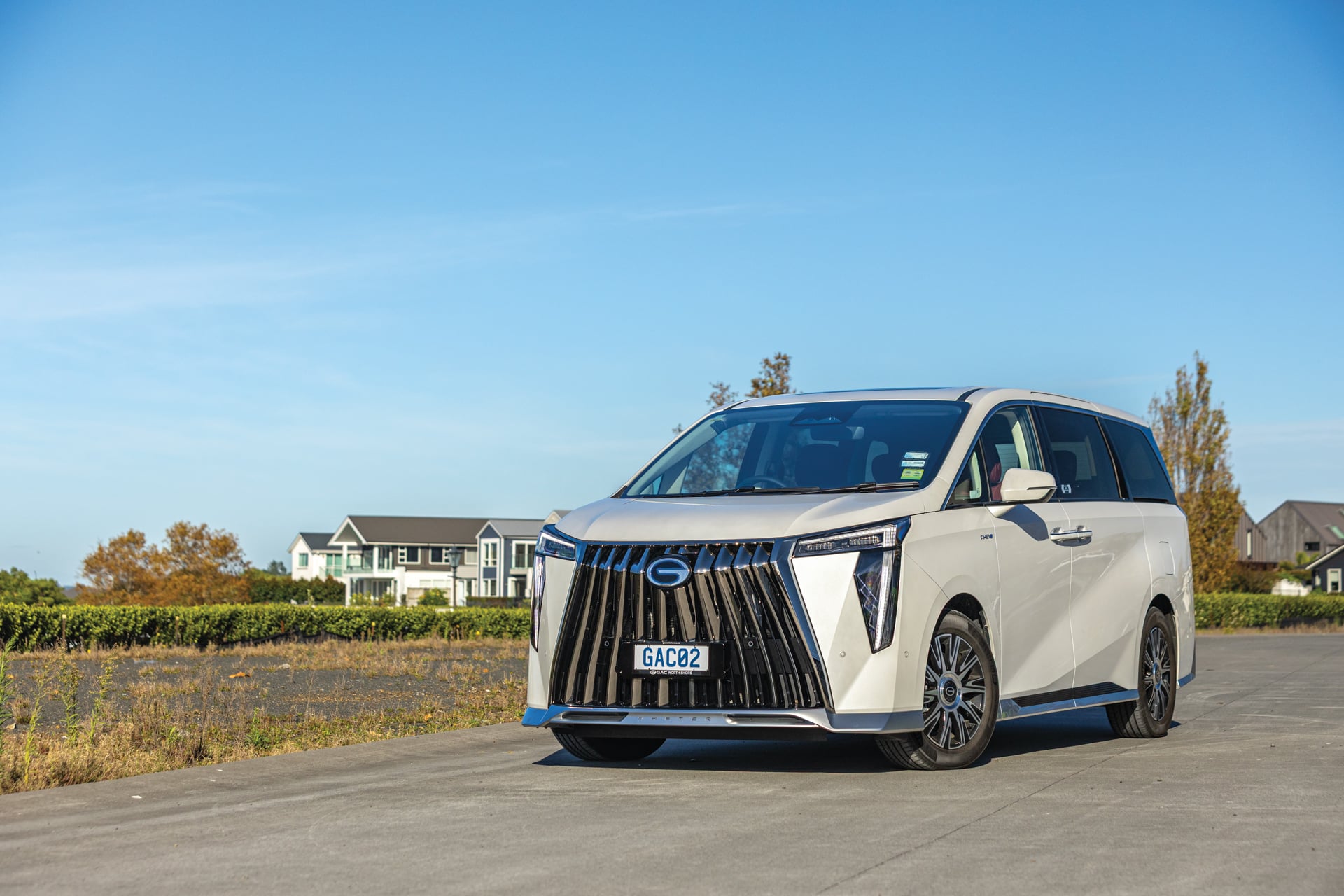
GAC, the Chinese giant that partners with Toyota to build cars in China, has just changed that maths. Its M8, badged Master in a nod to the boss who usually rides in the back of one in China, arrives as a properly premium seven-seater at a price that undercuts the lot.
Two grades are offered. The Premium opens at $85,990 and the Luxury at $89,990, and honestly there is not a lot between them, so you may as well take the flagship. Early buyers get $1000 off and a 7kW home charger thrown in, which matters because the M8 comes only as a plug-in hybrid.
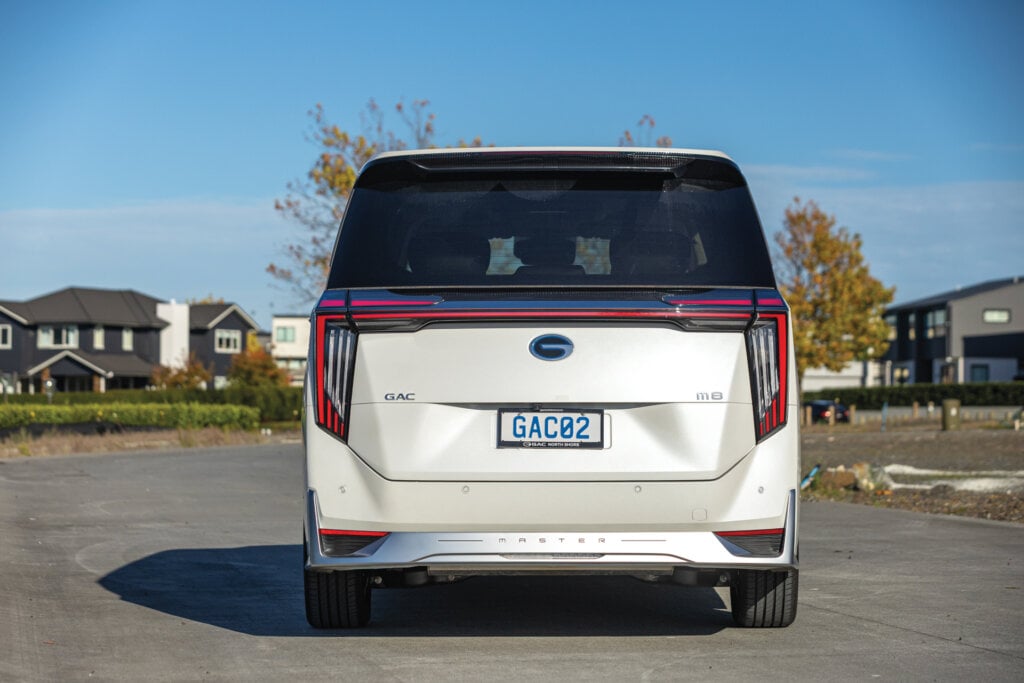
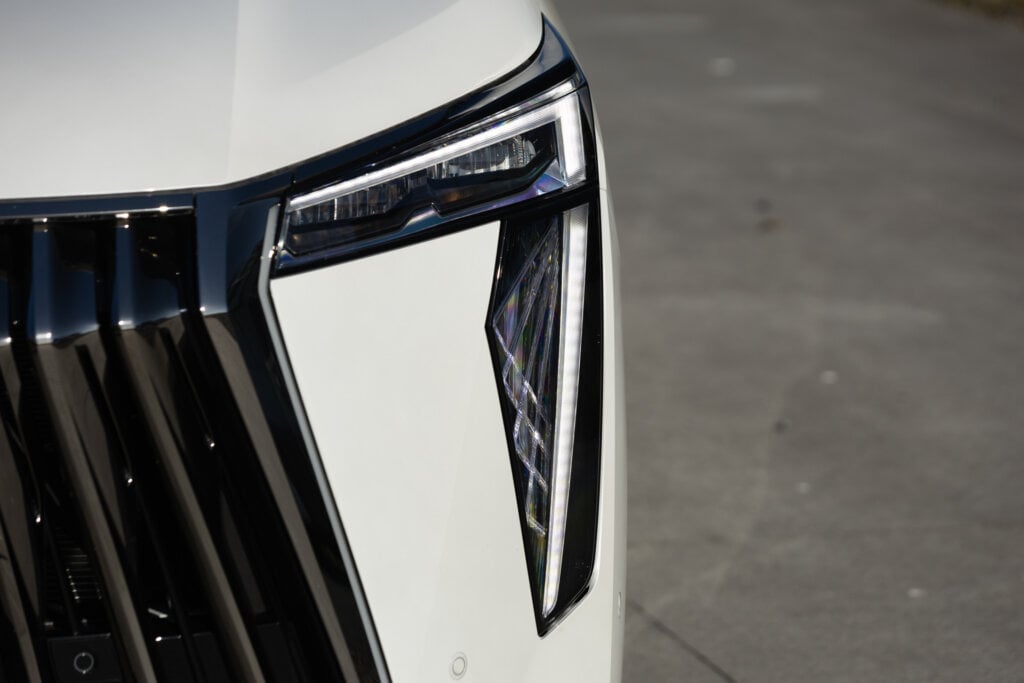
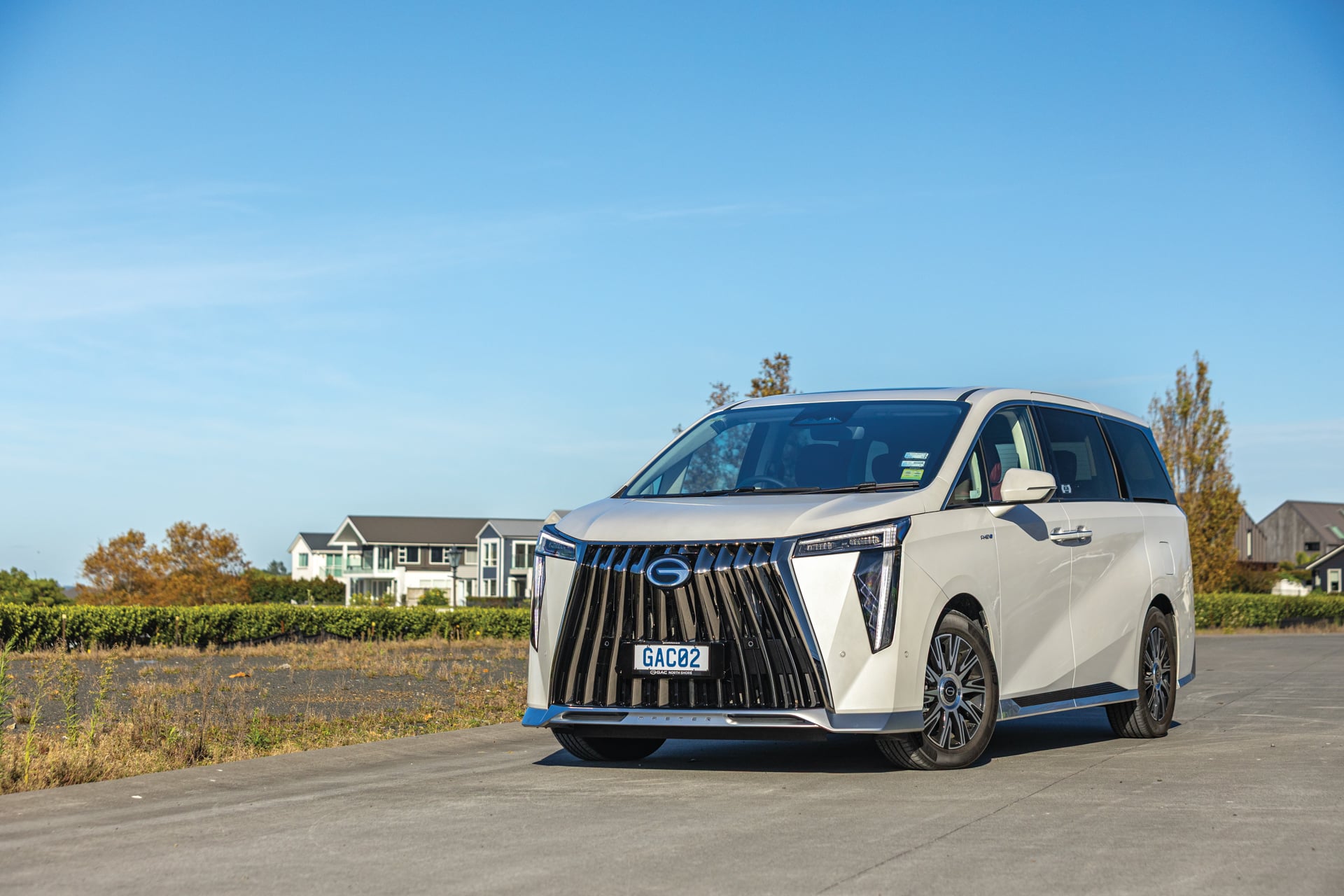
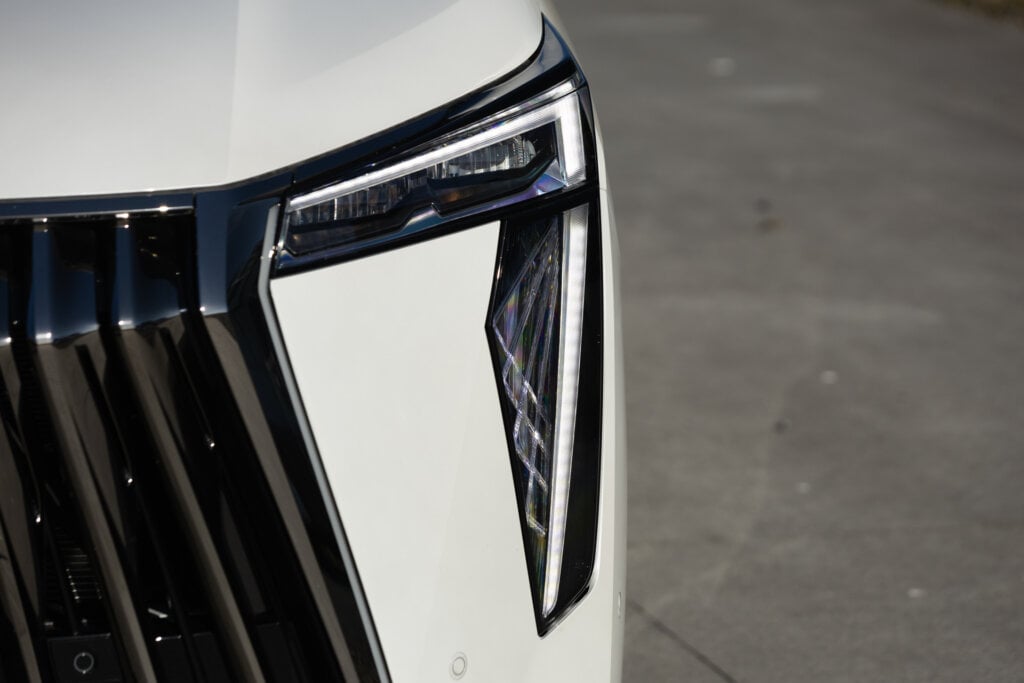
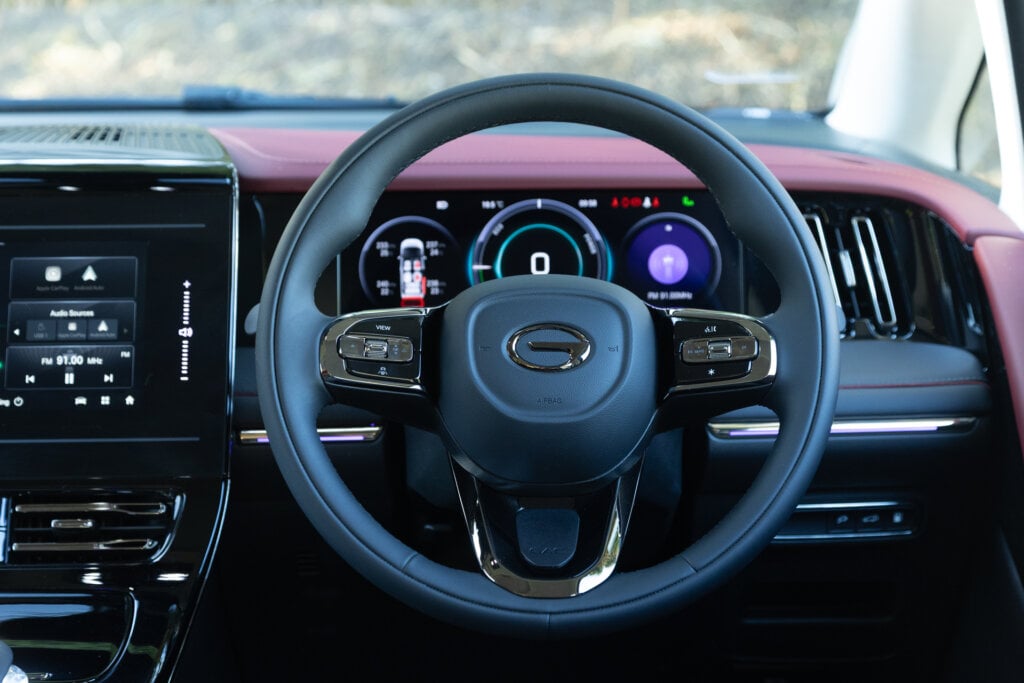
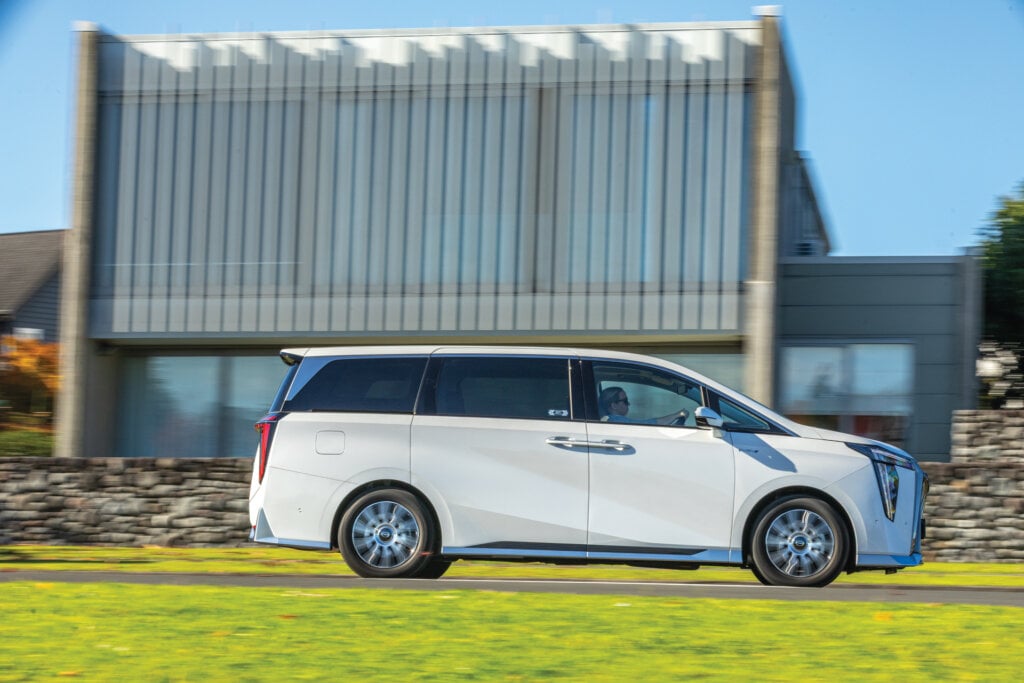
The styling wears its influences openly. From some angles it sits halfway between the current and previous Alphard, and the front end borrows heavily from Lexus, right down to a chrome waterfall grille and slim lights. The GAC badge, says Mrs Edwards, looks straight out of The Incredibles, which I rather like. There is a faintly older, almost classic air to the whole thing, and that is no surprise. The M8 is nearing four years old in China, where the previous generation ran a four-year cycle.
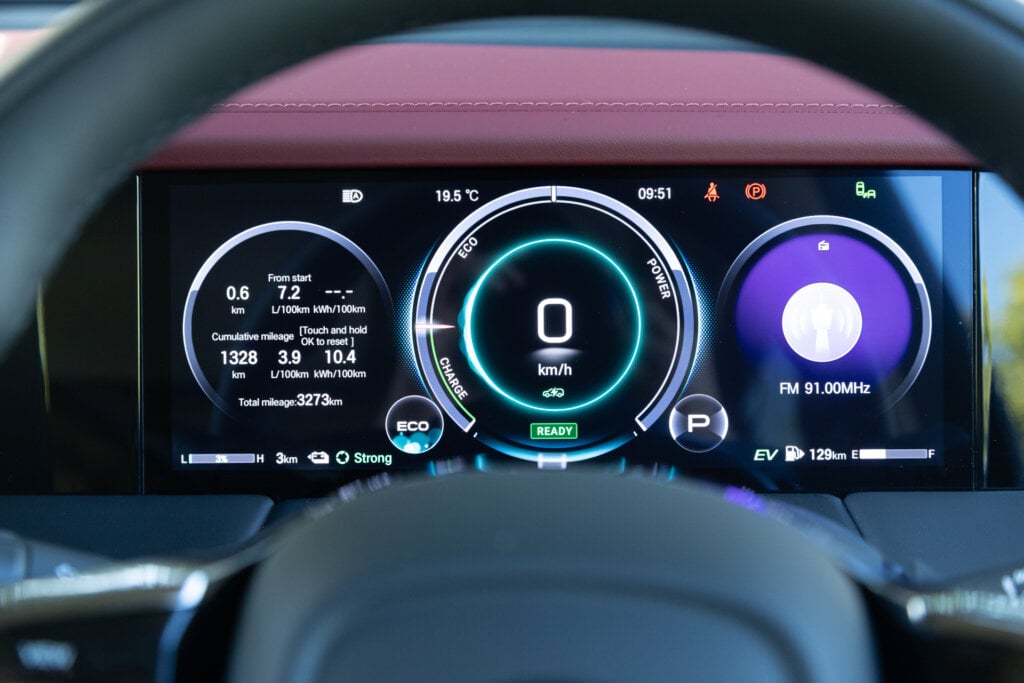
Under the bonnet is a 2.0-litre turbo petrol engine paired with an electric motor. The engine alone manages around 140kW, modest for a turbo two-litre, but the combined system delivers 274kW and plenty of torque. This is a big vehicle so it is not outright fast, but a mid-seven-second 0 to 100km/h is more than enough. GAC claims around 100km of electric range. On open-road running we saw closer to 60km, though in more normal use you can expect maybe 80km, still three or four times the average Auckland commute. On longer motorway runs north of the city we saw 5 to 6 litres per 100km with limited charging, which is genuinely good.
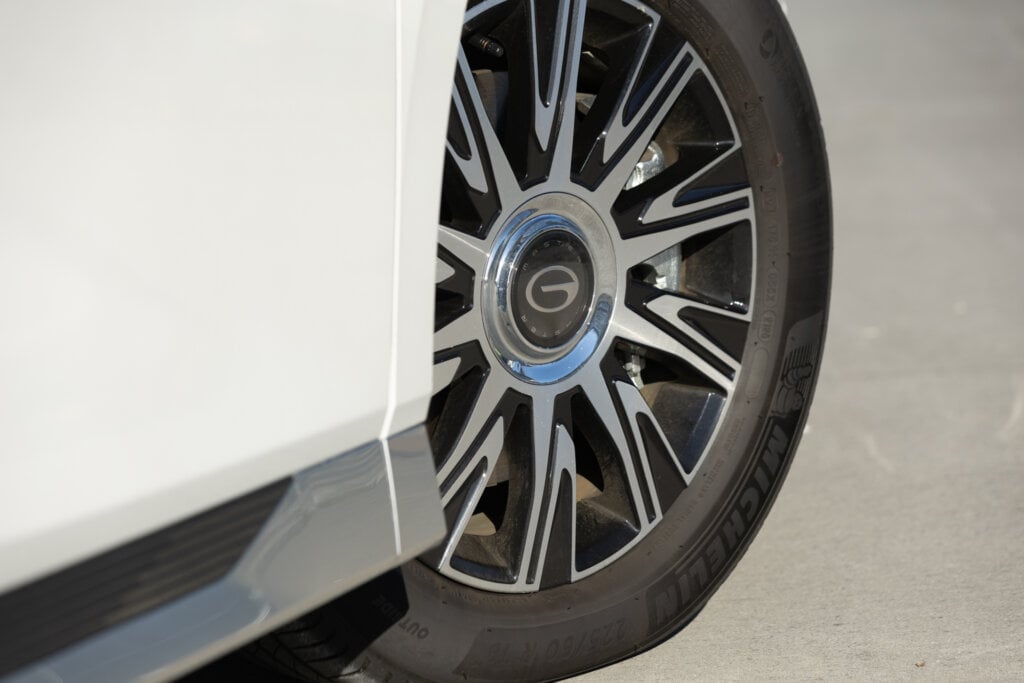
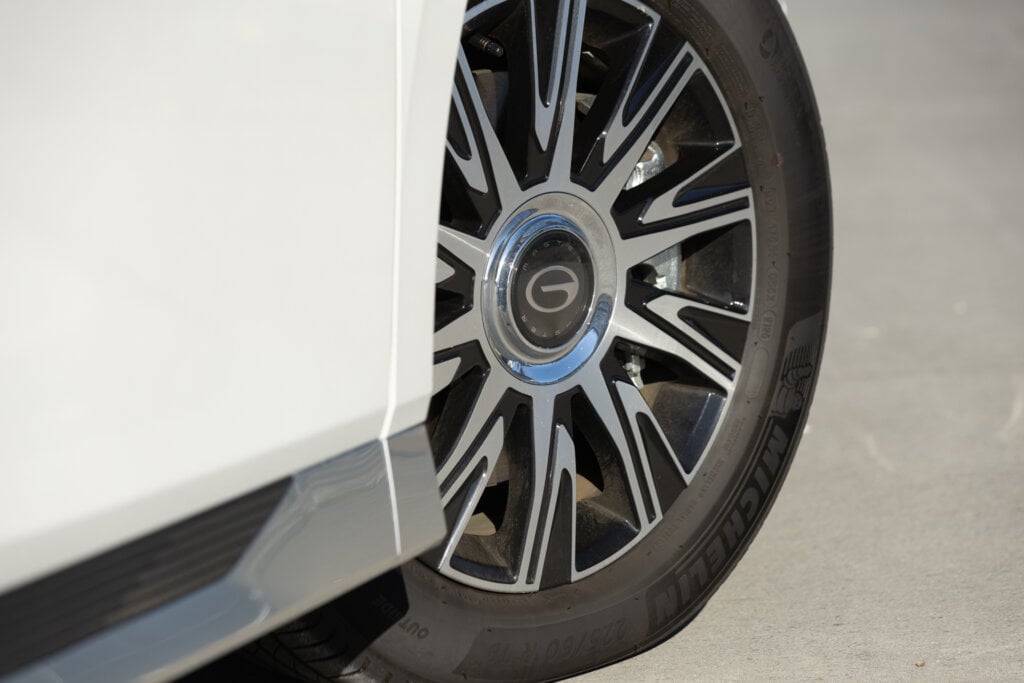
The 18-inch wheels have a neat party trick, with centre caps that stay level, a touch you usually find on a Rolls-Royce. The Luxury adds Michelin acoustic tyres to cut road noise and this is a very quiet, refined car. Charging is 6.6kW on AC, around four and a half hours for the roughly 25kWh battery, and GAC claims 35kW DC, though I saw closer to 40kW. AC at home is the sensible play. The M8 runs vehicle-to-load, though there is no 240V socket inside the cabin.
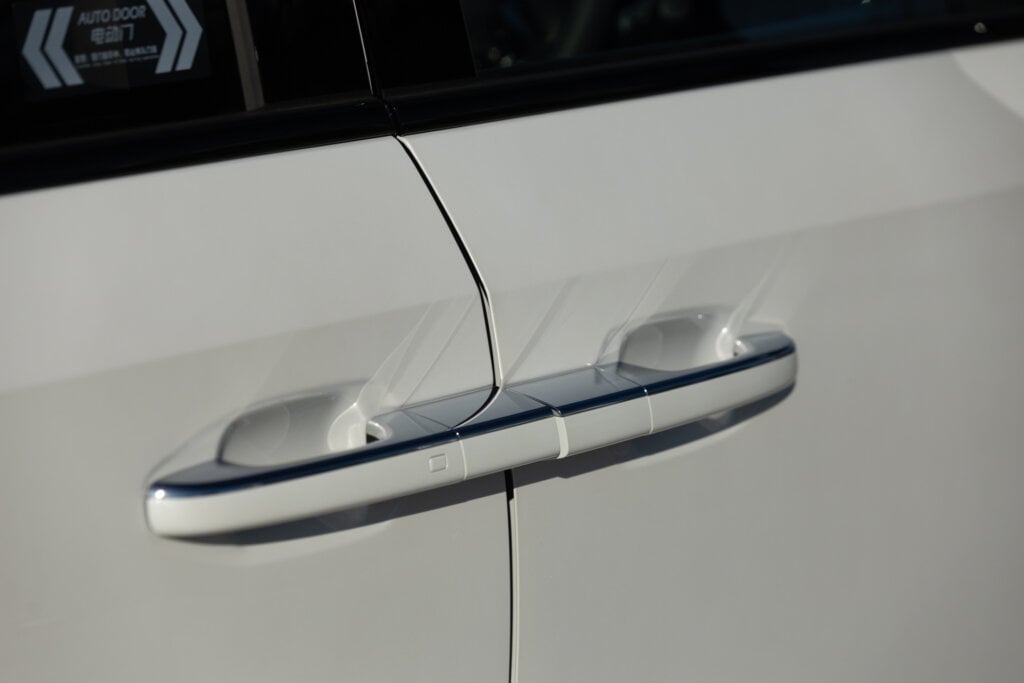
Practicality is where the M8 shines. Power sliding doors operate from both sides, with the release buttons sensibly placed on the rear doors, and there are steps so even grandma climbs up easily. The electric tailgate opens high enough for a six-footer to shelter under, and the third row tumbles, slides and folds, so you can run it as a four-seater with a cavernous boot. There is no tow rating yet, which rules out a loaded trailer for now.
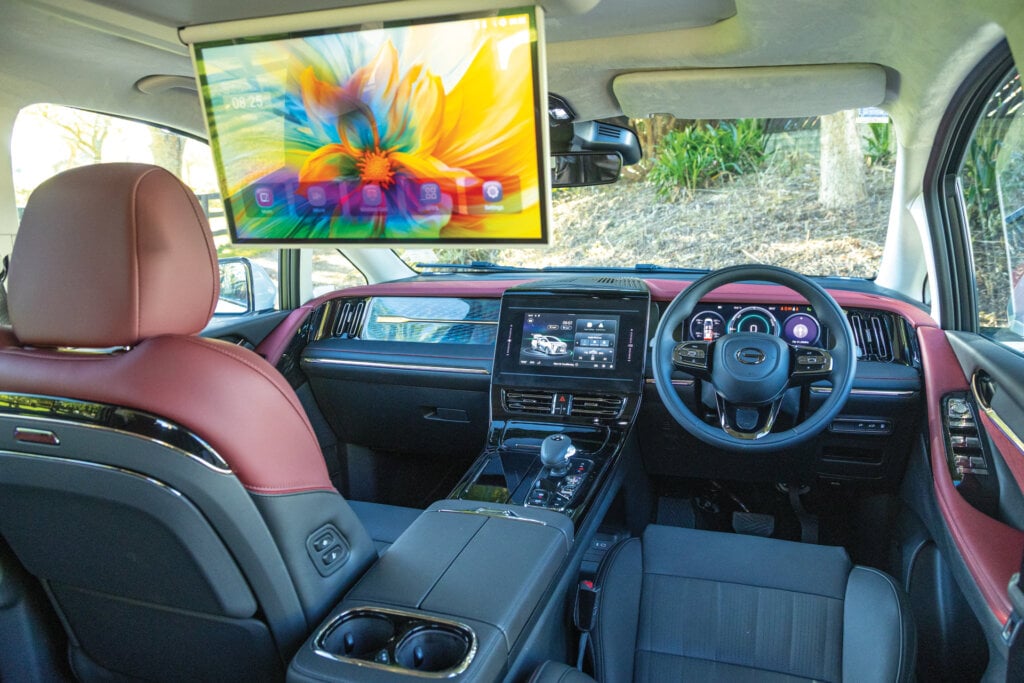
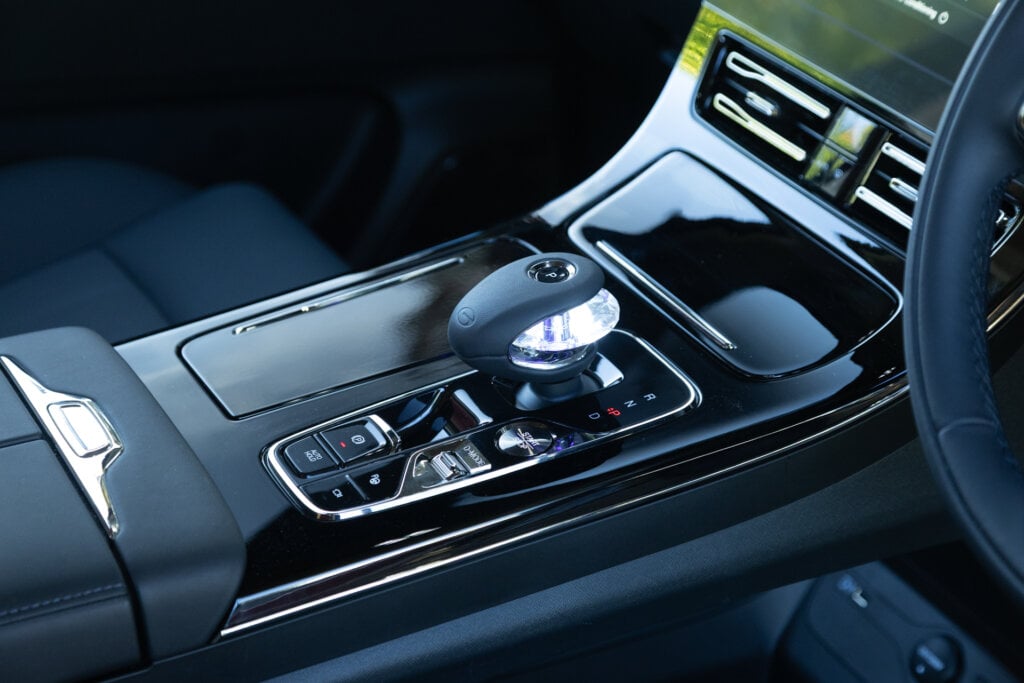
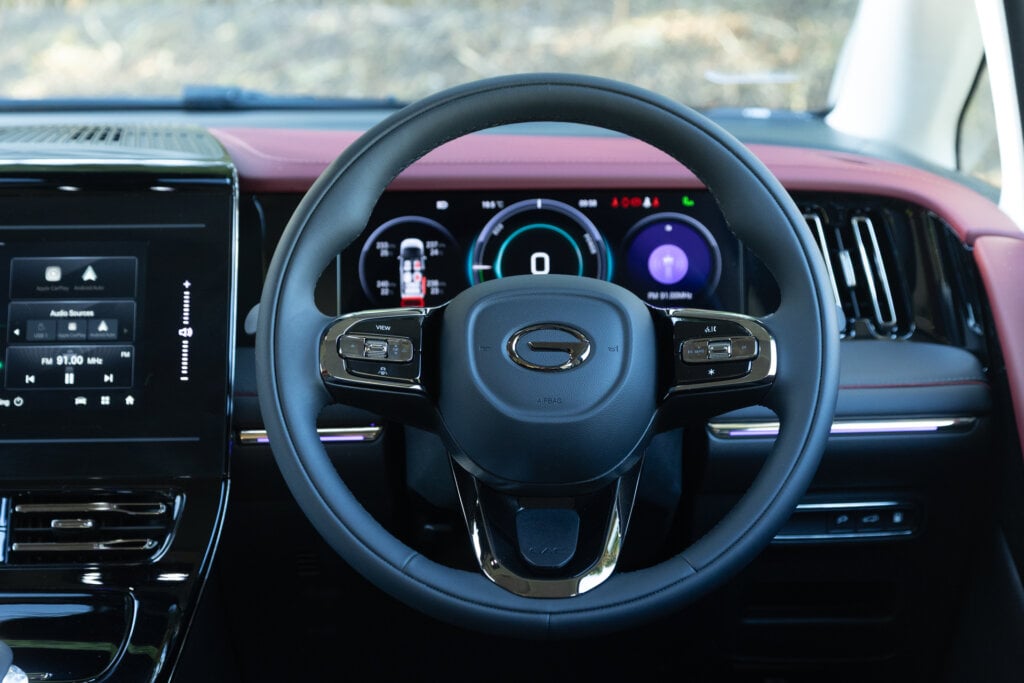
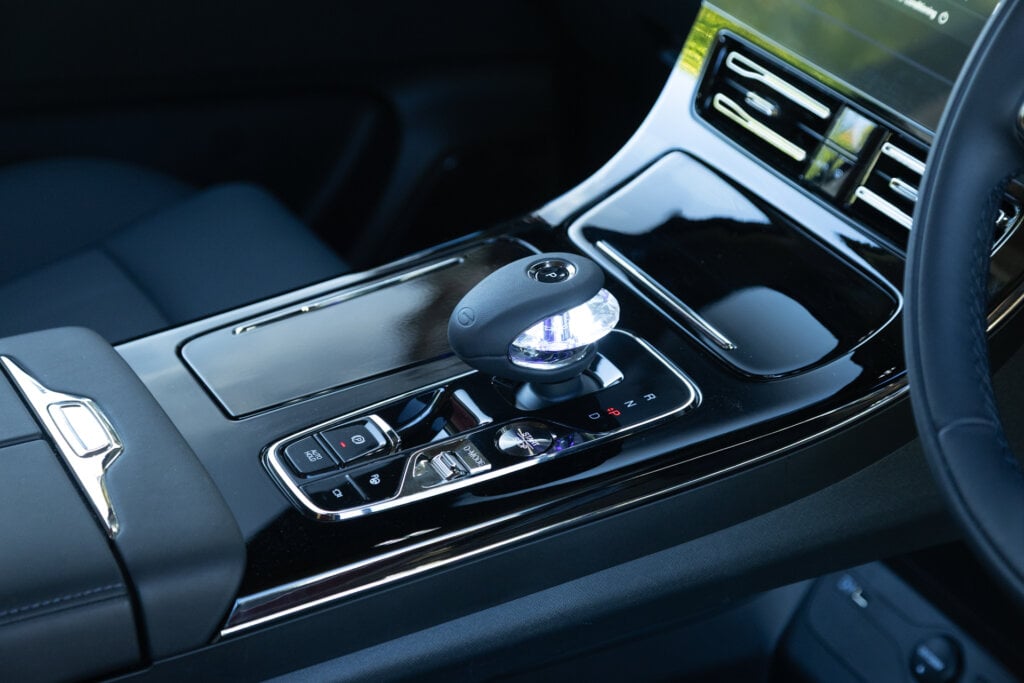
Inside, the quality impresses. Maroon stitched leather, soft-touch surfaces and a heated leather wheel on the Luxury all feel a cut above. There is too much piano black, which is already scratching, and I wish the industry would retire it. The 12-inch central screen is small by Chinese standards but kept refreshingly simple, with Apple CarPlay, Android Auto and proper physical rockers for volume and temperature. A vented wireless charger and crystal-ball shifter add flair. The centre console is tight because a small fridge lives beneath it, accessed awkwardly from the rear, and its layout leaves it near useless for anything beyond a few drink cans or a sandwich.
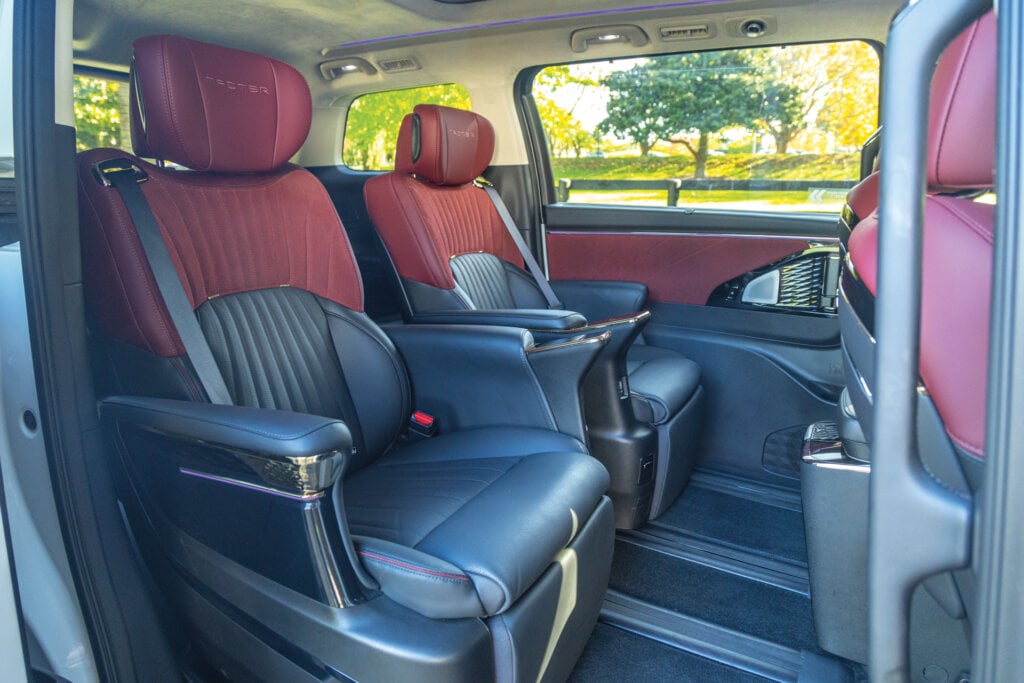
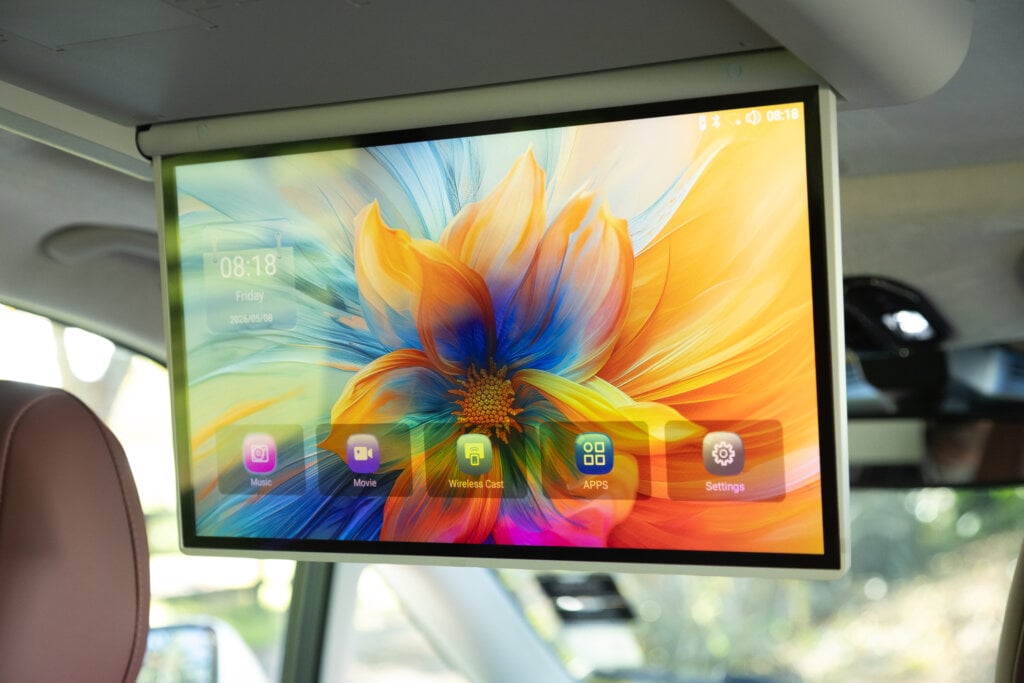
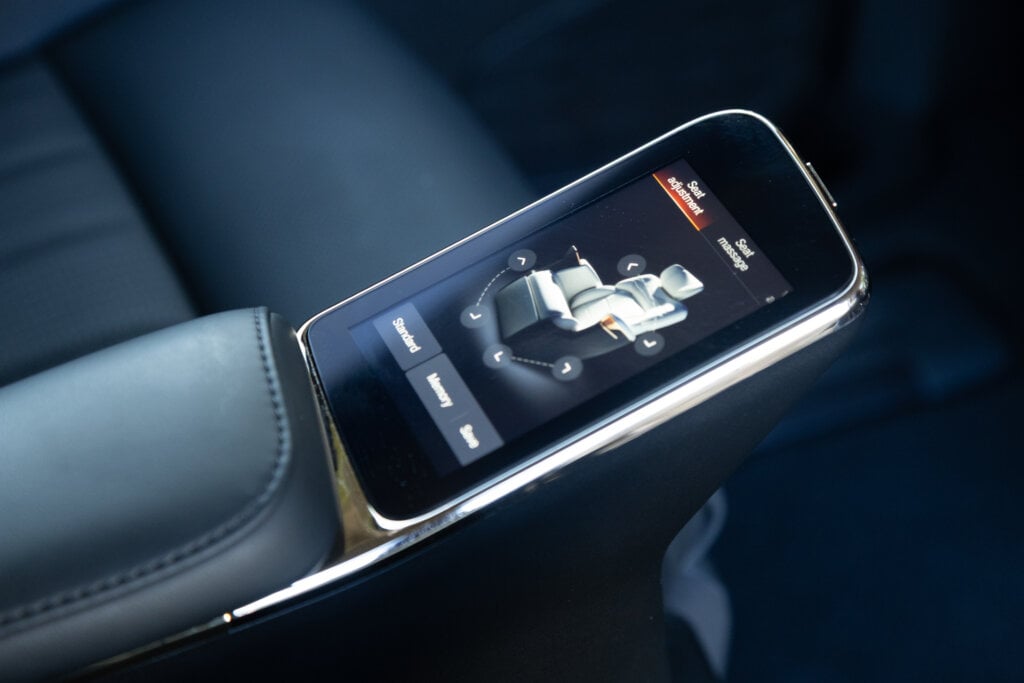
The second row is the star. The captain’s chairs recline, slide, raise a leg rest, heat, cool and massage, and the Luxury adds a one-click spa mode that lays you flat for the full treatment. Ambient light rails and fold-out tables round it out, along with an optional overhead television, not yet activated on this first car. That screen and the fridge come as a single package costing $5,046 plus GST, which is a tough sell. For less than that you could buy every rear passenger their own iPad and still drop a proper portable fridge in the boot.
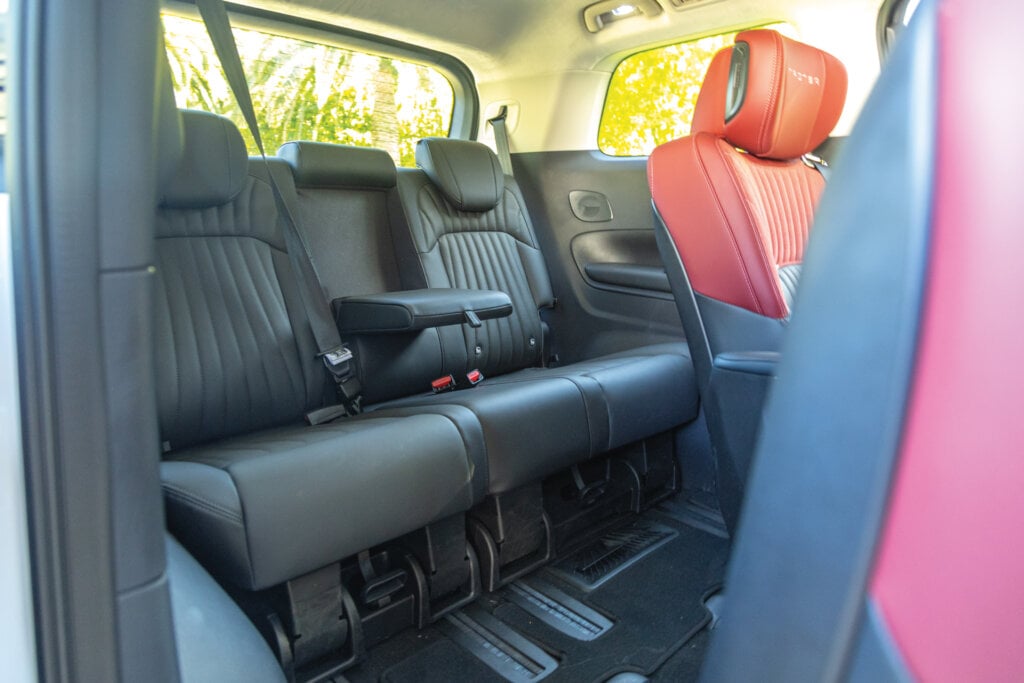
The third row beats most. Three seats, a rare armrest, ISOFIX points, USB ports and cupholders, with a low floor and proper legroom. Headroom is a little tight for adults, but kids will be happy back there.
On the road it does everything a premium people mover should. It is hushed, the ride strikes a clever balance between soft and controlled, and it is even mildly enjoyable through a set of corners. The hybrid system is seamless and there is decent SUV-level pace on tap.
The niggles are small. The adaptive cruise and lane keep are fiddly to activate, the car stays awake long after you walk away, and the school-run door routine, halt then park then unlock then long-press, is slower than it should be. The efficiency claims are optimistic too, though that is a plug-in hybrid problem across the board rather than a GAC one.
This does not feel like a Chinese car. It feels Japanese, and the Toyota influence is plain to see. For the money you would spend on a fairly ordinary mid-size SUV, you get a genuinely high-end luxury people mover. That is impressive, and the M8 is well worth your consideration.
GAC M8 Master Luxury
$89,990 / 1.3L/100km / 26g/km
0-100 km/h 7.5s
Engine 1998cc IL4 / DI / T
Engine Output 140kW / 300Nm
Hybrid Output 274kW / 630Nm
Battery/Range 25.5kWh / 100km
Drivetrain 1-speed auto / FWD
Weight 2402kg