View all
13 more images
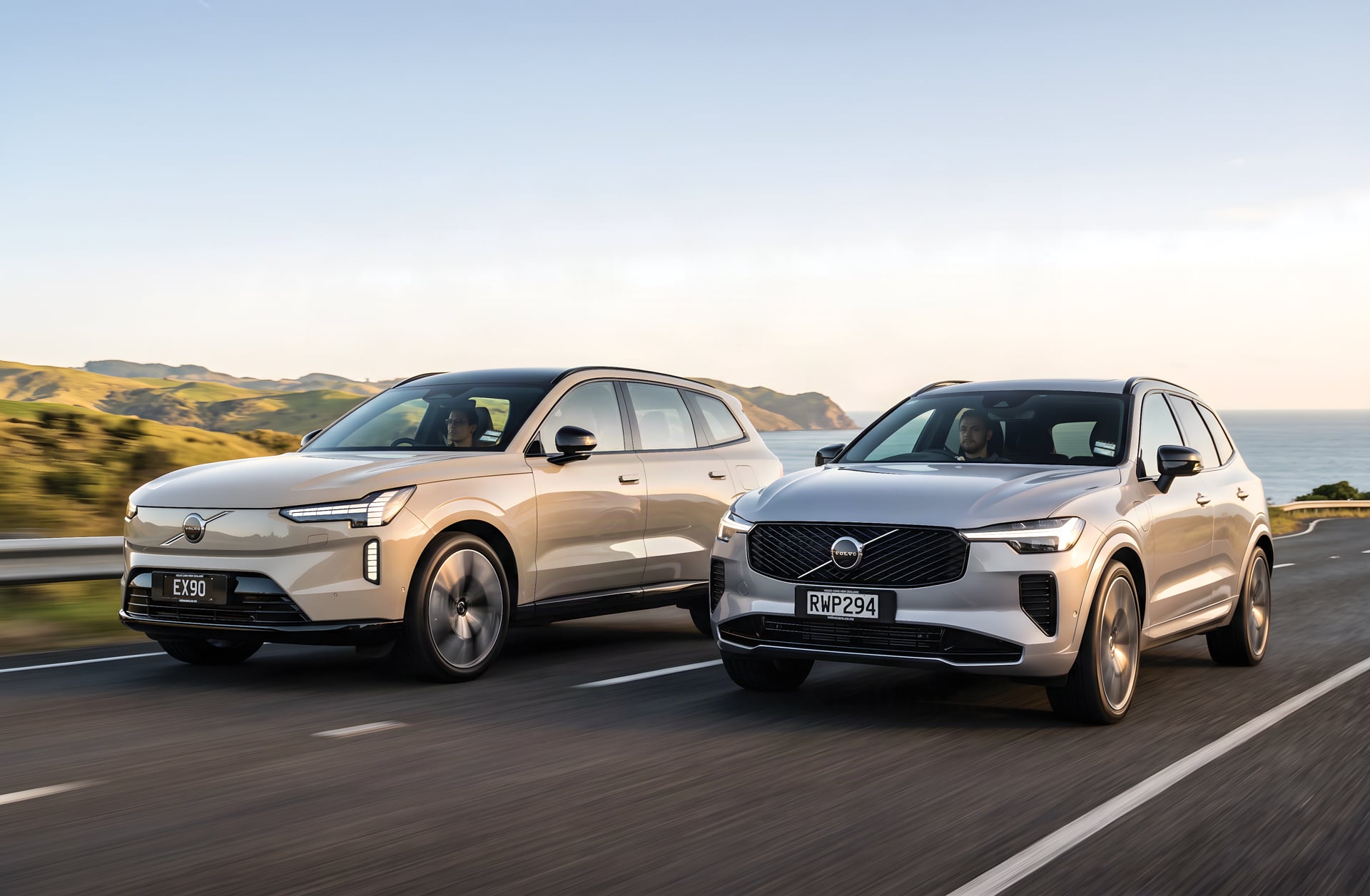
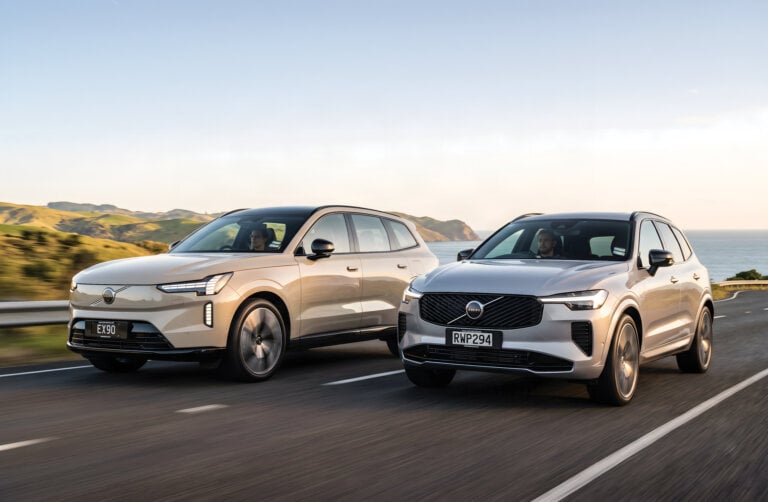
2026 Volvo EX90 Twin Motor Performance Ultra vs Volvo XC90 T8 Ultra AWD Review
Words: Kyle Cassidy | Photos: Alex Schultz
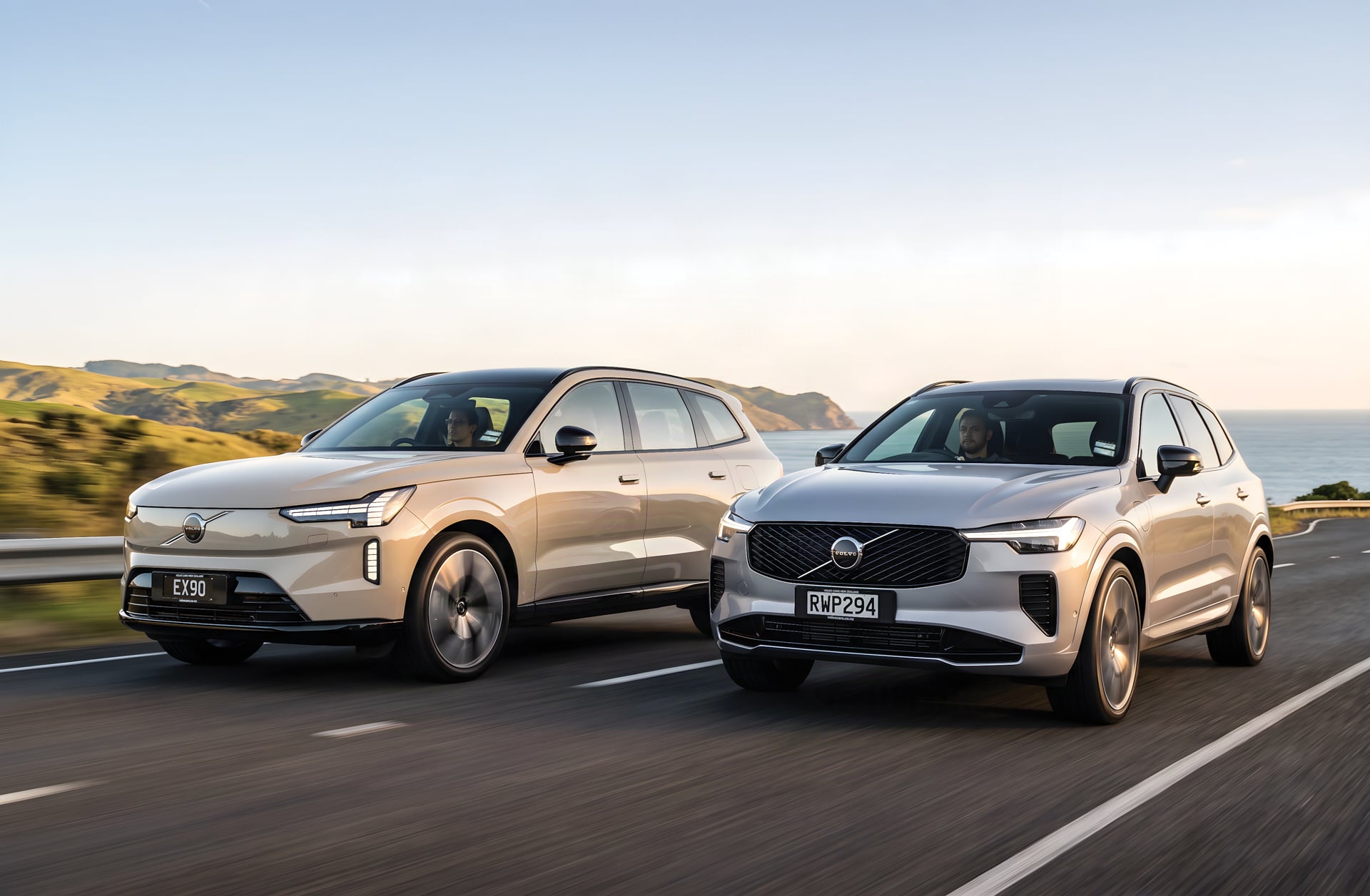
Volvo has two electrified seven-seat SUVs in its local line-up at much the same price. So should you choose the battery-electric EX90 or stick with the plug-in hybrid XC90 T8?
Volvo once declared it was heading exclusively down Electric Avenue, only to temper that enthusiasm when buyers proved less willing to adopt the plug. Hybrids will now remain in its showrooms alongside a growing range of EVs.
The EX90 is the newest and grandest of those EVs. Its arrival was delayed while Volvo sorted out a few things, though that worked in our favour; the New Zealand model has the updated 800V architecture for greater efficiency and faster charging.
Pricing starts at $149,990 for the EX90 Plus Twin Motor AWD, while the Ultra Twin Motor Performance tested here asks $159,990. Volvo says the EX90 is a foil for models such as the Mercedes-Benz GLE, BMW X5 and Audi Q7. These ask similar money but don’t offer zero-emissions driving or quite the same performance.
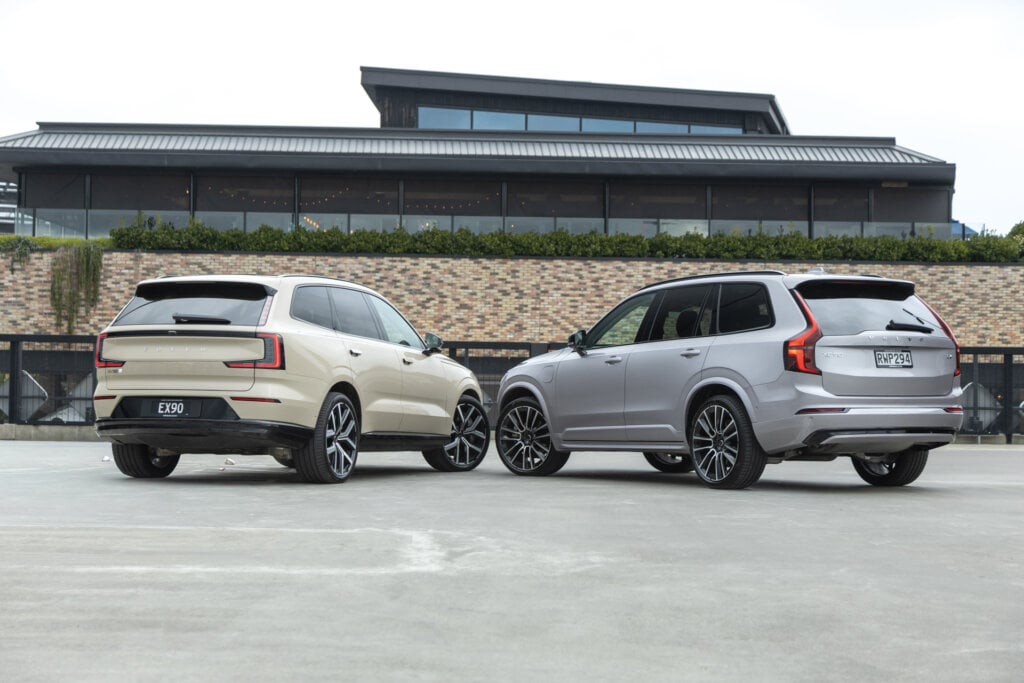
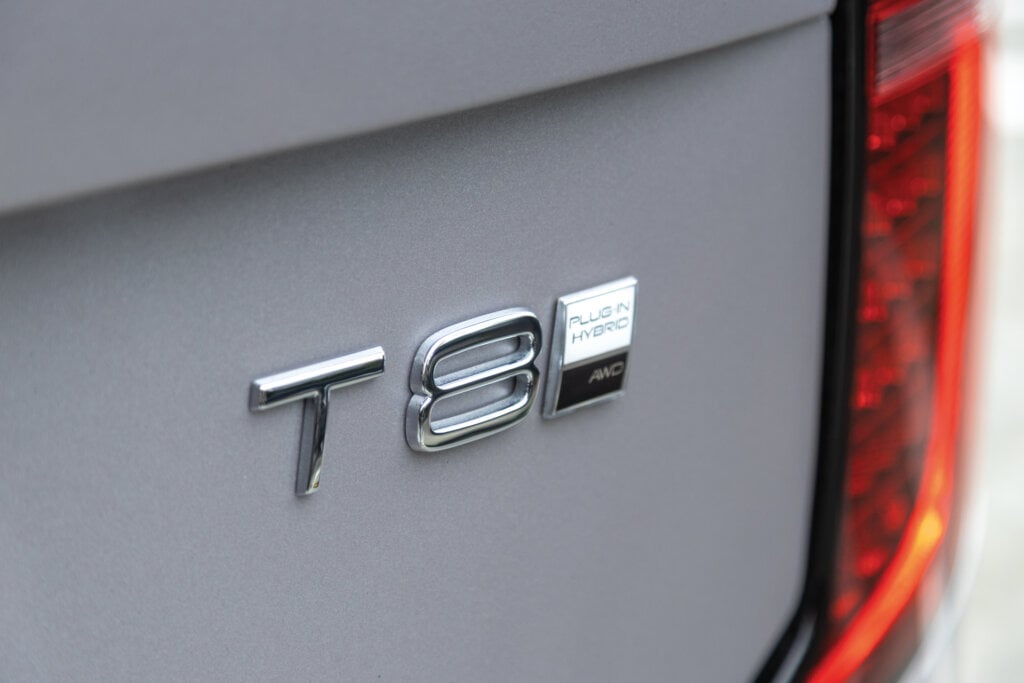
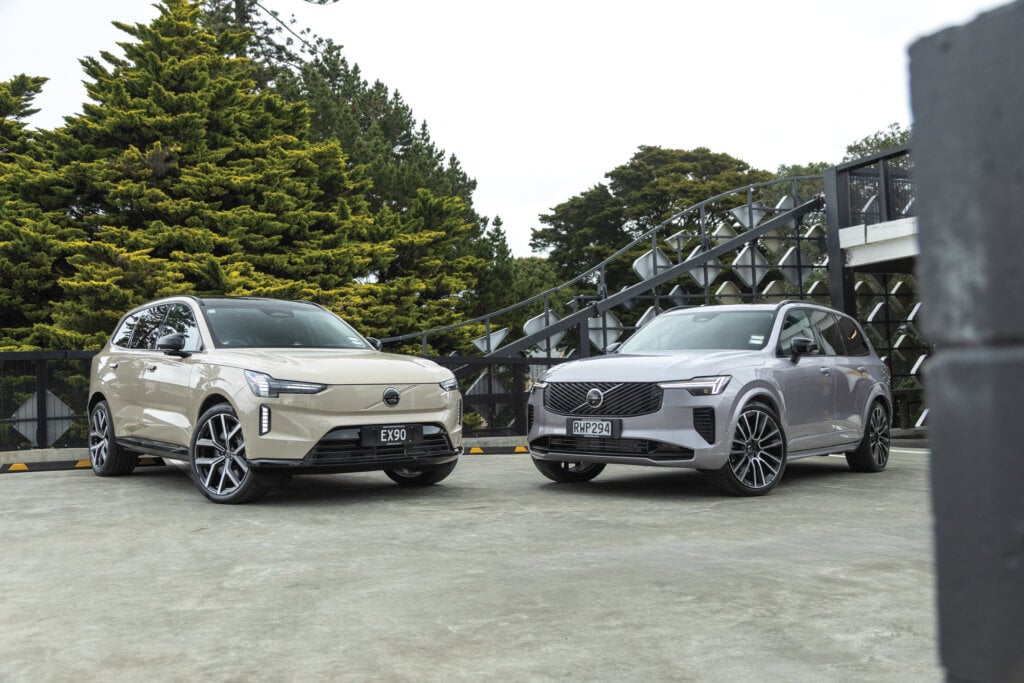
However, there is another option within the Volvo showroom. The revised XC90 T8 Ultra is a seven-seat plug-in hybrid priced at $149,990. That leaves just $10,000 between these two highly specified flagships, so we lined them up to see which makes more sense.
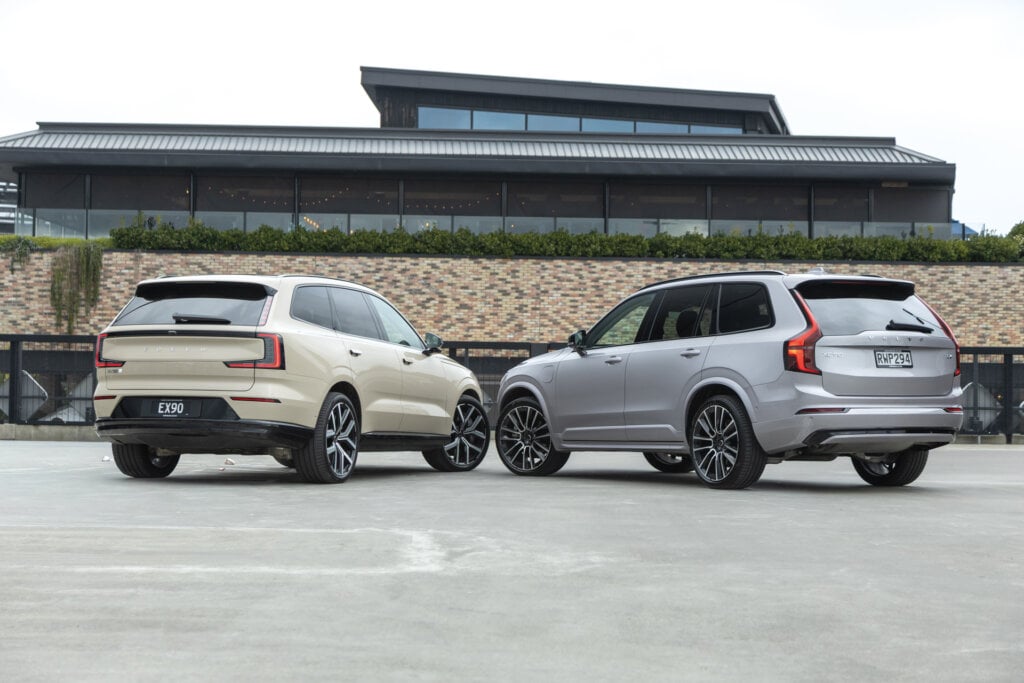
Spec battle
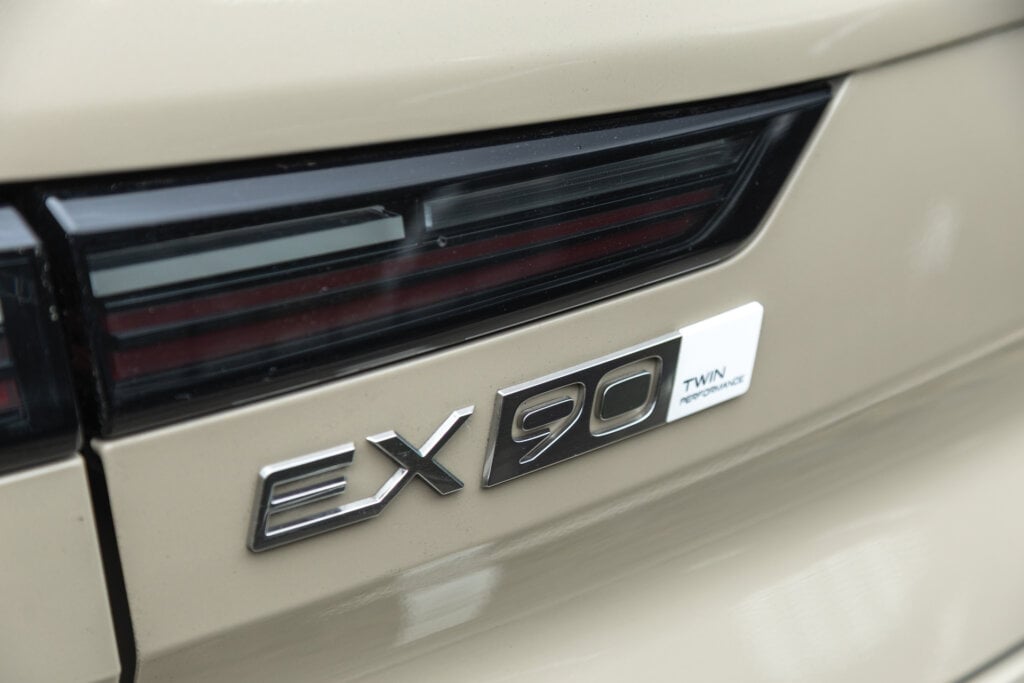
The EX90 Performance uses two electric motors to deliver 500kW and 870Nm through all four wheels. That’s an indecent amount of power for a family wagon and sufficient to propel this 2.7-tonne SUV from 0–100km/h in under four seconds.
Its 106kWh NMC battery provides up to 600km of WLTP range, with claimed energy consumption of 19.2kWh/100km. Volvo quotes 22 minutes for a 10–80 per cent DC recharge under ideal conditions, thanks to a maximum charging rate of 350kW. An 11kW AC onboard charger handles overnight replenishment.
The XC90 T8 combines petrol and electric propulsion, producing 335kW and 709Nm. It’s slower, although 5.5 seconds to 100km/h is still plenty quick for a large seven-seater. Its 19kWh battery provides up to 62km of WLTP electric range, while weighted fuel use is quoted at 3.8L/100km. As with all PHEVs, achieving anything close to that depends on charging whenever possible.
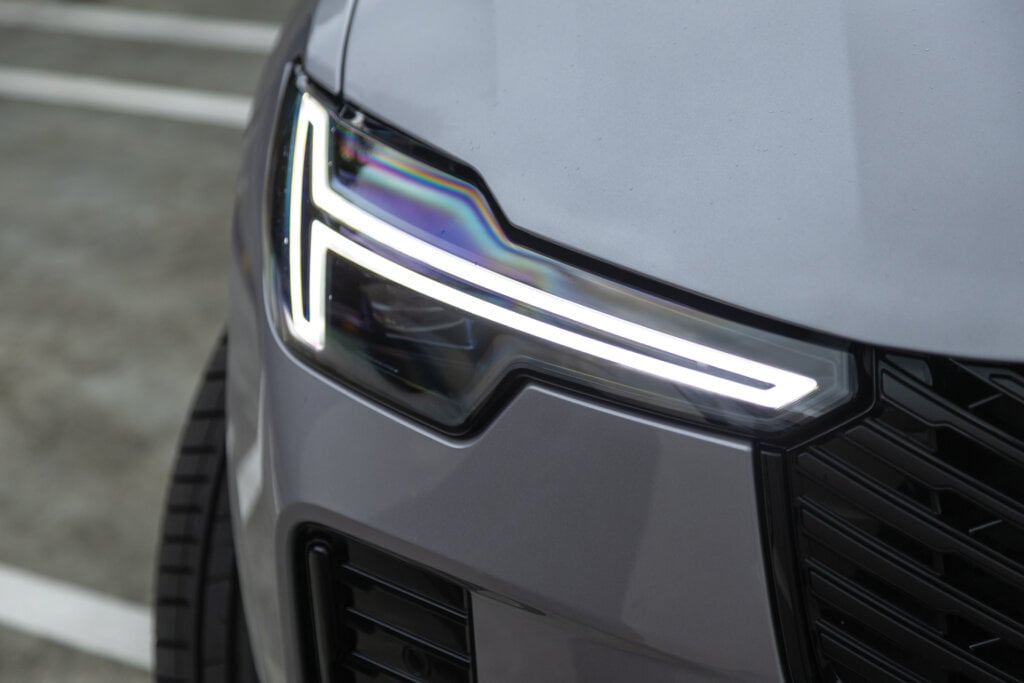
Once the battery is depleted, the XC90 carries on using its 71-litre fuel supply. That gives it the obvious long-distance advantage, along with the convenience of a five-minute refill. It can also tow 2400kg, giving it a 200kg edge over the EX90.
Both are all-wheel drive and lavishly equipped. Common features include panoramic roofs, ventilated and massaging front seats, heated rear seats, surround-view cameras, head-up displays, active air suspension, premium Bowers & Wilkins audio and Google-based infotainment.
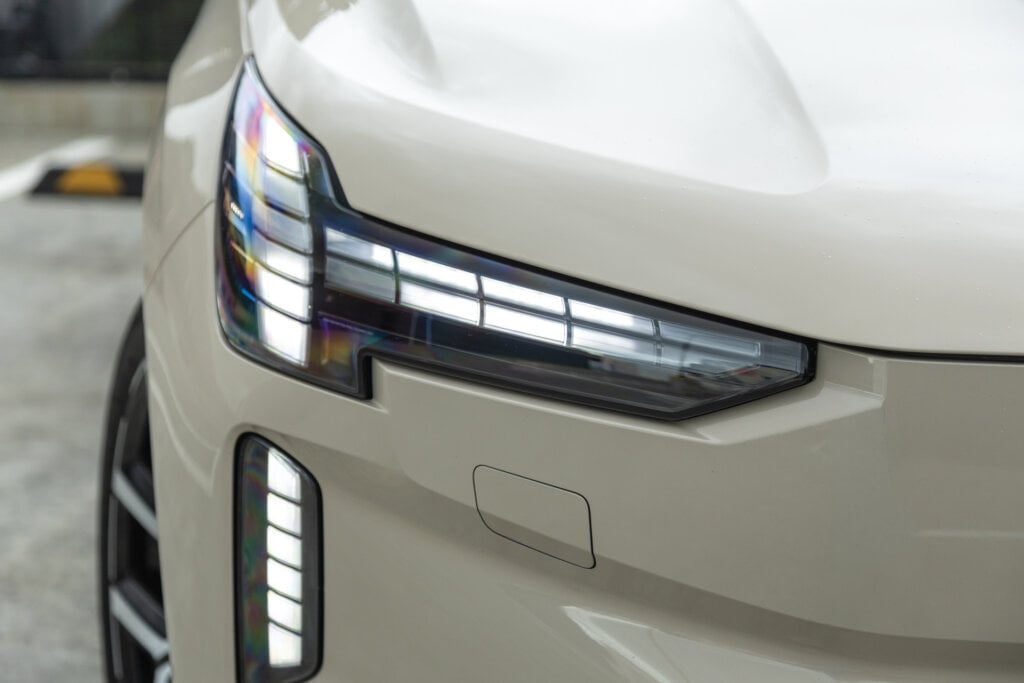
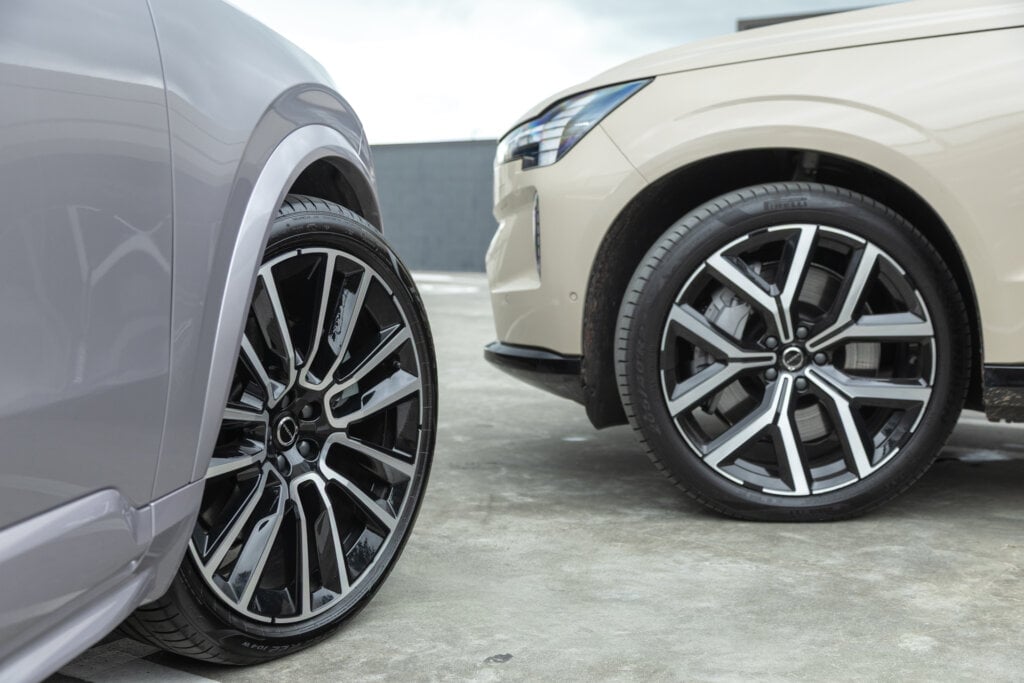
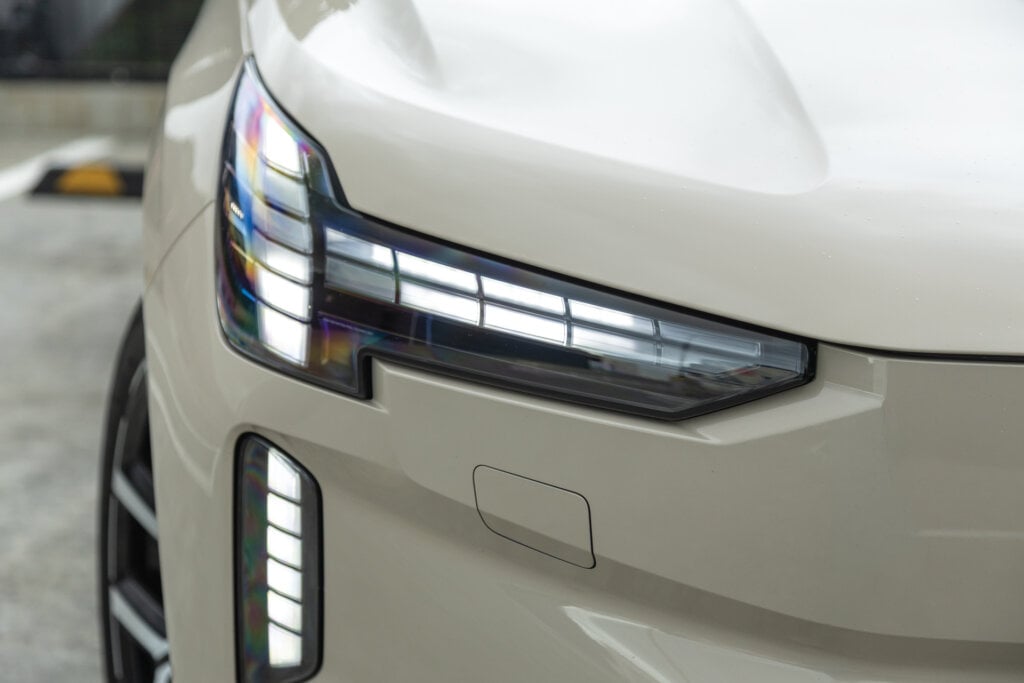
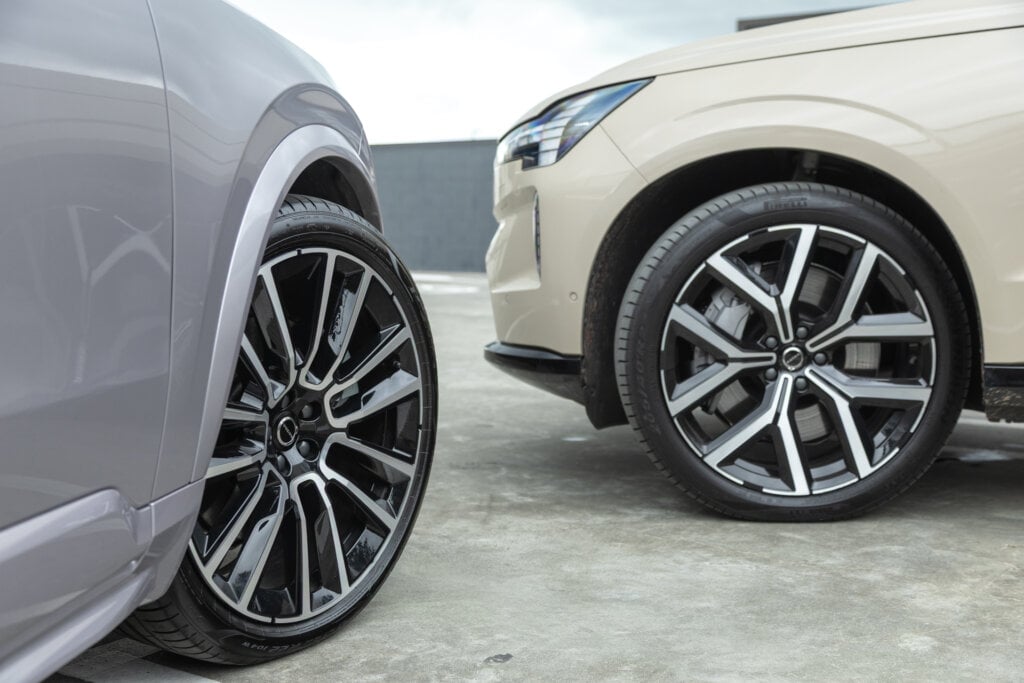
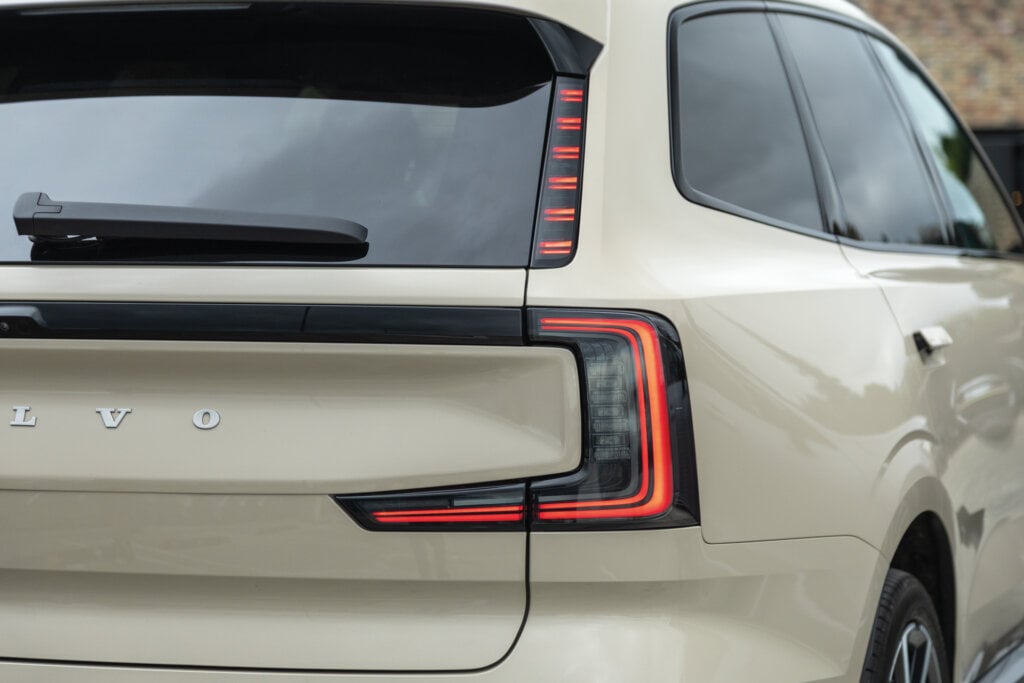
The EX90 Ultra adds High-Definition Pixel headlights, an electrochromic glass roof, soft-close doors and 22-inch alloy wheels. It’s the more overtly high-tech machine, as you’d expect of Volvo’s newest platform.
Electric avenue
Does the EX90 live up to its Performance badge? In a straight line, certainly. It’s properly rapid, bordering on ridiculous for a family seven-seater. It registered 100km/h in a scant 3.98 seconds, which should prove handy on the school run if you’re running late.
It delivers its formidable surge without the OMG dramatics of some other overpowered EVs. The EX90 gathers pace almost serenely, with well-calibrated traction control deploying the power efficiently. It’s effortless and refined around town too. The air suspension does well to manage the big 22-inch wheels, although a few bumps still permeate the calm. The steering is quick and easy, but the turning circle is large.
The EX90 holds itself together through corners too, although at more than 2700kg, the S in this SUV stands more for safe and secure than sports. The steering is accurate but distant, and there’s little meaningful change between its Soft, Standard and Firm settings. There’s more resistance in the latter, but no more feel.
You can sense a degree of electronic activity at play. Torque distribution, braking and stability systems all combine to keep the EX90 on your intended line, yet they do so effectively. Keep pressing the point and the stability control will push back until you calm down. Overall though, it handles its size and weight competently.
There are Standard, Performance and Off-road drive modes, plus three suspension settings. Most owners will leave everything in standard and never give it another thought.
Soft mode takes some edge out of the ride, but the EX90 never entirely isolates its occupants from the road. There’s more tyre and suspension noise than expected, while the occasional cabin creak detracts from the flagship experience.
The brakes get a pass mark, with consistent bite and pedal weighting. Regeneration can be set to low, high or automatic, or switched off.
Screen time
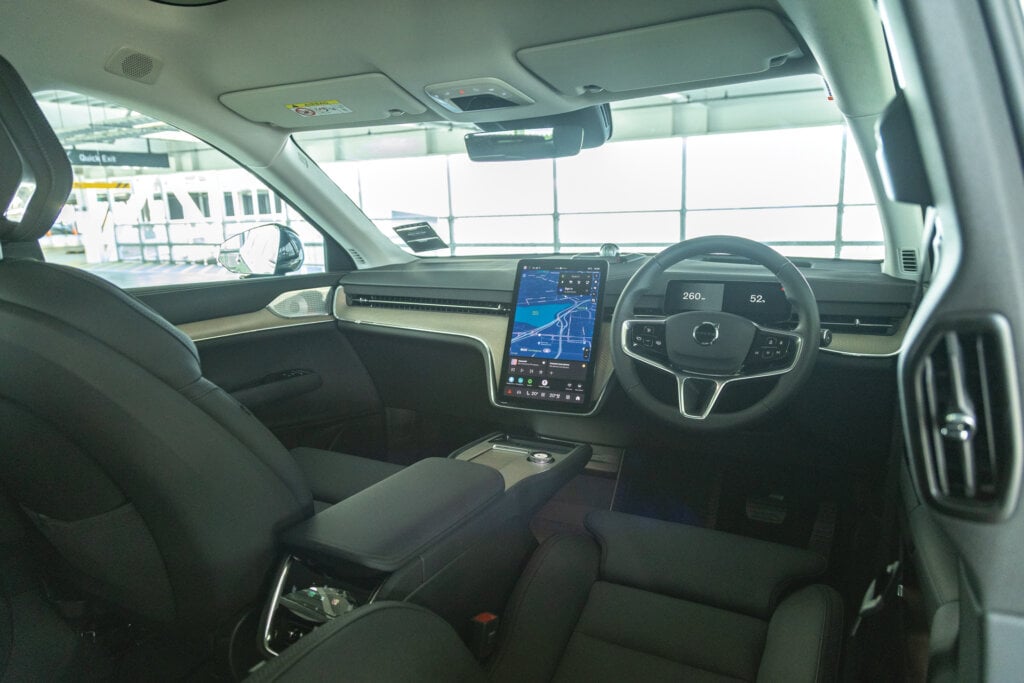
The EX90’s cabin embraces the anti-button movement. Most functions live within the 14.5-inch portrait touchscreen, supported by a compact 9-inch driver display and head-up display. The system responds quickly and its large touch points are easy to hit on the move. Google runs the show, so voice control works well and Google Maps provides familiar navigation.
Volvo has taken the screen-first philosophy too far in places. Adjusting the mirrors or steering column requires tapping the appropriate menu and then using the steering-wheel buttons. The glovebox is released through the screen, as is the tailgate. A few more switches would make things easier without ruining the Scandinavian minimalism. Speaking of which, the ambient lighting creates a striking pattern across the wood veneer at night.
The seats are a tad firm yet superbly supportive, and there’s enough adjustment to sort a decent driving position easily (thanks to there being an actual switch for that). Storage is good, helped by the EV architecture. The raised centre console houses the wireless charging pad and cupholders, with another useful space underneath.
Access is via a digital key, otherwise known as your phone. Its effectiveness depends on how current said device is, however. We had to get our phone out and tap the screen to gain access. Apparently, newer phones allow the technology to work much like a proximity key.
Volvo’s driver-assistance systems are well mannered. Pilot Assist combines adaptive cruise control with lane centring and works smoothly on motorways. Lane keeping and driver monitoring remain in the background, while the speed warning can be adjusted so it doesn’t scold you for every minor indiscretion.
The more familiar X
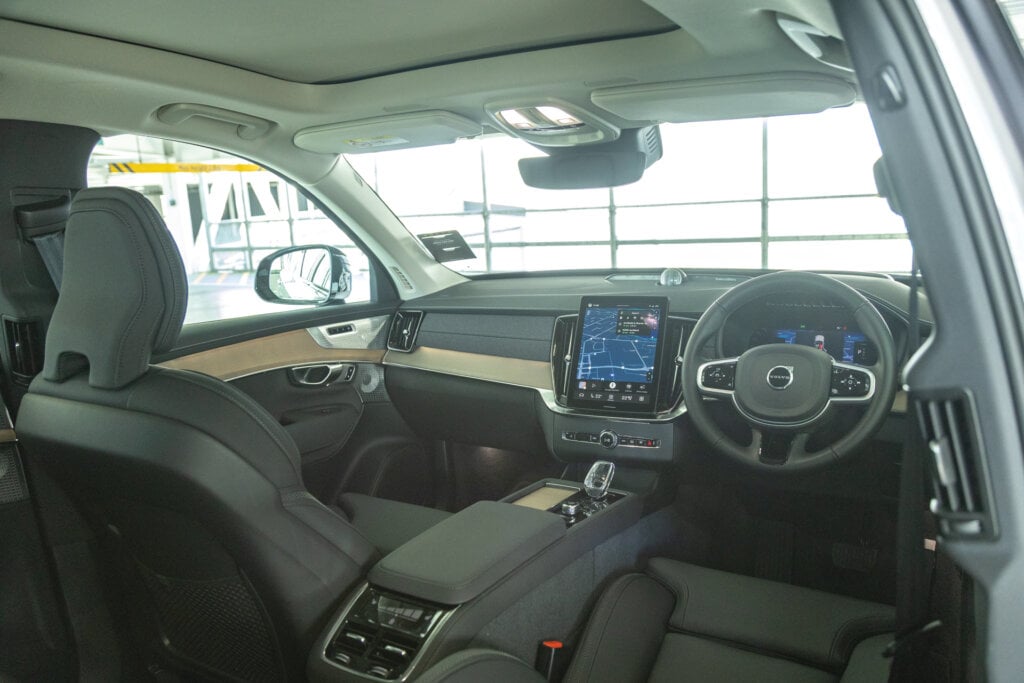
Climb into the XC90 after the EX and it feels reassuringly conventional. There’s a start button, a proper gear selector and a few more physical controls, including one to open the tailgate. Its 11.2-inch centre display and 12.3-inch instrument panel aren’t as dramatic as the EX90’s arrangement, but they get the job done.
Google built-in provides the same connected functionality, while the cabin’s materials and finish remain suitably upmarket. There isn’t quite as much oddment storage as in the electric car, but we reckon previous Volvo owners will feel more at home.
The T8 offers Pure, Hybrid and Power drive modes. Pure prioritises electric running and will keep the petrol engine dormant, provided there’s enough charge and you’re gentle with the accelerator. Real-world electric range is somewhere between 50 and 55km, which should cover most daily commutes. Owners will need to plug in frequently to avoid filling up with gas. When you go farther afield, there’s close to 850km of touring before you’ll need to find a pump.
Electric performance is adequate but it isn’t as effortless as the full BEV. It’s quiet, though, and the petrol engine joins in smoothly when more go is requested. The transition between the two power sources is difficult to detect, other than the sound of the ICE firing, while the brake pedal feels natural and free of awkward regenerative characteristics.
Read more – Volvo XC60 & XC90 PHEVs gain bigger batteries for more engine-off range
Select Power and the full 335kW becomes available. The XC90 doesn’t deliver the same startling shove as the EX90, but it never feels short of pace. In fact, its output is better matched to the job. You get relaxed electric running for local trips and ample performance when the engine and motor work together.
The older chassis isn’t as composed, however. The ride feels busier over broken surfaces and the steering is even more remote than the EX90’s. Understeer arrives earlier when pushed, and the rear can feel less secure through tricky corners. The electronics aren’t as adept at disguising the XC90’s size and mass.
Family matters
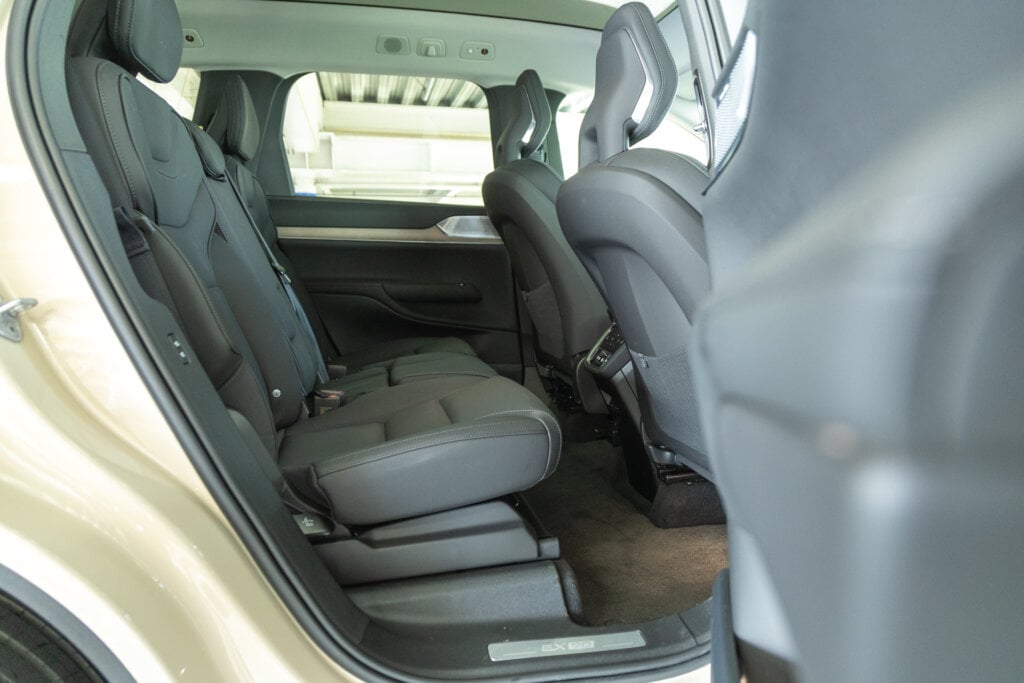
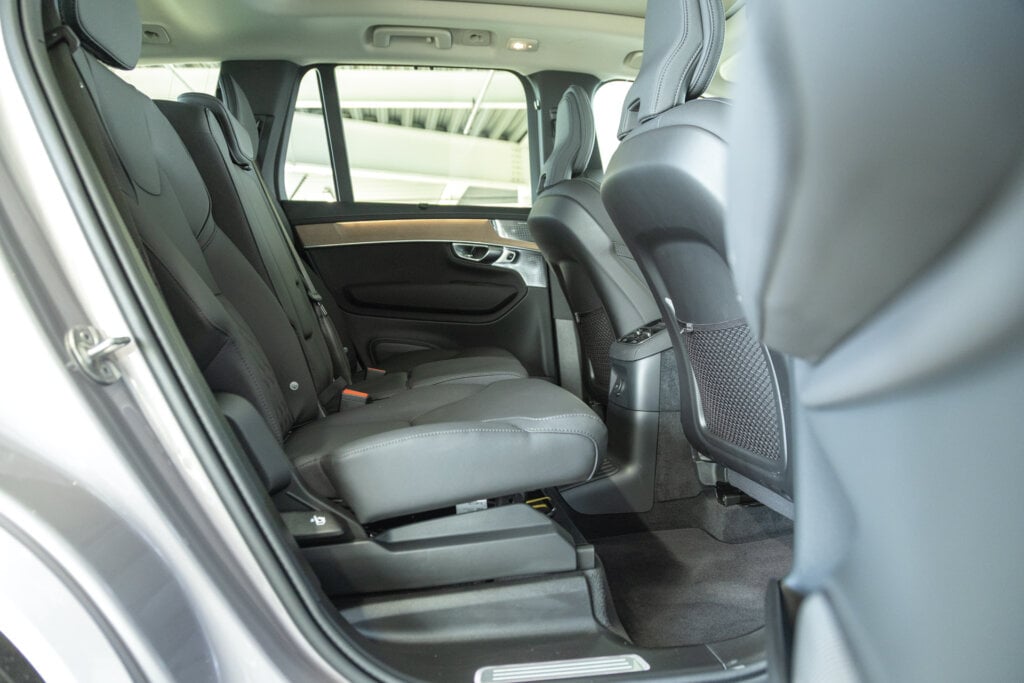
Both SUVs do the seven-seat thing well. Their wide-opening rear doors make access easy, while the second-row seats slide individually to balance legroom between the two passenger rows.
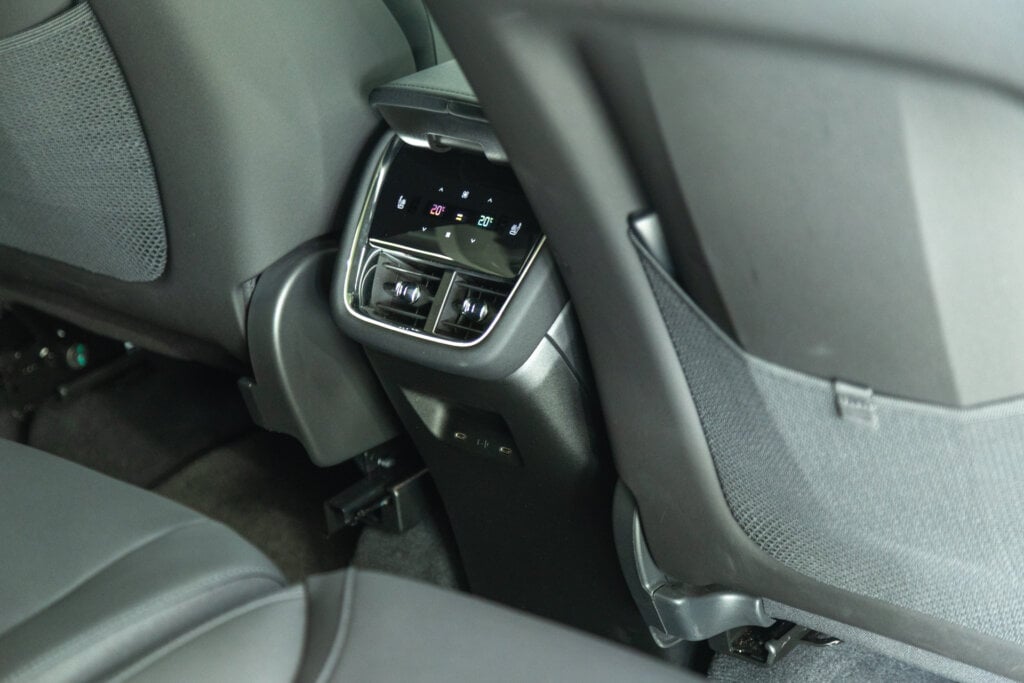
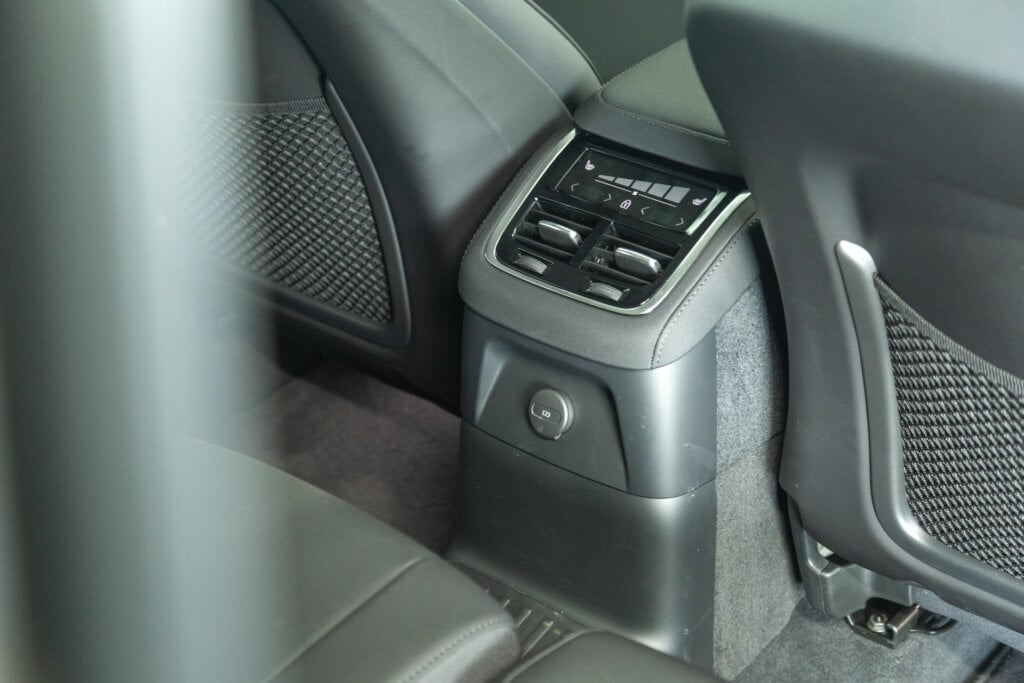
The EX90 has slightly more space, helped by its flat floor. Three adults will fit more comfortably across the middle row, while USB-C ports, climate vents, cupholders and storage are spread throughout.
Access to the third row is straightforward and its electric deployment is handy, with the mechanism working quickly enough. There’s adult-friendly headroom, but legroom requires cooperation from those ahead. Children will be perfectly happy during a road trip, but grown-ups will likely become grumpy after half an hour.
The XC90 is much the same in this regard, although its transmission tunnel compromises the centre position. It retains Volvo’s useful integrated booster cushion and uses a simple one-lever slide-and-fold mechanism to reach the third row.
The EX90 holds 324 litres behind its third row, against 244 litres in the XC90. Fold everything down and maximum capacity expands to 2135 litres, compared with 1941 litres for the plug-in hybrid. Neither is short of carrying space, but the electric car makes slightly better use of its footprint.
Which one?
The EX90 is the better vehicle overall. It’s quieter, faster, roomier and more settled on the road, with a more advanced cabin and a useful 600km WLTP range. It feels like the flagship Volvo intends it to be, even if the ride refinement and occasional cabin noises could be improved.
If you feel the Performance is a bit OTT, you can save $10,000 on the 335kW Plus, although it misses out on a few extras.
The XC90 remains a good option for those still worried about ultimate range and recharging on the road. It can cover urban trips electrically, tow a little more and travel without requiring you to plan your charging stops. It feels older and doesn’t drive quite as well, but its conventional controls and petrol-backed range will reassure some buyers.
Volvo XC90 T8 Ultra AWD
$149,990 / 3.8L/100km / 86g/km
0-100 km/h 5.53s
80-120 km/h 3.46s (99m)
100-0 km/h 36.12m
Speedo error 97 at an indicated 100km/h
Ambient cabin noise 70.9dB@100km/h
Engine 1969cc / IL4 / T / DI
Max power 233kW@6000rpm
Max torque 400Nm@3000-5400rpm
Motor output 107kW / 309Nm
Battery 19kWh
Range 62km
Hybrid System Output 335kW / 709Nm
Drivetrain 8-speed auto / e-AWD
Front suspension Wishbones / air springs
Rear suspension Multilink / air springs
Turning circle 12.0m (2.9 turns)
Front brakes Ventilated discs (366mm)
Rear brakes Ventilated discs (340mm)
Stability systems ABS, ESP, TV
Safety AEB, ACC, BSM, LDW, RCTA, ALK, AHB
Tyre size f/r-275/35R22
Wheelbase 2984mm
L/W/H 4953 / 1931 / 1767mm
Trackf-1673mm r-1675mm
Fuel capacity 71L
Luggage capacity 244 / 650 / 2135L
Tow rating 750kg (2400kg Braked)
Service intervals 12 months / 15,000km
Scheduled servicing 3yrs / unlimited km
Warranty 5yrs / 150,000km
ANCAP rating Unrated
Weight (claimed) 2365kg
Volvo EX90 Twin Motor Performance Ultra
$159,990 / 19.2kWh/100km / 0g/km
0-100 km/h 3.98s
80-120 km/h 2.10s (64m)
100-0 km/h 37.90m
Speedo error 97 at an indicated 100km/h
Ambient cabin noise 71.8dB@100km/h
Motor output 500kW
Max torque 870Nm
Battery 106kWh
Range 600km
Drivetrain Single-speed auto / e-AWD
Front suspension Wishbones / air springs
Rear suspension Multilink / air springs
Turning circle 12.0m (3.0 turns)
Front brakes Ventilated discs (400mm)
Rear brakes Ventilated discs (390mm)
Stability systems ABS, ESP, TV
Safety AEB, ACC, BSM, LDW, RCTA, ALK, AHB
Tyre size f-265/40R22 r-295/35R22
Wheelbase 2985mm
L/W/H 5037 / 1964 / 1744mm
Trackf-1672mm r-1666mm
Luggage capacity f-46 r-324 / 697 / 1941L
Tow rating 750kg (2200kg Braked)
Service intervals 24 months / 30,000km
Scheduled servicing 3yrs / unlimited km
Warranty 5yrs / 150,000 km
ANCAP rating ★★★★★ (2025)
Weight (claimed) 2725kg