
View all
3 more images
2026 BYD Atto 2 Premium Review
Words: Richard Edwards | Photos: Richard Edwards
BYD’s range continues to grow with the arrival of the Atto 2. This new small SUV sheds the brand’s eccentricities and is better for it.
BYD’s New Zealand arrival followed a familiar playbook. Lead with an SUV, price it keenly, and let the product do the talking. It worked. The Atto 3 quickly established itself as a mainstream electric option for Kiwi buyers who wanted something practical, easy to live with and not remotely intimidating. For a time, it stood alone, before the larger Sealion 7 joined the lineup.
Now there’s a third act, and arguably the most important one yet.
The Atto 2 slots in beneath the Atto 3, targeting buyers who want something more compact, more affordable and more city-friendly, without giving up the comfort and polish BYD has become known for. On paper, it looks like a predictable move. In reality, it’s a far more complete and convincing product than expected.
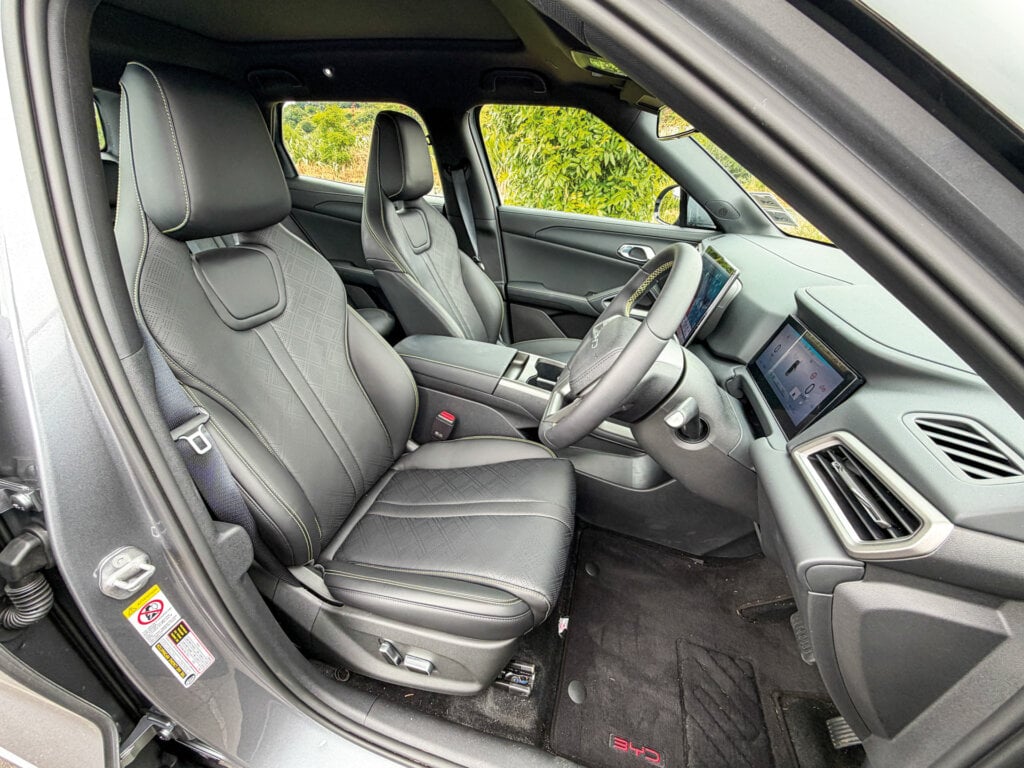
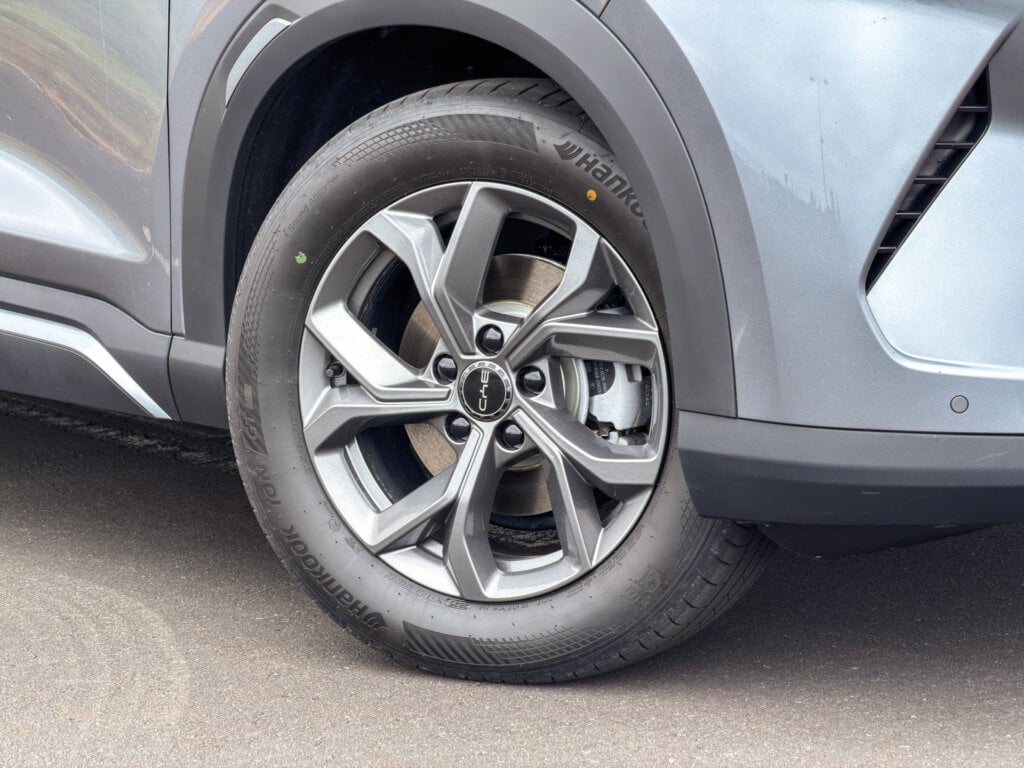
Two variants are offered locally. The entry-level Dynamic is priced at $39,990, while the Premium tested here comes in at $45,990. That $6000 step up isn’t simply cosmetic. Premium models gain 17-inch Hankook tyres in place of the Dynamic’s 16-inch ZhongCe rubber, a larger 12.8-inch rotating touchscreen, a 360-degree camera system with front parking sensors, a panoramic glass roof with sunshade, roof rails, power-adjustable front seats with heating and ventilation, an auto-dimming mirror, an eight-speaker audio system, and a 50-watt wireless phone charger.
Both variants share the same drivetrain; a 51kWh Blade LFP battery driving a single front-mounted 130kW/290Nm motor. It’s not headline-grabbing, but it’s sensible, and as it turns out, well matched to the car.
Design & practicality
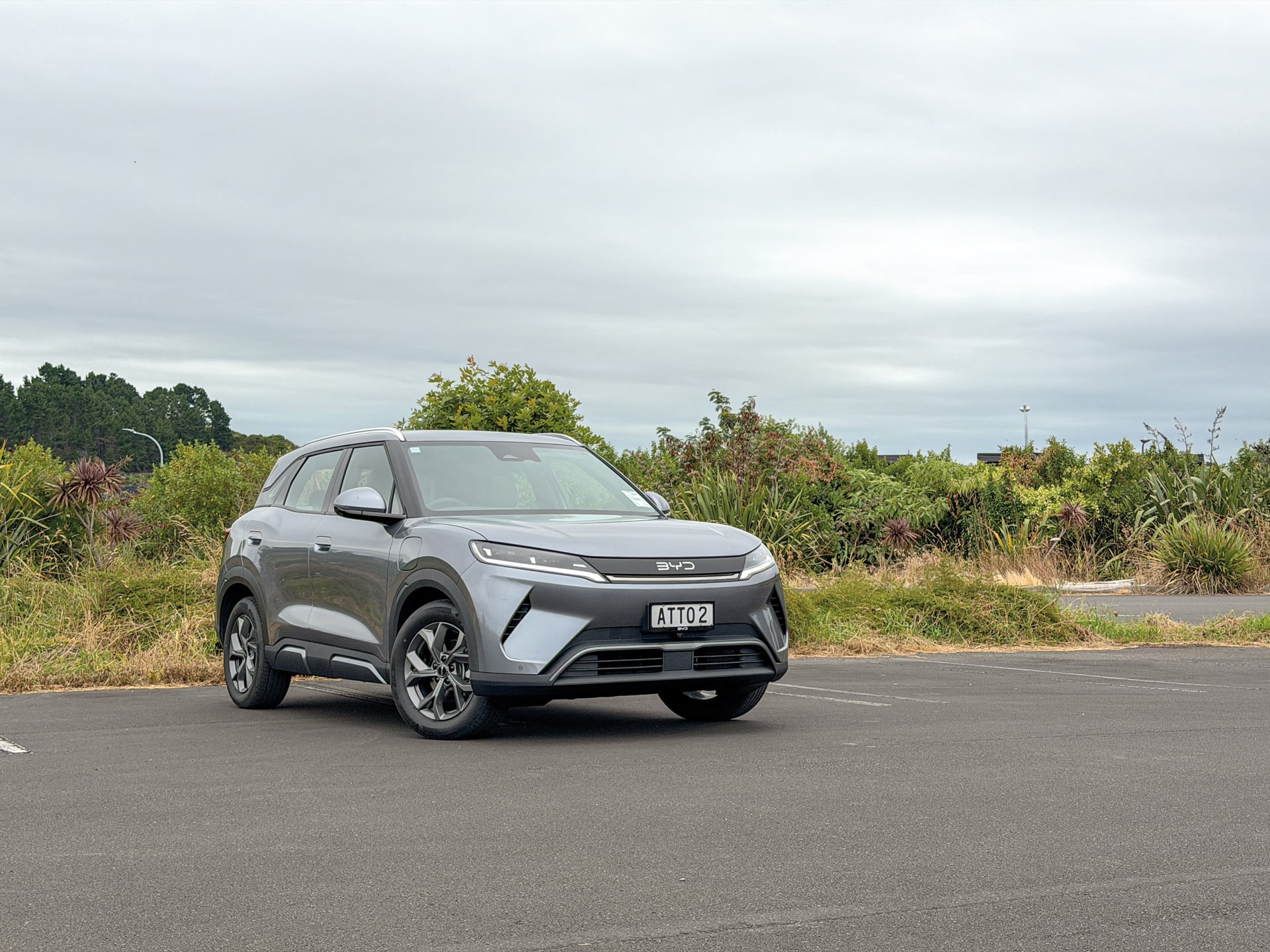
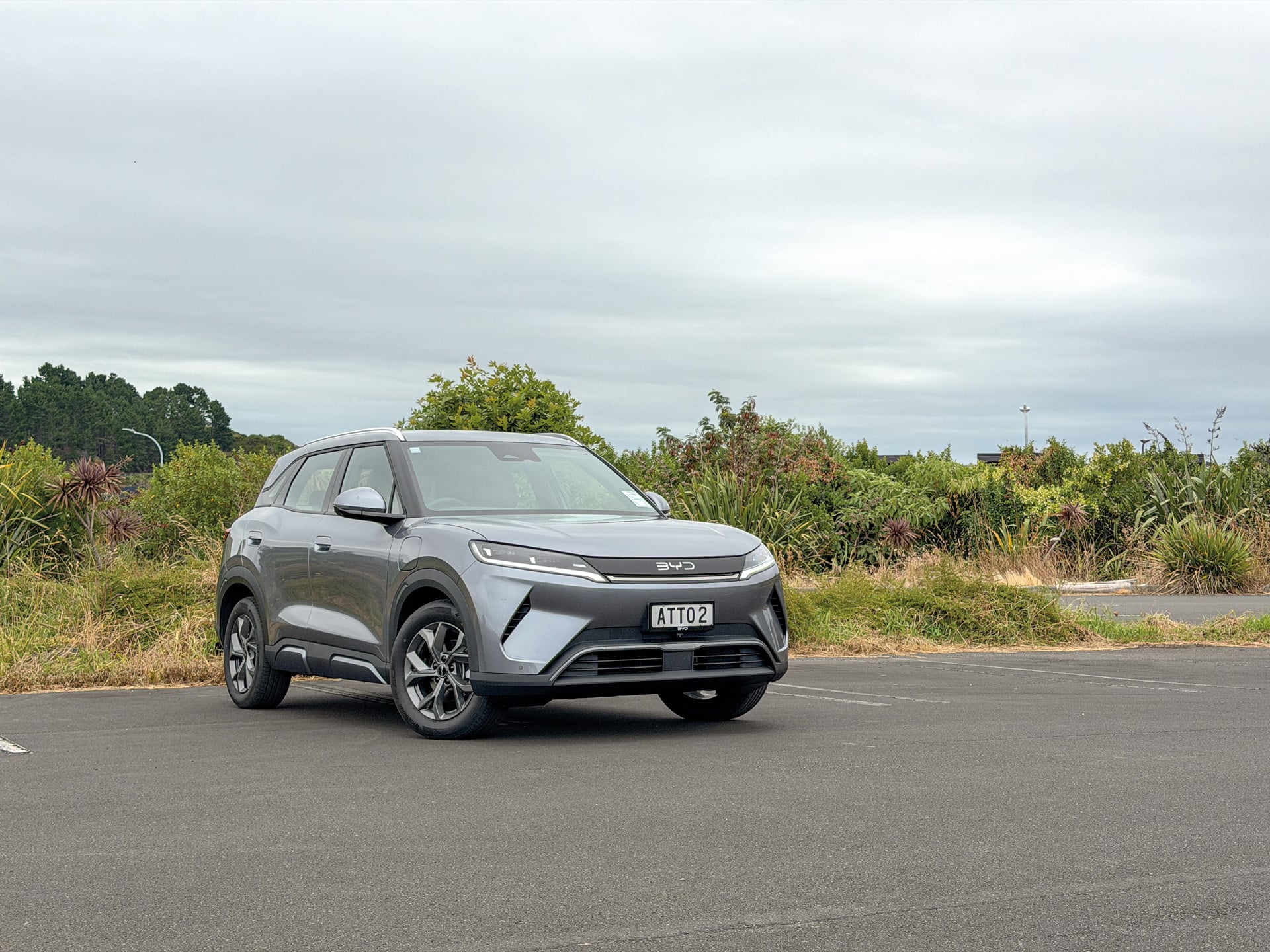
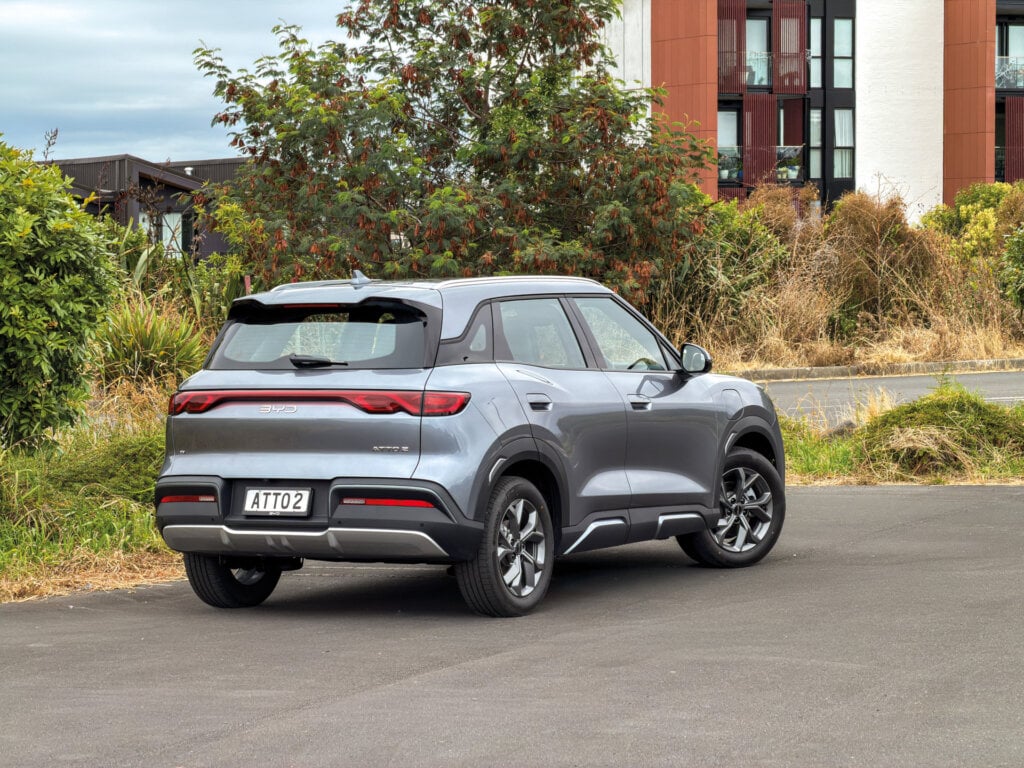
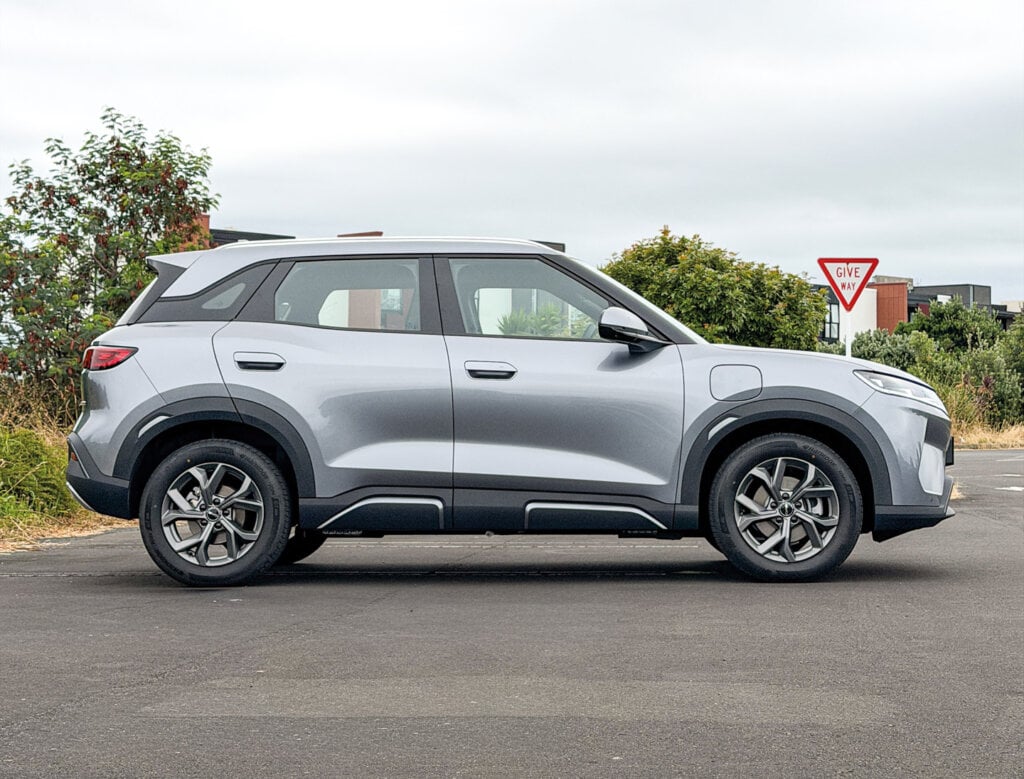
The Atto 2 wears a familiar BYD face, clearly related to the Atto 3 but tidied up and scaled down. At 4310mm long and 1830mm wide, it’s compact enough to feel at home in urban environments, while the 2620mm wheelbase and 1675mm height help deliver genuinely usable interior space.
It’s a tall car for its footprint, and that pays dividends inside. The proportions feel right, particularly for city driving and tight car parks. At the rear, the knitted-effect tail lights echo the Dolphin’s design language without looking derivative, while the chunky lower-body cladding adds a degree of visual toughness. In truth, this is closer to an upright hatchback than a traditional SUV, but that’s no bad thing.
Ground clearance measures 150mm, which is sufficient for kerbs, gravel driveways and the occasional rural road. Charging hardware sits behind a CCS Type 2 port mounted at the front, on the driver’s side behind the wheel. It’s a position that remains far from ideal, particularly for nose-in public chargers or tight garages. That said, it’s a setup we’ve grown used to through long-term familiarity with our own Atto 3, and in everyday use it becomes more of an inconvenience than a deal-breaker.
AC charging tops out at 7kW, while DC fast charging peaks at 82kW. A full AC charge takes just over eight hours, while a 10–80 percent DC charge is quoted at 38.6 minutes. In testing, the Atto 2 held near its peak charging speed for longer than expected, particularly when the battery was well within its temperature window.
One notable omission is a front boot. There’s clearly space under the bonnet, and it feels like a missed opportunity in a market where practicality matters. The rear boot, however, performs well. Capacity is rated at 380 litres, expanding to 1320 litres with the 60/40 rear seats folded. A two-tier floor adds flexibility, and fitting two large suitcases is no problem. As expected, there’s no spare wheel, just a tyre repair kit.
Premium models add roof rails, which will appeal to buyers needing extra carrying capacity. For a compact EV, the Atto 2 makes efficient use of its footprint.
Interior & technology
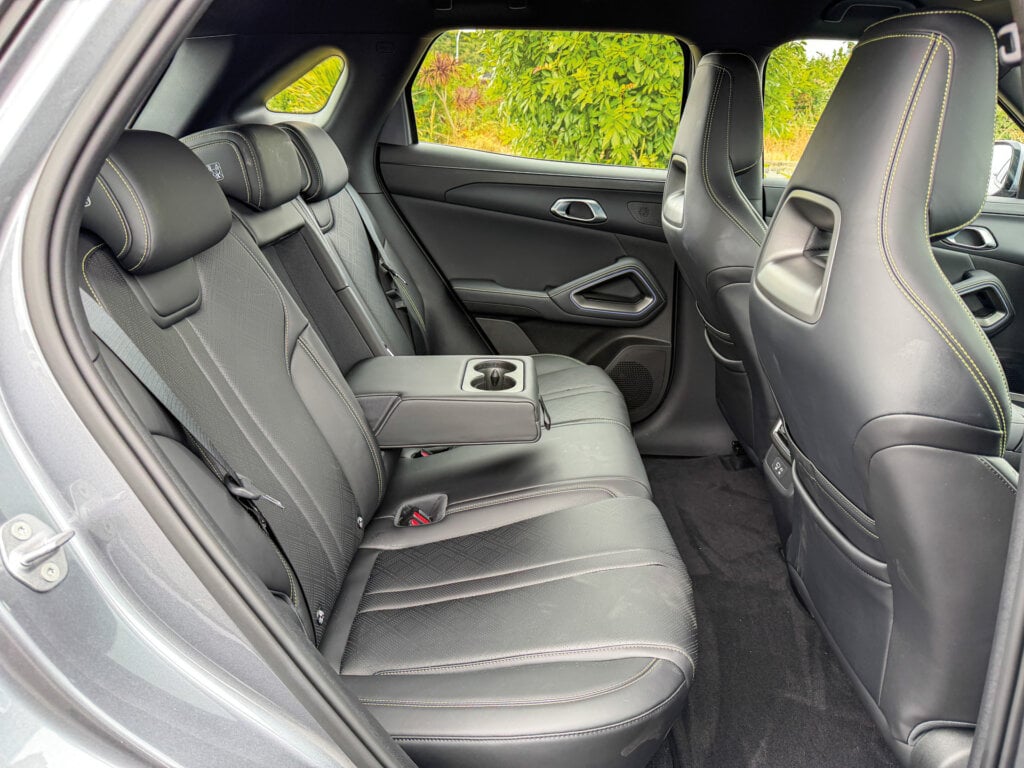
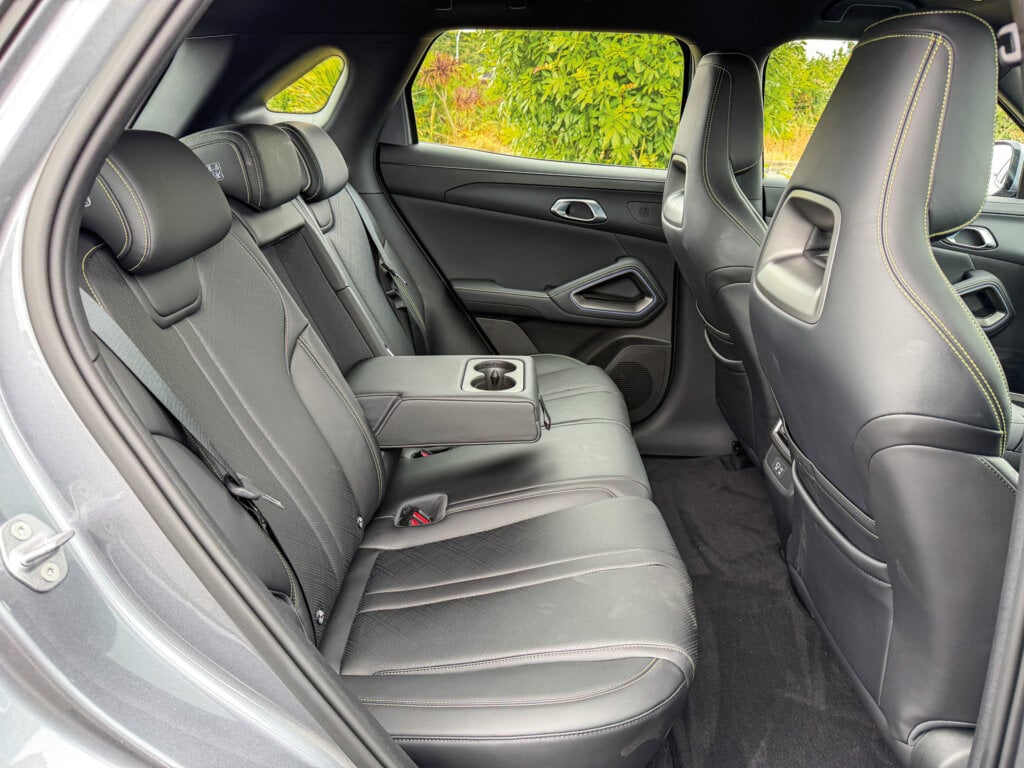
Rear seat accommodation is better than expected. With the driver’s seat set for a taller-than-average occupant, knee room remains acceptable, and headroom is generous, particularly in Premium models fitted with the panoramic glass roof. Rear passengers get both USB-C and USB-A ports, along with their own air vents. Three headrests and two outer ISOFIX points technically make this a five-seater, though four adults will be most comfortable.
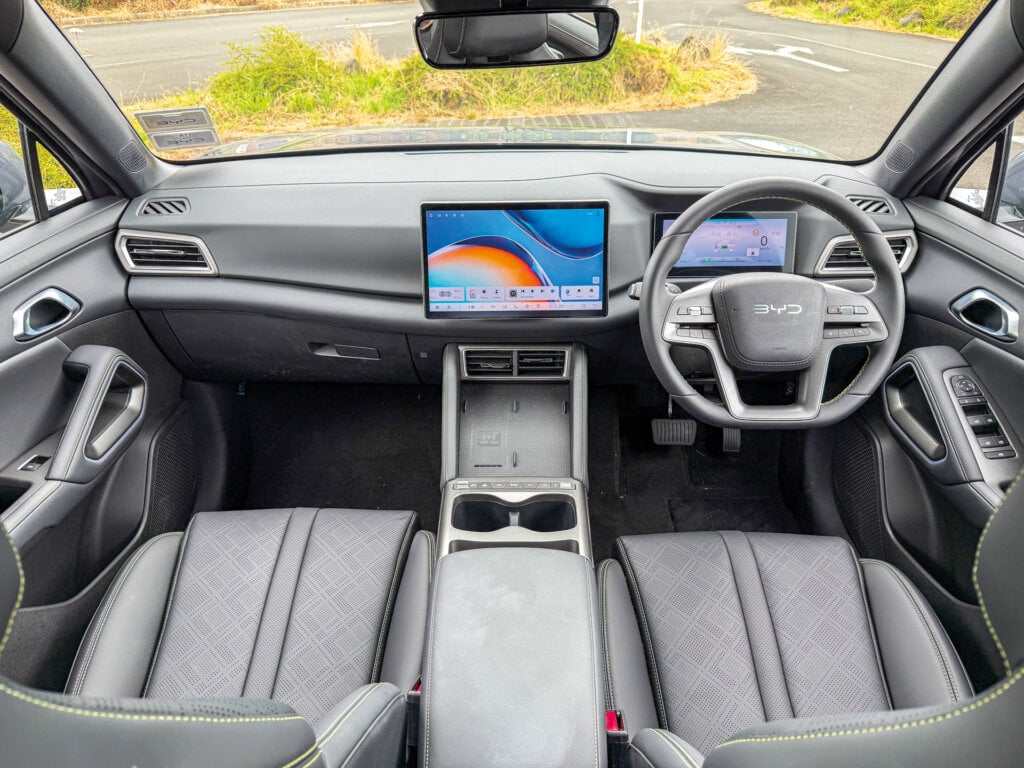
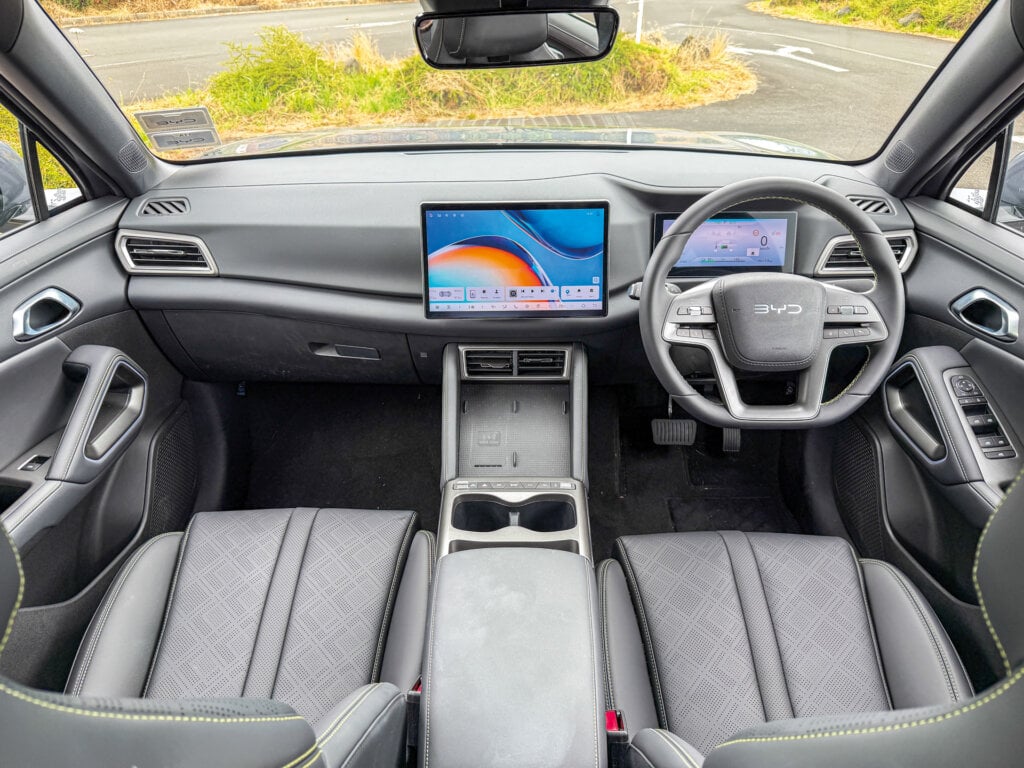
Up front, the cabin takes a noticeably more conservative approach than the Atto 3. That’s intentional. BYD’s local team has confirmed the interior was specified with fleet and mainstream buyers in mind. The result is a dashboard that feels intuitive and familiar, free of novelty for novelty’s sake. In fact, it feels more Toyota than tech showcase, and in this context that’s a compliment.
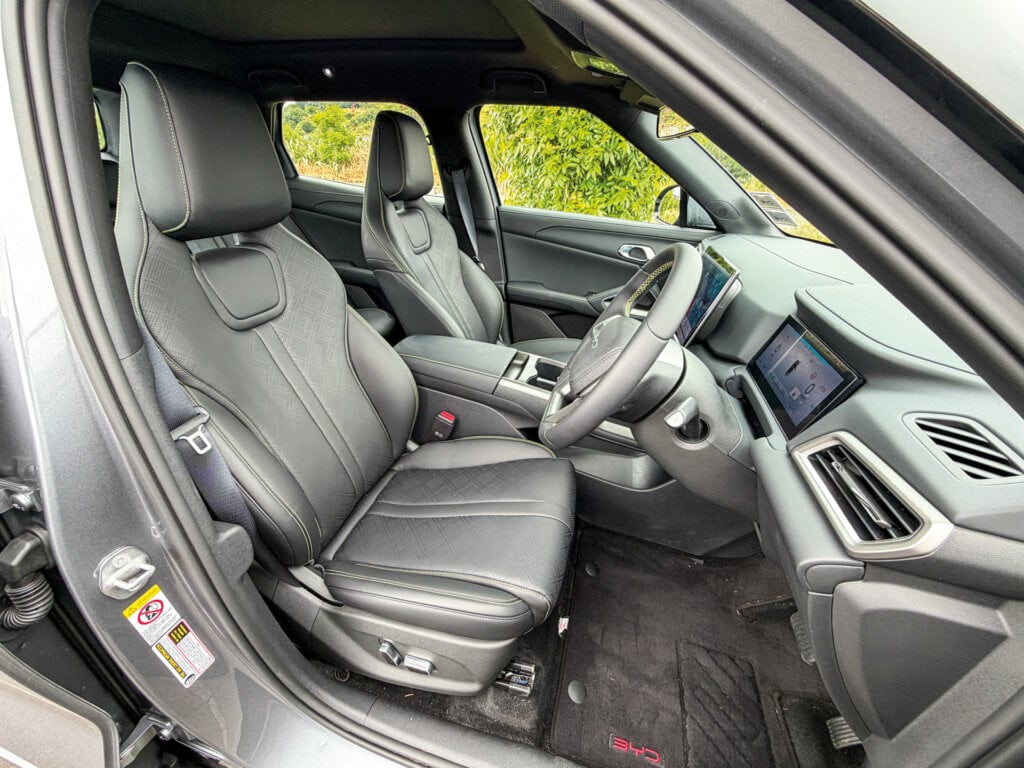
The column-mounted transmission selector frees up centre console space and makes the cabin feel open. Storage is well thought through, with a sensibly sized glovebox, useful console bins, and cup holders that actually work. Door pockets are generous, though they lack dedicated bottle moulding.
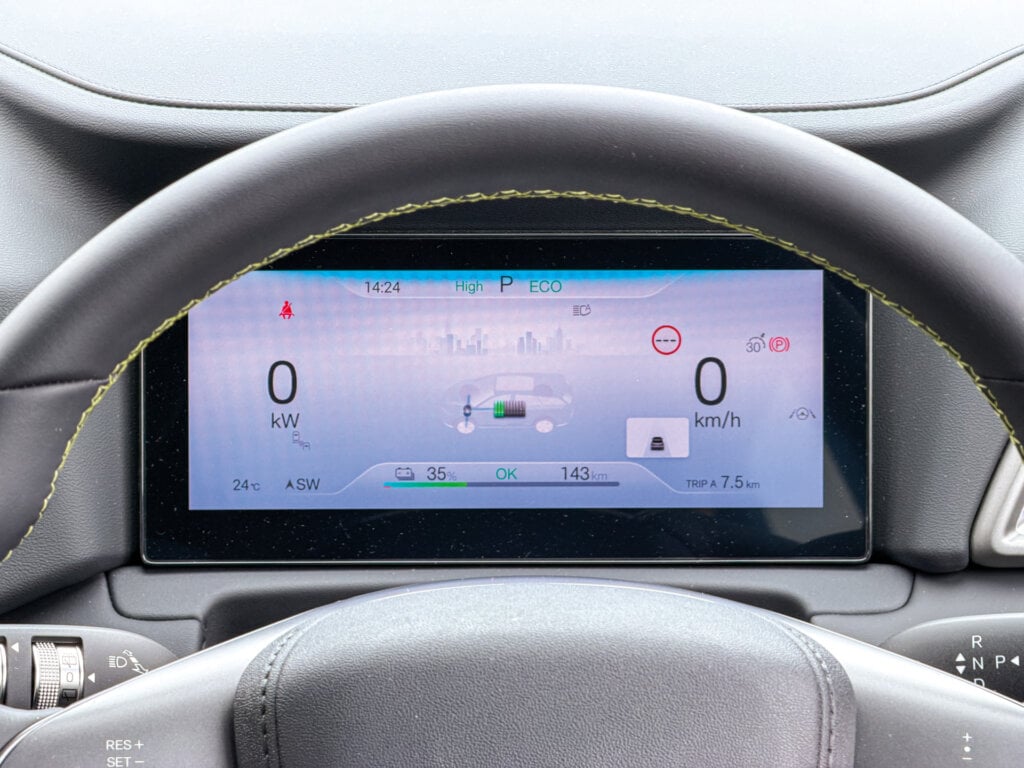
The Premium’s 12.8-inch rotating touchscreen is a highlight, but it’s worth noting that Dynamic models make do with a smaller 10.1-inch display. Functionality remains the same across both variants, including wireless Apple CarPlay and Android Auto, but the larger screen adds a layer of visual polish.
Navigation is Google-based and backed by built-in connectivity. Buyers receive 2 GB of data per month for the first two years, supporting navigation, online services, and over-the-air updates. That connectivity also underpins BYD’s smartphone app, which allows for remote monitoring, climate pre-conditioning, and basic vehicle controls. In use, it remains one of the more stable and intuitive apps among Chinese brands.
The 50-watt wireless phone charger deserves specific praise. Unlike many systems that promise fast charging but fail to deliver, this one actually does. Audio quality is another area where the Premium distinguishes itself. The eight-speaker system is a clear step up from the Dynamic’s four-speaker setup, offering better clarity and balance.
Seat comfort is strong across both variants. Synthetic leather upholstery is standard, with the Premium adding power adjustment, heating and ventilation for the front seats. Material quality consistently punches above the price point, and nothing inside feels budget or unfinished.
On the road
The Atto 2’s strongest argument is how it drives. The Atto 3 has always prioritised comfort over sportiness, and the Atto 2 follows that philosophy while sharpening the edges just enough to feel more cohesive.
We first drove the Atto 2 briefly in China, admittedly in the confines of a car park, where everything felt overly light and disconnected. Steering, throttle and brake responses bordered on vague. The transition to Australasia hasn’t turned the Atto 2 into a sharp driver’s car by any means, but it has made a noticeable difference. Weighting is better judged, responses feel more natural, and the car is far more settled at real-world speeds.
Suspension consists of MacPherson struts up front and a torsion beam at the rear. It’s a straightforward setup, but tuning is well judged. Ride quality is composed without feeling floaty, and body control is better than expected when the road begins to twist. The Hankook tyres fitted to the Premium don’t deliver outright grip heroics, but they’re quiet, predictable in the wet, and well matched to the car’s character.
Performance is brisk rather than exciting. The quoted 0–100 km/h time of 7.9 seconds feels realistic, and there’s enough immediate torque to make urban driving effortless. Steering is light but accurate, and the upright driving position delivers excellent outward visibility.
Over a weekend covering serious Auckland-to-Northland mileage, the seats proved supportive and fatigue-free. Braking performance is reassuring, with ventilated front discs and rear discs offering a progressive pedal feel. Noise suppression is good at highway speeds, helped by low drivetrain vibration and well-managed tyre noise.
The driver assistance suite is among the better implementations currently available from Chinese manufacturers. Adaptive cruise control, lane keeping assist, automatic emergency braking, blind spot monitoring, rear cross-traffic alert with braking, traffic jam assist, and traffic sign recognition are all standard. Crucially, they operate without constant intervention or excessive alerts. There’s no driver-monitoring camera, which some buyers will consider a positive.
The Premium’s 360-degree camera system is excellent for urban manoeuvring, while the generous wing mirrors aid visibility. A minimum turning radius of 5.25 metres makes the Atto 2 easy to place in tight environments.
Efficiency & range
BYD quotes a WLTP range of 345km from the 51kWh Blade battery, along with an official energy consumption figure of 17.1kWh/100 km. In mixed real-world driving, we consistently recorded figures closer to 14–15 kWh/100 km.
We’re not alone in that experience. Australian colleagues have reported similar results, noting that the Atto 2 tends to perform better in everyday use than its official numbers suggest. While it won’t challenge the most efficient EVs on the market, it delivers dependable, repeatable range without drama.
The Atto 2’s upright shape inevitably creates more aerodynamic drag, and the LFP battery chemistry, while excellent for durability and safety, adds weight. Kerb weight for the Premium sits at 1590kg. Still, predictability matters more than headline figures for most buyers, and the Atto 2 delivers exactly that.
Vehicle-to-load capability is standard on both variants and includes the discharge adaptor, allowing owners to power appliances or tools directly from the car’s battery.
Verdict
The Atto 2 is a quietly impressive addition to BYD’s New Zealand lineup. It doesn’t chase novelty or attempt to redefine the segment. Instead, it focuses on fundamentals: comfort, practicality, usable technology, and sensible pricing.
If we were buying with our own money, the $39990 Dynamic would be hard to ignore. The Premium’s $6000 uplift buys welcome rather than essential extras, and the standard car already covers the basics well. That said, buyers who value heated and ventilated seats, the larger screen, improved audio, and the 360-degree camera will find the Premium easy to justify.
Competition is only going to intensify. The MG S5 EV arguably offers stronger value on paper, but it may also be more car than some buyers actually want. Against that backdrop, the Atto 2 stands out for its balance. It feels like the better-built product, and its software, controls and overall user experience are more consistent and cohesive.
Conservative where it needs to be and competent where it counts, the Atto 2 delivers a level of polish that’s becoming a BYD hallmark. For many Kiwi buyers, that quiet competence will matter far more than chasing the latest headline.
BYD Atto 2 Premium
$45,990 / 17.1kWh/100km / 0g/km
0-100 km/h 7.9s
Motor output 130kW
Max torque 290Nm
Battery 51.13kWh
Range 345km
Drivetrain Single-speed auto / FWD
Front suspension Mac strut / swaybar
Rear suspension Torsion beam
Turning circle 10.5m (2.5 turns)
Front brakes Ventilated discs
Rear brakes Discs
Stability systems ABS, ESP
Safety AEB, ACC, BSM, LDW, RCTA, ALK, AHB
Tyre size f/r-215/60R17
Wheelbase 2620mm
L/W/H 4310 / 1830 / 1675mm
Track f-1570mm r-1570mm
Luggage capacity 380-1320L
Tow rating Not rated to tow
Service intervals 2yrs / 20,000km
Warranty 6yrs / 150,000 km
ANCAP rating Not yet rated
Weight (claimed) 1590kg