
Bugatti turns wild Bolide into elegant Destrier one-off
Words: Kyle Cassidy
Bugatti has stripped the wings and wild aerodynamic add-ons from its Bolide track car to create the Destrier, an altogether more elegant take on its most extreme machine.

The Destrier is the third one-off produced through Bugatti’s Programme Solitaire, following the Brouillard and F.K.P. Hommage. While those cars drew heavily on personal stories and the company’s history, the latest creation started with a simpler question: what would the Bolide look like if its engineering were wrapped in a body designed primarily for beauty?

The answer is a particularly dramatic-looking machine. At just one metre tall, the Destrier sits lower than any other Bugatti, while its 20-inch front and 21-inch rear wheels are considerably larger than the Bolide’s 18-inch items.
Its name refers to the powerful war horses ridden by medieval knights, which also explains some of the detailing found around the car.

Underneath, the Destrier retains the Bolide’s carbon-fibre monocoque and complete quad-turbocharged 8.0-litre W16 powertrain. It produces 1600PS, or approximately 1177kW, although Bugatti hasn’t released any performance figures for the one-off.

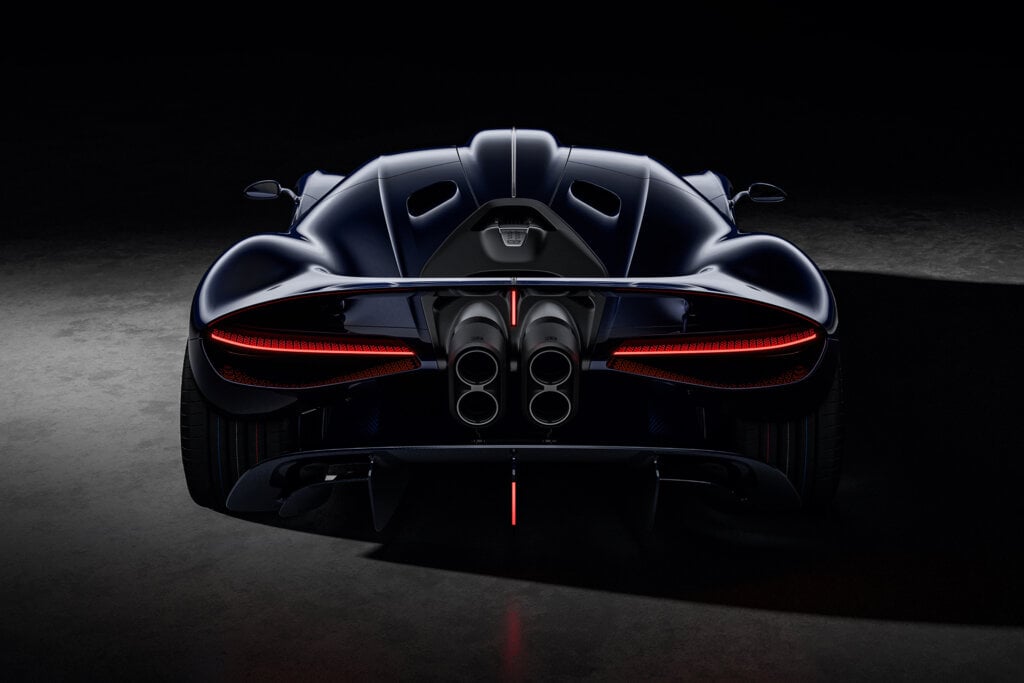
Unlike the track-focused Bolide, the Destrier does without a forest of vents, wings and other aerodynamic appendages. Its bodywork instead uses smoother surfaces and more traditional Bugatti design cues.

The familiar C-shaped character line remains, but is interrupted ahead of the front wheel before continuing towards a wider version of Bugatti’s horseshoe grille. A more subtle blended rear wing, inspired by the Chiron Profilée, replaces the Bolide’s enormous fixed item.

Bugatti has also drawn a connection between the Destrier and its Type 57 models of the 1930s. The same basic Type 57 chassis underpinned both the Le Mans-winning Type 57G and Type 57C Tank racers and the elegant Type 57SC Atlantic.
A hand-laser-engraved plate above the Destrier’s windscreen depicts the Type 57G Tank alongside the Atlantic, highlighting the idea of one engineering platform producing two very different cars.
The Destrier is finished in a unique shade called Sapphire Celeste. The multi-layer blue paint contains a diamond-inspired sparkle and is contrasted by polished aluminium trim. Exposed carbon fibre is largely restricted to the front splitter and rear diffuser, with both areas tinted to complement the paint.

The medieval theme continues in the engine bay, where several metal components have a hammered finish intended to resemble hand-beaten armour.
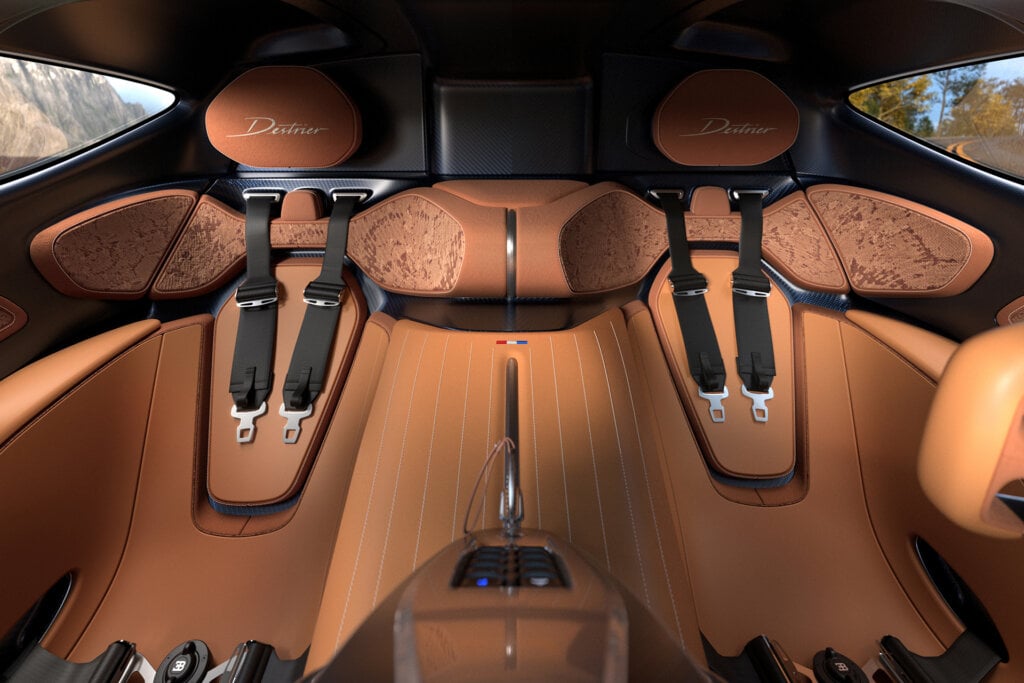
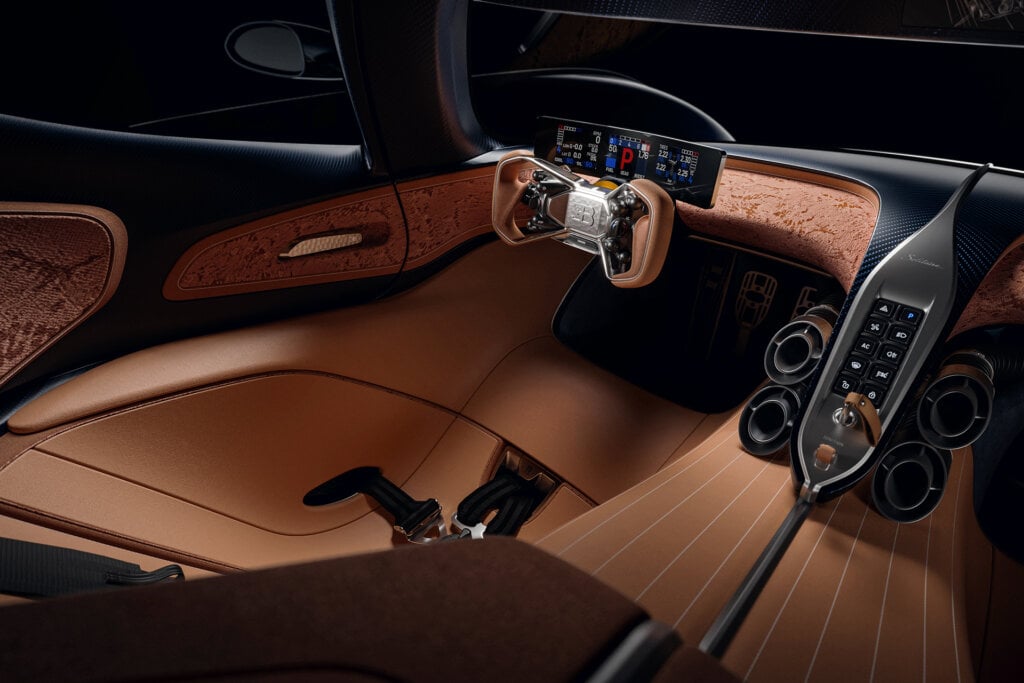
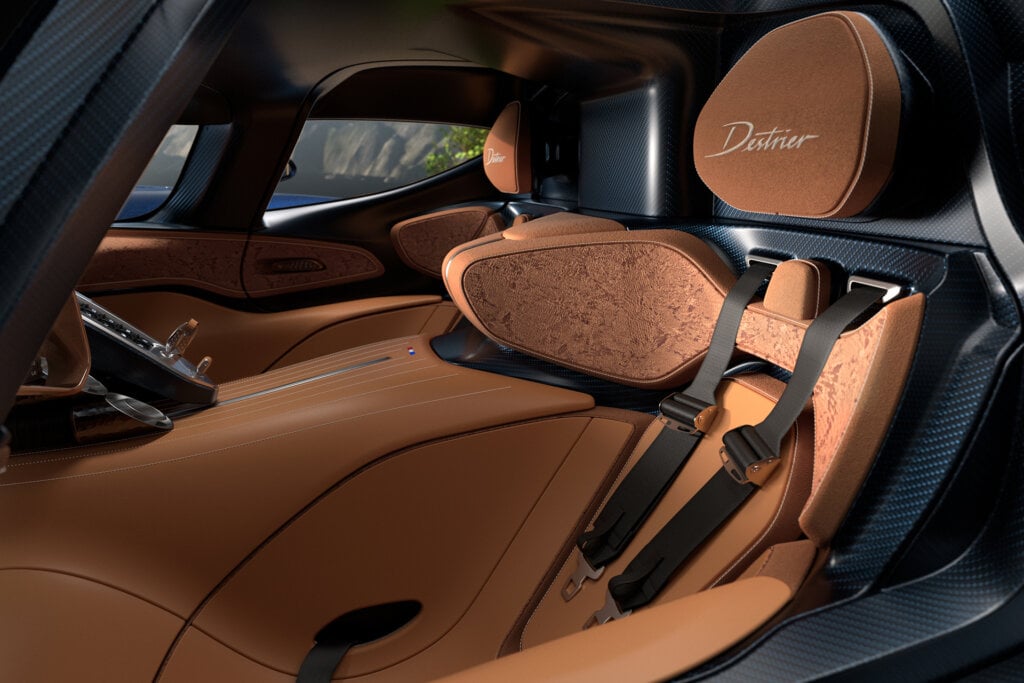
Inside, very little of the Bolide’s sparse racing environment remains. Bugatti says the cabin was inspired by a tailor’s atelier, with brown Ambre Voyageur leather and nubuck used alongside a 3D-knitted textile.
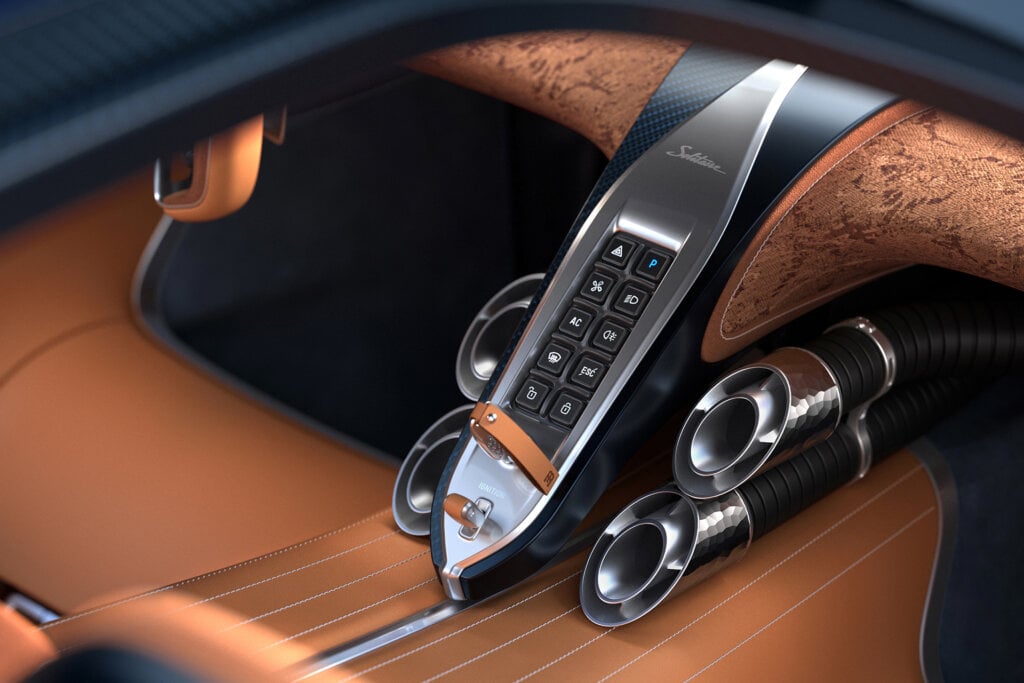
Copper yarn is woven through the knitted material, forming a circular pattern that runs around the cabin. The exterior’s hammered metal finish also appears on the door openers, air vents, steering wheel hub and entry plates.
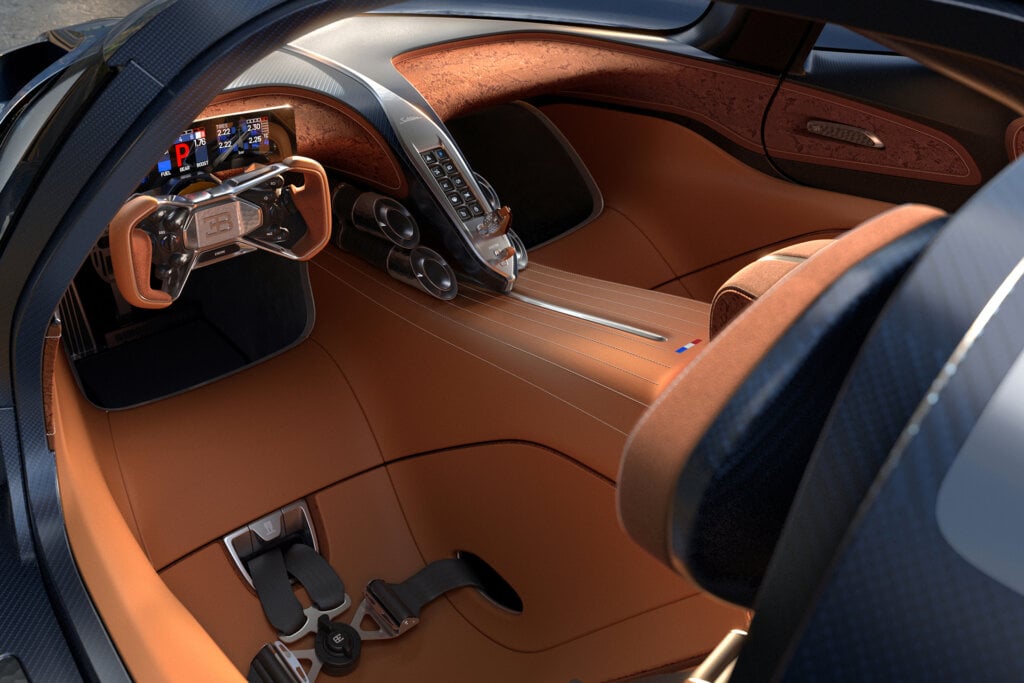
Modern parametric designs feature in the headlights and tail-lights, while the oil-filler cap carries a Destrier emblem and a “1/1” marking. A small French flag has also been placed at the centre of the cabin.
Bugatti hasn’t revealed how much the Destrier cost its owner. Considering the engineering underneath and the amount of bespoke work involved, it’s probably safe to assume the figure was similar to the annual budget of a small city hospital.
The Bugatti Destrier will make its public debut during Monterey Car Week before appearing at the Pebble Beach Concours d’Elegance on August 16, 2026.