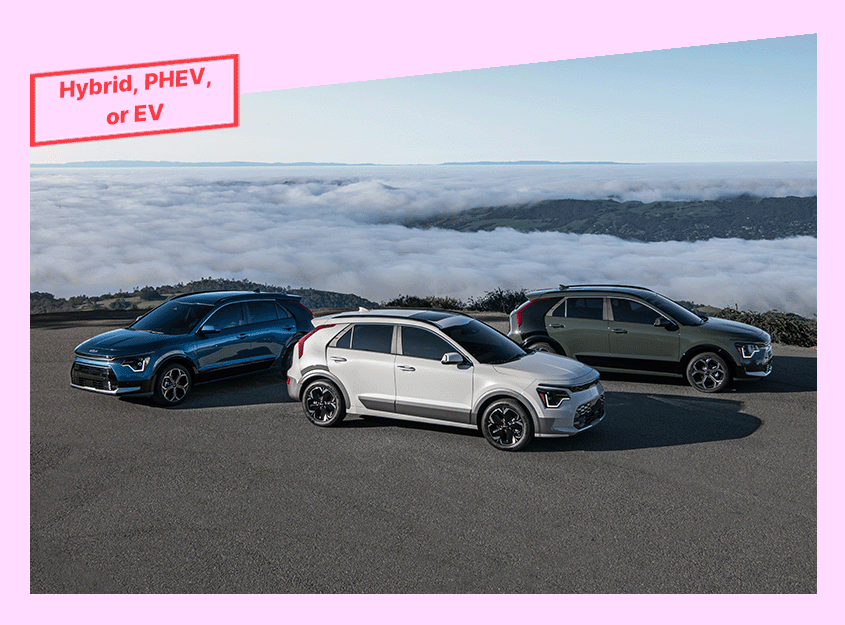
Hybrid vs PHEV vs EV: What’s the Difference? ⚡
Words: AutoTrader NZ
Electrified vehicles are becoming increasingly common on New Zealand roads – but many buyers are still unsure about the differences between a hybrid, plug-in hybrid, and fully electric vehicle.
While all three use electric power in some way, they work very differently and suit different lifestyles, budgets, and driving habits.
Here’s a simple breakdown of how each option works – and which one might suit you best.
Hybrid (HEV)
A traditional hybrid (HEV) combines:
- A petrol engine
- A small electric motor
- A battery that charges automatically while driving
You don’t plug a hybrid in. Instead, the battery recharges through regenerative braking and the petrol engine itself.
The electric motor mainly assists during:
- Low-speed driving
- Pulling away from traffic lights
- Stop-start traffic
This helps reduce fuel consumption and improve efficiency, especially around town.
Best for:
- Drivers wanting better fuel economy
- City commuters
- People not ready for full EV ownership
- Buyers wanting lower running costs without charging requirements
Pros:
✅ Better fuel economy than a normal petrol car
✅ No charging required
✅ Familiar driving experience
✅ Lower running costs
Cons:
❌ Still relies heavily on petrol
❌ Limited electric-only driving
❌ Smaller efficiency gains on open roads
Plug-in Hybrid (PHEV)
A plug-in hybrid (PHEV) combines:
- A petrol engine
- A larger battery
- The ability to plug in and charge
Unlike a standard hybrid, a PHEV can often drive short distances using electricity alone before the petrol engine activates.
Many PHEVs can cover:
- Daily commuting
- School runs
- Short city trips
…without using petrol at all – as long as the battery is regularly charged.
Once the battery runs low, the vehicle operates more like a traditional hybrid.
Best for:
- Drivers with short daily commutes
- People who can charge at home
- Buyers wanting EV-style driving without full range anxiety
- Drivers who occasionally travel long distances
Pros:
✅ Can drive on electricity alone for short trips
✅ Lower fuel costs when regularly charged
✅ Petrol engine backup for longer trips
✅ Less range anxiety than a full EV
Cons:
❌ More expensive than standard hybrids
❌ Still requires petrol
❌ Benefits reduce if you rarely charge it
👉🏼 Top tip: PHEVs work best when plugged in regularly. Without charging, they can become less efficient due to the added battery weight.
EV (Electric Vehicle)
A full EV runs entirely on electricity and has:
- No petrol engine
- No exhaust system
- A much larger battery pack
EVs are charged by plugging into:
- Home charging setups
- Public chargers
- Fast charging stations
Because there’s no petrol engine, EVs are:
- Very quiet
- Smooth to drive
- Cheaper to run day-to-day
They also have fewer moving parts, which can reduce maintenance costs over time.
Best for:
- Drivers with access to home charging
- Daily commuting and city driving
- Buyers wanting lower running costs
- People wanting zero tailpipe emissions
Pros:
✅ Lowest running costs
✅ No petrol required
✅ Quiet and smooth driving
✅ Lower maintenance requirements
✅ Zero tailpipe emissions
Cons:
❌ Higher upfront purchase price (for some models)
❌ Charging infrastructure still developing in some areas
❌ Longer charging times compared to refuelling petrol cars
Running Costs Compared
One of the biggest reasons buyers consider electrified vehicles is lower running costs.
Generally:
⚡ EVs are the cheapest to run day-to-day
🔌 PHEVs can be very efficient if charged regularly
⛽ Hybrids still reduce fuel use compared to normal petrol vehicles
EVs also typically require:
- Fewer servicing items
- No oil changes
- Less brake wear thanks to regenerative braking
Charging Differences
Hybrid (HEV)
❌ No charging required
Plug-in Hybrid (PHEV)
🔌 Can be plugged in at home or public chargers
EV
⚡ Fully dependent on charging
For many EV and PHEV owners, home charging overnight becomes part of their normal routine.
Which One Is Right for You?
The best option depends on:
- How far you drive
- Whether you can charge at home
- Your budget
- How often you travel long distances
A hybrid may suit you if:
- You want better fuel economy without changing habits
A PHEV may suit you if:
- You mostly drive short distances but still want petrol backup
An EV may suit you if:
- You can charge at home and want the lowest running costs
Bottom Line
Hybrid, PHEV, and EV vehicles all offer different advantages – and there’s no single “best” option for everyone.
The right choice comes down to your driving habits, charging access, budget, and lifestyle.
As EV technology and charging infrastructure continue to improve in New Zealand, more drivers are finding an electrified vehicle that fits the way they drive.