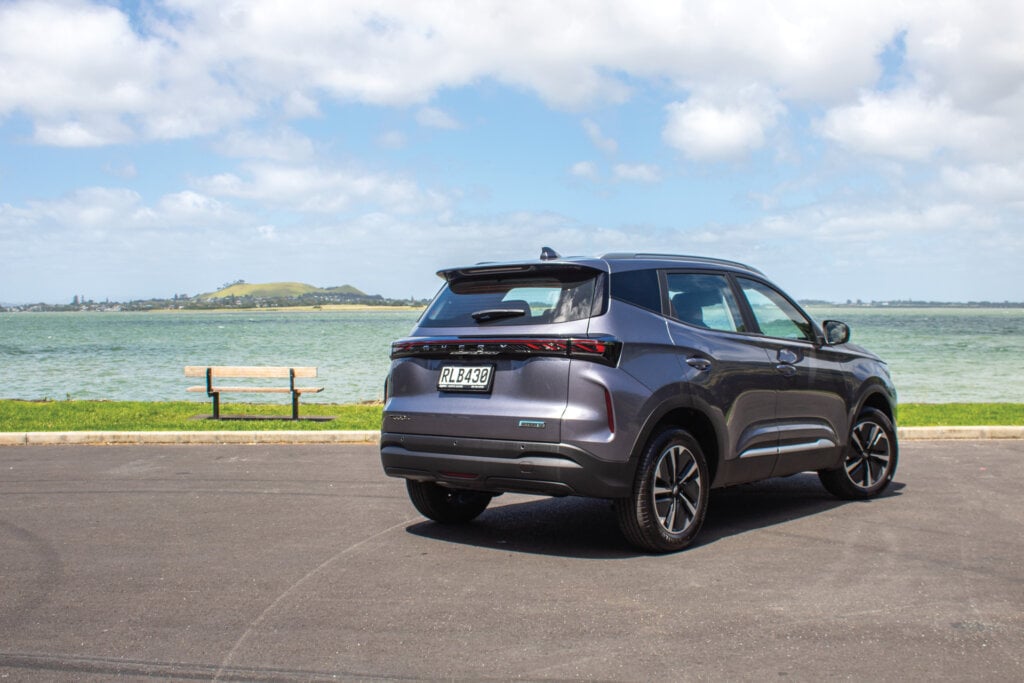

View all
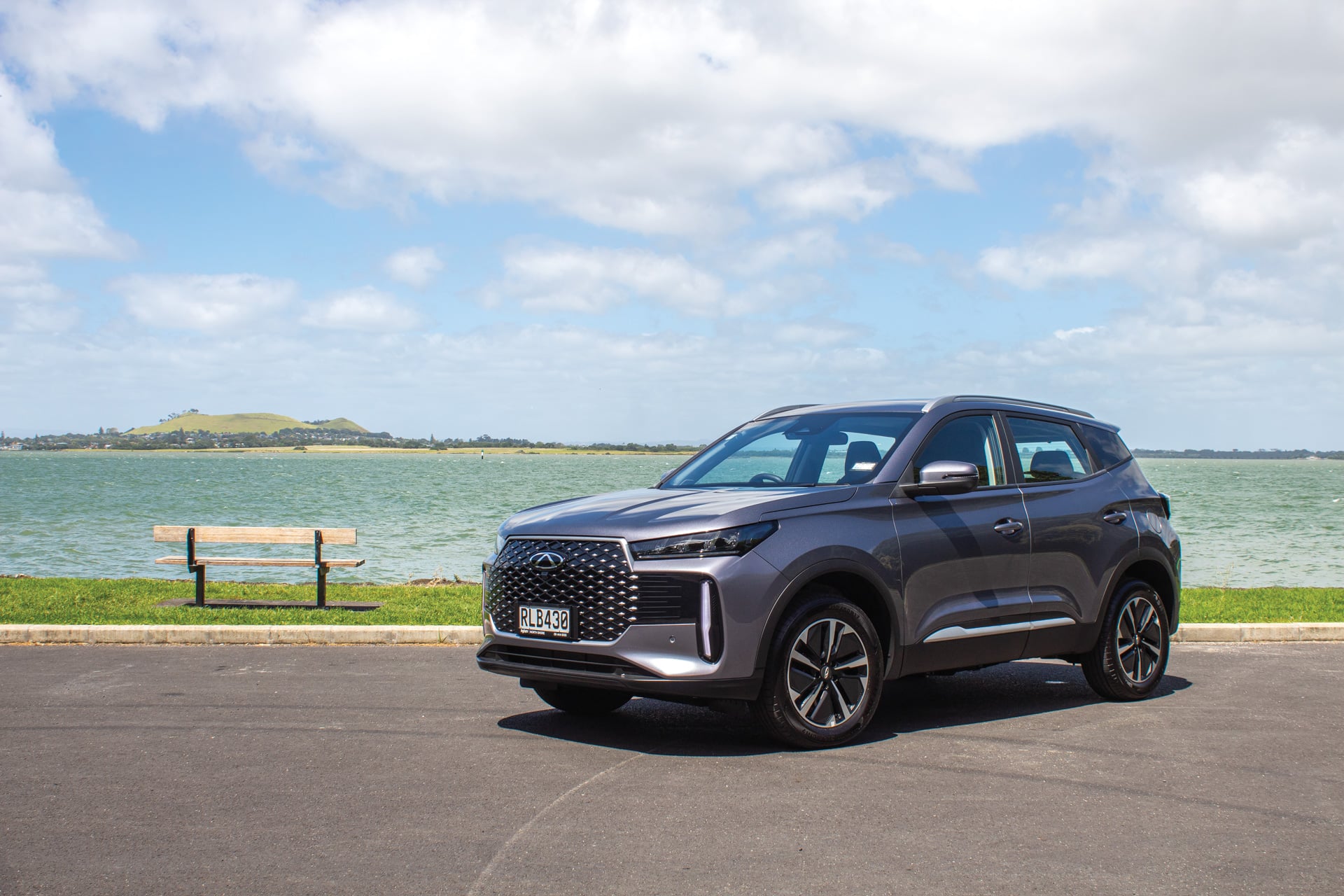
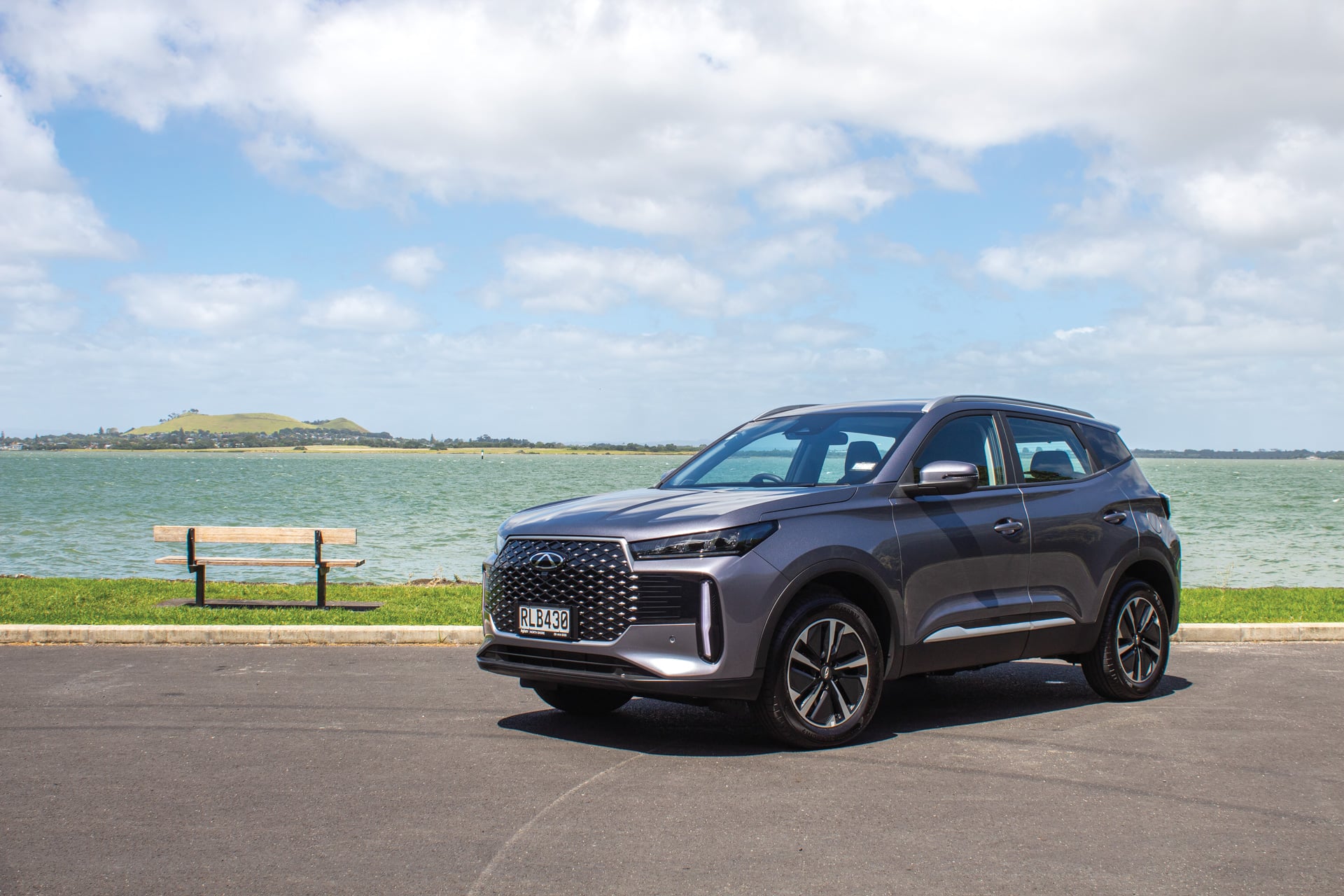
2026 Chery Tiggo 4 Hybrid Ultimate Review
Words: Kyle Cassidy | Photos: Kyle Cassidy
You’ll know the Chery Tiggo 4 reasonably well by now, it having won our Value Class award recently. We originally featured the Urban, which goes for just $25k and is a lot of vehicle for the price. It is well specified, is deemed safe by the authorities, while being a practical compact SUV. It’s small enough for easy commuting yet big enough for life.
You can step up to the Ultimate if you want a few extras, and now you can also opt for a hybrid powertrain. One of our criticisms of the ICE Tiggo 4 is its thirst. The 1.5T makes good everyday torque and even the CVT works quite well, but it can hoover gas for a little machine, especially in town ramblings.
So a hybrid will be the solution, right?
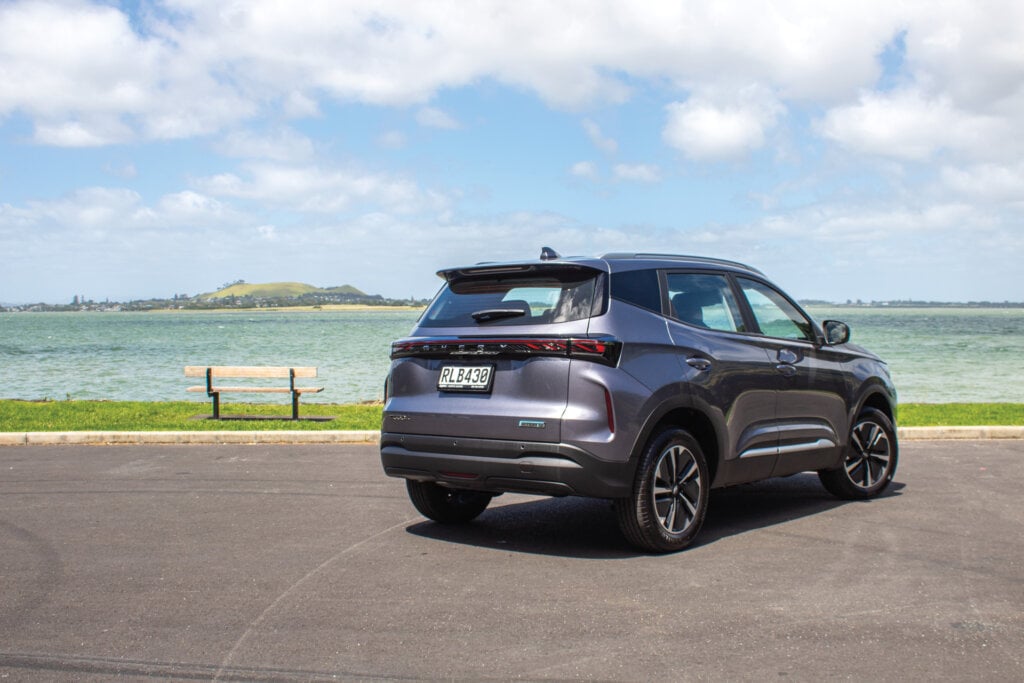
Hybrid premium
The hybrid is more expensive, eroding the Tiggo 4’s value quotient. It’s available in both Urban and Ultimate spec, each with an $8k premium over the ICE (though there is a $3k discount on the HEV at present). You get more go, the hybrid with a 150kW/310Nm output, while consumption falls from a claimed 7.4L/100km to 5.4.
When you first drive the Tiggo hybrid, you notice its smooth and torquey delivery. But also that the engine speed is somewhat disconnected from the throttle input. And that’s because it is a series parallel hybrid. The majority of the time, it’s powered by the electric motor, the petrol engine turning the generator to ensure you’ve got a continuous supply of electricity. When max thrust is required, the ICE can contribute to the overall output as well.
Swift and frugal
It’s brisk up to 50km/h, the power rolled out progressively but quickly. Being a front driver with a reasonable amount of torque, it can chirp the rubber coming out of intersections, something to watch for on wet roads in wintertime. Yet when you really want to go for the gap, there’s a palpable delay between flooring it and the power being delivered. It’s odd. And when changing from drive into reverse, you need to have a reasonable pressure on the brake pedal. It can be an issue when turning around in traffic; you wonder why you’re not going anywhere as the trans is still in neutral.
Those couple of quirks aside, the Tiggo 4 hybrid will get to 100km/h in about eight seconds, though the performance drops off from that point, so pick your moments carefully when overtaking. The Sport mode brings added response and a bit more oomph as the system calls on more contribution from the ICE. It revs harder, louder and more coarsely. Thankfully you don’t really hear much of it in town, it just sort of buzzes away.
The hybrid has the same dynamic foibles as the ICE Tiggo 4. It is softly sprung, which delivers an okay ride in town; it’s not too crashy over the bumps and so its general progress is tolerable. The steering is over assisted however, way too light and disconnected.
Through the corners you can expect a generous helping of roll which undermines what grip the front tyres have pretty quickly. It’s better suited as an urban jigger. As to its fuel use, where the ICE machine was dining out in the 9-10L/100km range in city running, the hybrid gets by on half that amount, the average in the mid-fives.

Practical however
The rest is much the same. It’s a handy size; you can fit three kids across the back seat without too many squabbles as there is quite decent leg room in this. The boot is a tad compromised as there is a lump in the floor where the 12 volt battery is sitting. You can split and fold the seats for bigger loads (no flat load floor however) though it’s not rated to tow.
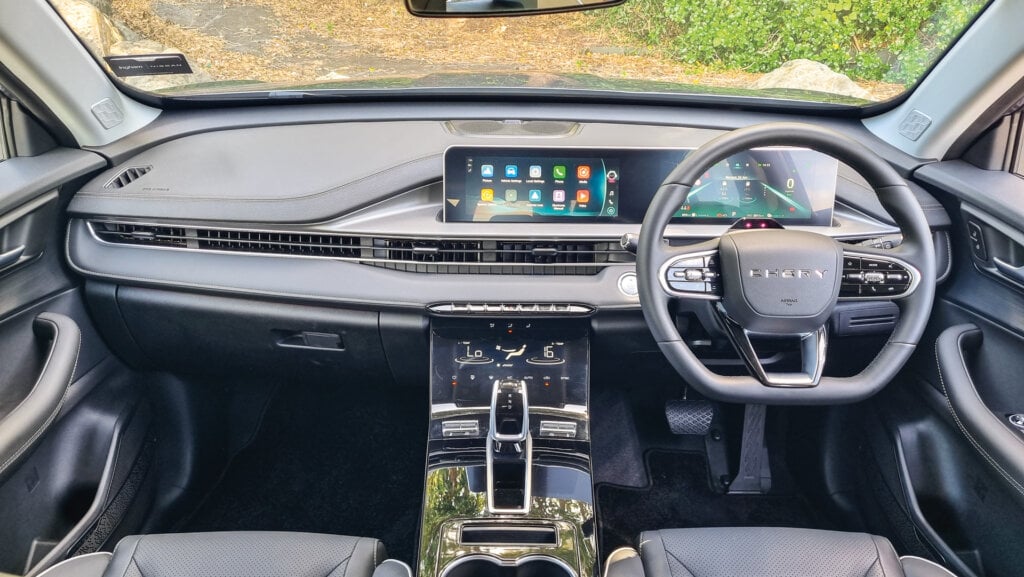
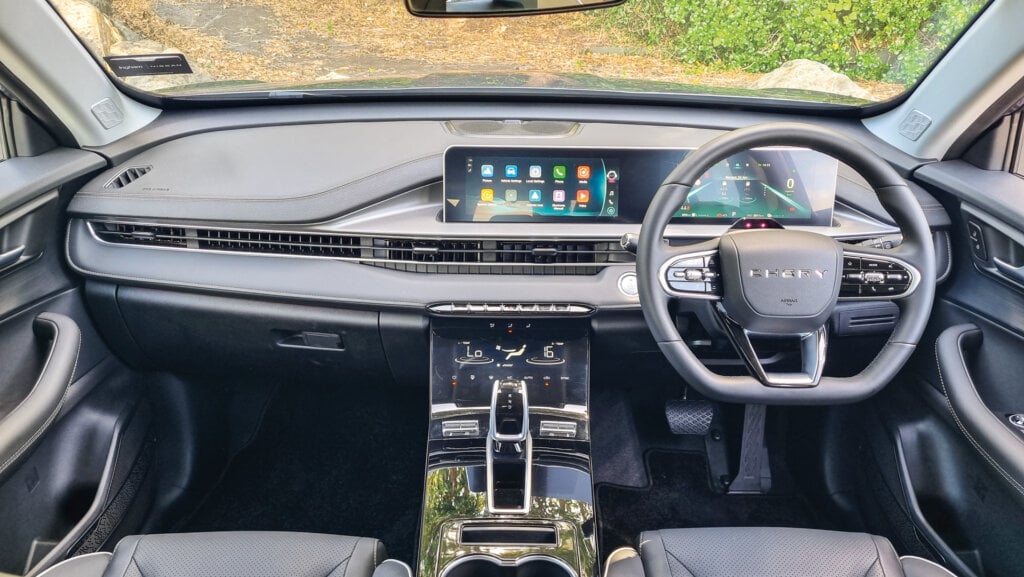
It’s a fairly simple machine to run upfront; there’s semi-intelligent voice control, and buttons for the ventilation, so not everything’s done through the touchscreen. There’s no sat nav, though phone connectivity is sorted, and there is a wireless charge pad on this Ultimate model. Yes, there are hard plastics, and the piano black finishings are overdone, but there is a good serve of soft materials too, and a good build too.
As for the ADAS features, the lane keeping likes to have its say on steering inputs, particularly at motorway speeds. While it has Intelligent Cruise (active lane centering) it’s better to opt for the regular old Adaptive mode. The driver monitoring system only tells you off when you are indeed looking away for too long and there’s no audible speed warning.
Worthy then?
Even though the hybrid carries a premium, it’s still cheaper than the Toyota Yaris Cross, though that is the superior car as far as powertrain and dynamics are concerned. The Ford Puma may only be a mild hybrid, but it’s remarkably efficient and also a better drive. But also more expensive again and not as practical. And so you’ll be looking at the Haval Jolion instead, which starts at $33k, rising to $40k. There’s also the Suzuki Fronx, at $33k, though it’s currently unavailable while they sort its seat belt-related safety issue, but it’s a good buy.
Chery Tiggo 4 Hybrid Ultimate
$37,990 / 5.4L/100km / 123g/km
0-100 km/h 8.1s
Engine 1.5L ,IL4
Max power 150kW
Max torque 310Nm
Drivetrain 1-speed auto, FWD
Weight (claimed) 1494kg