View all
3 more images
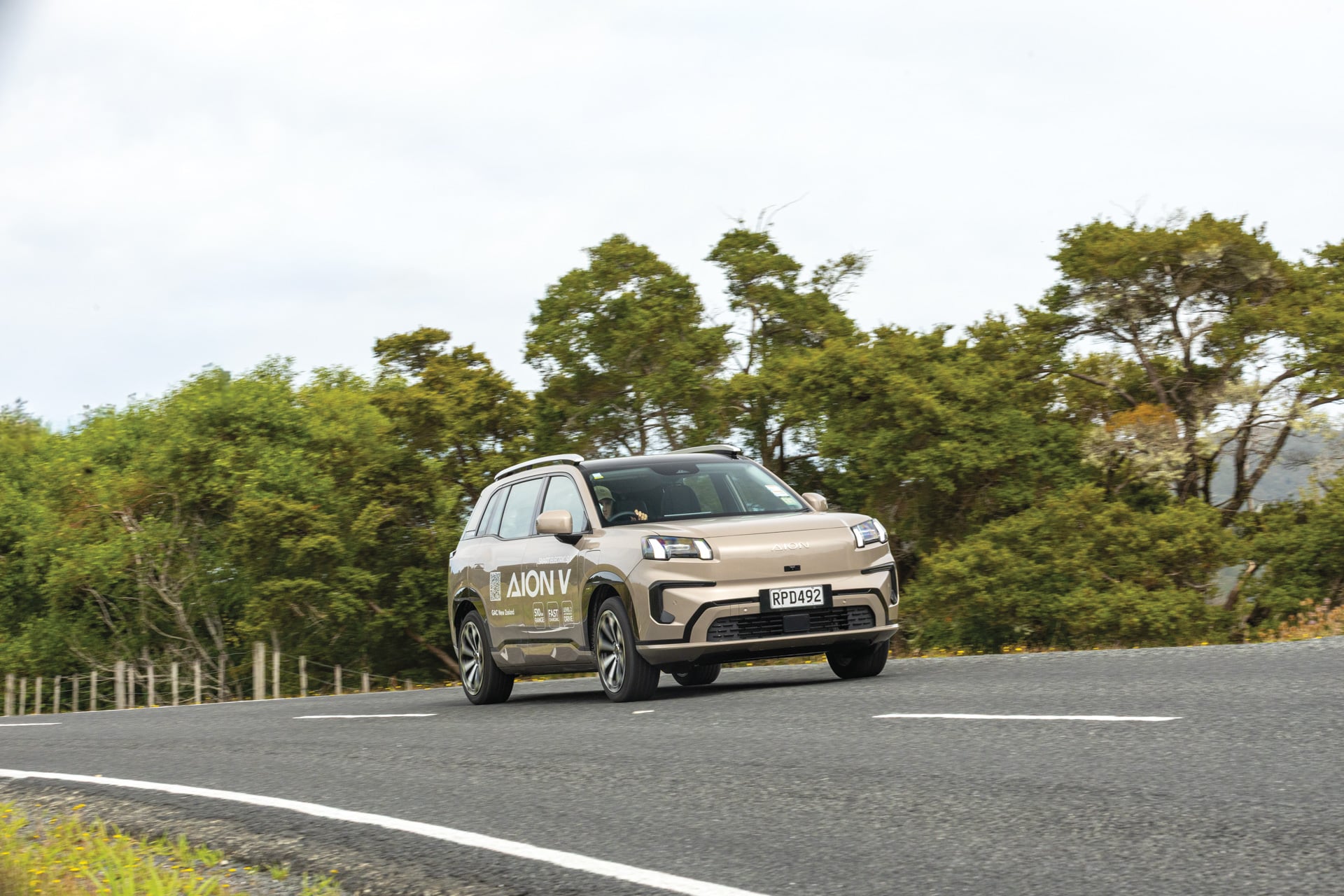
2026 GAC Aion V Luxe Review
Words: Richard Edwards | Photos: Alex Schultz
You might not have heard of GAC, yet another new arrival to the market from China. But it’s first offering here, the Aion V, is a thoroughly decent package, with some standout numbers and a few quirky features too.
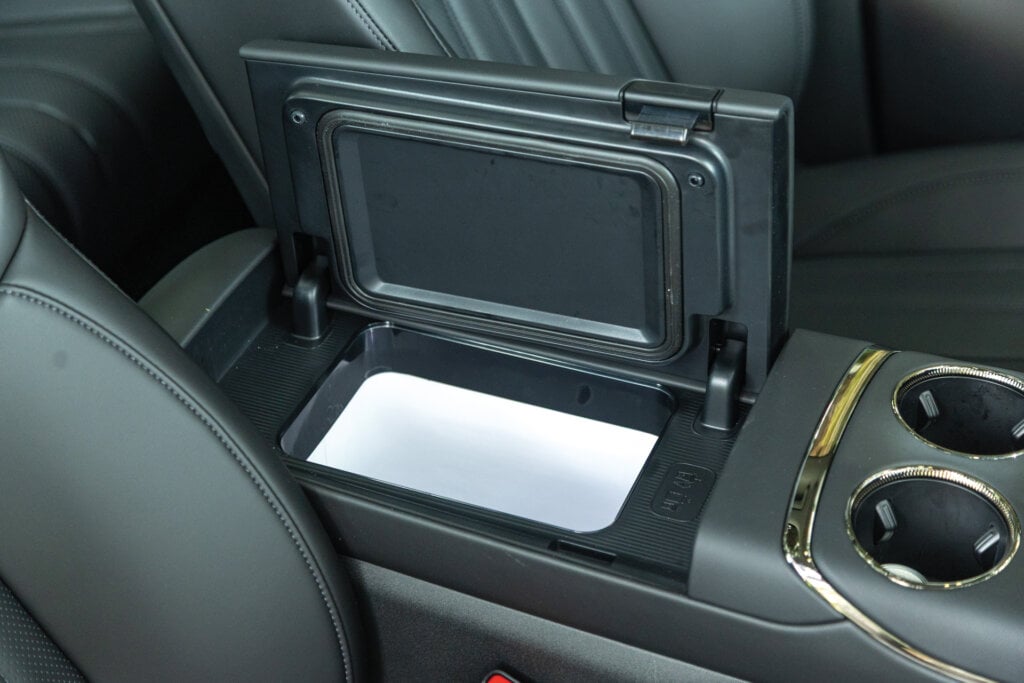
I never thought I would care about a fridge in a car. It sounded like one of those gimmicky features that looks good on a spec sheet but never gets used. But after just a couple of days with GAC Aion V Luxe, I was reorganising the supermarket shop around what would fit in the centre console. My daughter was eating ice cream off the fold-down rear tray table on the drive home. I was chilling drinks on the way to a barbecue. I have been converted.
But here is the thing about the Aion V: the fridge is not even close to the most impressive part. This is a medium-sized electric SUV with 510km of claimed range, 180kW DC fast charging, a five-star Euro NCAP rating, heated and ventilated seats, and a level of standard equipment that makes you wonder what the catch is. The price? From $49,990 before on-road costs. The catch, as far as I can tell, is that almost nobody in New Zealand has heard of GAC.
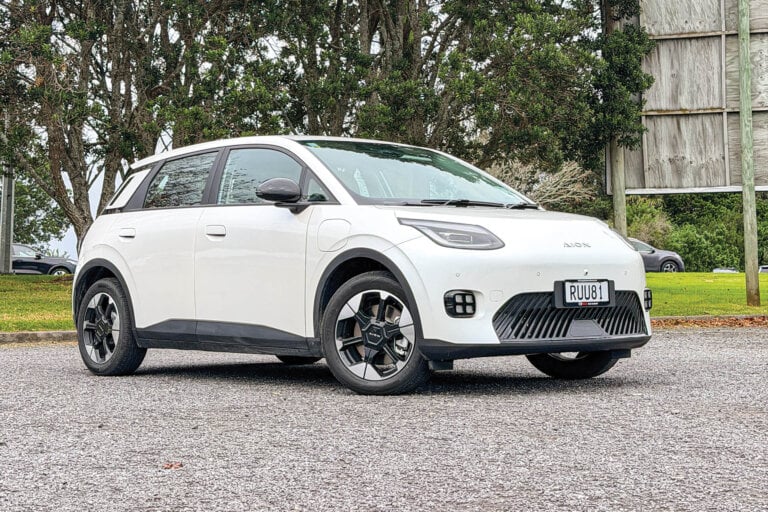
The Aion V is a medium-sized electric SUV available in two variants. The Premium starts at $49,990 and the Luxe tested here at $51,990, though each has a $2000 launch discount at present. In New Zealand, Aion sits as a sub-brand underneath the GAC umbrella, with the smaller Aion U city car also on the way.
What you get
The Aion V uses a 150kW/210Nm front-mounted electric motor paired with a 75.26kWh LFP battery from CATL. GAC claims 510km of WLTP range, a top speed of 160km/h and 0-100km/h in 7.9 seconds. DC fast charging peaks at 180kW, with a claimed 10-80 per cent time of 24 minutes.
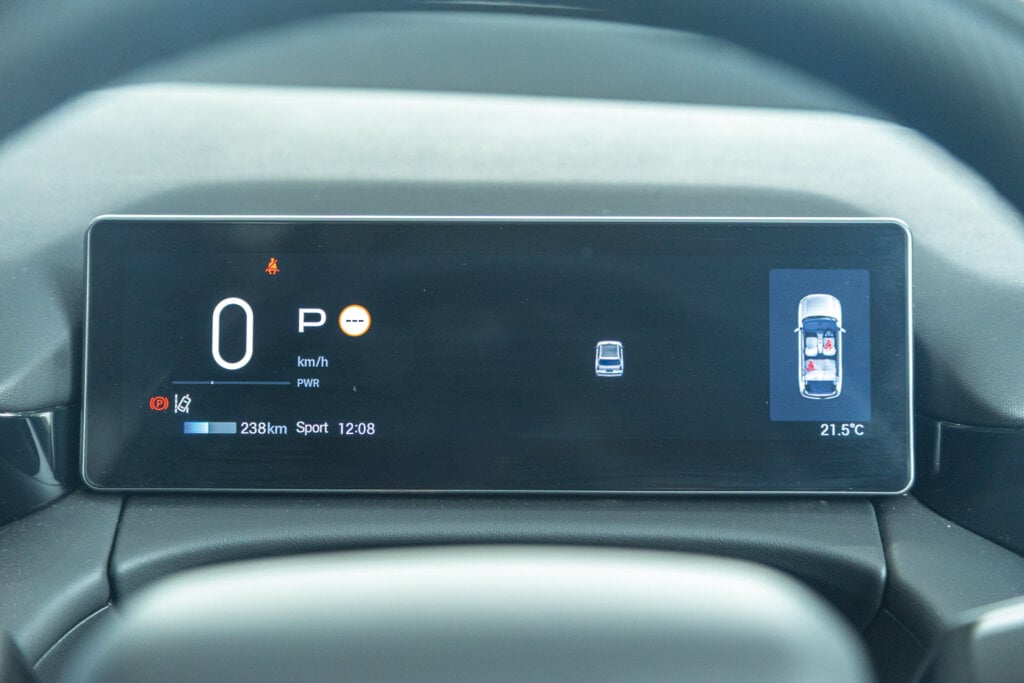
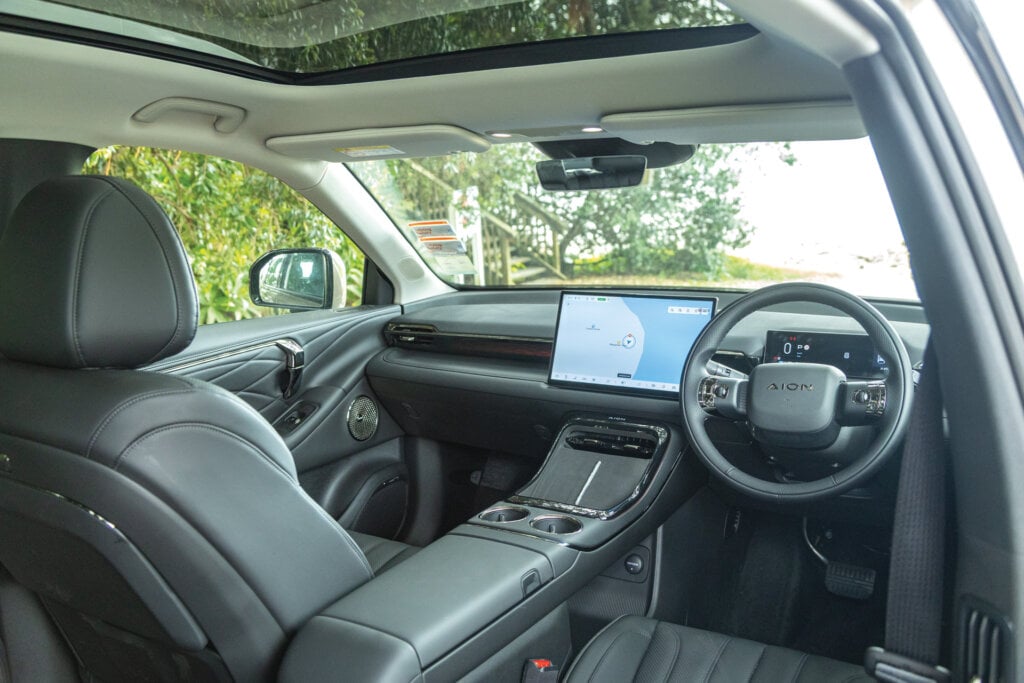
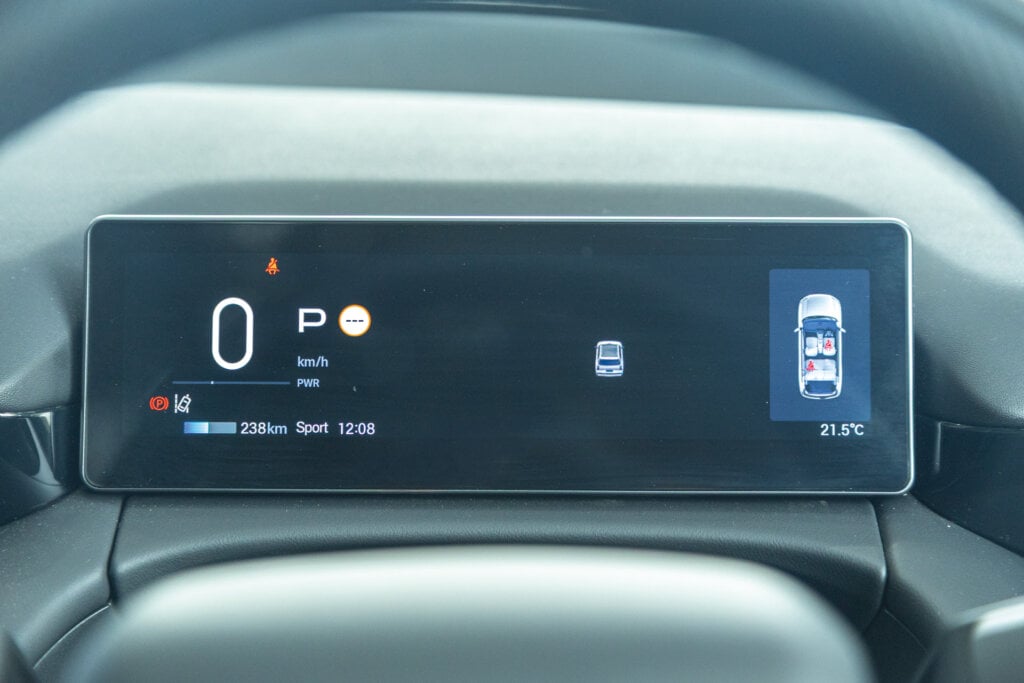
Standard equipment is generous. The Premium gets 19s, a panoramic sunroof, smart power tailgate, heated and ventilated front seats, a 14.6-inch touchscreen with Apple CarPlay and Android Auto, an 8.8-inch driver’s display, wireless phone charging, 9-speaker audio, dual-zone climate control, a heat pump and a comprehensive suite of Level 2 ADAS. It has a 2025-compliant five-star Euro NCAP safety rating.
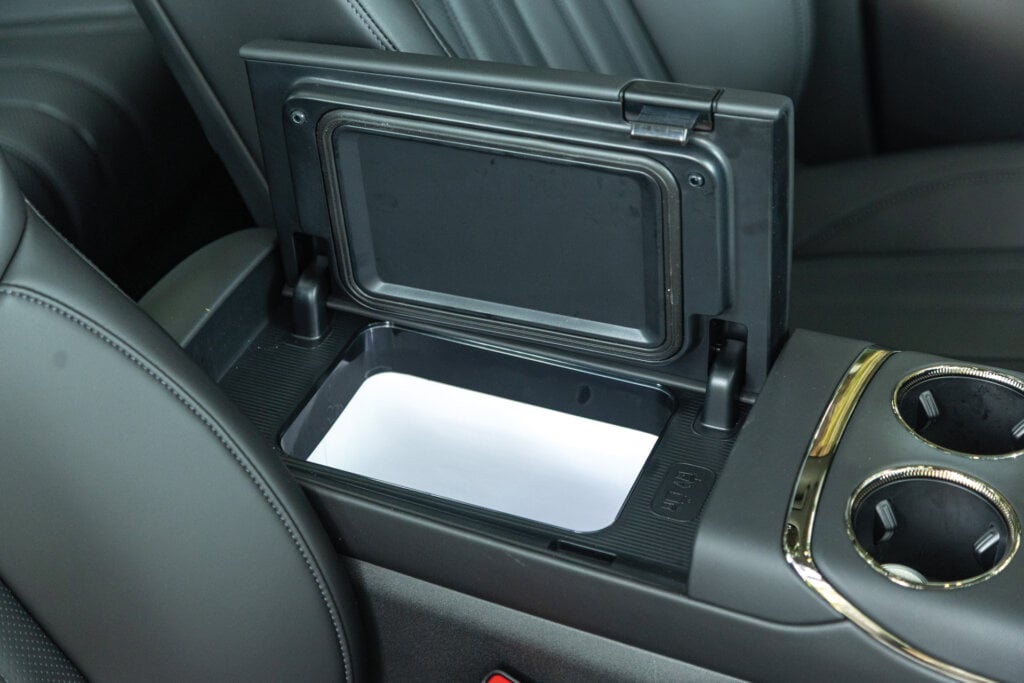
The Luxe adds massaging seats, the folding rear tray table, and the aforementioned 6.6-litre refrigerator/warmer. It can drop to minus 15 degrees or heat to 50 degrees (hot pies on a road trip, theoretically), controlled via the touchscreen. Between the fridge and the massages, the $2000 step up to Luxe feels like a no-brainer.
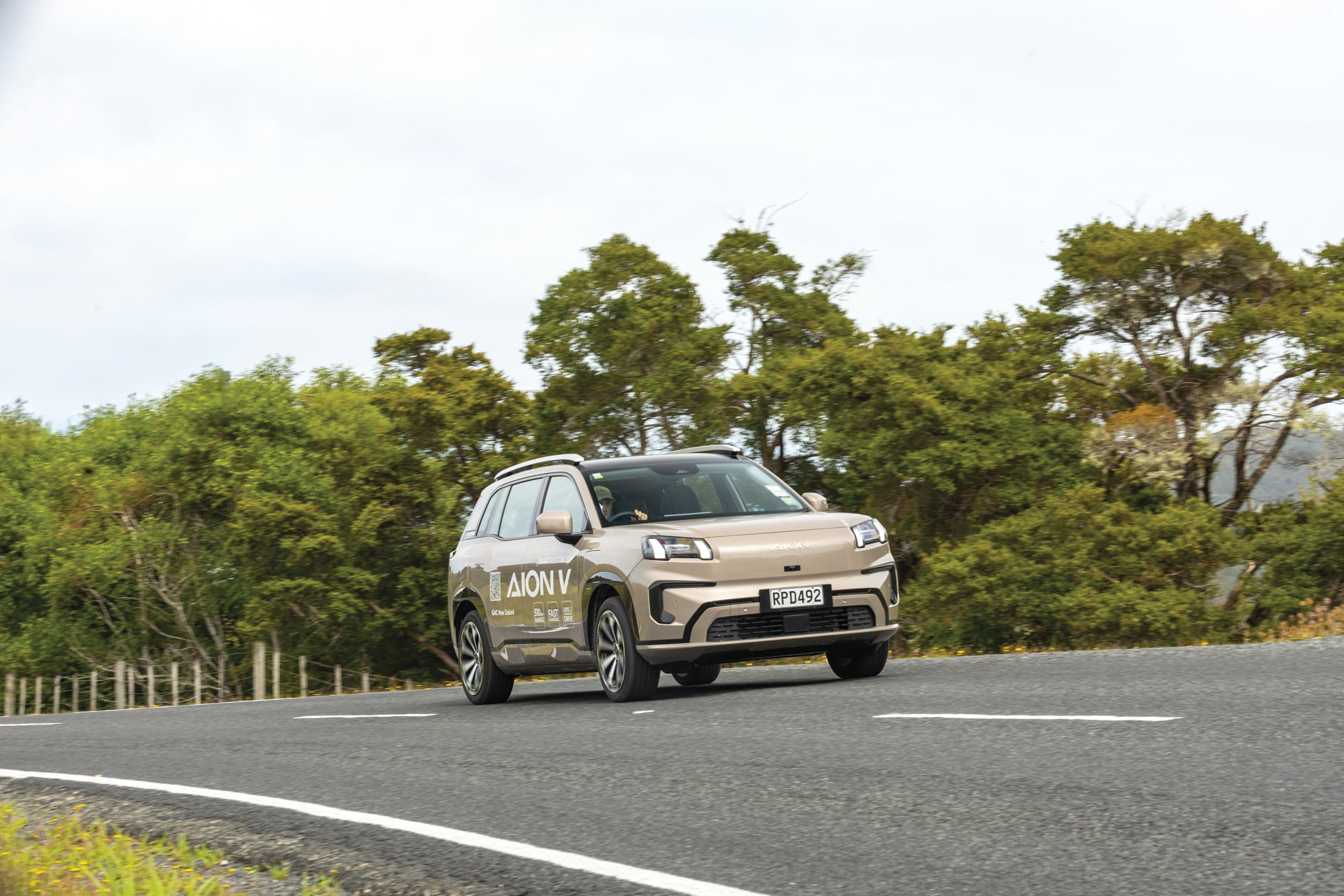
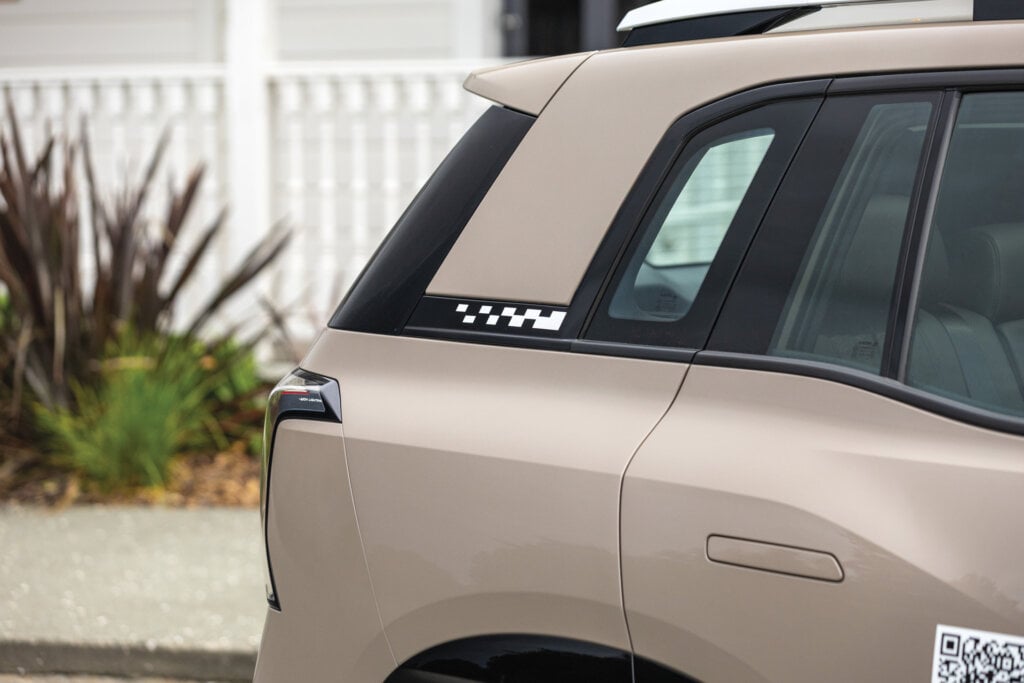
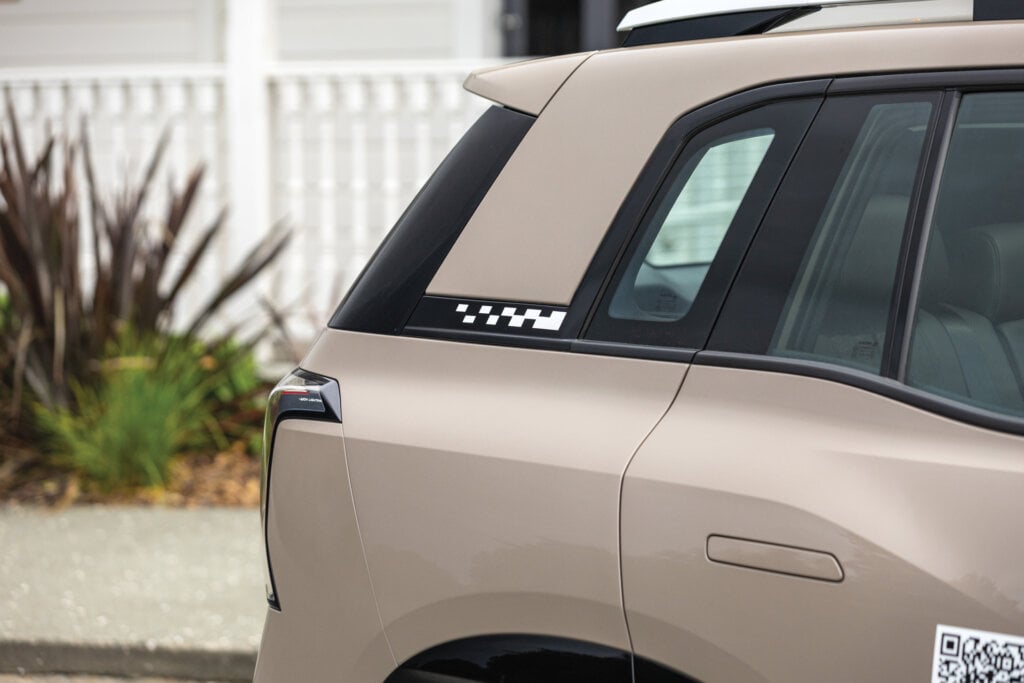
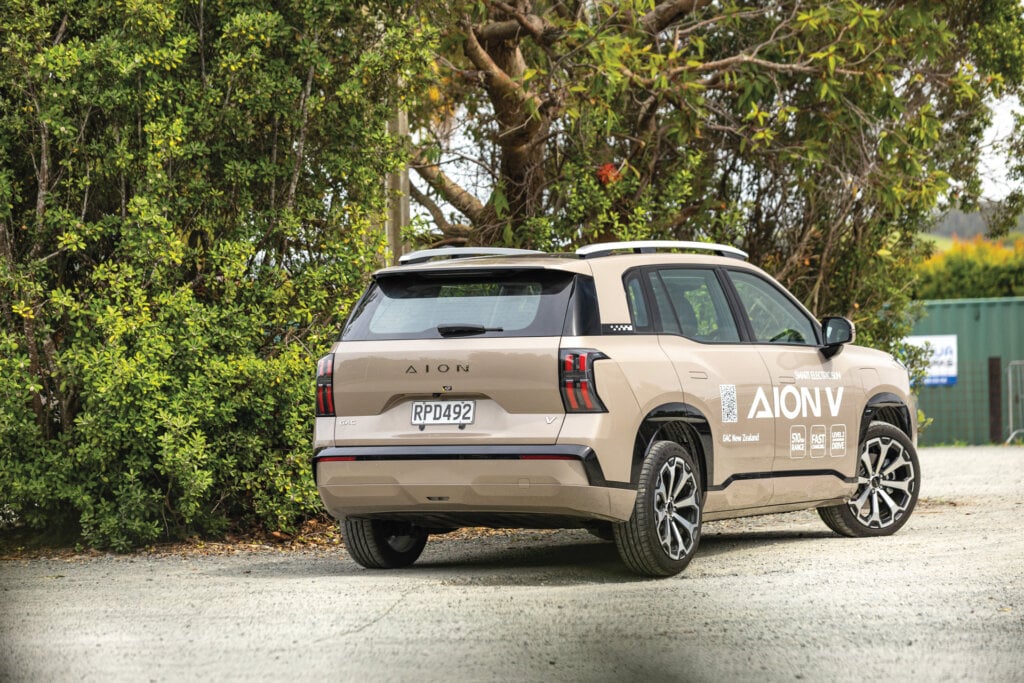
Where most electric SUVs chase aerodynamic efficiency with smooth, teardrop shapes, the Aion V is blunt, squared off and boxy. It’s a monobox design intended to maximise interior space, and it works. Up front, claw-like headlights sit above big ventilation openings and 360-degree cameras. The profile features pop-out door handles (very Tesla-adjacent, and they work fine), chunky roof rails and an interesting rising window line that gives the rear haunches some visual muscle. There is piano black trim around the windows and at the rear that will inevitably scratch and collect dust on New Zealand roads.
There is no frunk but the boot offers 427 litres expanding to 978, and while the depth front-to-back is modest, the overall volume is strong thanks to good height. A false floor lifts to reveal space for the charging cable and tyre repair kit, with a space-saver wheel available as an option. There is 12-volt power in the boot, and the car supports vehicle-to-load. There is also a tow mode buried in the vehicle settings, though GAC New Zealand says it is still awaiting an official tow rating.
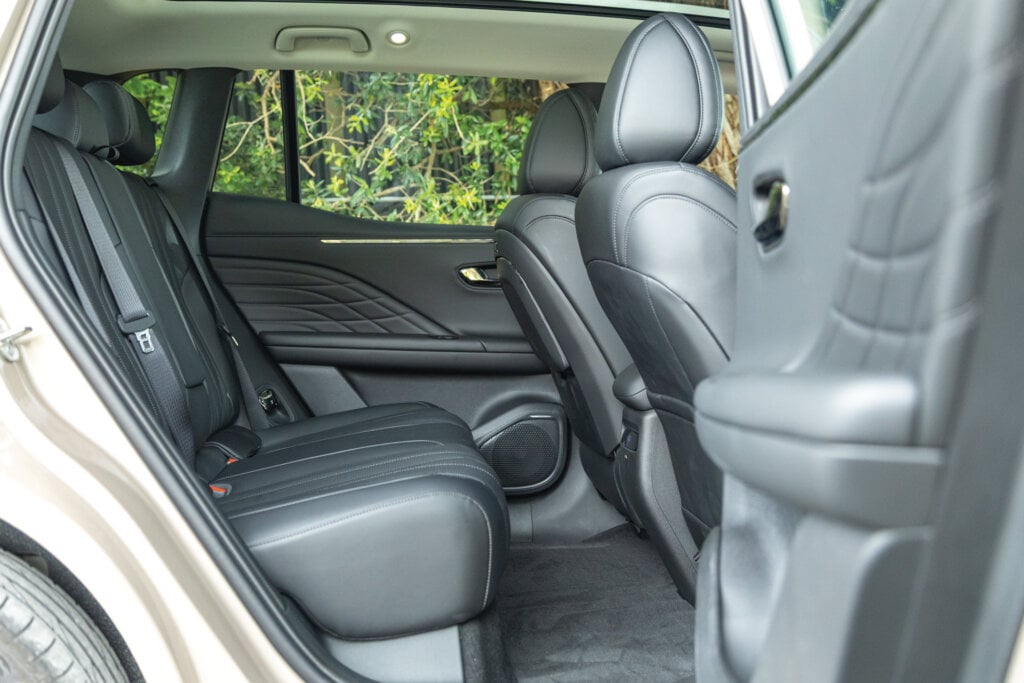
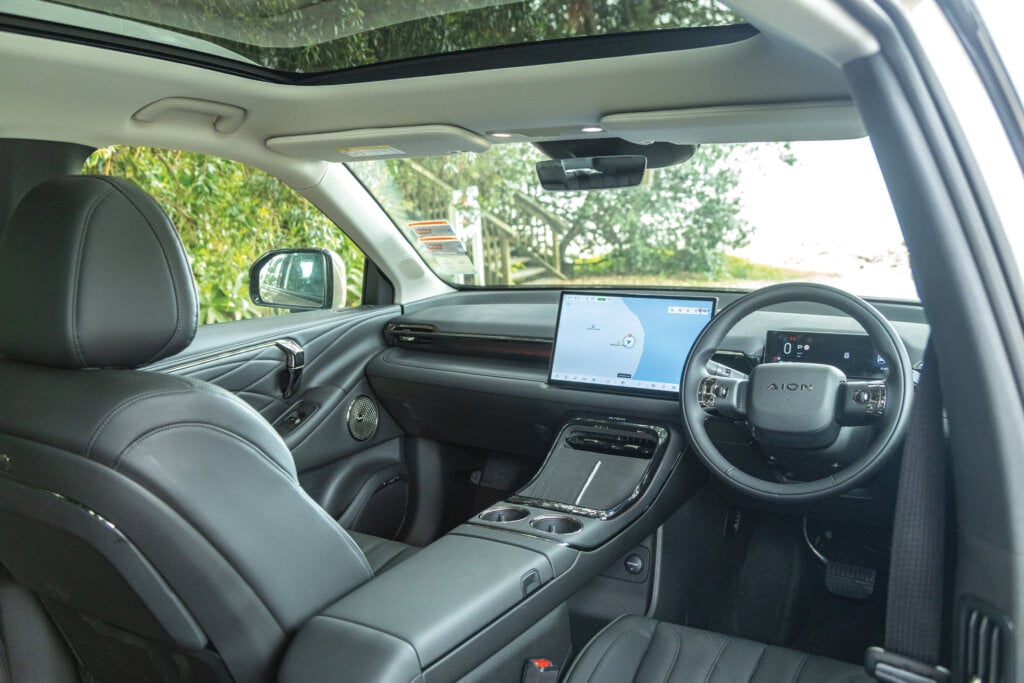
The rear seat is, frankly, limo-like. With a 2,775mm wheelbase accounting for roughly 60 per cent of the car’s 4,605mm length, legroom is enormous. Soft-touch materials extend throughout, and you have to reach quite low to find any scratchy plastic. There’s a big centre armrest with cupholders and, on the Luxe, the folding table on the front seatback.
Up front, the cabin is well finished with soft materials and nice stainless trims even on the speaker surrounds. There is, however, no glove box, which is a strange omission. Storage under the centre console is generous and includes USB charging and a 50-watt wireless charging pad with cooling. The door locks are also buried in the touchscreen with no physical button, which is an odd choice.
On the road
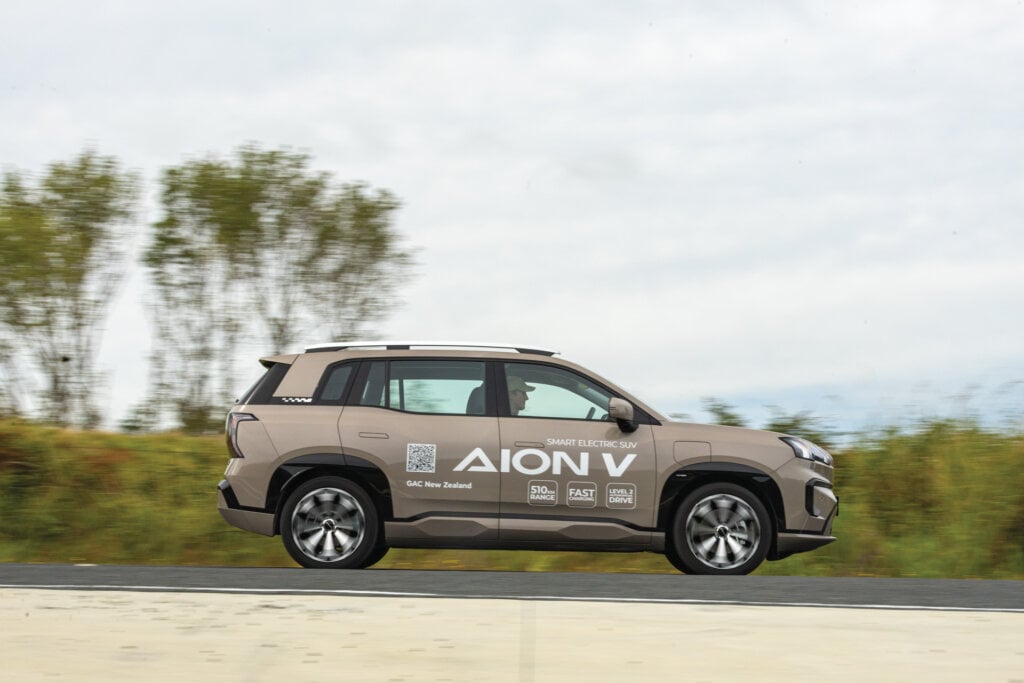
This feels faster than the numbers suggest. GAC claims 150kW and 210Nm, but having driven the car hard through the hills around Kaiwaka, I am not entirely convinced those torque figures tell the whole story. The shove off the line feels more like 350Nm territory, equivalent to a decent two-litre turbo.
Drive modes include Eco, Normal and Sport, though in practice the car is happy in Normal for most situations. Power delivery is smooth and meaty regardless.
Efficiency has been a genuine highlight. Even with an enthusiastic right foot through twisty roads, the trip computer has sat stubbornly around 16kWh/100km. Run the maths on the 75.26kWh battery at that consumption rate and you are looking at a reliable 450km or more in real-world driving. For a car priced under $50,000, that sets a new benchmark for usable range.
We tested DC charging at the ChargeNet station in Kaiwaka and peaked at 157kW. GAC claims 180kW, and it is possible the battery simply was not warm enough to hit its maximum on the day. Even at 157kW, this is up there with, if not better than, the standard-range Teslas, and comfortably the fastest-charging car available for under $50,000 in New Zealand.
Handling is surprisingly tidy for a front-wheel-drive family SUV. The steering feels responsive with genuine feedback, and the chassis stays composed through corners. The ride is on the firm side, but I would point the finger at the 19-inch wheels with their relatively low-profile, performance-oriented tyres rather than the suspension itself. An 18-inch wheel with more sidewall would likely deliver a better overall result for New Zealand conditions, and probably reduce the road noise on coarse chip that is the one notable refinement issue. Wind noise and cabin creaks are otherwise well suppressed, and there is only a faint hum from the front motor.
Visibility is outstanding. The windows are large, the mirrors are massive, and the driving position is high and commanding. GAC has clearly prioritised the things that make a car easy to live with every day, and it shows.
Beeps and bongs
The ADAS system needs calibrating. The intelligent speed warning triggers the moment you touch the posted limit with zero tolerance, and the driver monitoring camera is overzealous. Silencing all the beeps and bongs requires navigating three screens and roughly 10 button presses, which, while arguably the right approach (these systems should not be easy to disable), is frustrating when the underlying calibration is the issue. Fix the sensitivity, and the problem goes away.
Lane keeping is non-intrusive, and the adaptive cruise control on the motorway is genuinely relaxing. It does not brake aggressively for gentle curves the way some Level 2 systems do on New Zealand highways.
The built-in navigation also needs an over-the-air update. It tried to route me through a supermarket car park and through the middle of a restaurant on the way to my destination. The car does support OTA updates, so this should be fixable.
Verdict
The GAC Aion V arrives at exactly the right time and exactly the right price. A five-star Euro NCAP electric SUV with 510km of claimed range, fast charging, a generous equipment list and a genuinely mature driving experience for under $50,000 is a compelling proposition. It offers much of what a Tesla Model Y does, for roughly $20,000 less.
The software needs minor polish, the ADAS calibration needs a New Zealand tune, and the tyres could do with a rethink. But these are small things. The fundamentals of the car, the space, the quality, the efficiency, the charging speed, are all seriously impressive.
GAC may be an unknown name in New Zealand, but on this evidence, it will not stay that way for long.
GAC Aion V Luxe
$51,990 / 16.7kWh/100km / 0g/km
0-100 km/h 7.9s
Motor output 150kW
Max torque 210Nm
Battery 75.26kWh
Range 510km
Drivetrain Single-speed auto / FWD
Front suspension Mac strut / swaybar
Rear suspension Torsion beam
Turning circle 11.2m (2.4 turns)
Front brakes Ventilated discs
Rear brakes Discs
Stability systems ABS, ESP
Safety AEB, ACC, BSM, LDW, RCTA, ALK, AH
Tyre size f/r-225/45R19
Wheelbase 2775mm
L/W/H 4605 / 1876 / 1686mm
Luggage capacity 427-978L
Tow rating TBC
Warranty 8yrs / 160,000 km
ANCAP rating ★★★★★ (2025)
Weight (claimed) 1920kg