View all
21 more images
2026 Zeekr 7X Performance AWD Review
Words: Richard Edwards | Photos: Alex Schultz
The Zeekr 7X arrives to challenge the establishment in the premium space with a thoroughly compelling package. But is it priced too well to be considered by those shopping in that arena?
The mid-size electric SUV segment has become the undisputed battleground of the decade. But the Zeekr 7X arrives with a very clear mission: to bring genuine luxury and serious performance at a price that makes the establishment properly nervous.
There was a time when premium meant European. German, ideally. Perhaps Swedish at a push. That paradigm has been crumbling for years, and the Zeekr 7X might just be the vehicle that finally buries it. This is a medium-sized SUV designed in Gothenburg, engineered to satisfy Chinese tastes for rear-seat luxury, and built on some of the most advanced 800V architecture currently available anywhere. We have been testing the flagship Performance AWD variant ($94,990) to see if the reality matches the spec sheet.
The Zeekr 7X Range
Zeekr has kept things simple for New Zealand with three variants. The entry point is the RWD model at $69,990, powered by a 75kWh LFP “Golden Brick” battery with 310kW and 440Nm, good for a claimed 480km of WLTP range. Step up to $79,990 and you get the Long Range RWD with a 100kWh battery pack and a claimed 615km range.
Our test car sits at the top. The Performance AWD shares that 100kWh battery but adds a front motor for a combined 475kW and 710Nm. The claimed range drops to 543km, but honestly, range anxiety is not something you will experience with this vehicle. Partly because of the generous battery capacity, and partly because of what happens when you plug it in.
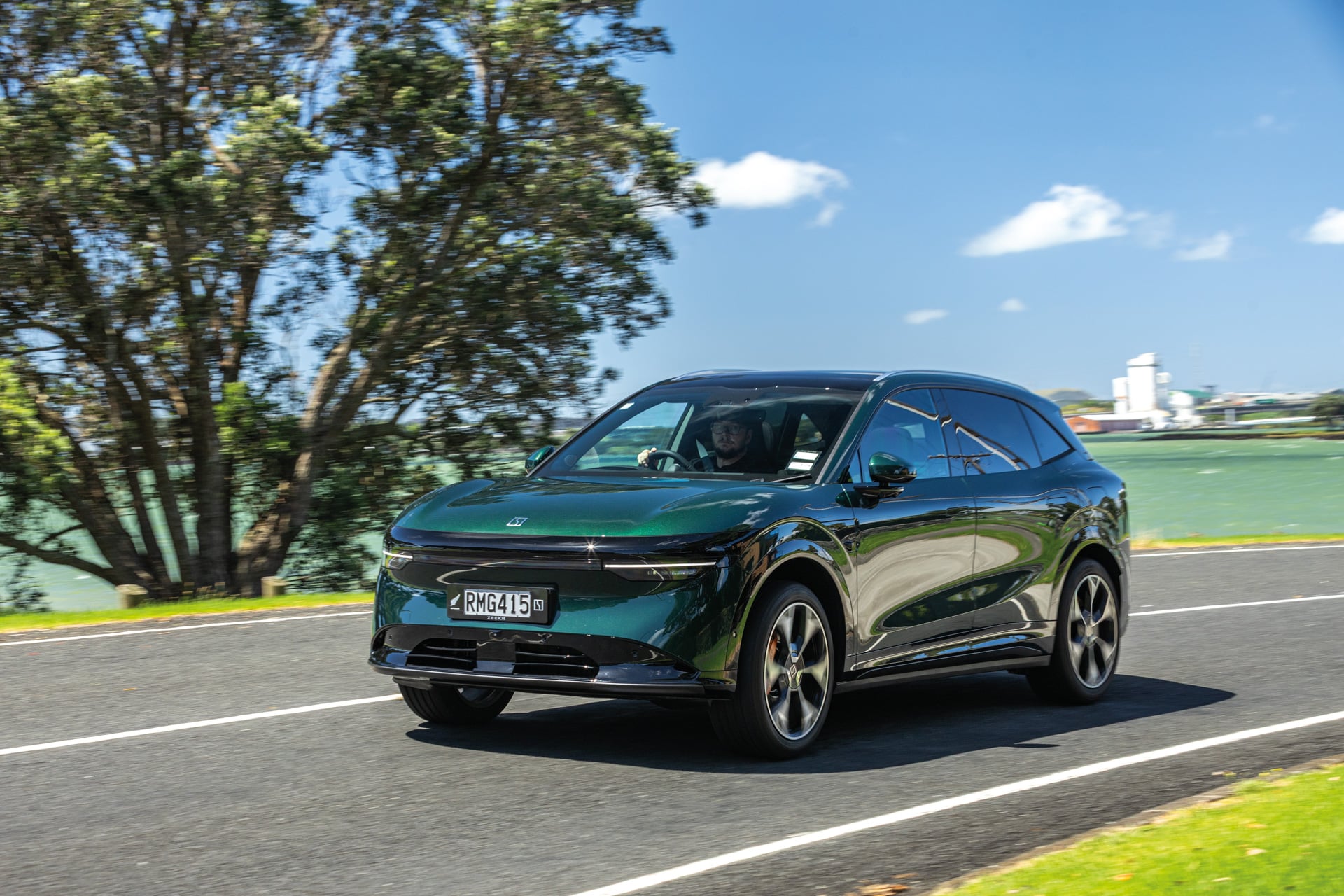
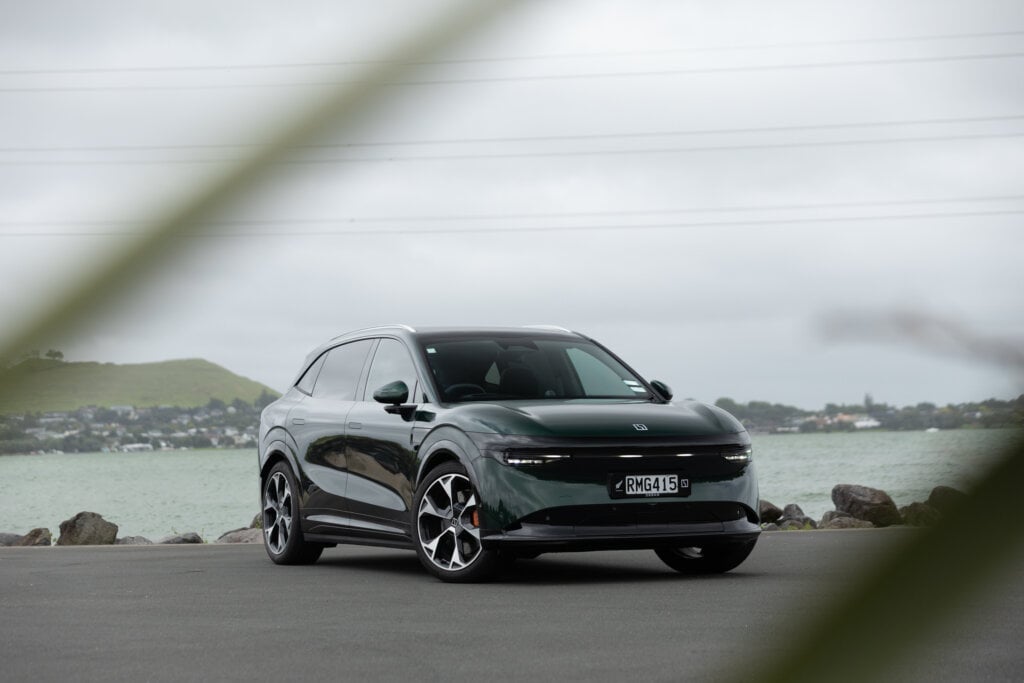
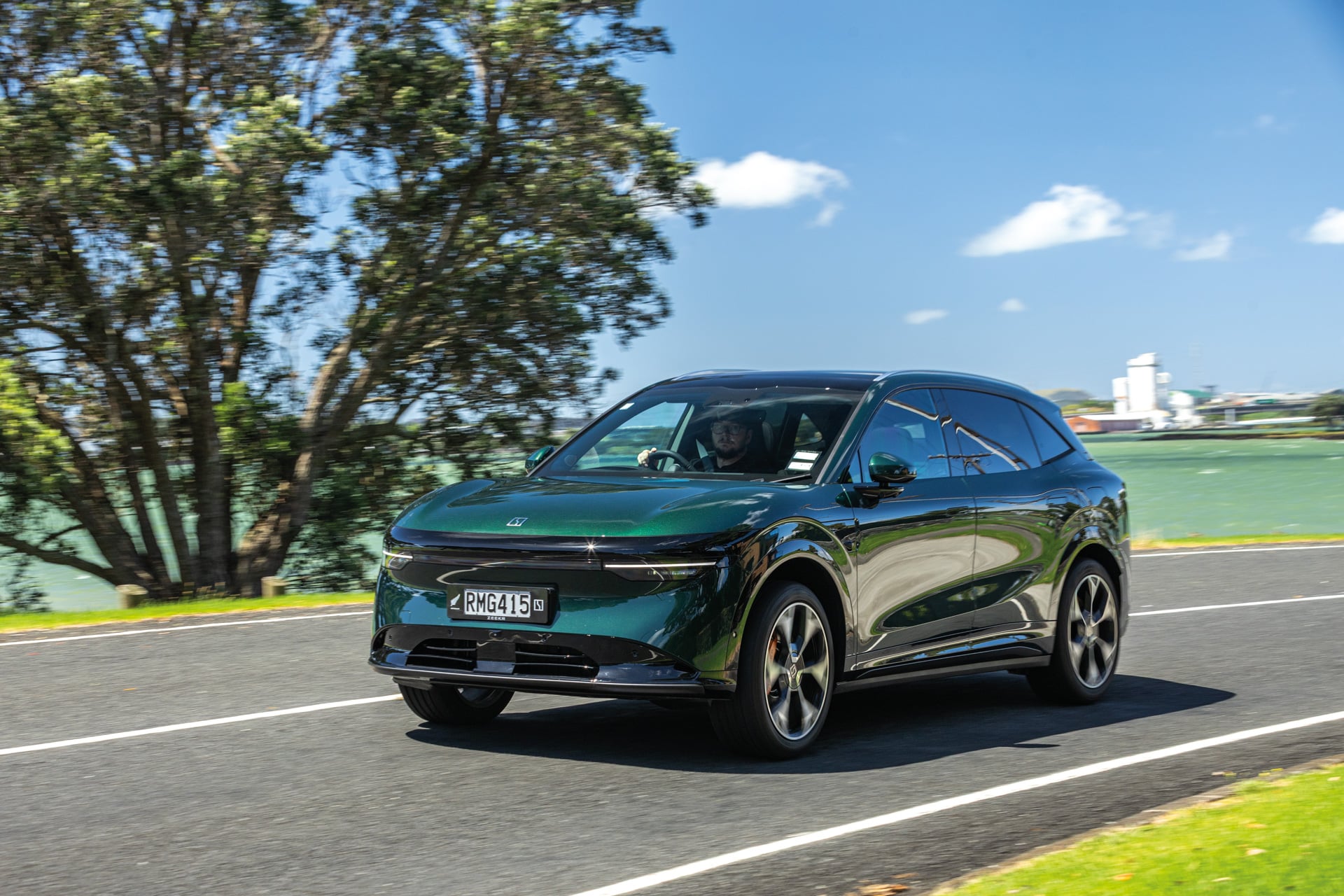
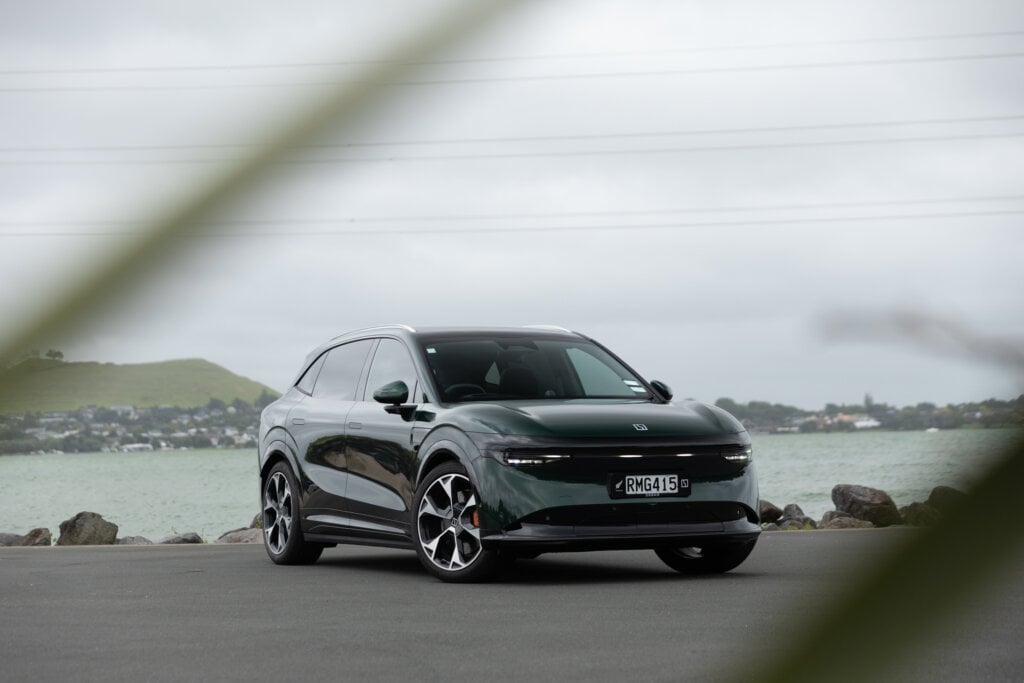
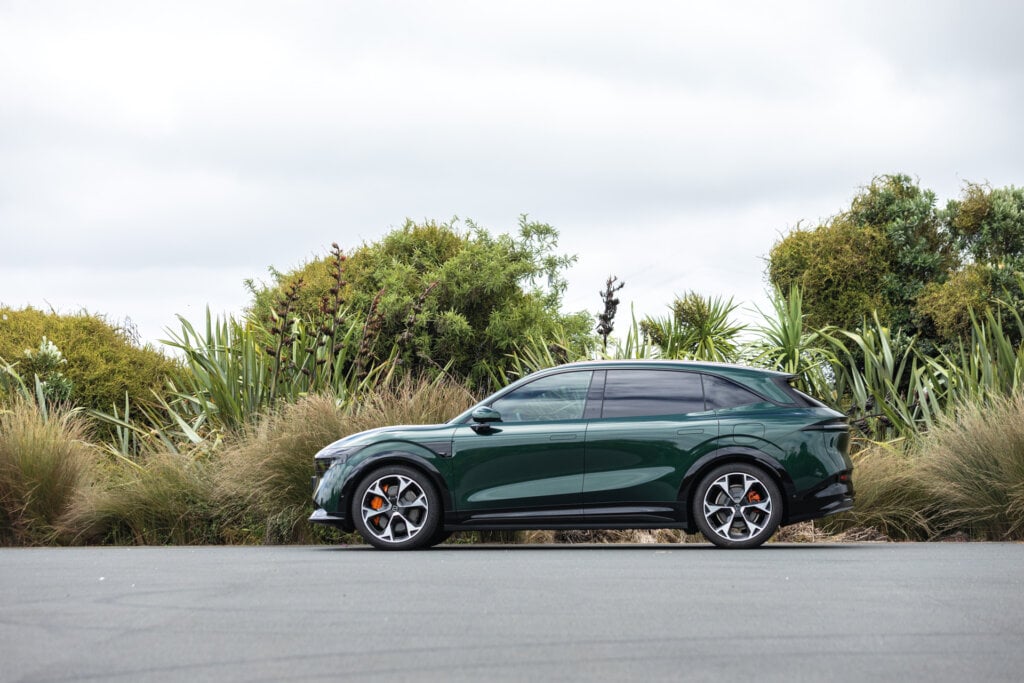
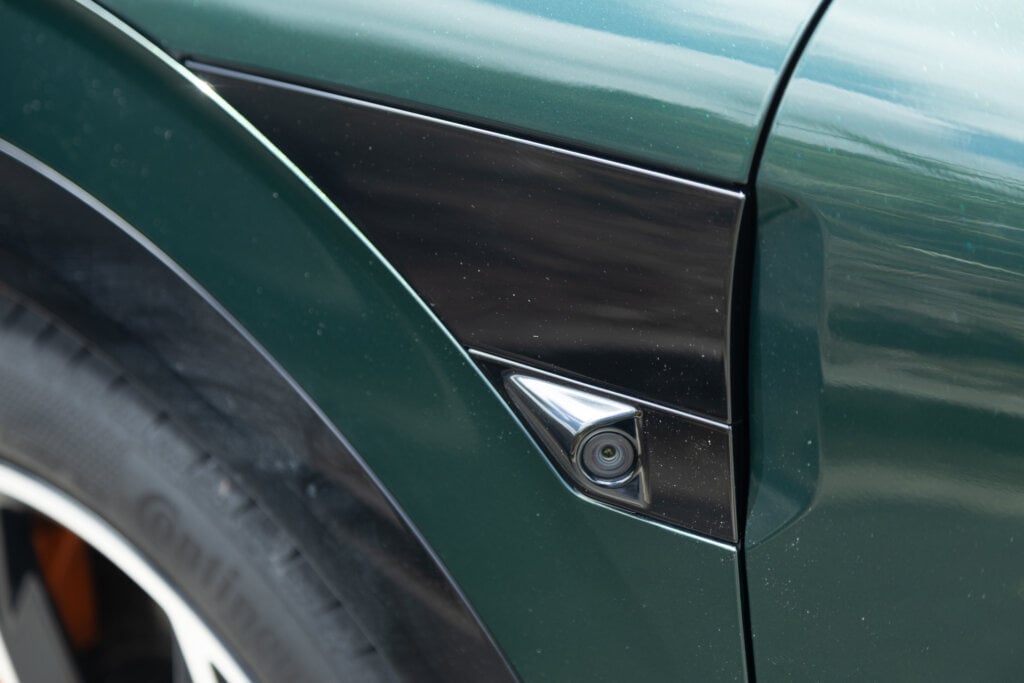
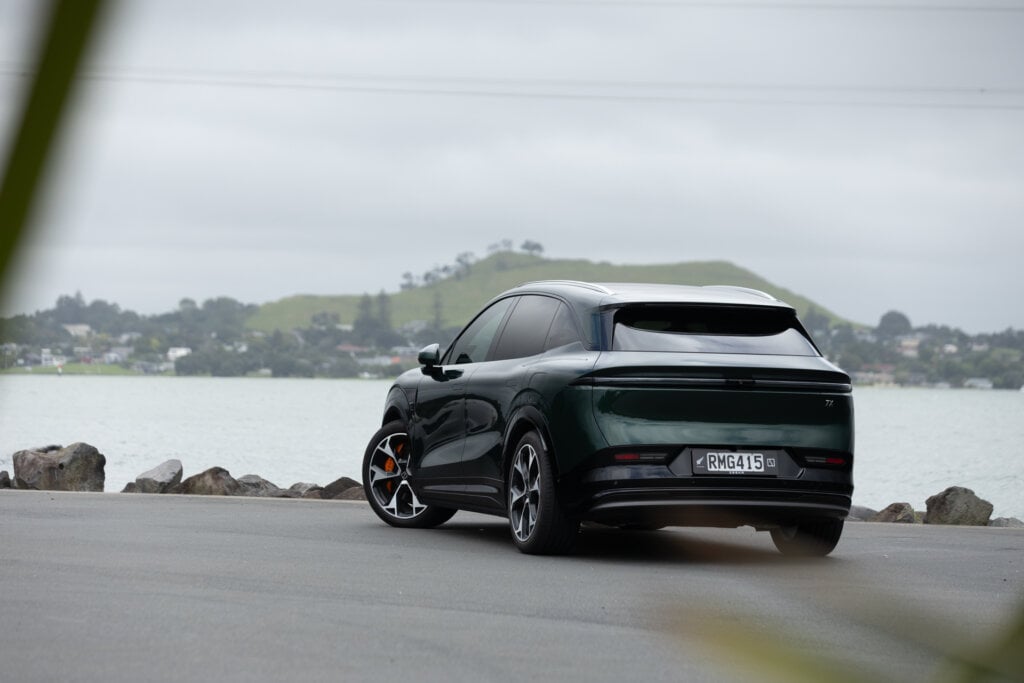
The 7X wears a distinctive face that is quickly developing into a family look for Zeekr. The way the arches flow upward is reminiscent of Lynk & Co if you squint, which is interesting for a brand that is only a few years old but already building design heritage. In overseas markets, the front features the “Stargate” LED light bar, but Australian regulations prohibit that and we follow their lead, so Kiwi cars get a more subdued treatment.
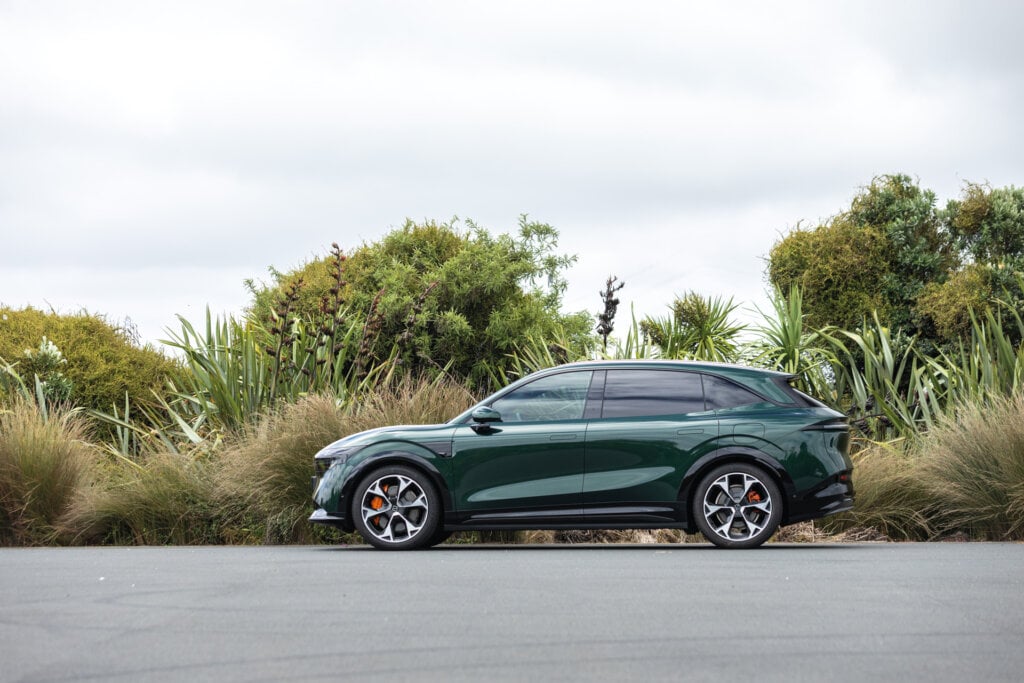
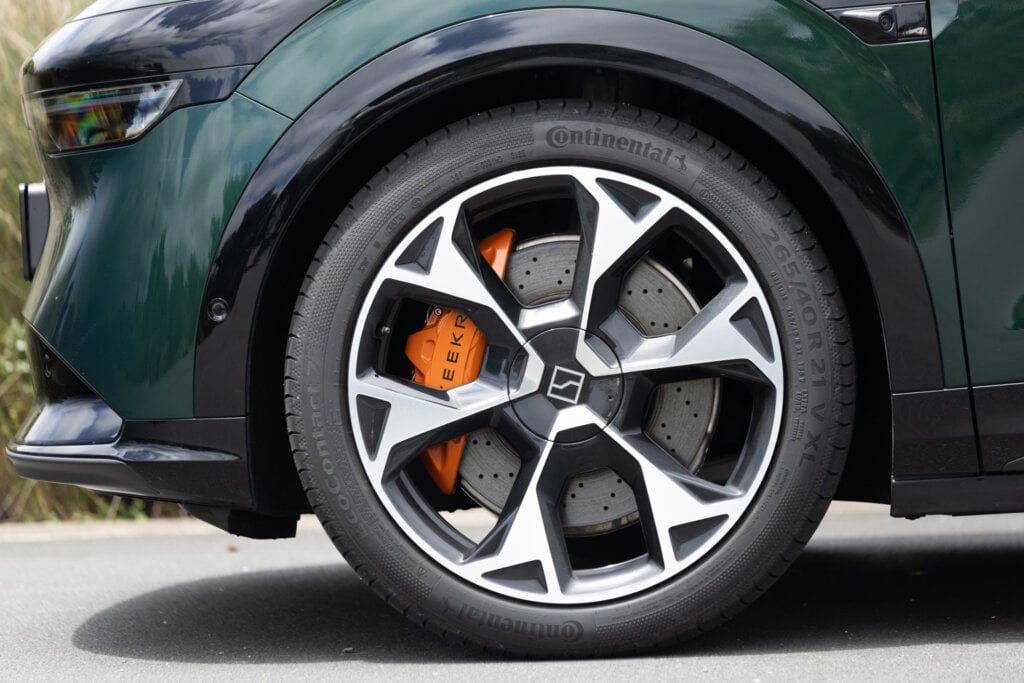
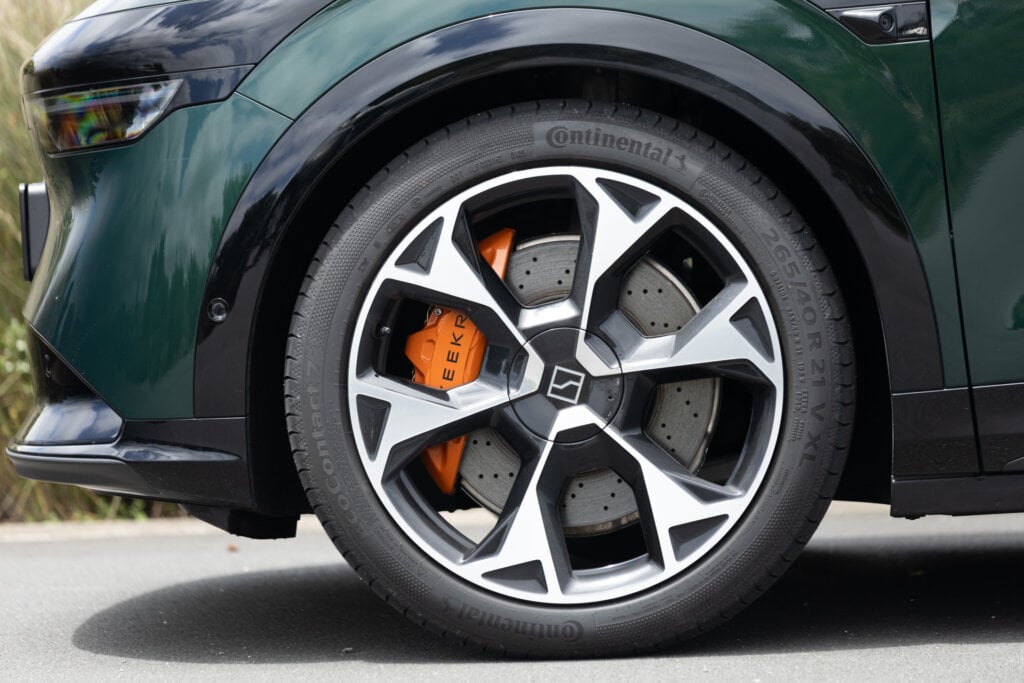
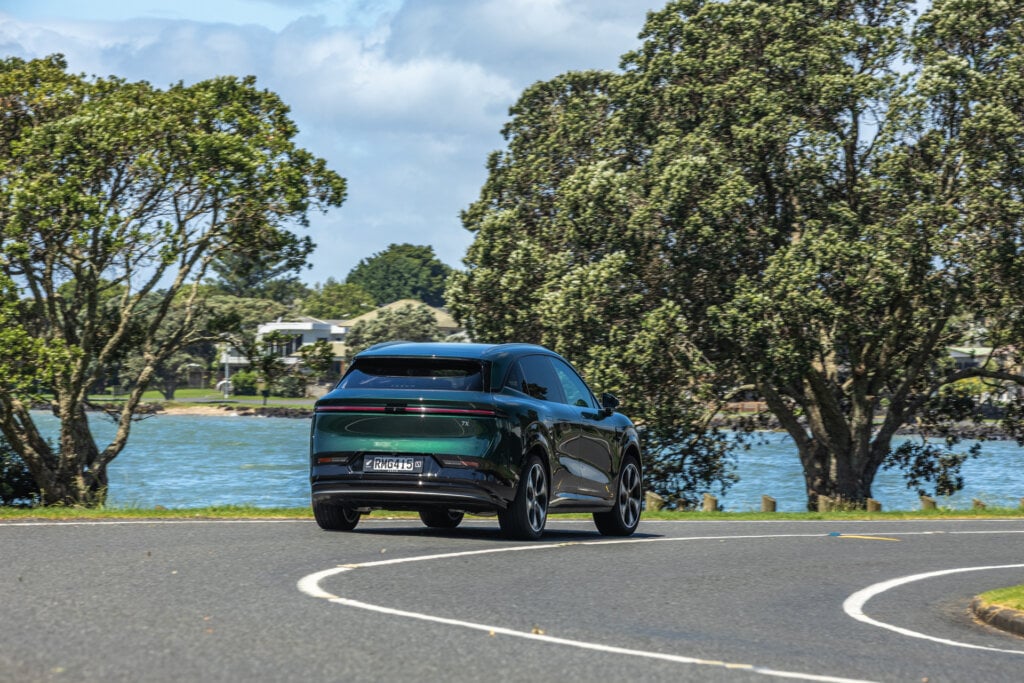
At 4787mm long and sitting on 21-inch wheels in Performance trim, the 7X has genuine road presence. It is longer, taller, and wider than a Model Y in pretty much every direction, and heavier too. This is very much a luxury-focused proposition rather than an exercise in minimalism.
Fast Charging
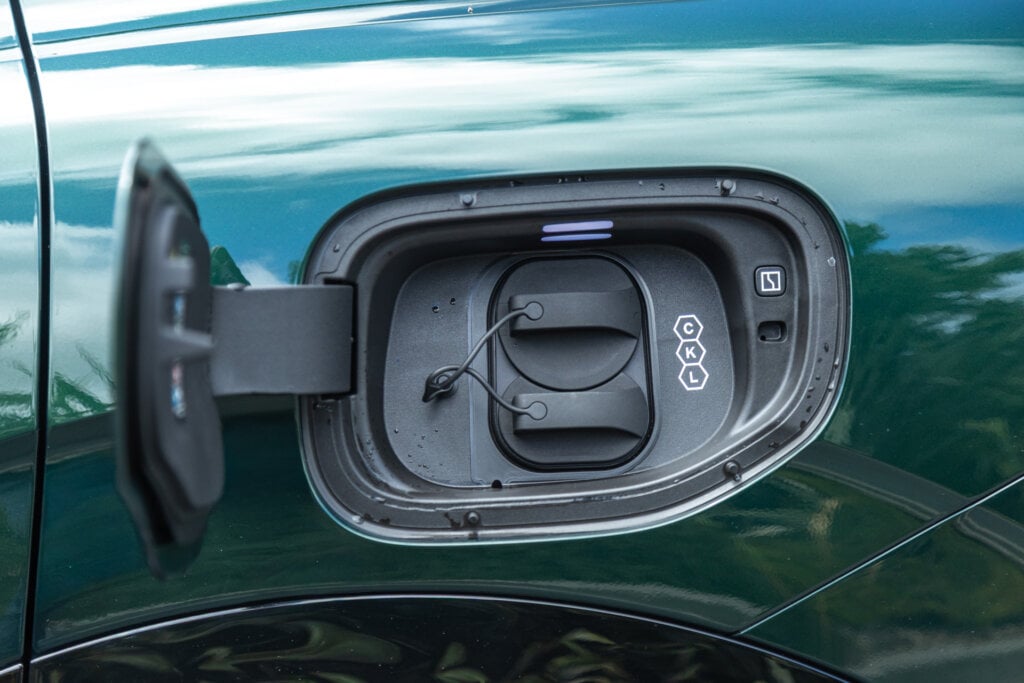
This is where the Zeekr 7X truly earns its stripes as a serious long-distance touring machine. The 800V architecture is impressive, though there is a technical quirk worth noting: the headline-grabbing 450kW charging capability actually belongs to the entry-level 75kWh “Golden Brick” battery. Our 100kWh Performance model “only” peaks at 420kW.
Honestly, that is splitting hairs. New Zealand does not have anything close to that publicly available yet. ChargeNet’s Hyperchargers top out at 300kW, and even then you need the charger to yourself to see those numbers. There are 400kW units sitting in warehouses, and 600kW units can be ordered, but when they will actually appear on our roads remains anyone’s guess.
None of that matters much in practice, because the 7X maxes out whatever you plug it into. At a ChargeNet Hypercharger, we saw it pulling close to 295kW right out of the gate. Ninety seconds in, we had already added 7.5kWh. At 80 per cent state of charge, the car was still drawing over 200kW. Even at 90 per cent, it was pulling 90kW. The charging curve is flat and sustained in a way that most EVs simply cannot match.
The numbers that matter: 10 to 90 per cent in around 21 minutes, taking on 84kWh and adding over 400km of range. That is the fastest charge I have witnessed in New Zealand. For anyone doing serious mileage, whether commuting between cities or towing the boat to the bach, this is genuine future-proofing. When faster chargers do arrive, the 7X will be ready for them.
On The Road
From the moment you set off, the 7X feels substantial. At 2415kg, it is a big bus. But it never feels lumbering. The chassis setup is sophisticated: double wishbones at the front, multi-link at the rear, and air suspension is standard on the Performance model. In Comfort mode, it soaks up our typical coarse chip seal and undulations with the kind of aplomb you would expect from something wearing a German badge. Switch to Sport and the body control tightens without ever becoming harsh. My wife’s first instinct was to put it in Comfort mode and leave it there. The car obliged.
Power delivery is where the Performance badge earns its keep. With 475kW available, the 0-100km/h sprint is dispatched in a claimed 3.8 seconds. In the real world, this translates to effortless passing power. It does not just accelerate; it surges. The dual-motor system manages traction beautifully, even when exiting tight corners on damp tarmac.
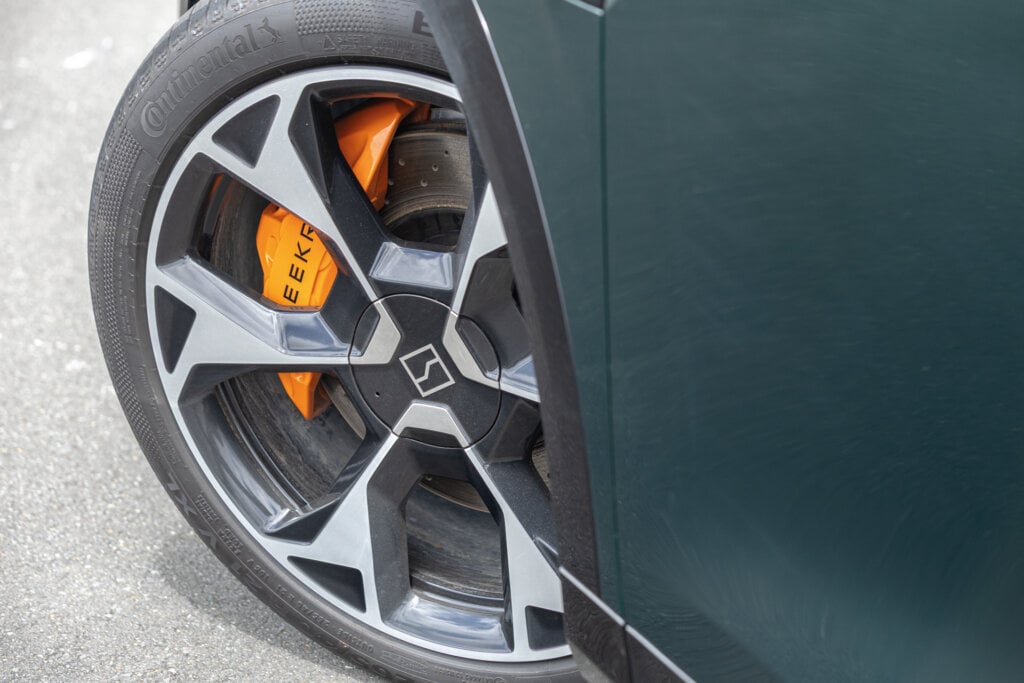
You feel the mass in the corners as there is no getting around physics. But the low centre of gravity keeps body roll in check, and the big Akebono brakes haul it up with real authority. One note on the driving modes: selecting Sport does not automatically crash the ride quality. You can have quick acceleration without a stiff suspension, which is actually a sensible approach for Kiwi roads.
Premium Promise Delivered
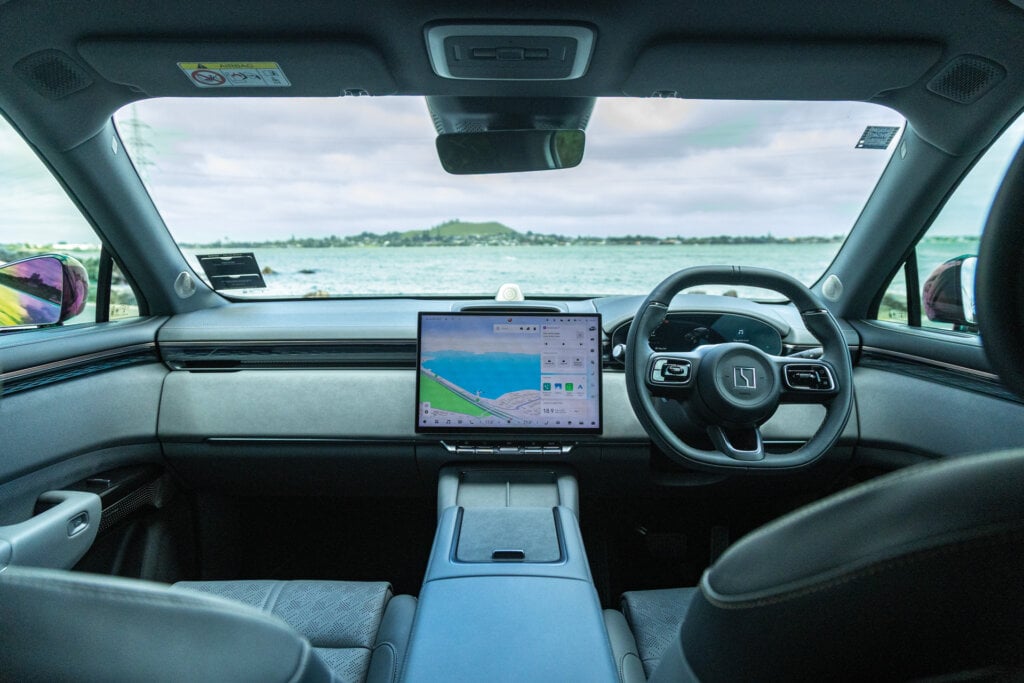
Step inside and the luxury aspirations are fully realised. The cabin is awash with Nappa leather and soft-touch materials. The seats are electrically adjustable in seemingly every direction, heated, ventilated, and massaging. They are also generously sized, big enough for larger Kiwi frames to be quite blunt about it.
The 16-inch central touchscreen runs Zeekr’s in-house software on a Qualcomm Snapdragon 8295 chip. It is responsive and loaded with features. There is even a voice assistant that works reasonably well, though it has a slightly spooky quality when it pipes up unprompted.
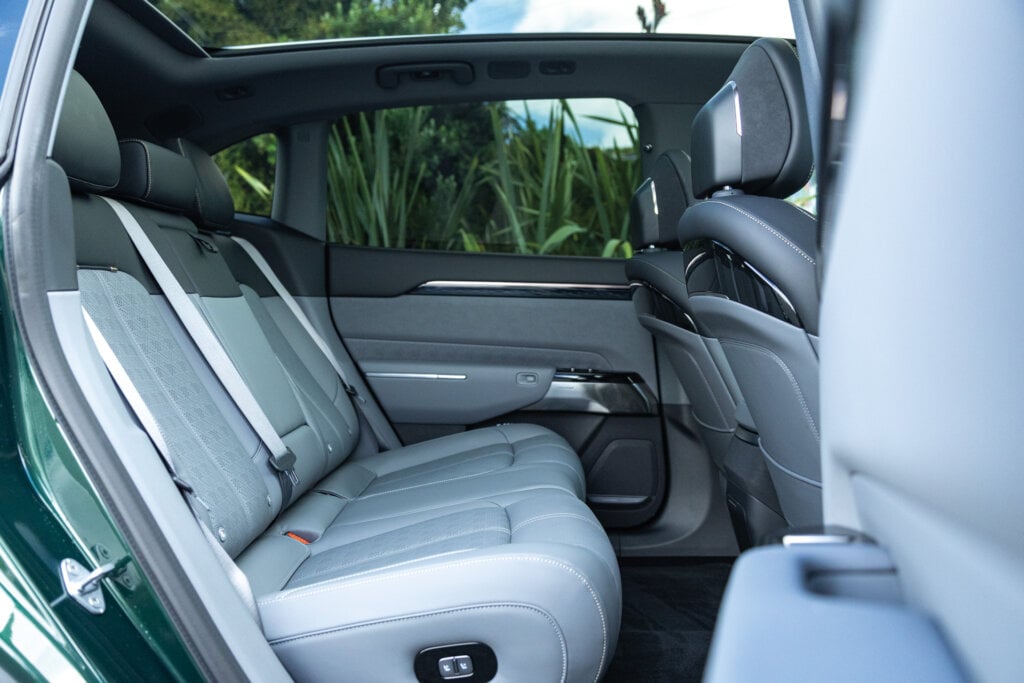
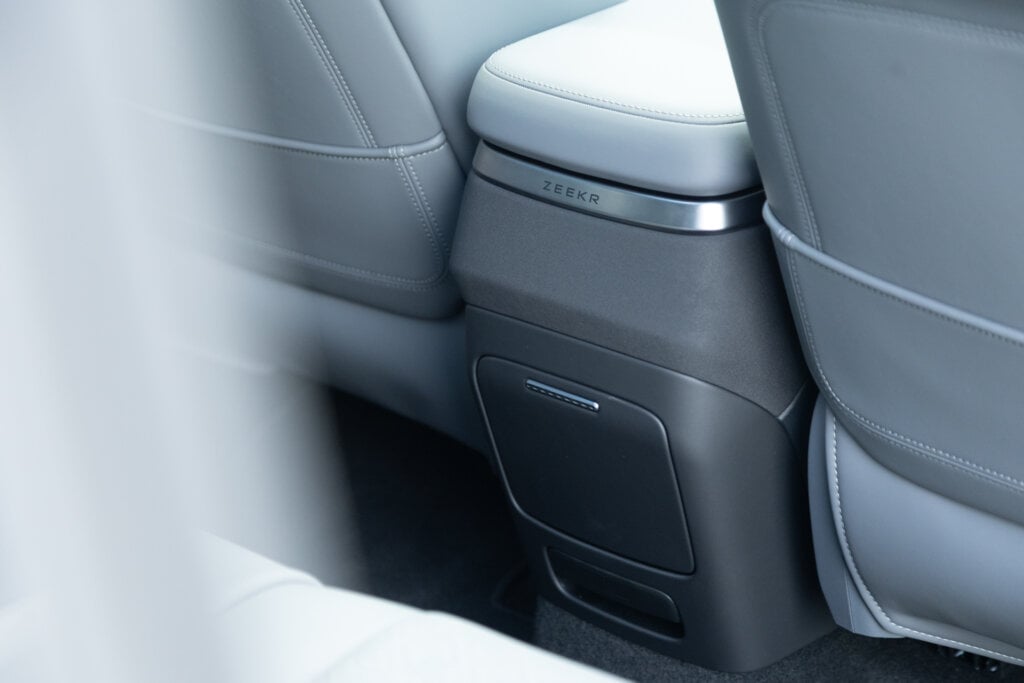
The rear seat is where Zeekr has paid particular attention. There is genuinely remarkable legroom, with the left-side passenger able to power-adjust the front seat out of the way for “boss mode” space. Rear passengers can also recline their backrests electrically. It is the kind of treatment you would expect in a chauffeur-focused vehicle, not a family SUV. It is let down slightly by a lack of dedicated rear climate controls, which seems like an odd omission given the focus on rear-seat luxury.
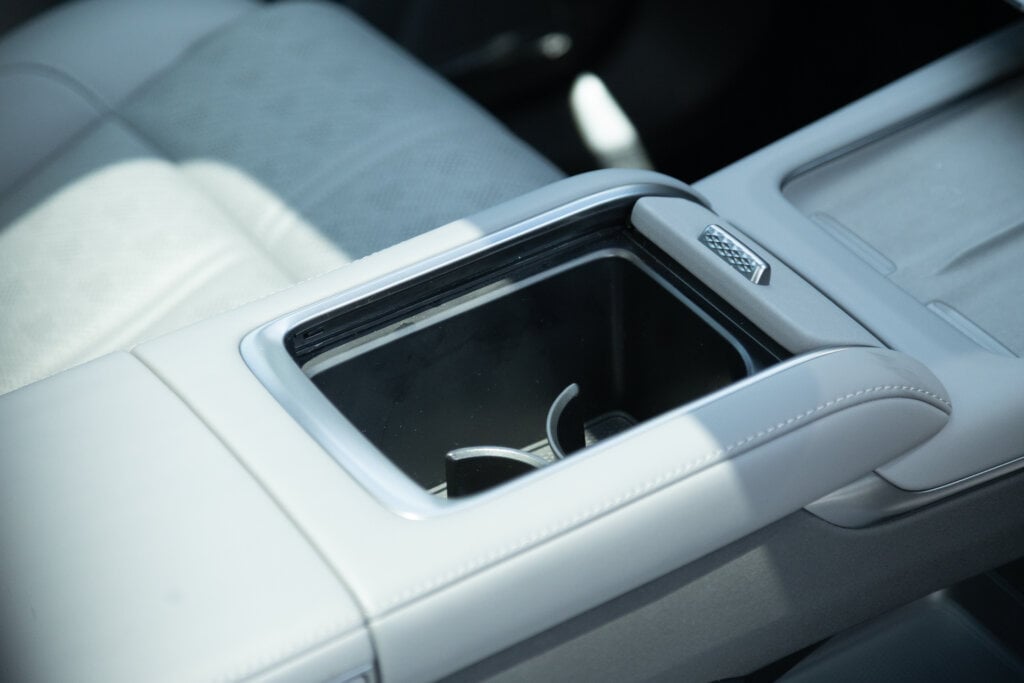
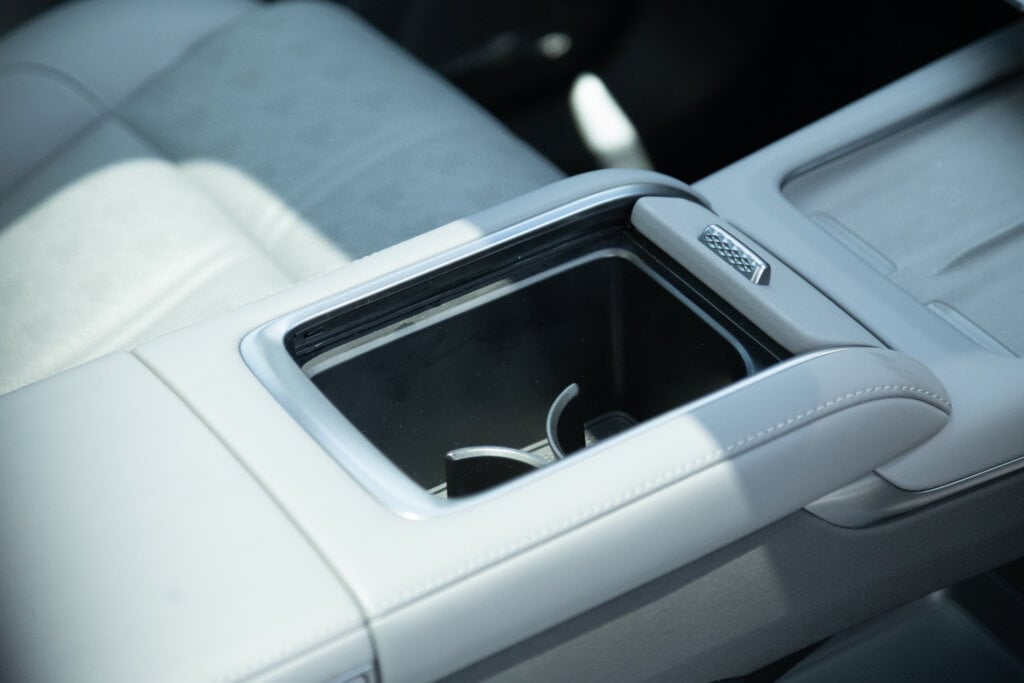
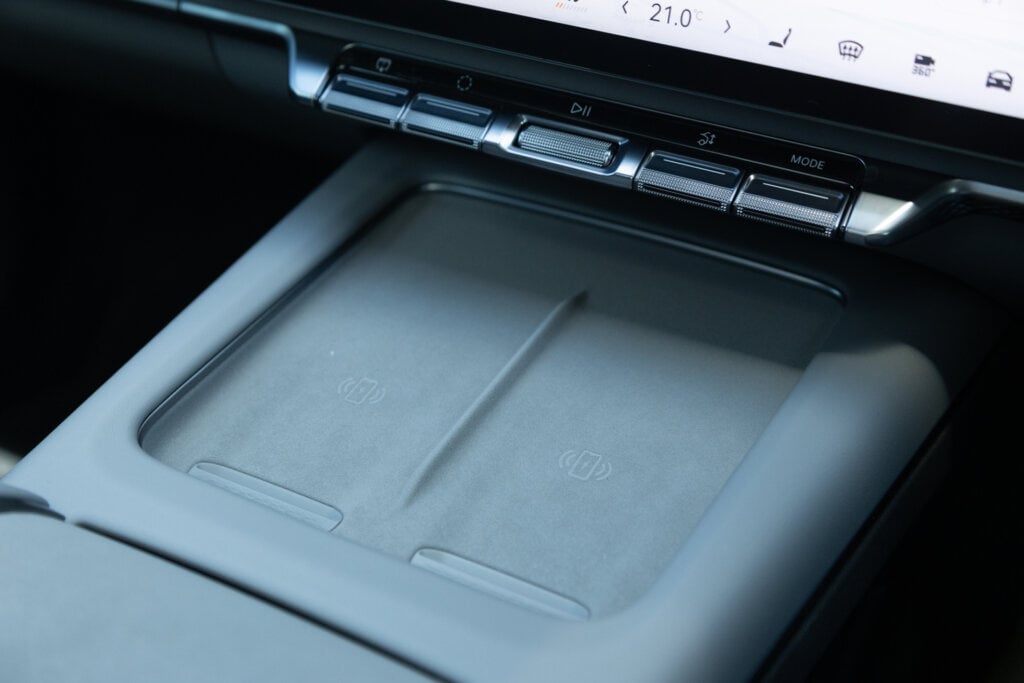
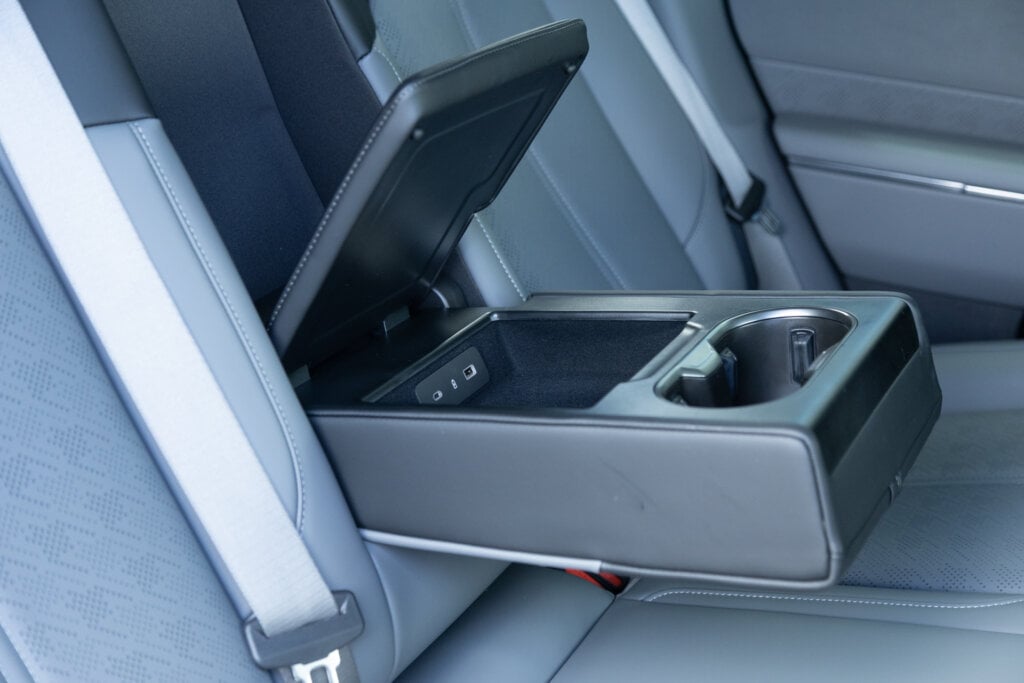
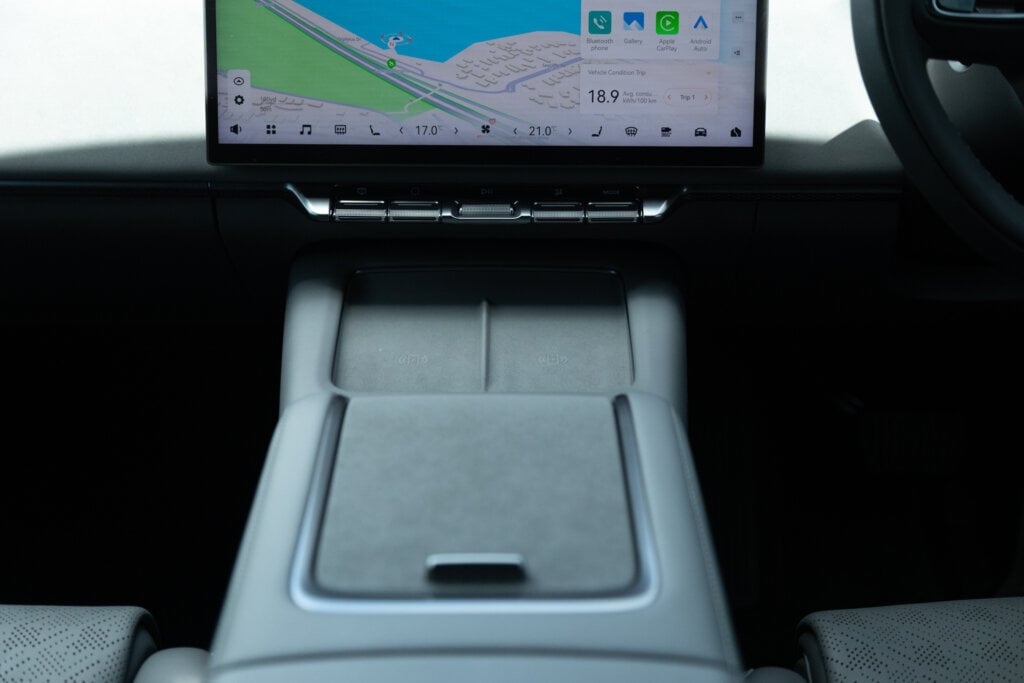
Zeekr claims 36 storage compartments throughout the cabin. This is worth noting because the Xpeng G6 we tested recently went without a glovebox entirely. The 7X has one, operated by a button because apparently manual levers are passé now. The centre console is deep enough to fit your entire forearm, opens in both directions, and can be removed entirely and replaced with a fridge. Cup holder arrangements are flexible enough to accommodate whatever giant Stanley cup monstrosity you are carting around.
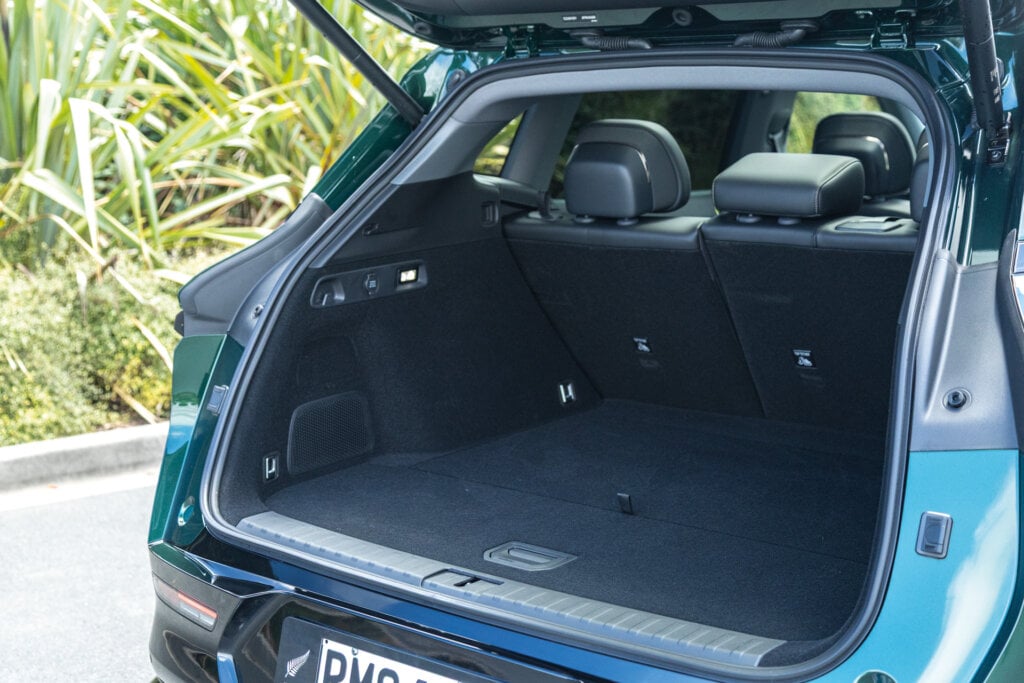
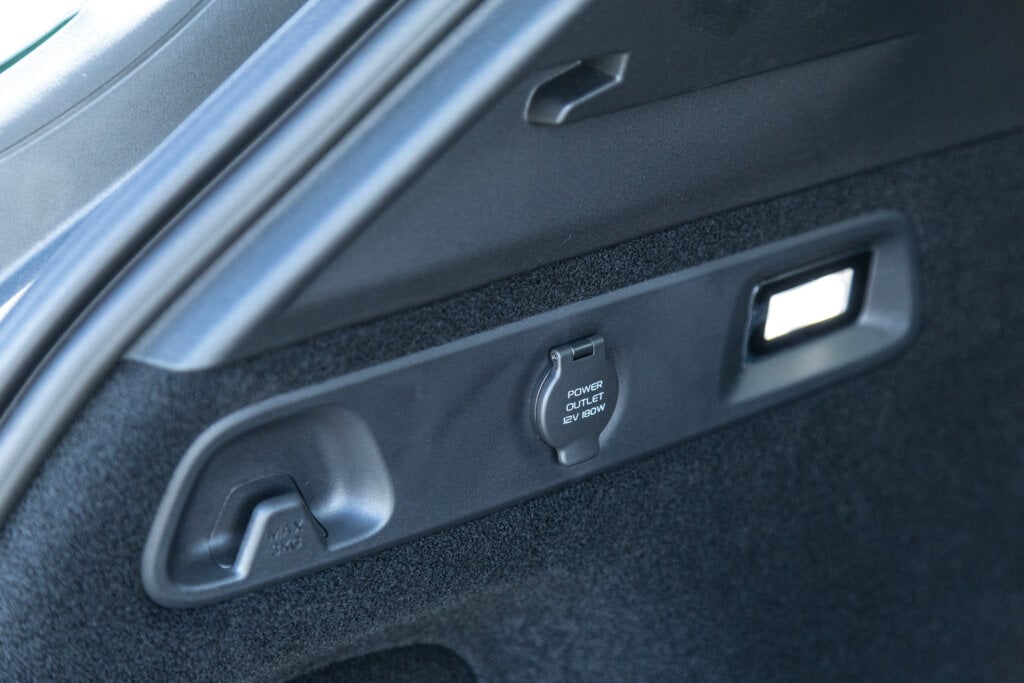
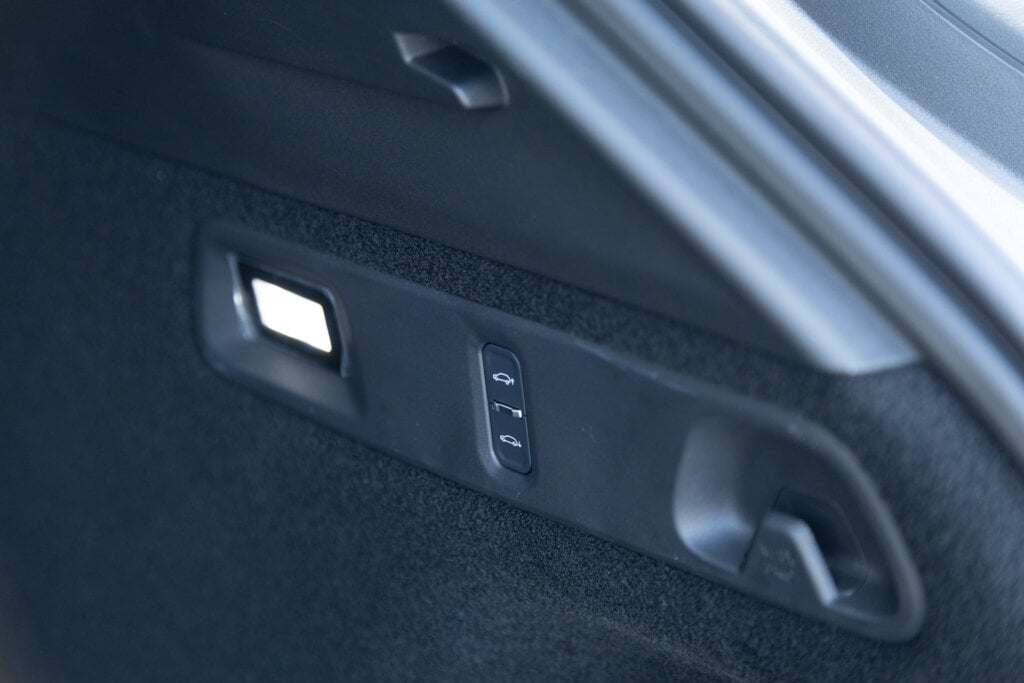
Boot space is competitive at 539 litres with the seats up, expanding to nearly 2000 litres with them folded. There is useful sub-floor storage and the frunk offers 44 litres in the AWD model, enough for the charging cables.
The Quirks
The doors are fully powered. Push a button and they open; put your foot on the brake and they close. There are no door handles as such, just blank panels. It is a feature borrowed from the upper reaches of the luxury car world (think Rolls-Royce), and it works well enough for adults. But my six-year-old struggled to work out how to get in, which felt like a usability step backwards. You can turn off the powered operation in the screen, but then you are left with a car that has powered doors you have chosen not to power. That seems like paying for a feature and deliberately not using it.
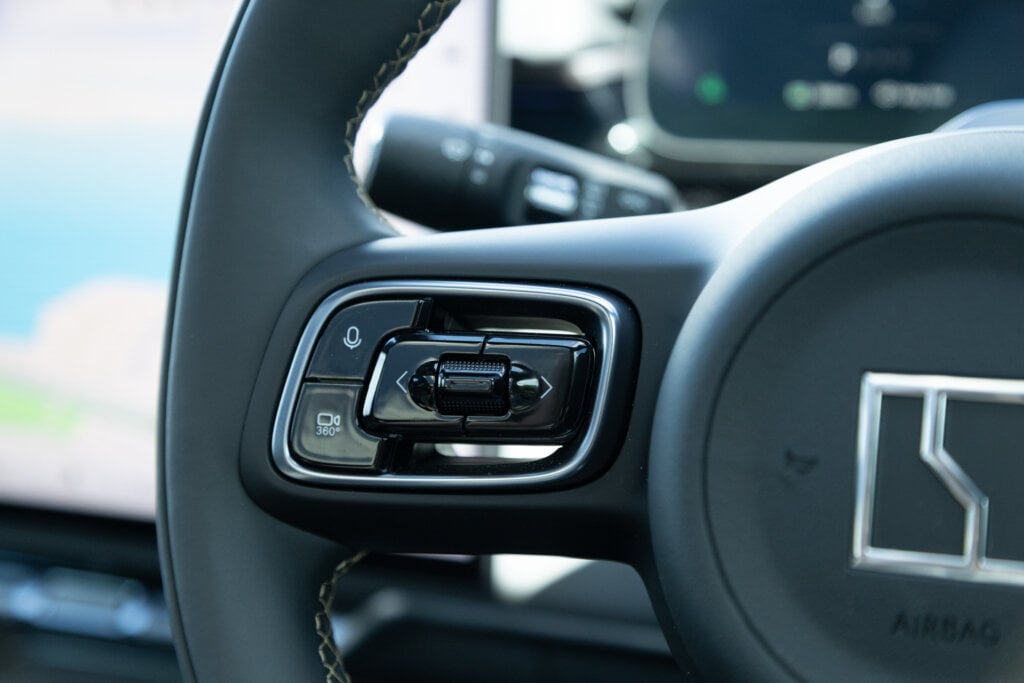
The audio system is a 21-speaker in-house Zeekr effort. It sounds good, but there is a lot of digital processing. Some tracks feel slightly artificial, as though the bass has been added on rather than reproduced.
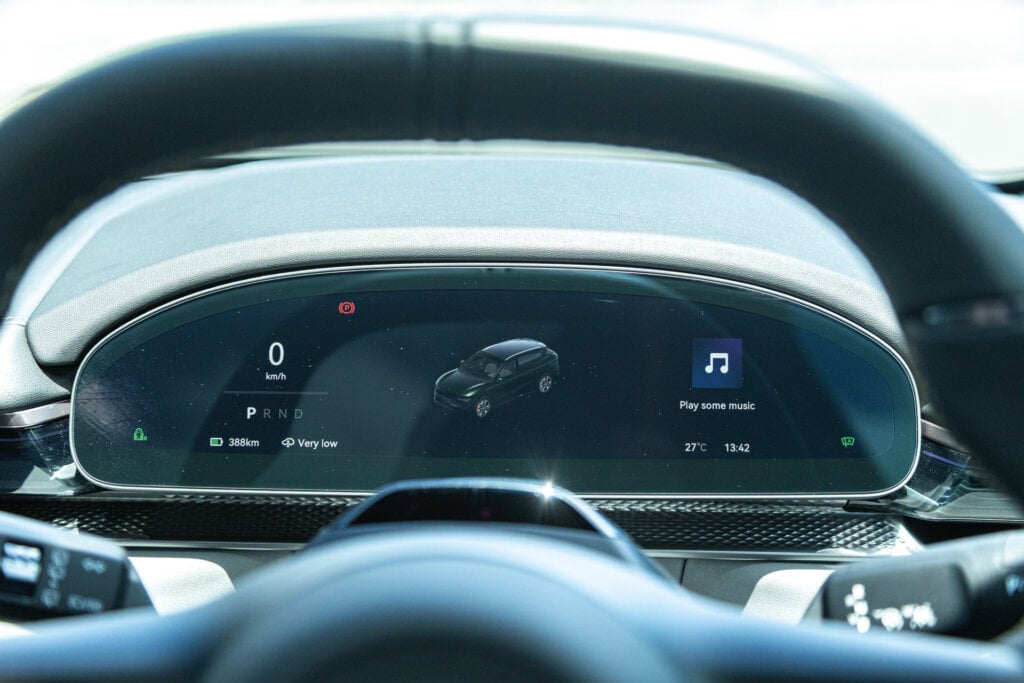
The ADAS systems are competent but not class-leading. Lane keeping works well, adaptive cruise is solid, and the phantom cone issues we experienced with the G6 were not present here. But the full self-driving capabilities available in China are not coming to New Zealand. Those systems are moving to AI-based approaches over there, which means what we get is essentially legacy technology. It is good, just not exceptional.
Zeekr 7X – The Verdict
The Zeekr 7X Performance AWD is a lot of vehicle for the money. It undercuts the Tesla Model Y Performance significantly while offering more power, more luxury, and charging speeds that are class-leading.
Here is the thing though: the 7X is almost hamstrung by its price tag. This is a vehicle fit to compete with luxury options out of Germany, Japan, and Sweden, but Zeekr has priced it closer to the other Chinese contenders. In our algorithm-based world, buyers cross-shopping Polestars and BMW iX3s are probably filtering their searches at $100,000 and up. There is a real risk they will never even see the 7X. A price tag of $100,001 might actually serve it better, getting it in front of the competitor set it genuinely belongs in. A strange problem for a car to have.
Is it perfect? The powered doors add complexity without much benefit. Despite the Performance badge, this is not really a sports car pretending to be an SUV. It is a luxury cruiser that happens to have genuinely startling straight-line pace when you ask for it. Some buyers might find that disappointing; others will find it exactly right.
Personally, I would save the cash and go for the Long Range RWD at $79,990. Same interior quality, same mega charging, same 100kWh battery, and over 600km of range. That would be an absolute road trip beast. But if you want the fastest and most feature-packed version, the Performance AWD justifies its premium.
Zeekr is backed by the Giltrap Group through NordEast Distributors. When the people who sell Lamborghini, Bentley, and Aston Martin take on a Chinese EV brand, that is a statement of confidence. On this evidence, it is well placed.
Zeekr 7X Performance AWD
$94,990 / 19.9kWh/100km / 0g/km
0-100 km/h 3.8s
Motor output 475kW
Max torque 710Nm
Battery 100kWh
Range 543km
Drivetrain Single-speed auto / AWD
Front suspension Wishbones / air springs
Rear suspension Multilink / air springs
Turning circle 11.6m (2.2 turns)
Front brakes Ventilated discs
Rear brakes Discs
Stability systems ABS, ESP, TV
Safety AEB, ACC, BSM, LDW, RCTA, ALK, AHB
Tyre size f/r-265/40R21
Wheelbase 2900mm
L/W/H 4787 / 1930 / 1650mm
Track f-1649mm r-1654mm
Luggage capacity 539-1978L
Tow rating 750kg (2000kg braked)
Service intervals 24 months / 20,000km
Warranty 5yrs / Unlimited km
ANCAP rating ★★★★★ (2025)
Weight (claimed) 2535kg