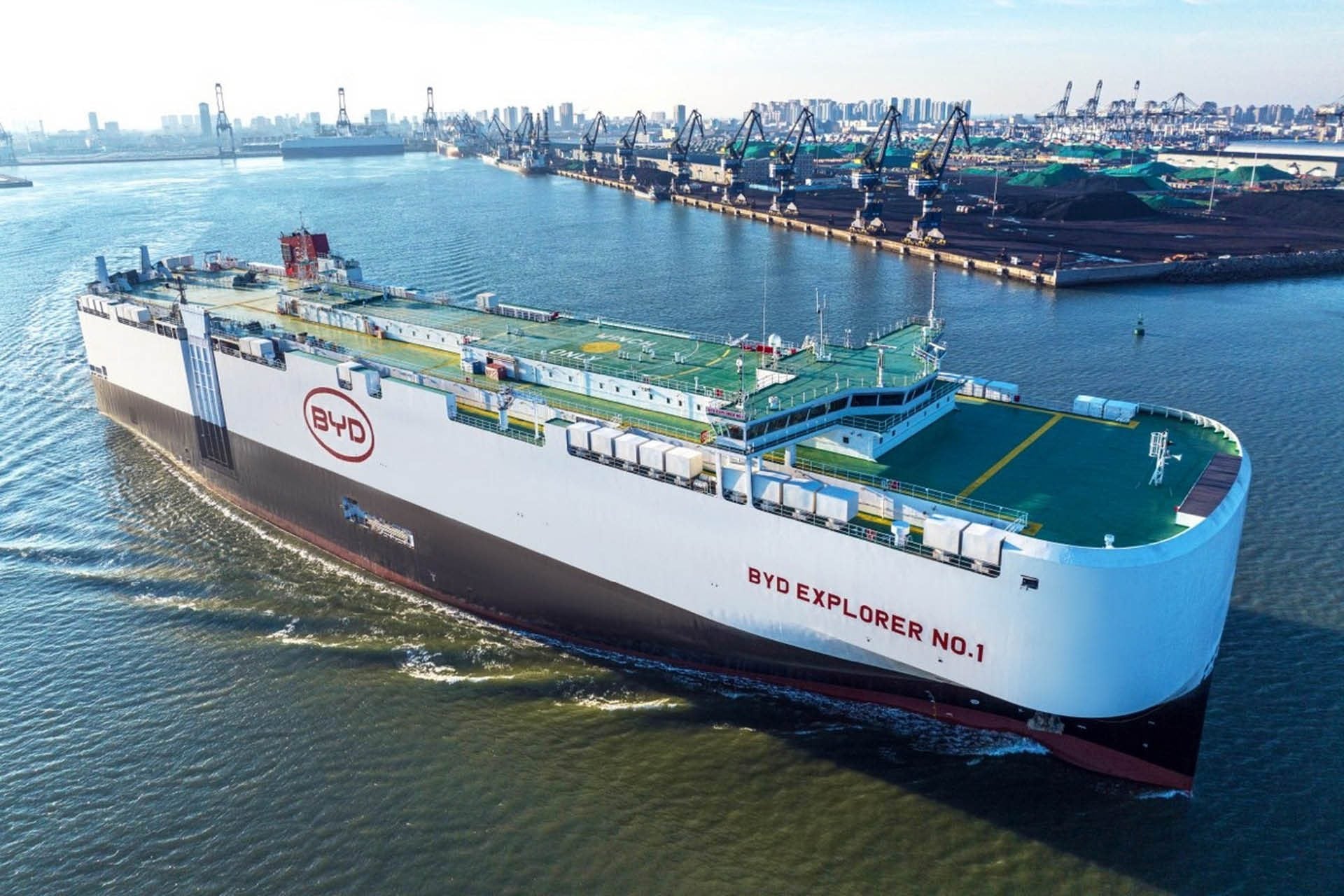
BYD’s own ships could be bringing cars to New Zealand from late 2027
Words: Richard Edwards
BYD is reportedly adding 10 more car carriers to its fleet, and its New Zealand arm expects the brand’s own ships to start delivering vehicles here from late 2027 or early 2028.
The order, reported by maritime publication New Ships citing shipping industry sources, is for 10 vessels each able to carry 9200 vehicles. BYD has not officially confirmed it and no price has been disclosed.
The ships are to be built by China Merchants Industry, with deliveries between 2027 and 2029. That would take BYD’s fleet from eight ships to 18, with room for more than 130,000 vehicles across the lot.
BYD finished building its first eight ships in September 2025. Each carries between 7000 and 9200 cars, and the company says the fleet can move around one million vehicles a year. They are roll-on/roll-off carriers running LNG dual-fuel engines, with BYD’s own Blade Battery systems supplying power on board.
Getting cars out of China is currently a squeeze for New Zealand. The far larger Australian market takes up much of the space on car carriers, and in some cases vehicles bound for Australia are shipped to New Zealand first before being sent on across the Tasman, a practice known as transshipping.
BYD New Zealand country manager Warren Willmot tells us the expansion is good news for a market as far from the factories as this one.
“It’s encouraging to see BYD continuing to invest in cleaner, more sustainable vehicle shipping through the expansion of its roll-on/roll-off (RoRo) fleet. Shipping remains one of the biggest challenges for New Zealand due to our distance from key manufacturing plants, and we’re hopeful BYD vessels will begin delivering vehicles here from late 2027 or early 2028.
“These state-of-the-art ships, powered by hybrid LNG technology and advanced Blade Battery systems, represent an important step towards reducing emissions across the automotive supply chain and supporting our broader sustainability goals.”
BYD first announced plans for its own shipping fleet in 2022, calling it a “maritime bridge” for its exports, and says owning the ships cuts its per-vehicle shipping cost by 30 to 40% compared with chartering.