McLaren revives Bruce’s unfinished supercar dream with manual McL 6GT
Words: Richard Edwards
McLaren has revealed the McL 6GT concept at Monterey Car Week in California, previewing a production supercar due in 2028 that will bring a manual transmission back to the brand for the first time since the F1 of 1992.
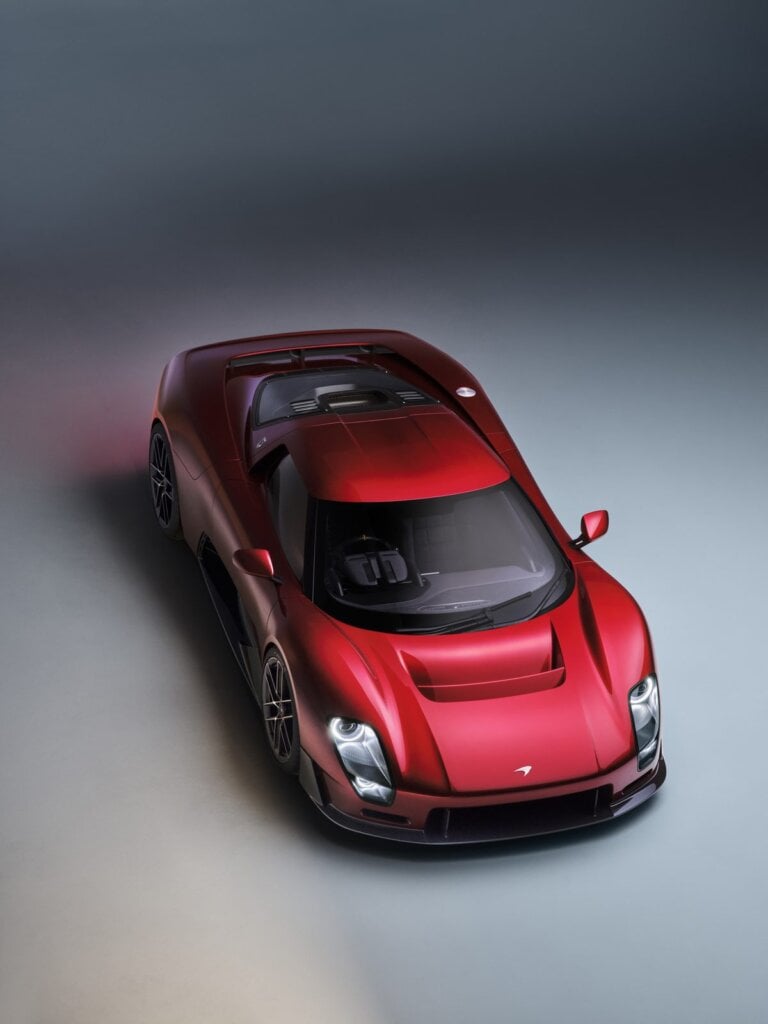
The concept draws directly on the M6GT, the road car Bruce McLaren was developing before his death in 1970 and which never reached production. The New Zealander built the project around the M6A Can-Am racer, intending it to become the company’s first road-going supercar. McLaren describes the new car as completing that vision with six decades of engineering progress applied.
“The McLaren McL 6GT imagines what our inspirational founder had wished to complete but with six additional decades of innovation and passion woven through every element, creating a modern icon of driver connection,” says McLaren Automotive chief executive Nick Collins. “It is symbolic of the bold, provocative and hugely exciting future that we are preparing to realise.”
Power comes from a V8 combustion engine driving the rear wheels through a three-pedal manual. McLaren has not released outputs, but the drivetrain choice alone marks the car out. No McLaren road car has offered a clutch pedal since the F1, and the company pairs it here with hydraulic steering in place of the electric assistance now universal across the industry.
‘Celebration of analogue driving’
McLaren pitches the car as a deliberate celebration of analogue driving. Every shift, throttle movement and steering input is intended to feel physical and mechanical, with tactile switchgear and visible engineering details reinforcing the connection between driver and machine. Knurled machined aluminium controls feature throughout the cabin, and the gearstick has been designed for feel and throw, with a three-dimensional Speedy Kiwi set within its upright.
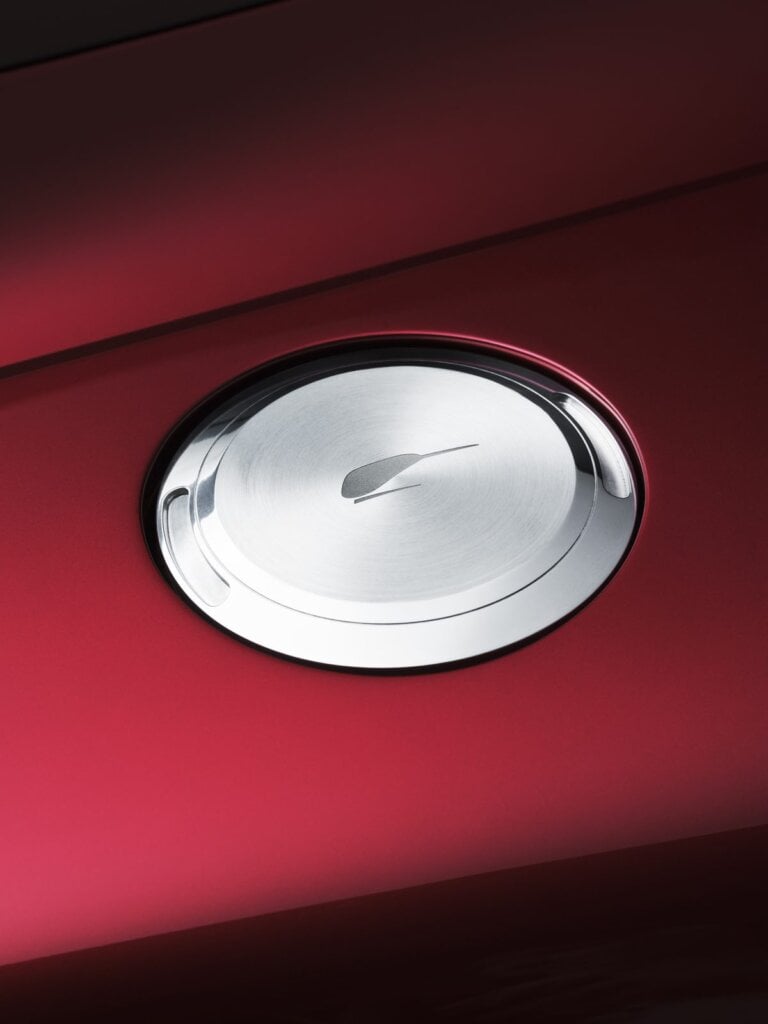
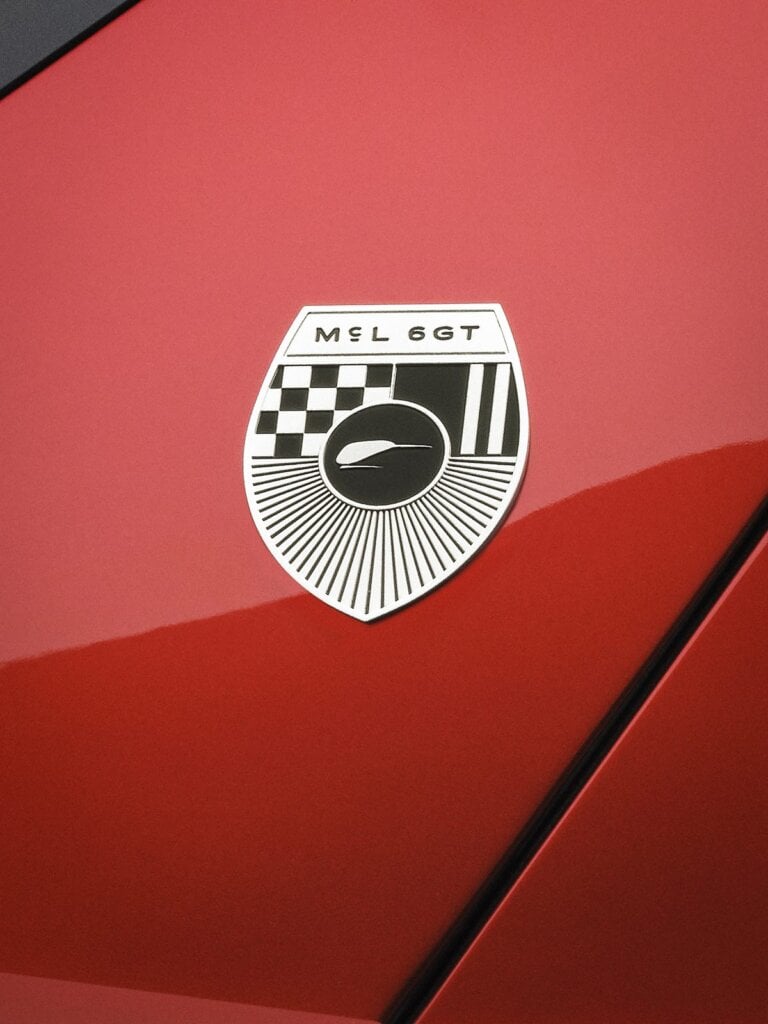
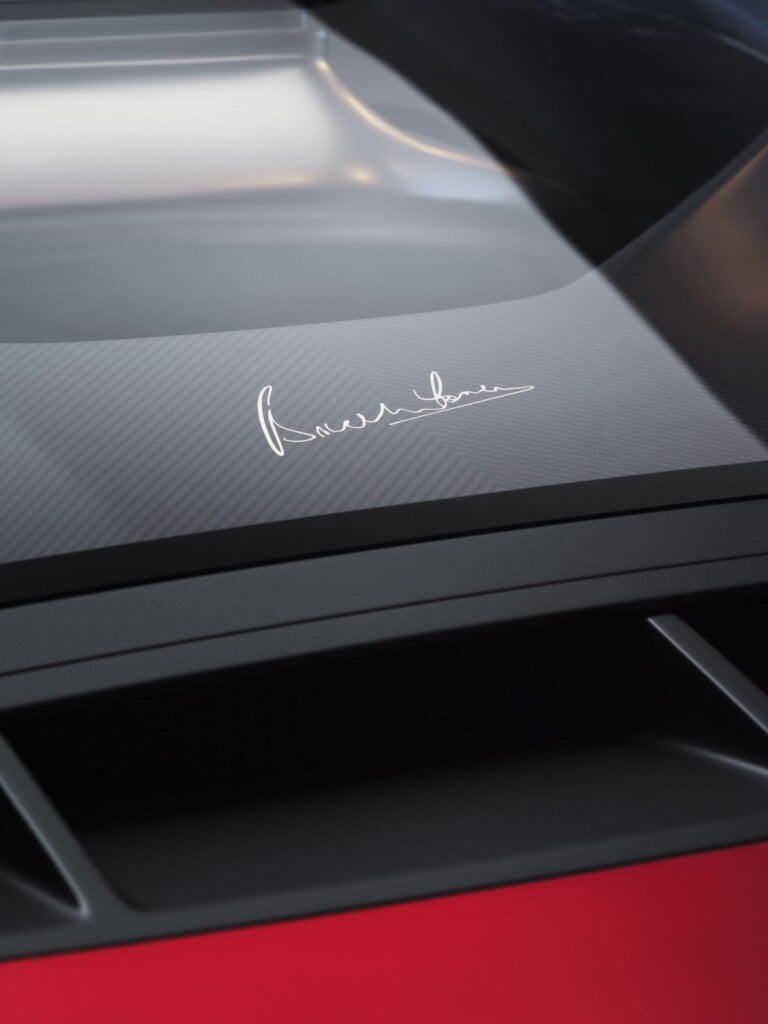
That emblem, the first iconography developed from McLaren’s original logo, also appears etched into the fuel filler cap. Bruce McLaren’s signature adorns the engine bay, and his original M6GT number plate is reimagined as a tone-on-tone graphic on the bodywork. A ‘Racing Loop’ motif inspired by the M6GT’s original taillights is integrated into the exterior airflow architecture.
The design interprets the surfacing of 1960s sports prototype racers with modern packaging. The McL 6GT sits low and wide with a low nose, echoing the stance of the M6A, and the body reads as a single continuous form flowing from nose to Kammback tail. The roof runs naturally into the rear deck and engine cover, with the cabin appearing embedded within the body rather than sitting on top of it, mimicking the low-drag aerodynamic conventions of the era.
Underneath, the car uses McLaren’s latest super-lightweight carbon fibre monocoque with carbon fibre bodywork. Exposed gloss carbon in the cabin references both the original M6GT and the company’s racing history, alongside reinterpreted boxed quilting and digital instrumentation that McLaren says retains the clarity of the original car’s dials.
The reveal follows the one-off M6GT completed by McLaren Special Operations to Bruce’s in-period specification, shown at this year’s Goodwood Festival of Speed.
McLaren says the production McL 6GT will establish a newly positioned and highly exclusive tier of supercar beyond its core and expanded portfolio when it arrives in 2028. Pricing and performance figures are yet to be announced.