New Lexus ES makes a big impression at Auckland reveal
Words: Kyle Cassidy
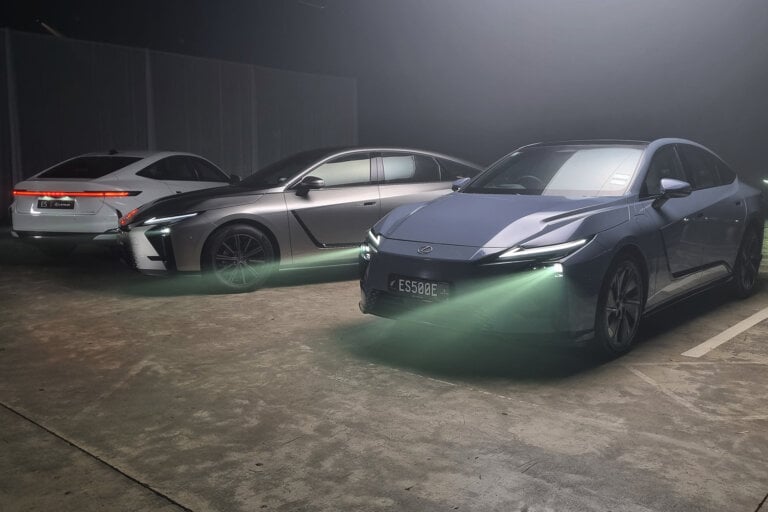
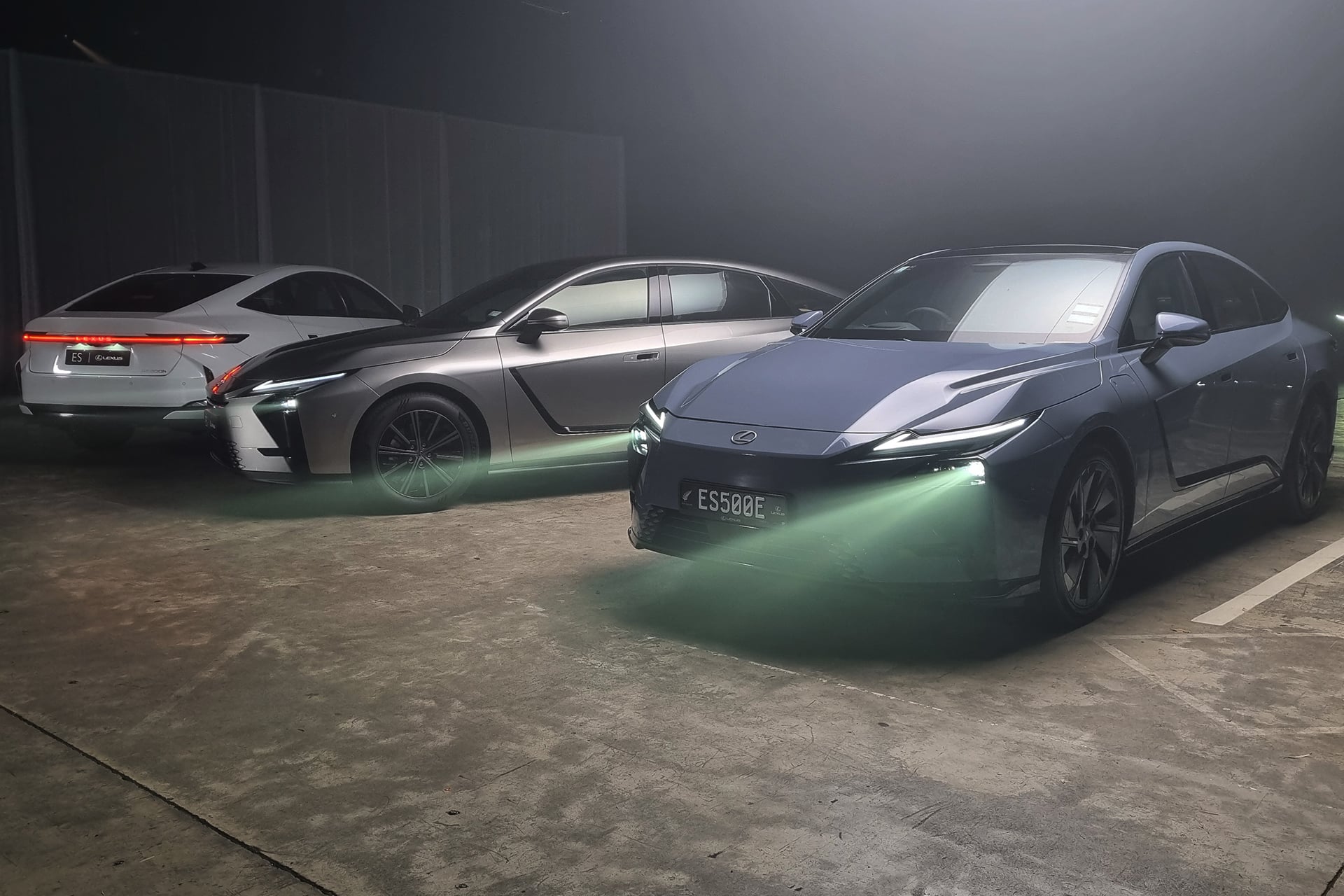
The new Lexus ES has arrived in New Zealand, and first impressions suggest the new car is nothing like the seven generations that have come before it. It could legitimately get away with wearing a new badge. It was unveiled in Auckland on Thursday night, and this was an introduction rather than a driving launch, with time behind the wheel still to come.
Lexus has done considerably more than sharpen the styling and update the screens. The ES has grown, changed shape and gained an electric flagship, while retaining hybrid options alongside it.
Craig Burton, Lexus New Zealand’s manager of sales and operations, described it as the most significant redesign in the model’s history.
Read more – Lexus ES arrives in NZ, starting at $96,900
“This new model that we see here tonight is now leading the design and technology across our range.”
Three models, two approaches
The local line-up comprises the ES 300h Premium and Limited hybrids, topped by the battery-electric ES 500e Dynamic.
It’s also the first time Lexus has offered a fully electric ES alongside hybrids.
Pricing starts at $96,900 for the Premium, rising to $104,900 for the Limited and $109,900 for the electric Dynamic, all plus on-road costs.
By offering both powertrains in the same body, Lexus wants customers to choose the approach that suits them, with the electric version adding another route into the ES.
“There isn’t one pathway that suits every customer,” Burton said.
The 300h introduces Lexus’s sixth-generation hybrid technology with Burton promising improvements in smoothness and efficiency.
The 500e brings more than 250kW and Lexus’s Direct4 all-wheel drive system. It also has a feature that sounds slightly at odds with the ES’s relaxed brief: a simulated eight-speed manual shift function.
Called Interactive Manual Drive, it provides eight virtual ratios, selected using paddles. The technology also features in the RZ F Sport and is intended to give drivers another way to interact with the electric powertrain.
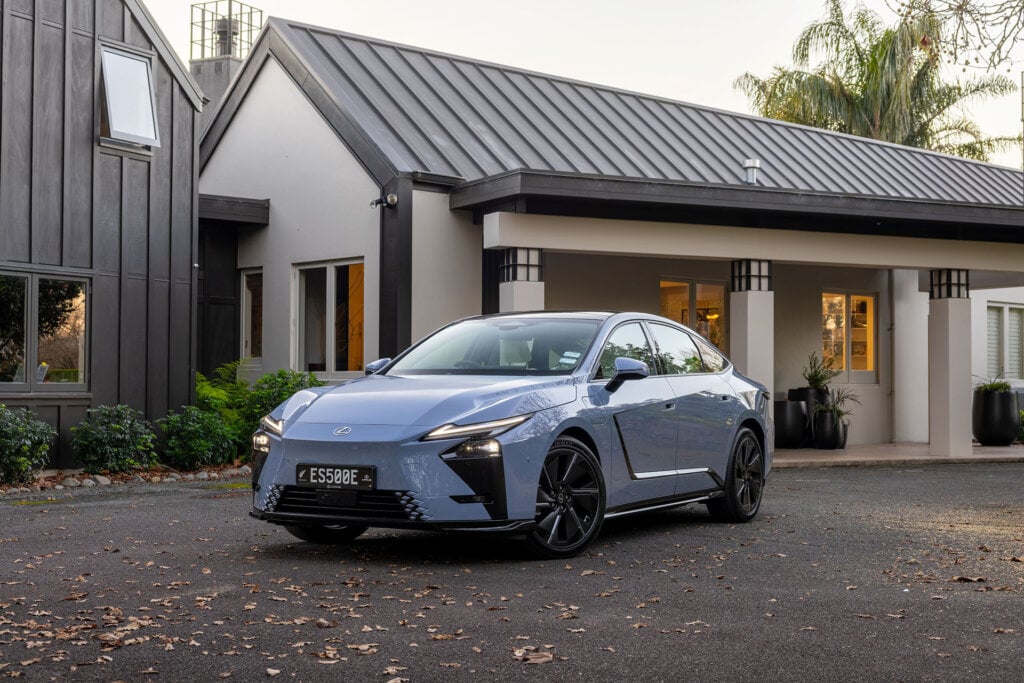
Whether ES buyers regularly reach for the paddles remains to be seen. Still, their inclusion suggests Lexus wants this car to offer something beyond an exceptionally quiet commute.
A different sort of sedan
Burton acknowledged the change in the luxury market. Executive sedans once dominated; SUVs now account for nearly all of the customer interest. The new ES responds with proportions that blur the familiar boundaries a little.
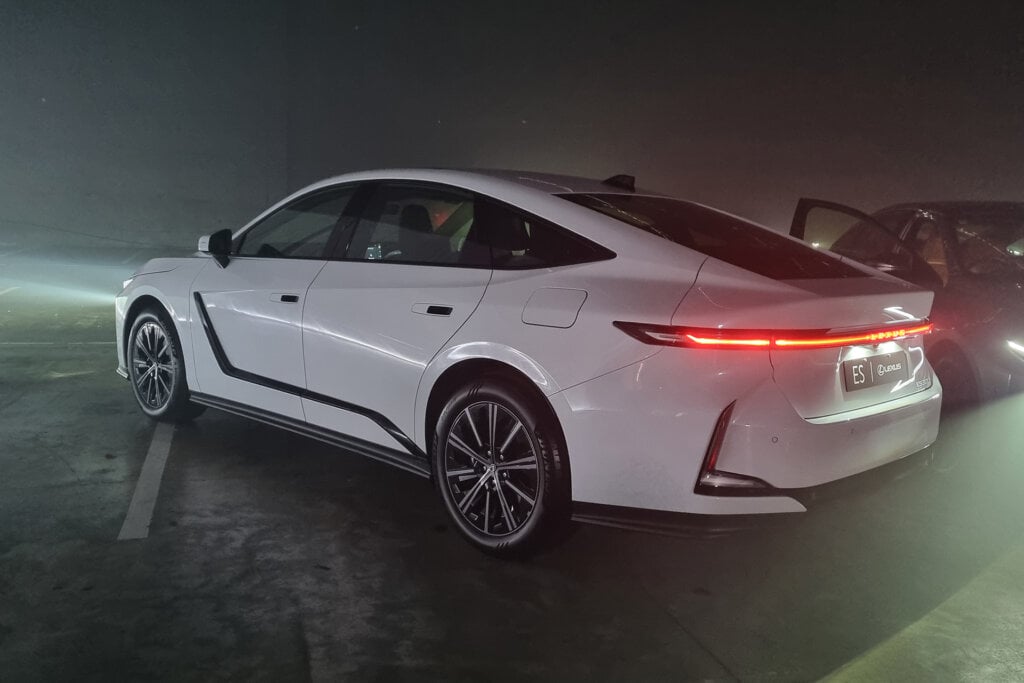
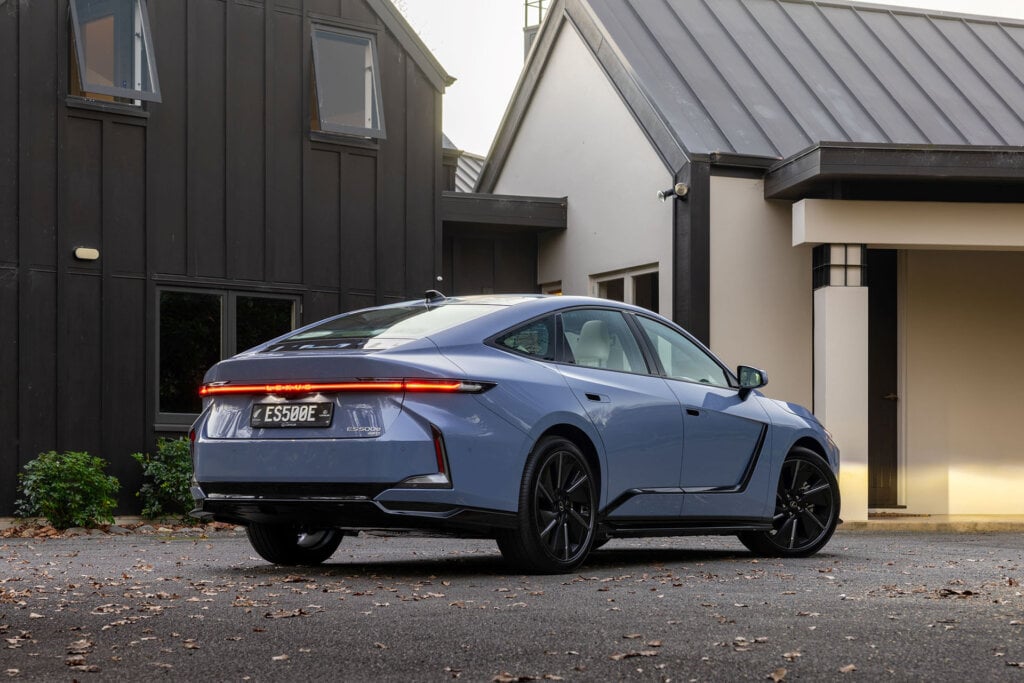
It is 165mm longer and 55mm wider than its predecessor, with a substantially taller body. Burton suggested its appearance sits somewhere between an SUV and a sedan, particularly viewed from the rear.
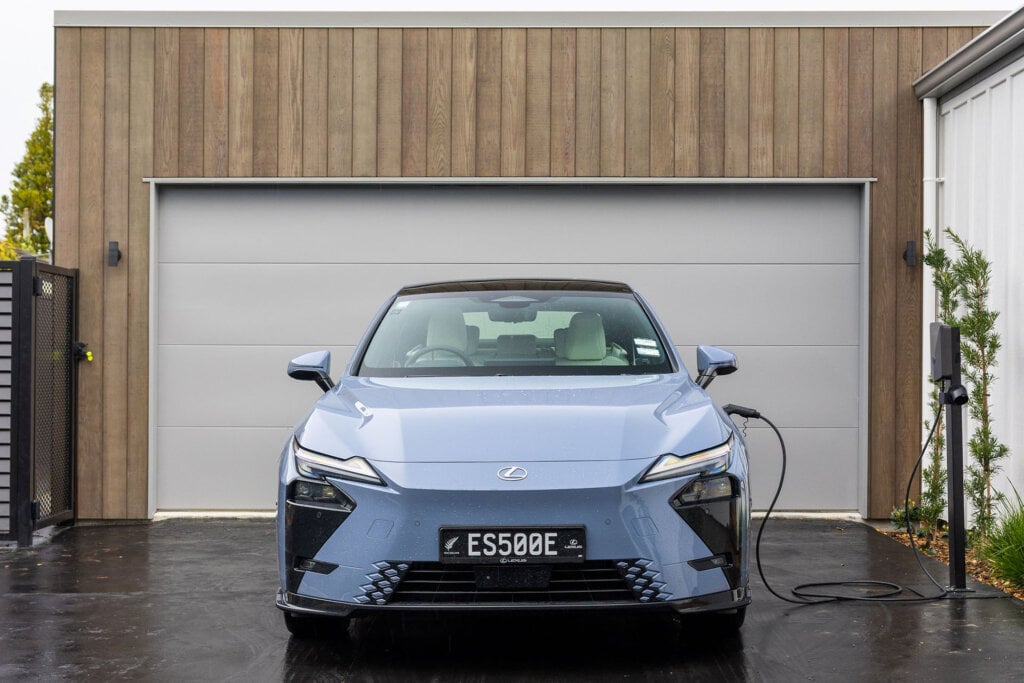
That’s a fair description of the impression it makes standing still. There’s a long, fastback-style roofline, but also considerably more height and visual substance than you might associate with the ES badge.
Lexus calls the design direction “clean tech and elegance”. Its spindle theme survives, although the emphasis has shifted from a dominant grille to forms running through the bonnet and body.
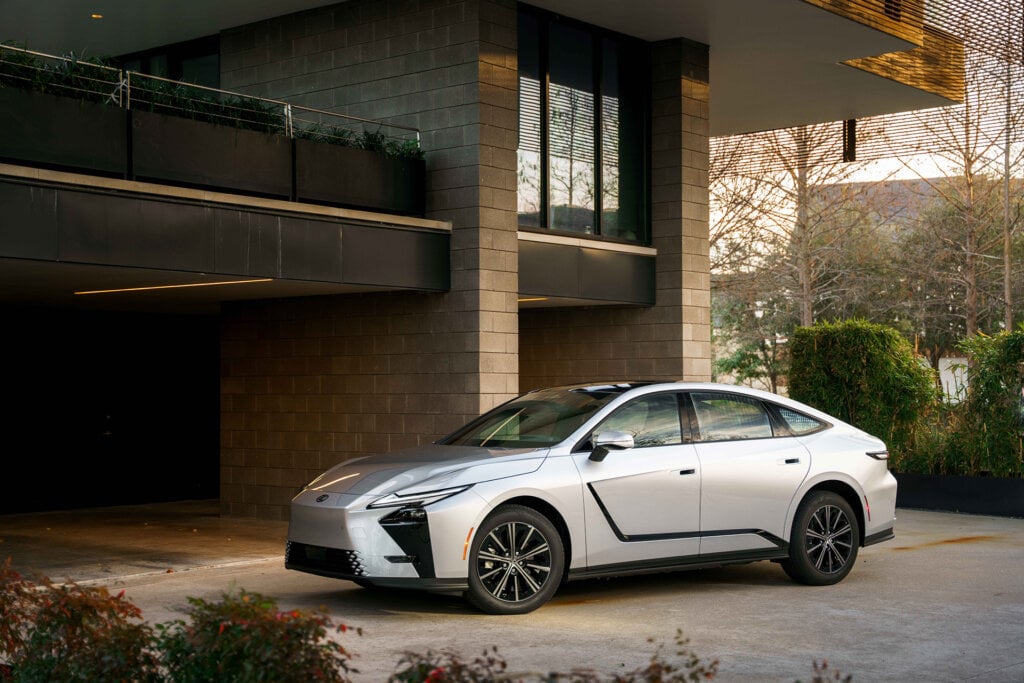
At the rear, a split-line LED treatment incorporates the Lexus wordmark, accompanied by L-shaped fog lights. The Sonic Copper 500e displayed at the reveal helped show off the new shape.
The extra size is intended to benefit the people inside. Burton highlighted increased rear accommodation and headroom, with passenger comfort central to the brief.
Buttons that appear when needed
Inside, Lexus has pursued the idea of a second living room: somewhere occupants can settle into, whether crossing Auckland in traffic or heading away for a weekend.
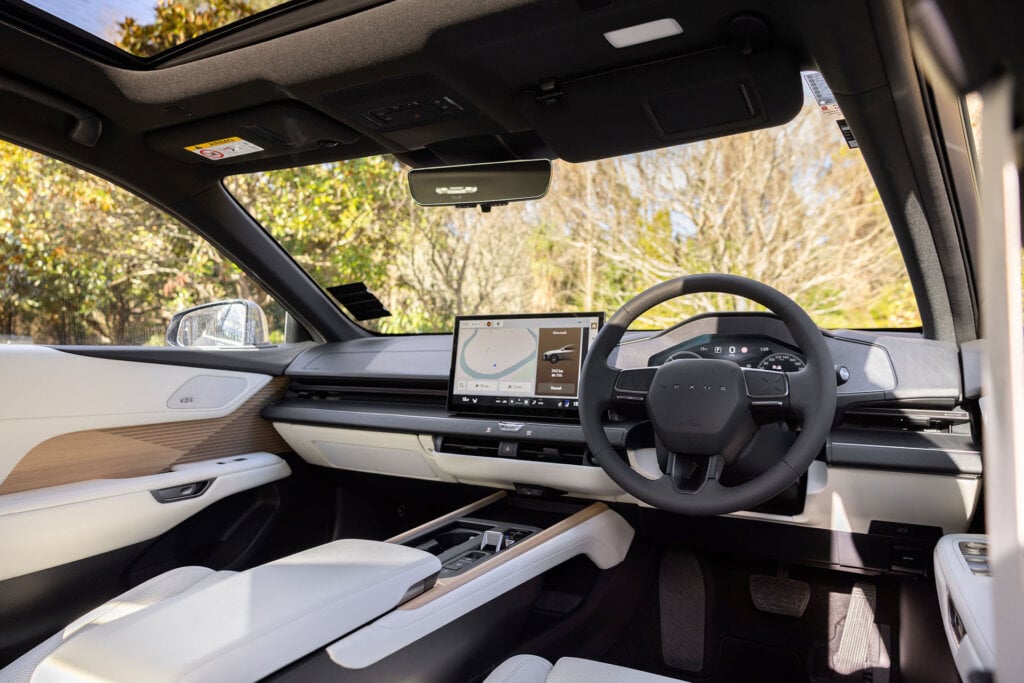
Burton’s point was that luxury includes how passengers feel after an hour or two in the car.
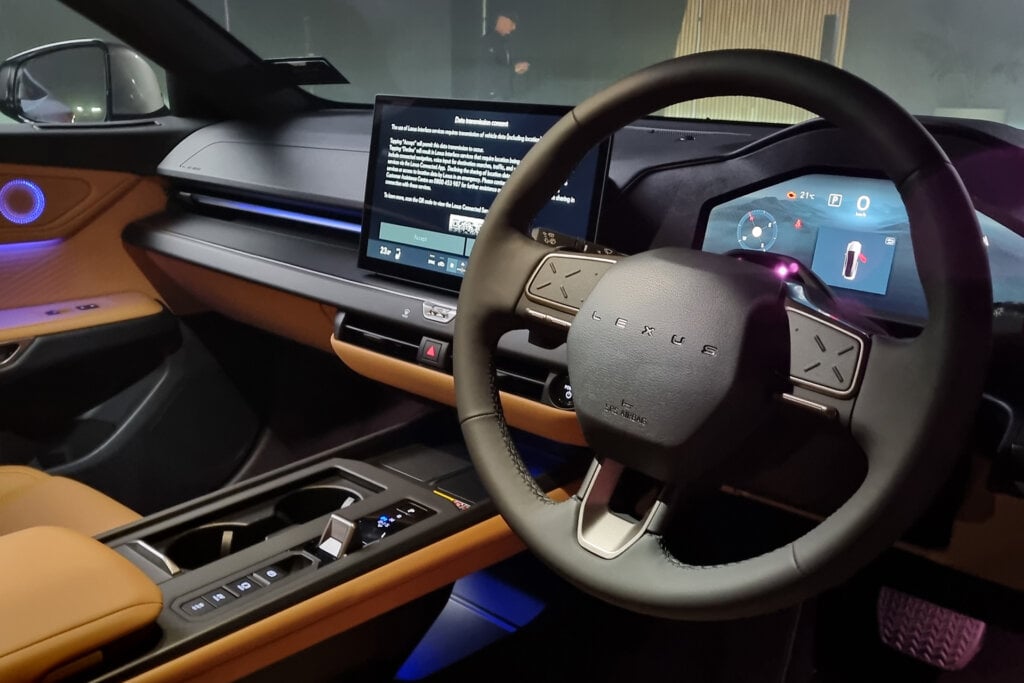
The minimalist dashboard introduces hidden switches, although these remain tactile push buttons. Their illumination appears when required, keeping the surface visually clean without shifting every function into a touchscreen.
“We’re still offering the buttons because we like to have the buttons easily accessible, right?”
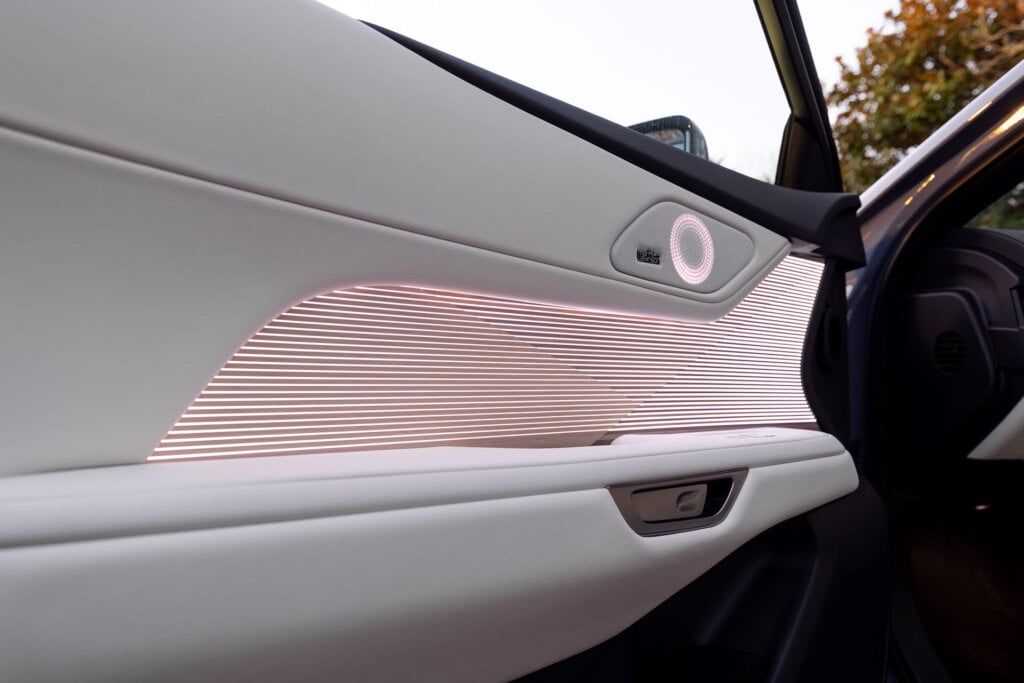
The Limited hybrid and Dynamic electric also feature configurable ambient lighting. Burton outlined 14 themes, 50 colours and six lighting patterns, allowing occupants to change the cabin’s atmosphere.
In the 500e, genuine bamboo elements are integrated with the lighting. It’s a detail that gives Lexus’s familiar emphasis on materials and craftsmanship a different expression, with illumination becoming part of the trim itself.
The ES also introduces connected services to the local Lexus range. A companion app provides functions including remote locking, starting, climate control and vehicle location, bringing access to the car beyond the key in your pocket.
Much of this sits under Lexus’s new “Discover” brand direction, which Burton described as an invitation to approach products and experiences more adventurously. There’s plenty of brand language wrapped around it, but the ES gives the idea something tangible.
The familiar name now belongs to a markedly different proposition. How successfully it combines that spacious cabin with the promised refinement and driver engagement is the next question.