Next Mazda MX-5 aims to stay light while prepping for volts
Words: Kyle Cassidy
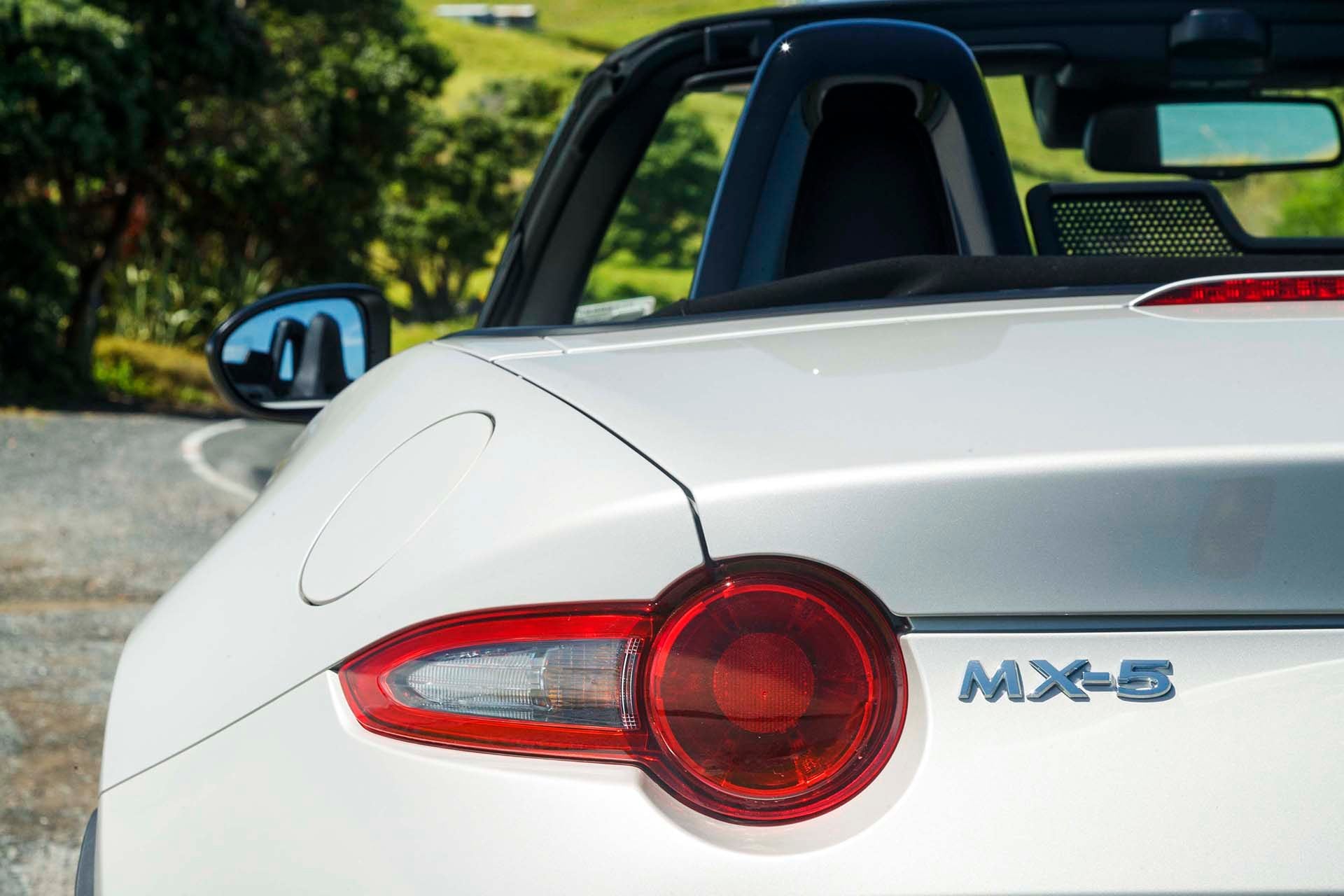
Mazda has begun considering the next-generation MX-5, with company boss Masahiro Moro indicating the new roadster will retain the current car’s lightweight character while being engineered to accommodate a non-combustion powertrain.
That doesn’t mean the next MX-5 will necessarily be electric from launch. Instead, Mazda wants its underlying structure to be flexible enough to support different powertrains as emissions regulations and market demands evolve.
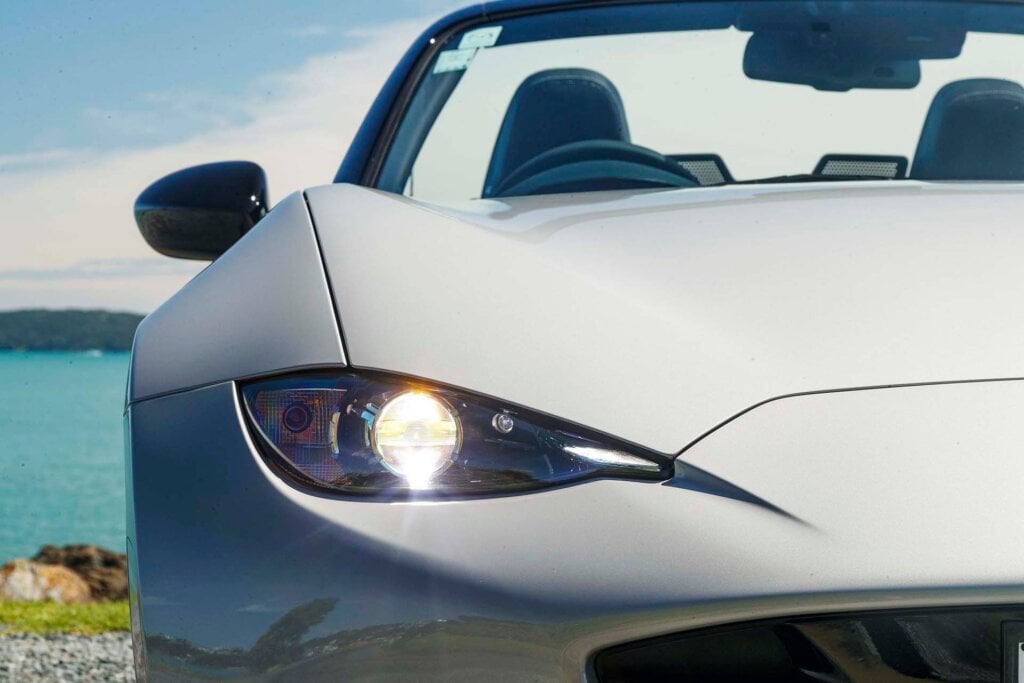
Speaking to German publication Auto Motor und Sport, Moro said the next MX-5 “must also be ready for a scenario without a combustion engine”.
“The challenge for us is to make the basic structure lighter without using exotic materials like carbon fiber,” he said.
Read more – 2024 Mazda MX-5 GT review
Moro said engineers were targeting a weight of between 1000kg and 1200kg, keeping the new model within broadly the same range as the current ND-generation car.
Mazda subsequently confirmed it was considering the next MX-5 and evaluating several powertrain options.
“We are currently considering the development of the next-generation MX-5. It is true that we are considering a weight target (between 1,000 kg and 1,200 kg) to realize the ‘Jinba ittai’ driving experience that is the MX-5’s appeal. Regarding the powertrain, we are also exploring various possibilities while considering regulations and other factors,” the company said.
Jinba ittai translates roughly to “horse and rider as one” and has underpinned the MX-5’s development since the original arrived in 1989.
Petrol power likely to continue
Previous reports suggest the combustion-powered version could use Mazda’s upcoming 2.5-litre Skyactiv-Z four-cylinder engine.
Despite the increase in capacity over the current 2.0-litre unit, Mazda isn’t believed to be chasing substantially more performance. Instead, the larger engine would be designed to meet stricter emissions requirements while retaining a naturally aspirated character.
The current New Zealand MX-5 produces 135kW and 205Nm, with prices starting at $61,990. It remains available as both a conventional Roadster and the folding-hardtop RF.
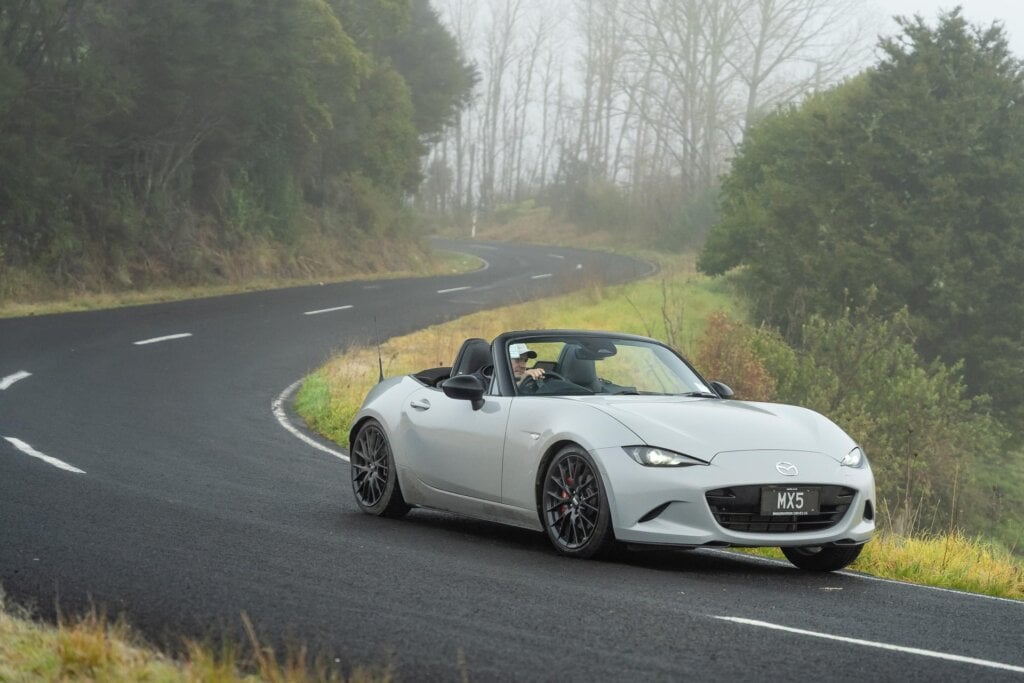
Mazda has previously indicated that it considers the current power-to-weight ratio sufficient, suggesting the next petrol model could deliver similar outputs.
An electric MX-5 presents a much tougher engineering challenge. Batteries add significant weight and require considerable space, neither of which is plentiful in a compact two-seat roadster.
Mazda could place the battery beneath the floor in a conventional skateboard layout or use a T-shaped pack running between and behind the seats. Either solution would have to preserve the low seating position, compact dimensions and balanced handling for which the MX-5 is known.
The company would also need to find a workable compromise between battery size, range, performance, charging speed and price. A larger battery would provide greater range but risk undermining the low weight Mazda is determined to protect.
An electric version would likely require more power than the petrol model to compensate for its additional mass, but Mazda hasn’t confirmed any proposed outputs or driving range.
Reports suggest the next-generation MX-5 could appear from 2028, although Mazda has not announced a launch date.
What is clear is that Mazda doesn’t intend to abandon the formula that made the MX-5 successful. Whether powered by petrol or electricity, the next one is still supposed to be small, light and focused on the driver.