Why hybrid drivers will pay more under the new RUC system
Words: Richard Edwards
The Government’s plan to scrap petrol tax and shift every light vehicle onto road user charges will leave hybrid owners paying considerably more than they do now, according to official figures.
A Ministry of Transport briefing to Transport Minister Chris Bishop, released under the Official Information Act, sets out the gap. Petrol vehicles pay fuel excise duty of 70 cents a litre. Diesel, electric and heavy vehicles pay road user charges at $76 per 1000km.
Officials advised Bishop that closing the disparity between the two through the pump would require fuel excise to rise 26 percent to 91 cents a litre, which is not on the agenda.
The implication is that petrol drivers as a group are undercharged by roughly a quarter compared with RUC payers, and that shifting them onto RUC collects that difference without a fuel tax increase ever being announced.
The crossover point
The briefing puts a number on where the line sits. The average car in New Zealand uses 8.1 litres per 100km. The consumption at which fuel excise and RUC collect the same amount per kilometre is 9.4 litres per 100km.
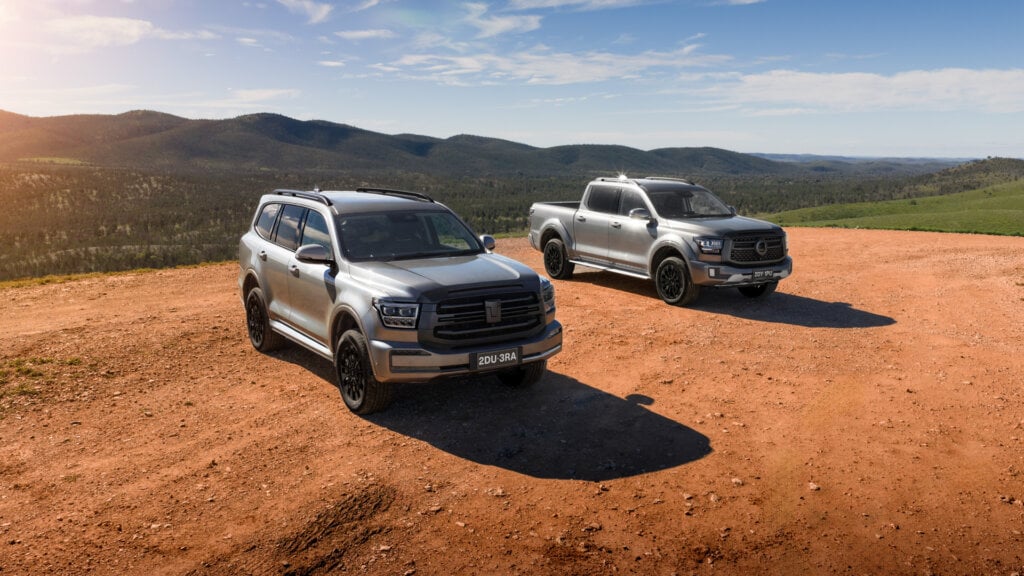
Any vehicle using more than 9.4L/100km currently pays more per kilometre than the diesel Ranger next to it at the lights. Anything using less pays less. Most of the fleet sits below that line, which is why a flat distance charge lifts the bill for most petrol drivers, and lifts it furthest for the most efficient cars.
What it looks like in dollars
No rate has been set for light petrol vehicles, so the figures below use the current $76 per 1000km as a placeholder and assume 12,000km of driving a year. Fuel excise plus GST currently adds 80.53 cents to every litre.
| Vehicle | Real-world use | Road tax now | At $76 per 1000km | Change |
|---|---|---|---|---|
| Corolla hybrid | 4.5 L/100km | $435 | $912 | +$477 |
| RAV4 hybrid | 5.5 L/100km | $531 | $912 | +$381 |
| Average NZ car | 8.1 L/100km | $783 | $912 | +$129 |
| Petrol ute or large SUV | 11.0 L/100km | $1063 | $912 | -$151 |
| Diesel or EV | n/a | $912 | $912 | no change |
A Corolla hybrid owner contributes more than double what they do today. An owner of a less fuel efficient car comes out slightly ahead.
Bishop makes the case on fairness. He points to hybrid numbers rising from 12,000 on New Zealand roads in 2015 to more than 350,000 today, and argues it is wrong for people who drive less and cannot afford an efficient car to subsidise people who can. The counterargument from hybrid owners is that running costs were part of the pitch when they paid the premium in the first place.
What we still don’t know
The $76 figure is the current rate for diesel and electric light vehicles, not a rate anyone has announced for petrol cars. Weight-based differentiation remains on the table, which could see a 1200kg hatch charged less than a 2400kg ute. Collection costs are another unknown, because a digital system run by competing third-party providers will carry fees that the pump does not charge separately.

The revenue picture points one way. Bishop describes the National Land Transport Fund as massively oversubscribed and notes fuel excise has fallen 20 percent in real terms since 2020, while saying a fuel tax rise is unlikely in January.
When
The bill shifting RUC to a digital system has had its second reading in Parliament, and officials expect the modernised system to be ready for use in 2027. No date has been set for moving the remaining 3.5 million light vehicles across. Bishop says the Government will assess how the new system performs in 2027 before deciding on the next steps.