View all
11 more images
2026 Denza B5 & B8 – First Drive
Words: Richard Edwards | Photos: Supplied
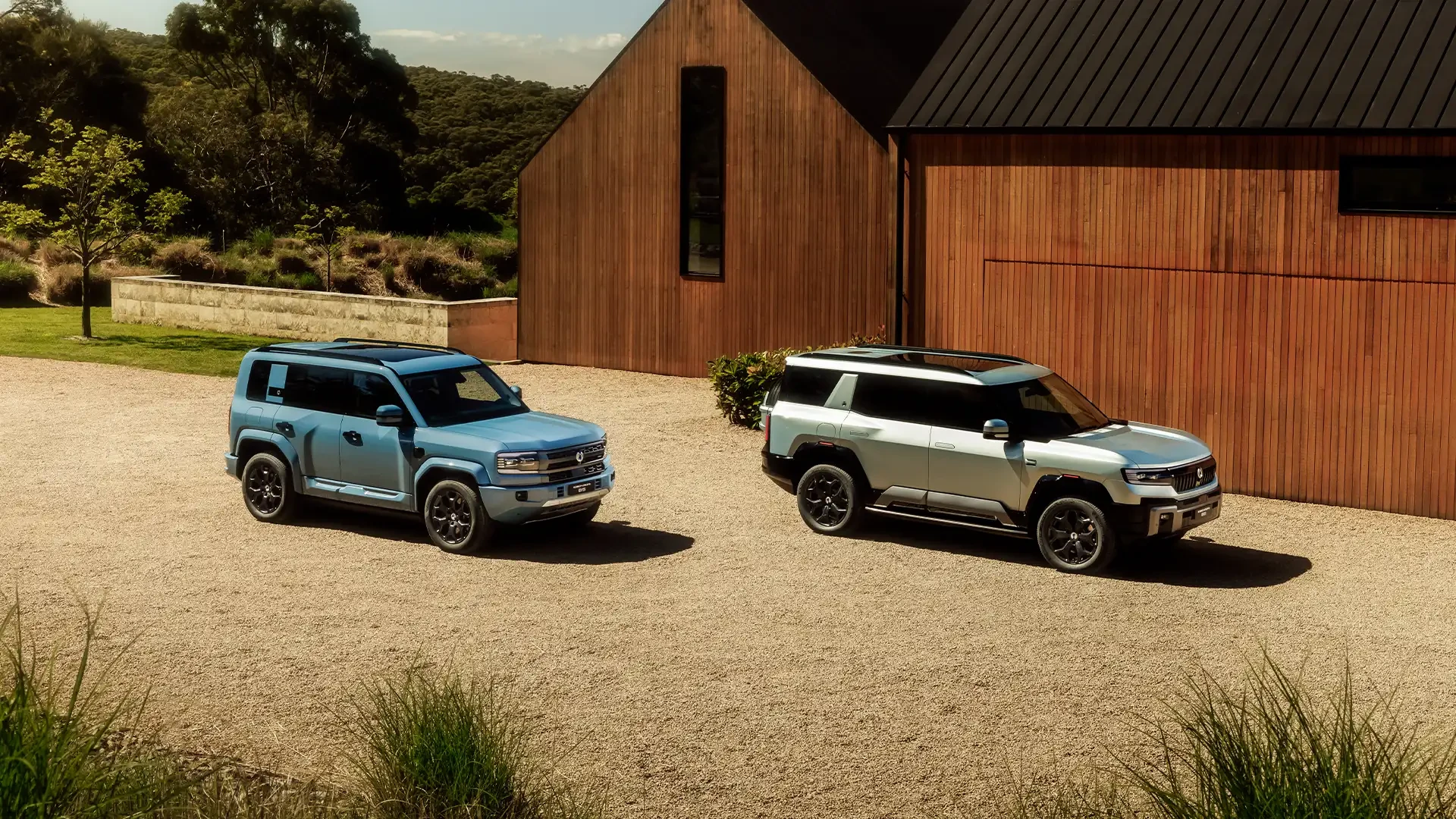
A pair of plug-in hybrid off-roaders from BYD’s premium sub-brand aim to shake up New Zealand’s large SUV pecking order. We drove both in South Australia to find out if the hype is justified.
Luxury car brand launches typically involve the Spanish coast, five star hotels and all the trimmings. So why was I standing in a dusty car park in outback South Australia having slept in a tent? Because Denza, BYD’s premium sub-brand originally co-created with Mercedes-Benz (though the German company withdrew from the partnership in 2024), is doing things differently.
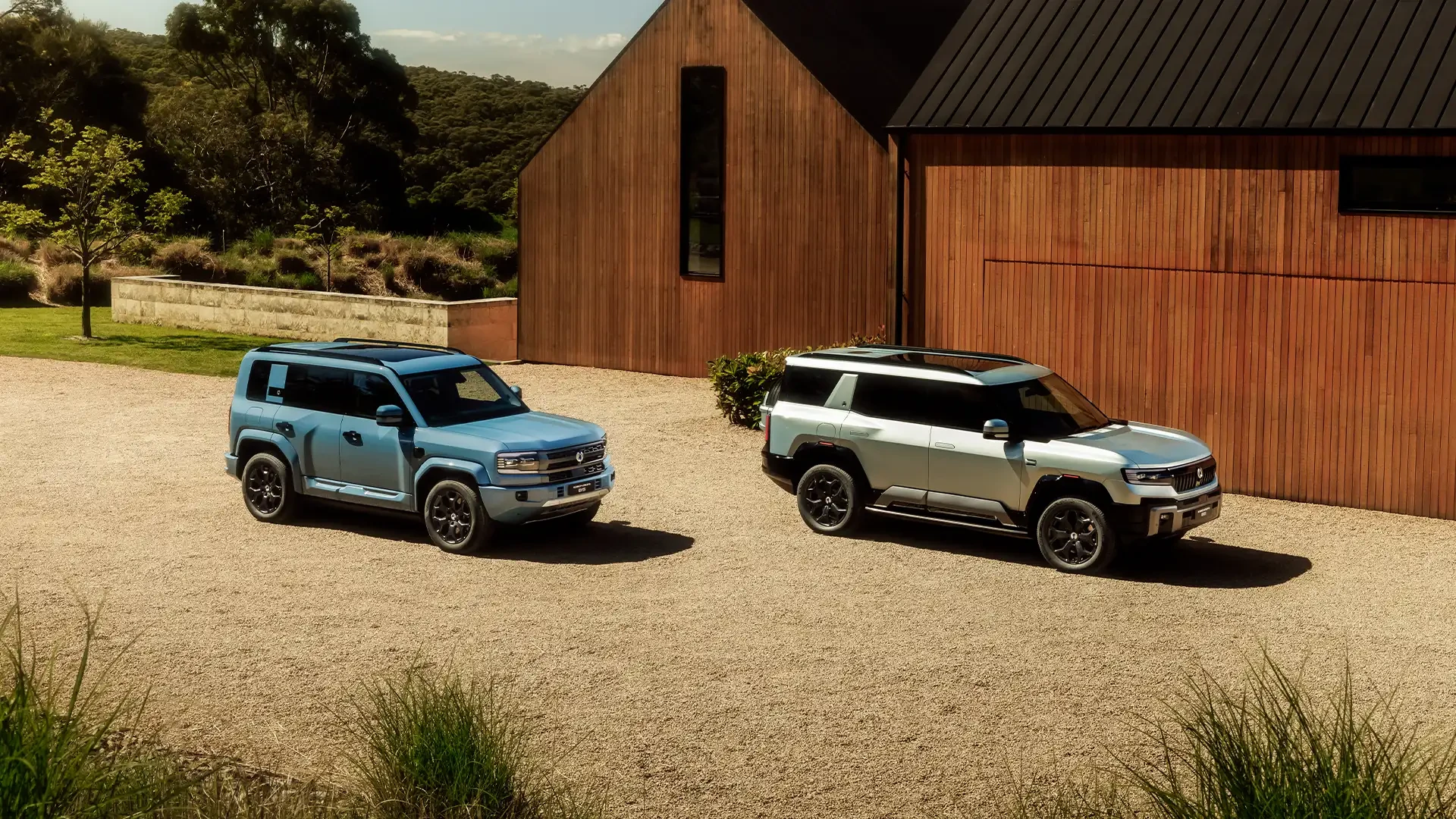
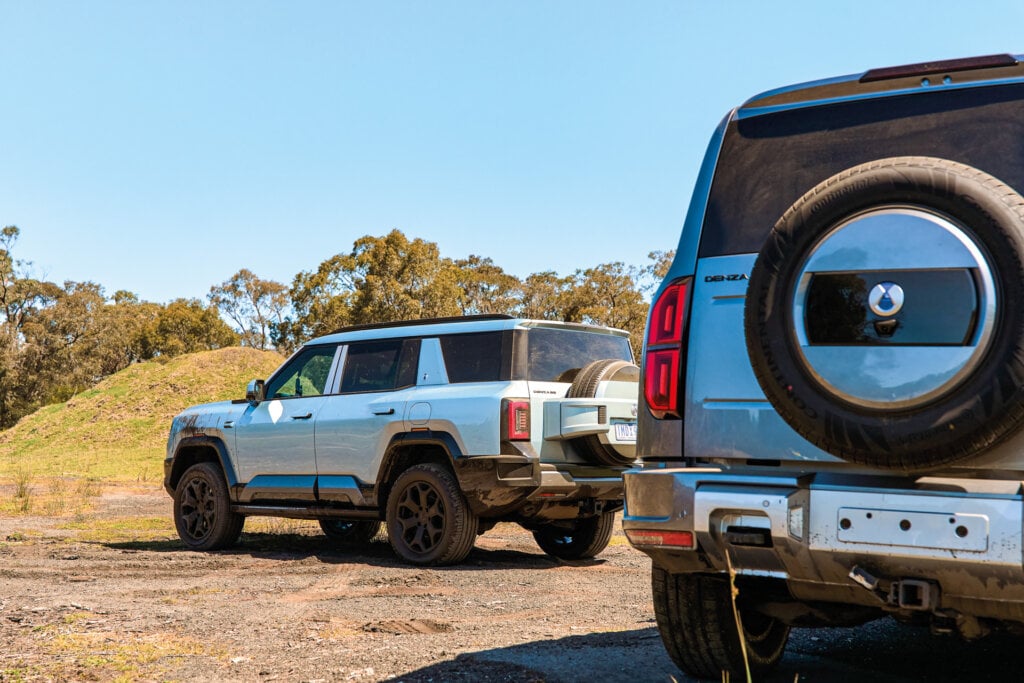
Rather than leading with sedans or limousines as you might expect from a luxury newcomer, Denza has chosen two body-on-frame plug-in hybrid SUVs as its opening salvo for the Tasman Sea markets. They aren’t even ground-up Denza product, starting life under sister-brand FangChengBao. The thinking is straightforward: this market loves large, capable off-roaders, and Denza reckons it can deliver luxury, technology and genuine off-road ability into a far more voluminous market.
Both models sit on BYD’s DMO (Dual Mode Off-road) platform, which pairs dual electric motors with a turbocharged petrol engine in a series-parallel hybrid arrangement. It’s the same architecture underpinning the BYD Shark ute, but here it’s wrapped in considerably more luxury. The key point, as Denza product manager Sajid Hasan was at pains to explain at the launch, is that these are fundamentally electric vehicles with a petrol engine acting primarily as a generator. You will run out of petrol long before you run out of battery.
New Zealand pricing
The B5 starts at $88,990 in standard trim, rising to $96,990 for the Leopard with its DiSus-P adaptive hydraulic suspension, Nappa leather, 20-inch wheels and digital rear-view mirror. The larger B8 is $109,990 for the seven-seat model and $117,990 for the six-seat with captain’s chairs, massage seats and a head-up display.
To put that in context, a comparably equipped Toyota Prado sits north of $90,000, a Ford Everest Platinum is over $80,000 and you’re looking at well over $130,000 for a LandCruiser 300. Step into Range Rover or Mercedes GLS territory and you’re spending north of $200,000. The Denza pricing looks seriously aggressive for what’s on offer.
Denza B5: The Prado fighter
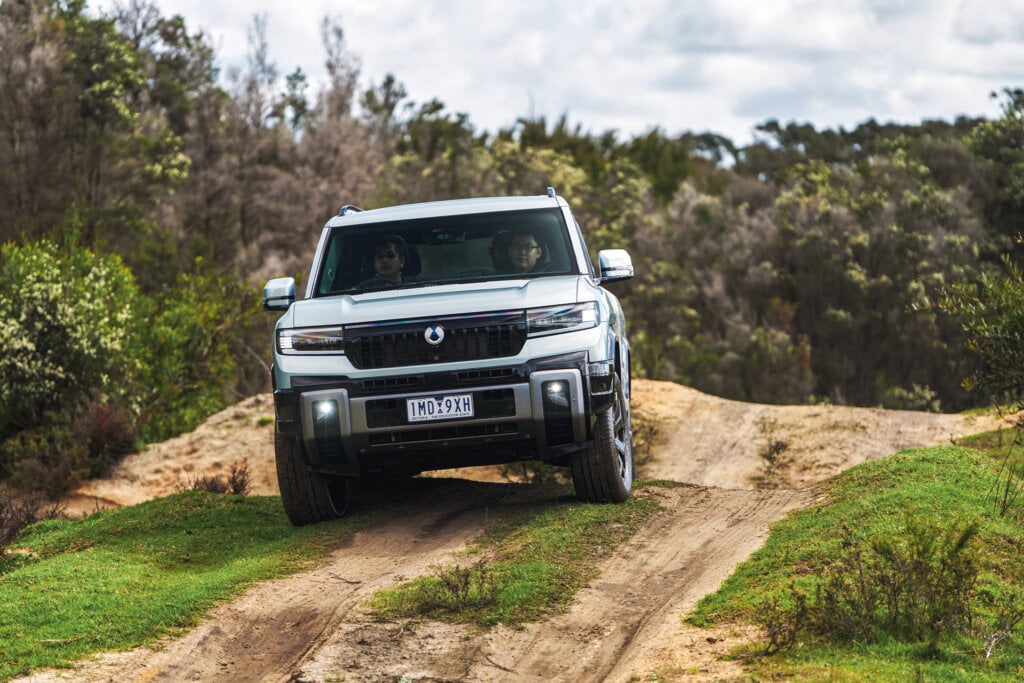
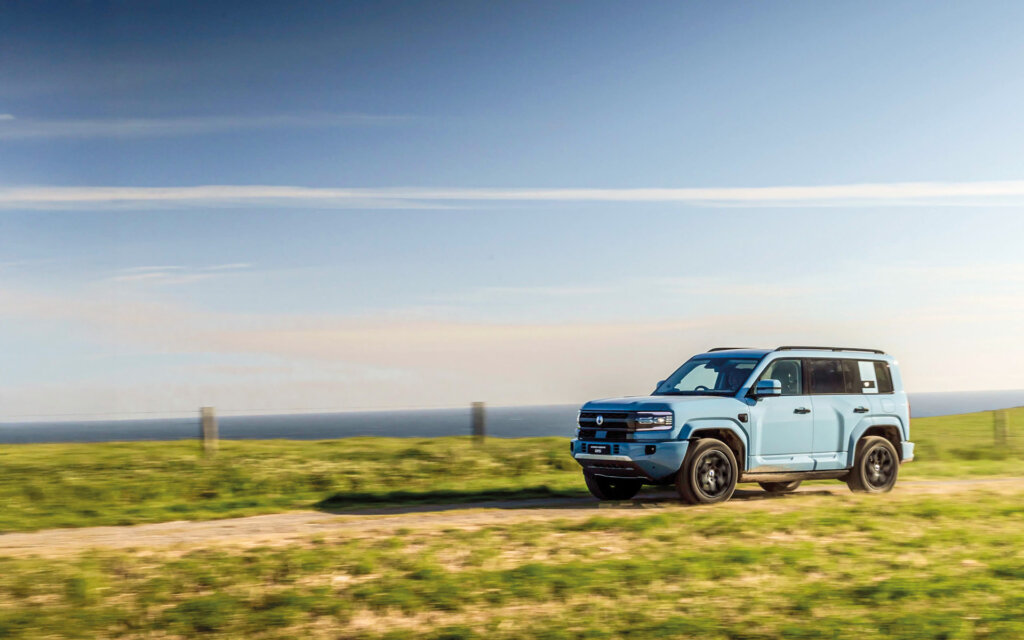
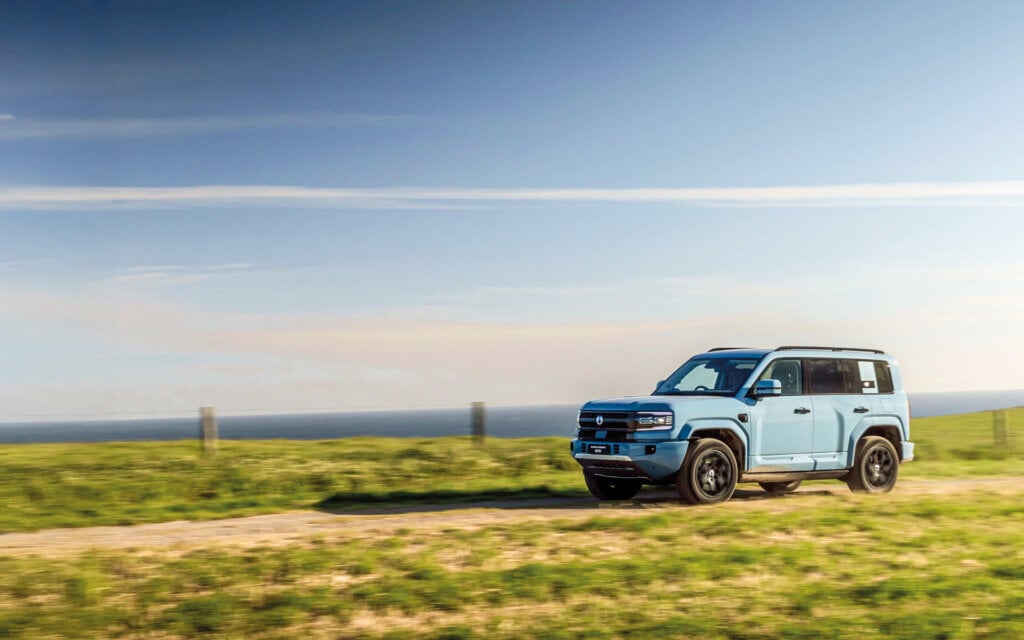
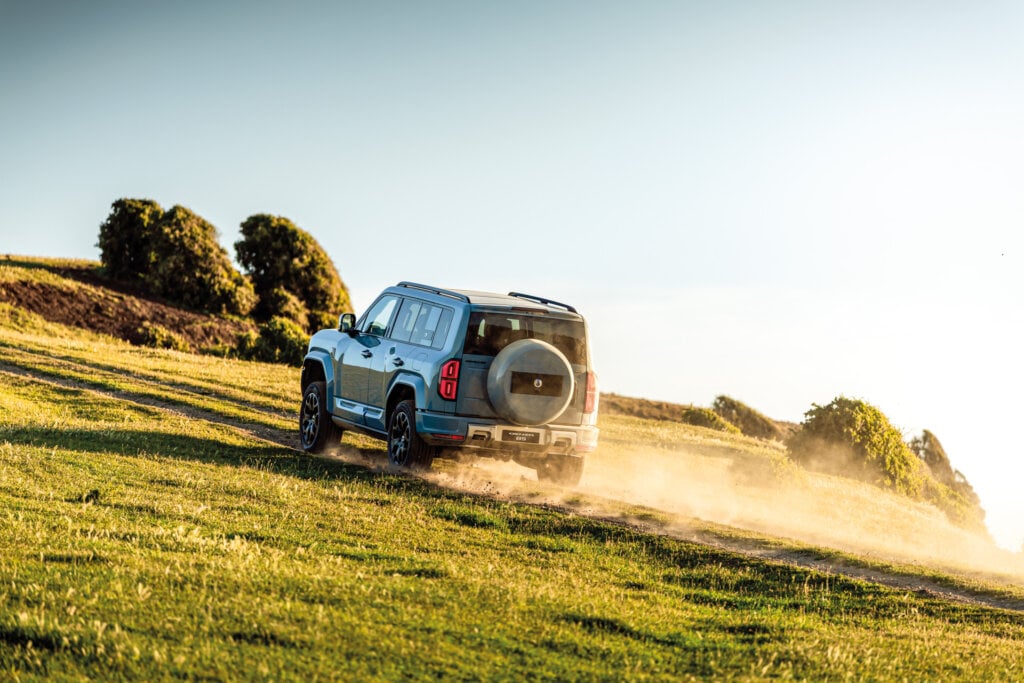
The B5 is the smaller of the two, a five-seat SUV roughly comparable in footprint to a Prado, though a touch shorter. Under the bonnet sits a 1.5-litre turbo-petrol engine working alongside dual electric motors for a combined 400kW and 760Nm, numbers that dwarf the Prado’s diesel or the Everest’s turbo V6. A 31.8kWh Blade battery provides around 100km of electric-only range (NEDC), and the 83-litre fuel tank extends total range to a claimed 975km. Importantly, it runs on 91 octane. Denza quotes impressive efficiency figures, but with the nature of our launch drive it was very difficult to get a true read on real-world consumption. We’ll reserve judgement on that until we can drive them properly in New Zealand.
On the road, the B5 feels well put together. Refinement is good, certainly ahead of a Prado, and the ride, even for a large separate-chassis vehicle, is commendable. In EV mode around town it’s near-silent, and even when the petrol engine kicks in to top up the battery, it’s barely noticeable most of the time. Performance is, as you’d expect from 400kW, class-leading. The 4.8-second sprint to 100km/h doesn’t tell the whole story; it’s the instant torque delivery from the electric motors that makes this thing feel genuinely rapid.
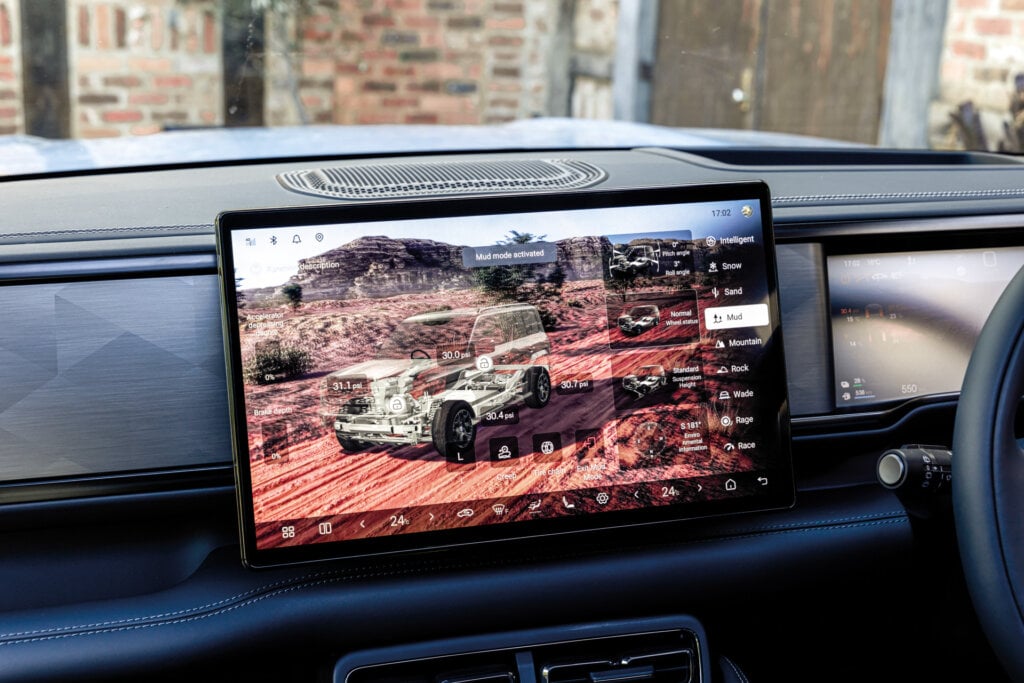
Where the B5 really impressed me was off-road. Despite wearing road-oriented tyres, it scrambled up rocky slopes like a mountain goat. Front and rear mechanical locking differentials are standard on both B5 models, which is a rarity at this price point and a genuine differentiator against the Prado and Everest (the B8 7S gets a rear lock only, while the 6S gets both). Add a low-range mode and that clever electric motor torque vectoring, and you can place power exactly where it’s needed. There’s also a party trick called Leopard Turn, which spins the rear wheels in opposite directions to create a dramatically tighter turning circle in confined off-road situations. The Leopard’s DiSus-P suspension adds 140mm of adjustable ride height, taking ground clearance from 220mm to 310mm and enabling a wading depth of 790mm.
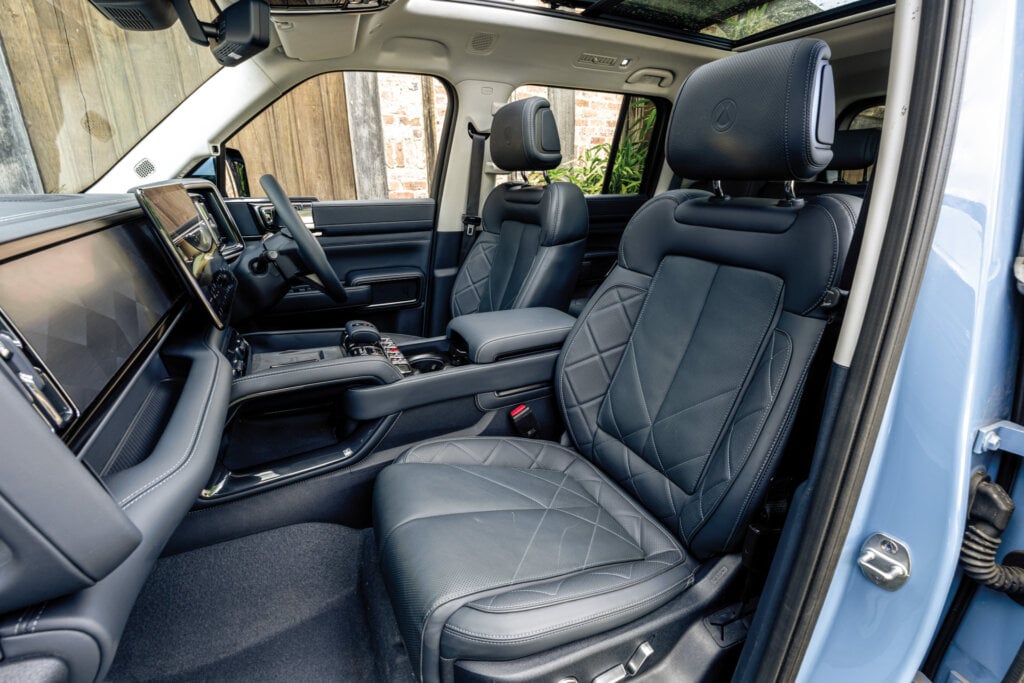
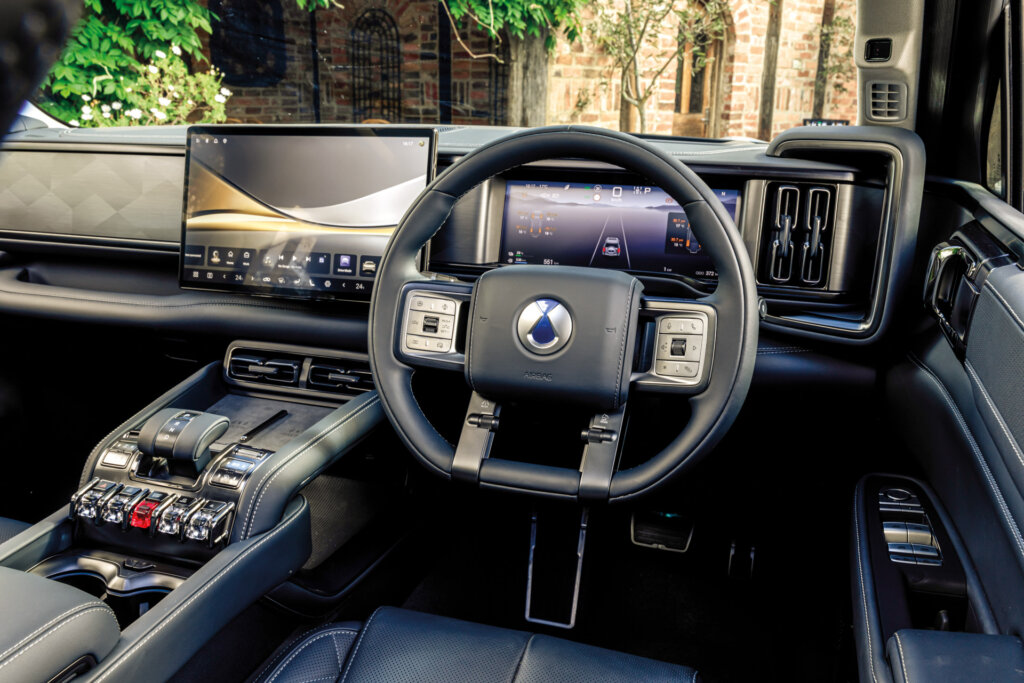
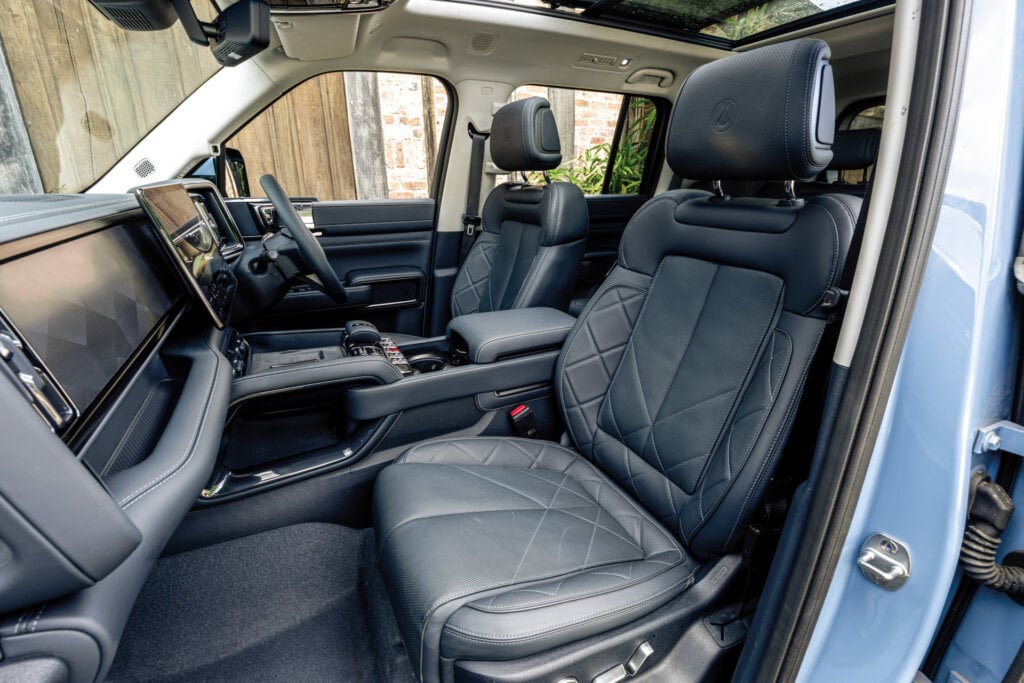
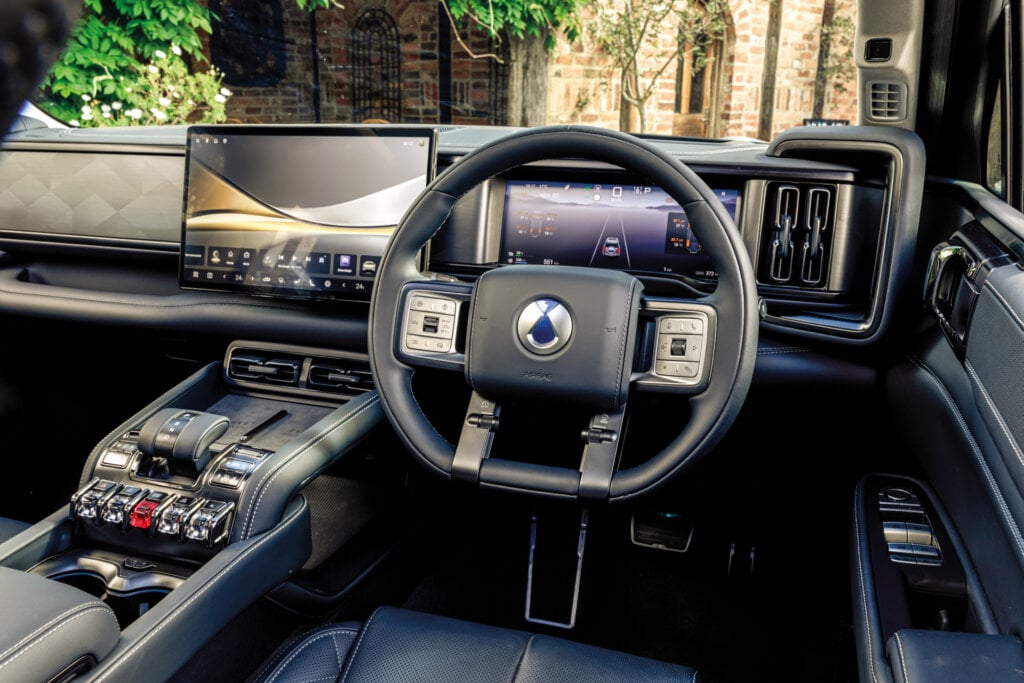
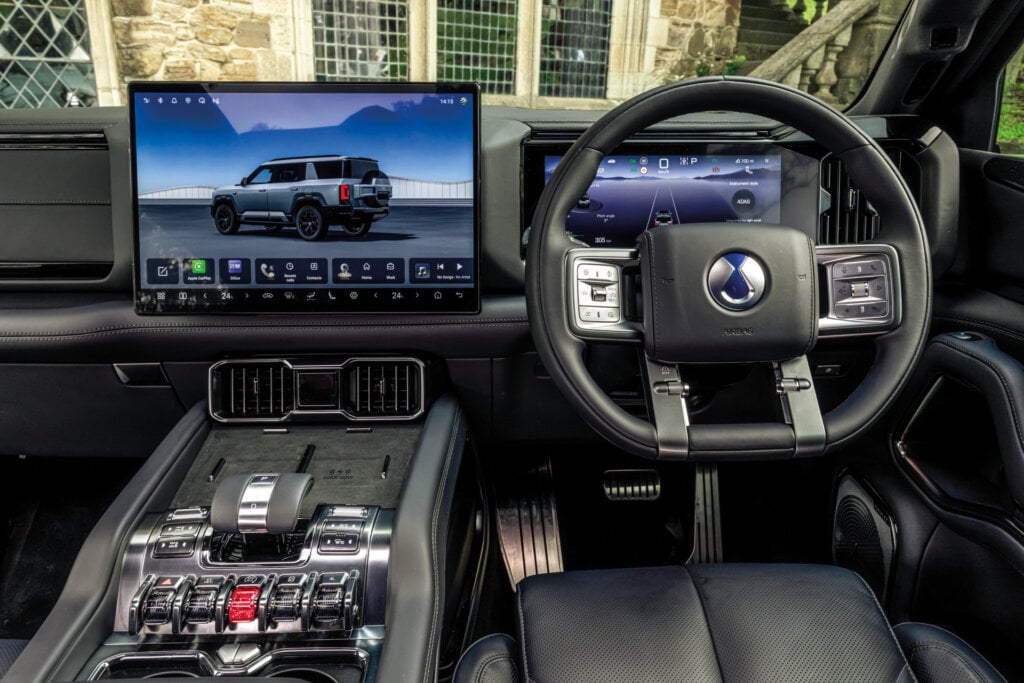
Inside, it’s a curious but appealing mix of slightly conservative layout and technology overload. Over 90 per cent of the cabin is wrapped in leather, the Devialet 16-speaker stereo sounds excellent, and even the base model gets heated, ventilated and massaging front seats. The 15.6-inch touchscreen runs familiar BYD software that’s been lightly reskinned, which is no bad thing; it works well. The fridge between the front seats, which ranges from minus six to over 50 degrees, proved more than a gimmick. It turned our grapefruit sodas into a tasty slurry when cracked open, and we theorised you could do the first half of a reverse sear on a t-bone in there before finishing it on the campfire. Practical? Debatable. Fun? Absolutely.
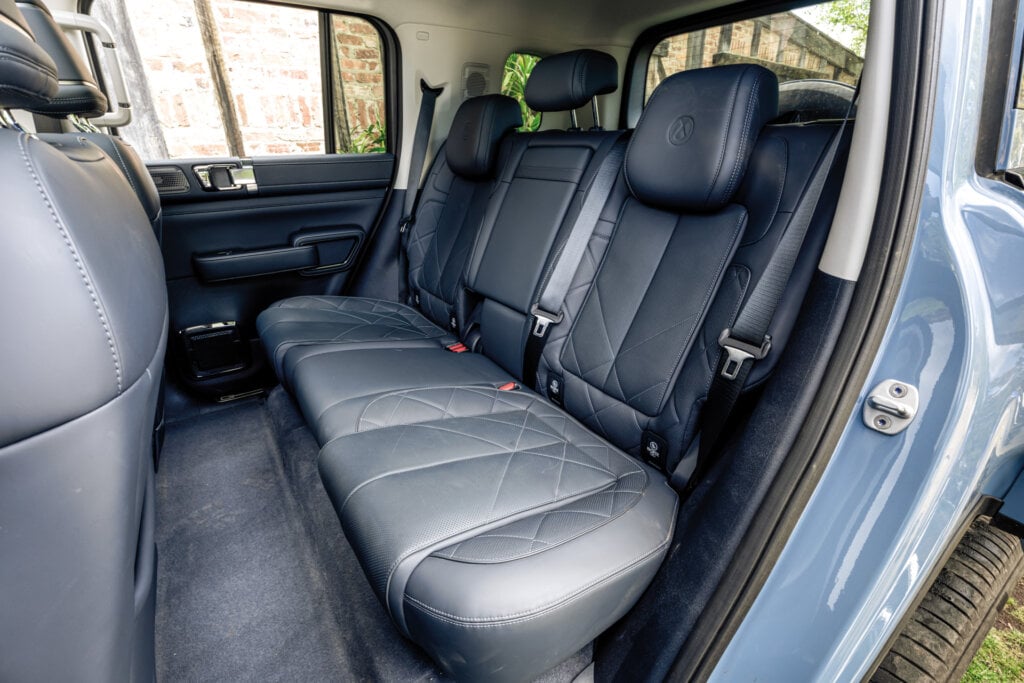
Against the Prado, yes, the B5 lacks a third row. But the Prado’s third row is a genuine compromise anyway, with the hybrid battery eating into an already marginal boot space. I think most Kiwi buyers would be better served by the B5’s properly usable 470-litre boot.
One area that needs work is the ADAS. The driver attention monitor is heavy-handed, particularly if you’re wearing sunglasses, and the intelligent cruise control was downright annoying to use, surprising given the system in the related BYD Shark is very solid. The good news: at the end of the launch, Hasan noted the vehicles were not running the latest software version, so a fix may already be in the pipeline. Encouragingly, a team of Denza engineers from China was following the launch procession throughout, picking up on changes they can make to better suit local conditions. Australia is the first market outside China to receive this level of engineering attention, and the commitment to continuous improvement was evident.
The side-hinged tailgate that opens towards the kerb is also a frustration. It’s the wrong way around for New Zealand, and something you’d have to live with.
One thing worth noting for prospective towers: the B5 shares its 1.5-litre petrol engine with the BYD Shark, where we’ve found it can be a limiting factor when towing. Once battery charge runs low, the small engine has to work harder and efficiency suffers noticeably. It’s adequate, but something to be aware of if you’re regularly hauling heavy loads over long distances.
Both models also feature 6.6kW vehicle-to-load (V2L) capability through the charging port, effectively turning the car into a mobile power station. Denza drove the point home at the launch by running an entire outdoor cinema setup off the cars, complete with projector, popcorn machine and a screening of Talladega Nights. It’s a genuinely useful feature for camping, job sites or emergency power during outages.
Denza B8: Go big or go home
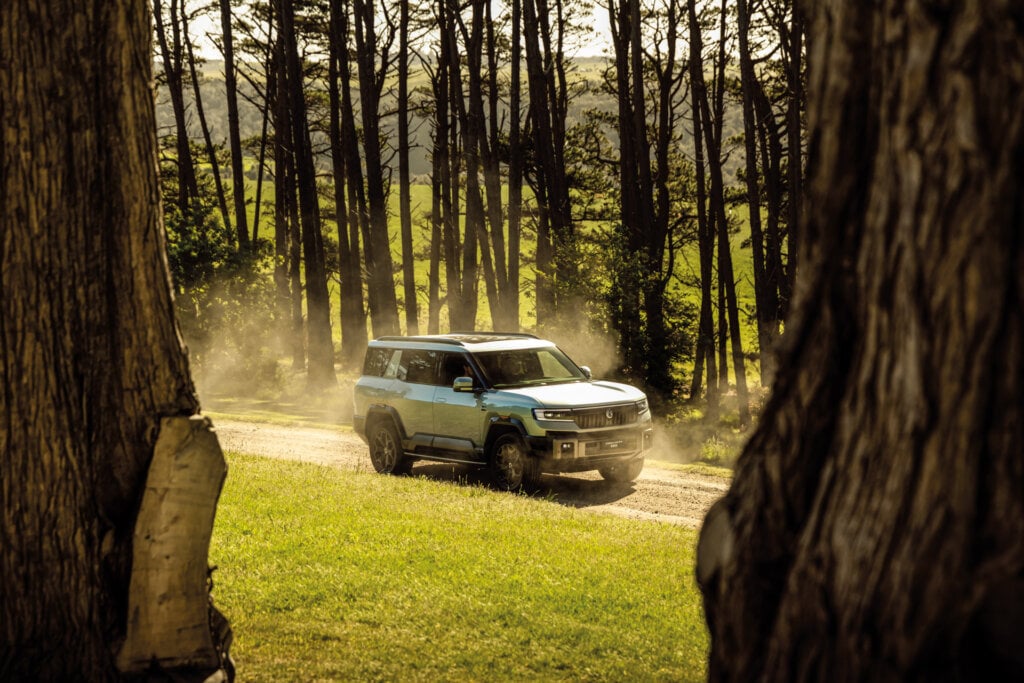
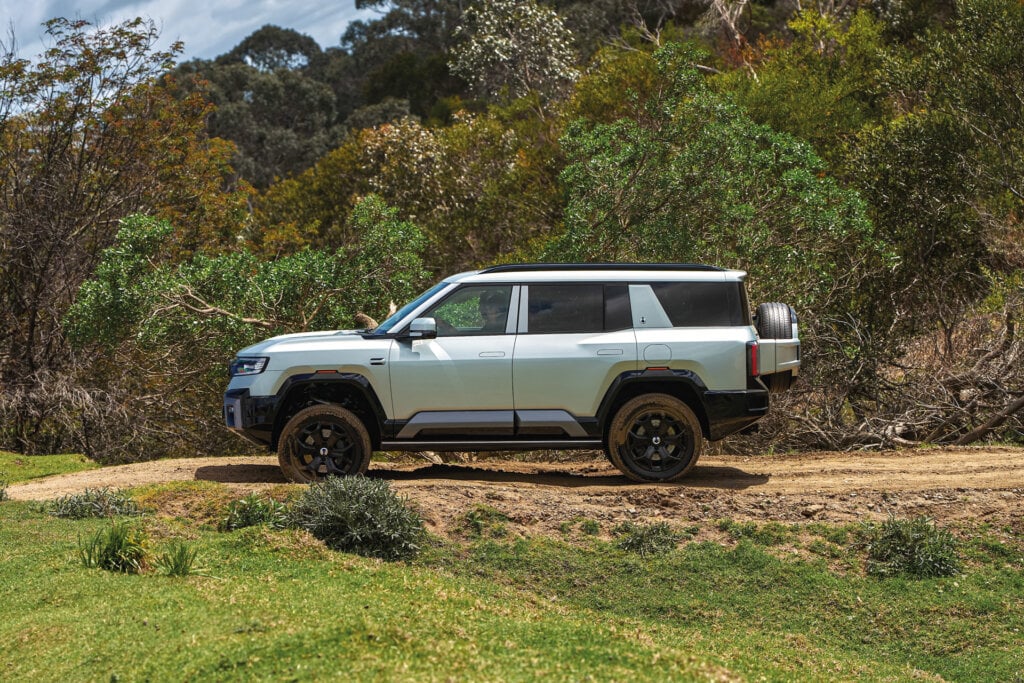
Then there’s the B8, and this thing is a whole new level of big for New Zealand. At over 5.2 metres long and tipping the scales at around 3.2 tonnes, it’s larger than a LandCruiser 300 and closer in size to a Land Rover Defender 130. If you want the biggest, this is it.
The powertrain steps up to a 2.0-litre turbo-petrol engine, lifting combined output to 425kW while torque stays at 760Nm. A larger 36.8kWh battery provides 115km of electric range (NEDC), and with a 91-litre fuel tank, total range stretches to a claimed 1040km. Towing capacity is a segment-matching 3500kg braked, with the tow bar and 12-pin plug fitted as standard, which means it can supply power to the caravan for items like the fridge. Crucially, that larger 2.0-litre engine should address the towing efficiency concerns we’ve noted with the Shark’s 1.5-litre unit. We’ve seen a similar effect in our testing of the Ford Ranger PHEV, where a larger combustion engine makes a meaningful difference to real-world towing economy. The same 2.0-litre is also expected to find its way into a future Shark update.
On the road, the B8 is also very good. Refined and genuinely comfortable, with the ADAS notably improved over the B5 we drove. The 17.3-inch touchscreen is the largest I’ve seen in any car to date, and the Devialet 18-speaker system works well though sounds a little processed. DiSus-P is standard across the range here, and the suspension’s self-levelling function should be a genuine asset when towing or loaded up.
Where I have a reservation is the ride over broken surfaces. Despite the adaptive suspension, the B8’s sheer mass means it can get unsettled on rougher roads. There’s noticeable body roll in corners regardless of drive mode, and the steering can feel a smidge vague. Since our launch drive, Denza has confirmed an OTA update for the DiSus-P suspension is on the way, aimed specifically at improving ride quality. It’s exactly the kind of continuous refinement we’ve seen BYD do effectively in recent years.
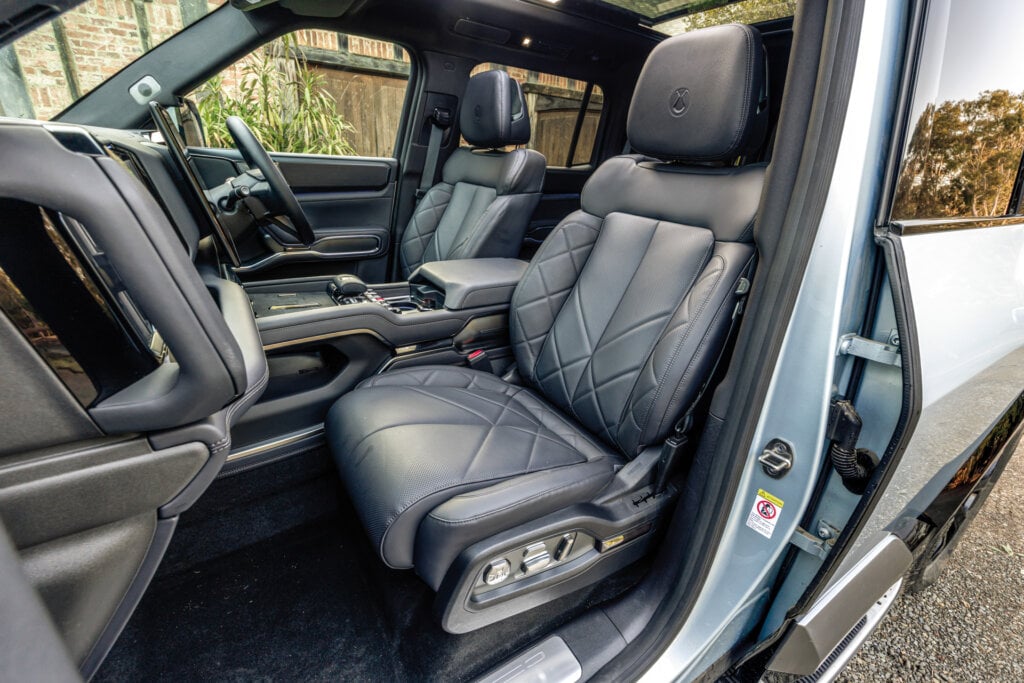
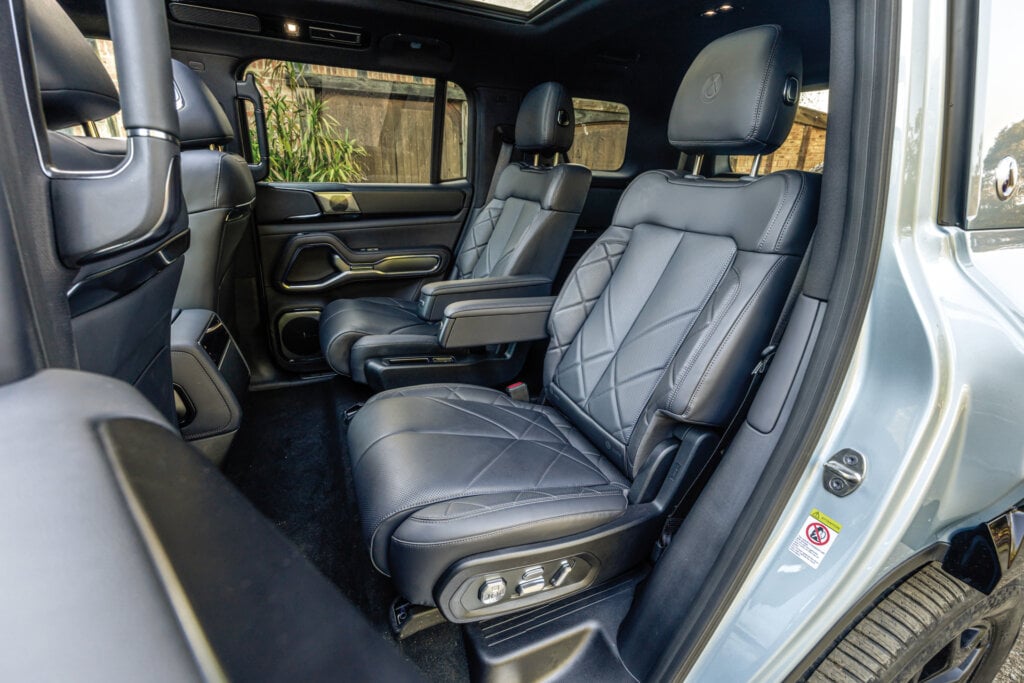
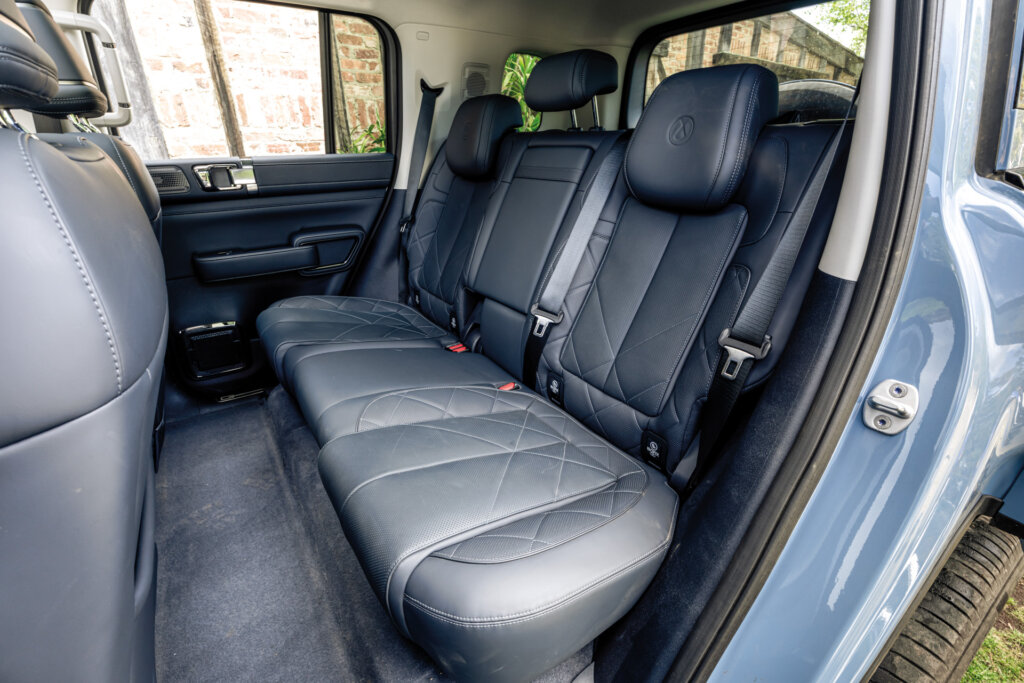
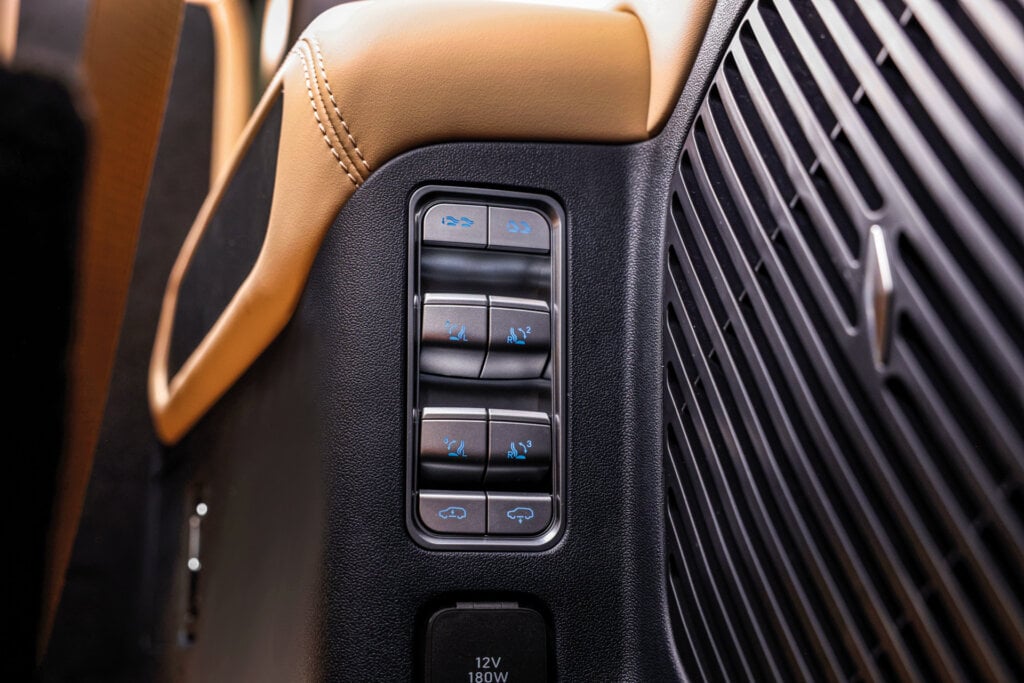
The six-seat configuration, I think, could be a real winner for Kiwi buyers. The captain’s chairs in the second row are superb, with heating, ventilation and massage, and the walkthrough access to the third row is far easier than clambering past a folded bench. For families who want more than five seats without everyone rubbing shoulders, this layout hits a sweet spot that few competitors offer at this price. The seven-seat model with its bench second row is no less appealing for larger families who need maximum capacity.
Against the LandCruiser 300, the B8 offers more power, more technology and vastly more standard equipment for substantially less money, even before you factor in the PHEV running cost advantages. There’s another financial wrinkle worth noting: at over 3500kg GVM, the B8 sits above the threshold for road user charges, meaning PHEV owners dodge RUC entirely. It’s an unintended loophole, but a real saving. Against a Mercedes GLS or Range Rover, you’re potentially saving six figures while arguably getting comparable kit. The GWM Tank 500 is the closest rival on price (well undercutting it), but the Denza operates in a noticeably more premium space.
The verdict
Both the B5 and B8 make a strong first impression. The value proposition is hard to argue with: genuine off-road ability backed by standard locking diffs and low range, luxury interiors that aim to rival vehicles costing twice as much, and PHEV powertrains that mean most daily driving can be done on electric power alone.
Of the two, I think the B5 is the better drive right now. It’s more composed, more manageable in size, and represents an intriguing proposition against the Prado and Everest. The B8 is the statement piece, a genuinely luxurious seven-seater with capability to burn, but it needs a little chassis refinement to fully deliver on its promise.
Denza’s COO Mark Harland told us the brand is targeting the top five premium brands in sales volume, and with a claimed 50 per cent conversion rate from test drives in Australia, the product is clearly doing the talking. With warranty matching BYD at six years/150,000km (eight years on the battery), servicing through both Denza and authorised BYD dealers, and the promise of continual OTA improvements, the ownership proposition looks solid on paper.
The software niggles around ADAS and some infotainment translations need sorting, and you’ll want to see the cars in the metal before committing. But for Kiwi buyers who’ve been eyeing a Prado, LandCruiser or even a Defender and wondering whether there’s a smarter way to spend their money, Denza has just made that question a whole lot more interesting.