
View all
2 more images
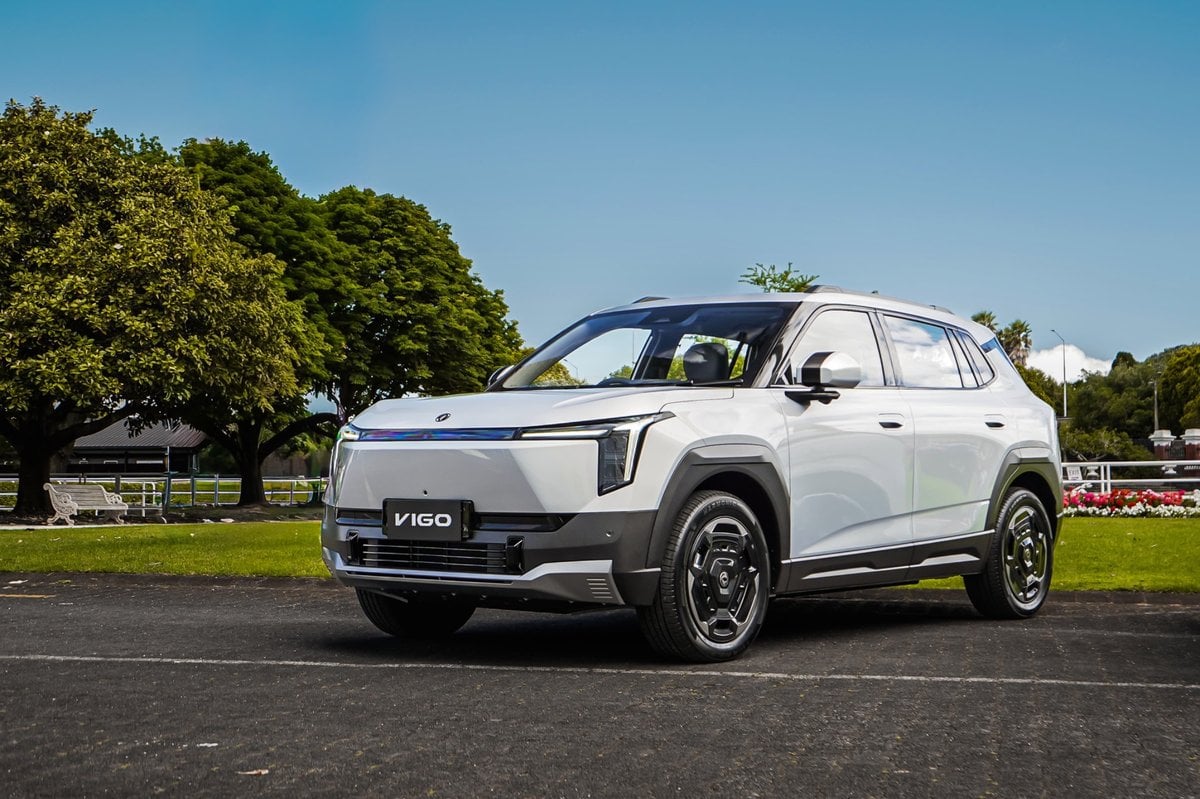
Watch – Dongfeng Vigo first drive: The $38k EV you can order with a mattress
Words: Richard Edwards
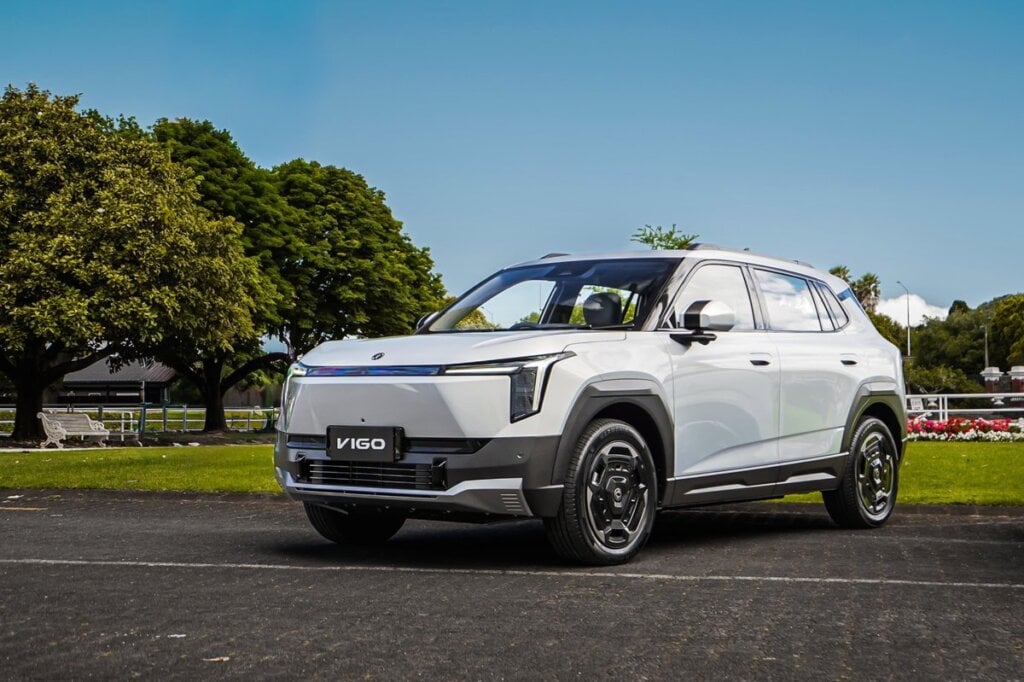
You’d expect a $38,000 electric SUV to cut some corners. That’s kind of the deal with budget EVs: you save money, you accept compromises. But after a short first drive in the Dongfeng Vigo, the compromises are harder to find than you’d think.
The Vigo is the second model in Dongfeng’s New Zealand lineup, following the sub $30k Box city car. Where the Box arrived with headline-grabbing pricing but missing a few key items, the Vigo arrives with six airbags, and what feels like a genuine attempt to reset the conversation.
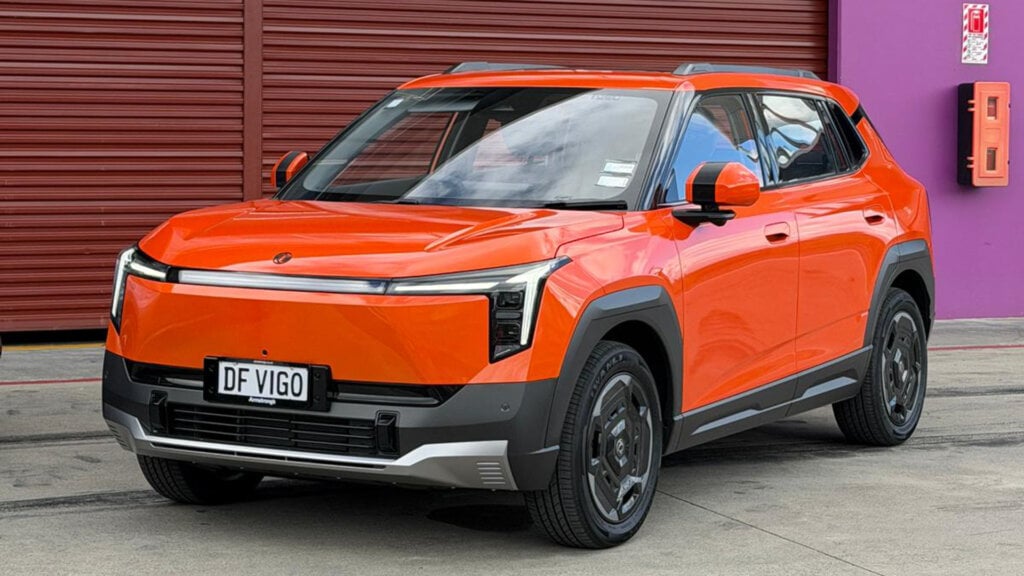
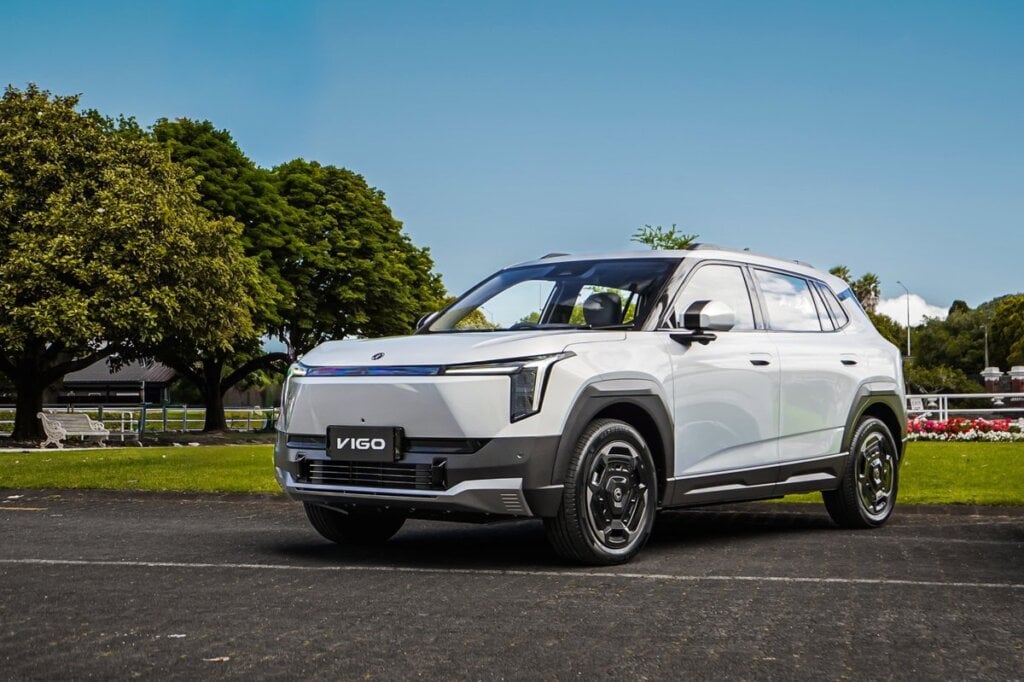
Priced at $37,990 plus on-road costs during its launch period (rising to $39,990 afterwards), the Vigo is a compact electric SUV sitting on Dongfeng’s ‘Quantum Architecture 3 platform’. It measures 4,306mm long, 1,868mm wide and 1,654mm tall, with a 2,715mm wheelbase that accounts for roughly 67 percent of the overall length. That’s a lot of wheelbase for a compact SUV, and it shows inside.
Power comes from a single electric motor driving the front wheels, producing 120kW and 230Nm. A 51.87kWh battery provides a claimed 340km of WLTP range, with a peak DC charging rate of 167kW and a claimed 30 to 80 percent time of just 18 minutes. If those charging numbers hold up in real-world testing, that’s genuinely impressive charging speed for a car at this price point.
Inside
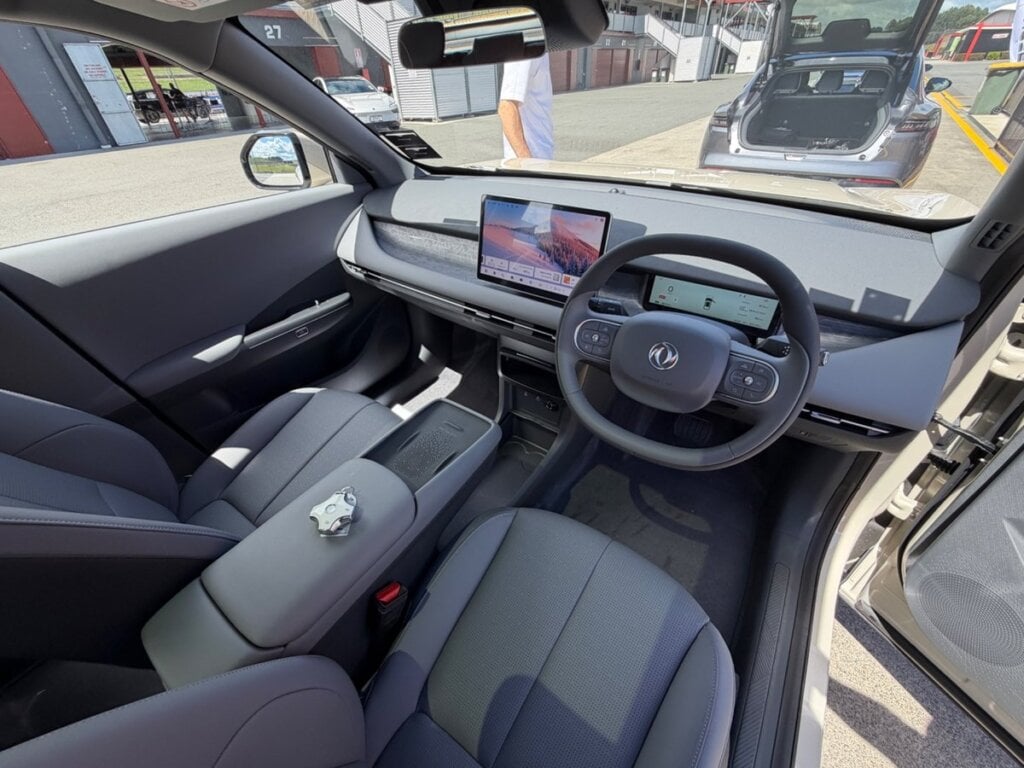
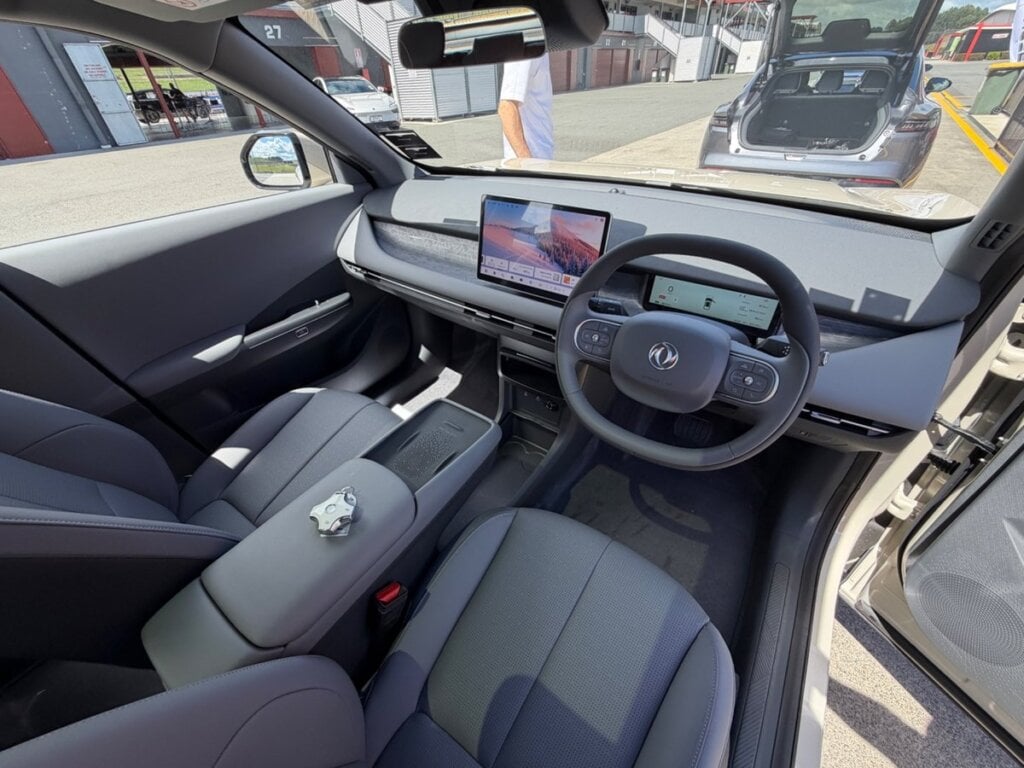
Overall interior quality is decent. The upper sections of the cabin are finished in soft-touch materials and the design is clean and uncluttered. Some of the lower plastics and boot trim show where a few RMB were spared, but it’s unlikely to offend at this price point. The 12.8-inch central touchscreen and 8.8-inch driver display are clear and responsive enough, running software that will feel familiar to anyone who has spent time in recent Chinese EVs. The interface isn’t class-leading but it works without frustrating you.
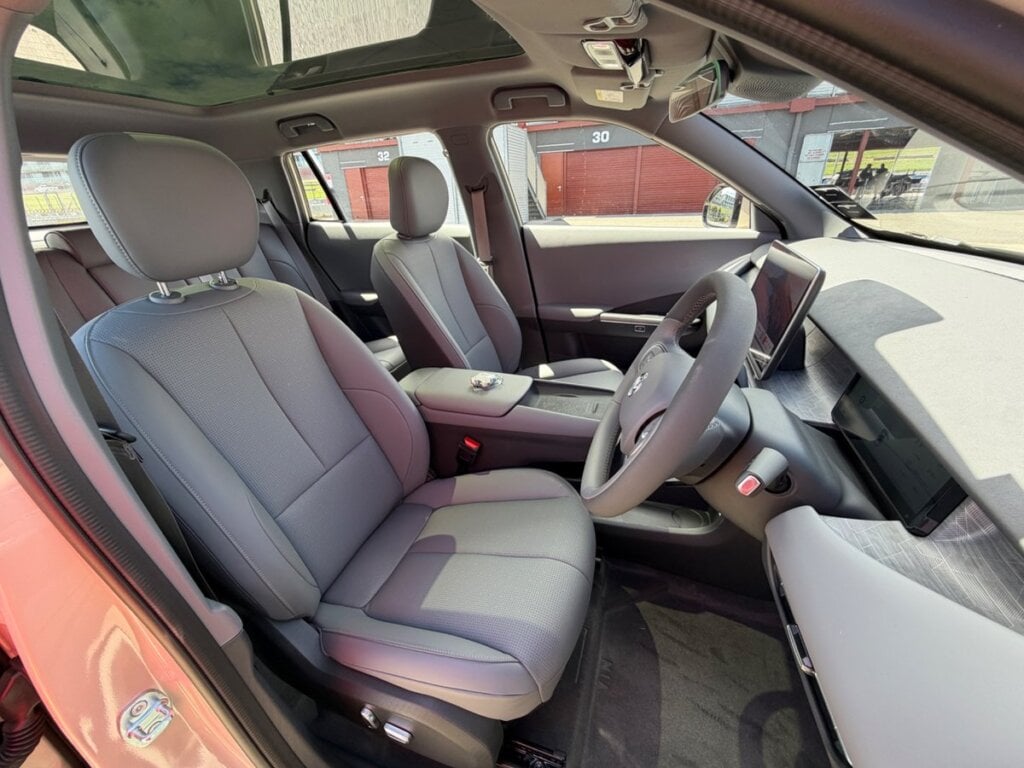
Standard equipment is generous. Electric front seats with memory and welcome function for the driver, heated and ventilated driver’s seat, wireless Apple CarPlay, wireless charging, leatherette trim, climate control with rear outlets and 128-colour ambient lighting that reacts to music. For a car under $40,000, that’s a lot of kit.
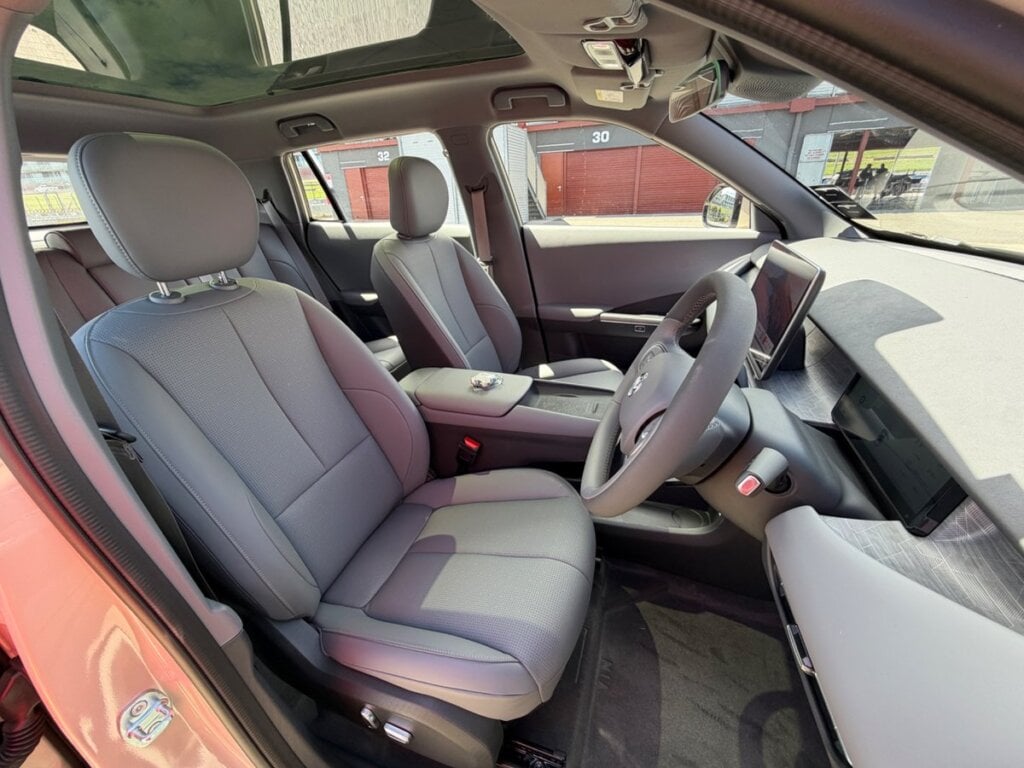
There is one notable omission, though. Android Auto is not standard. It’s available as a $390 accessory that requires a dongle and some software coding. For a market where Android phones hold significant share, that feels like an oversight Dongfeng would do well to address.
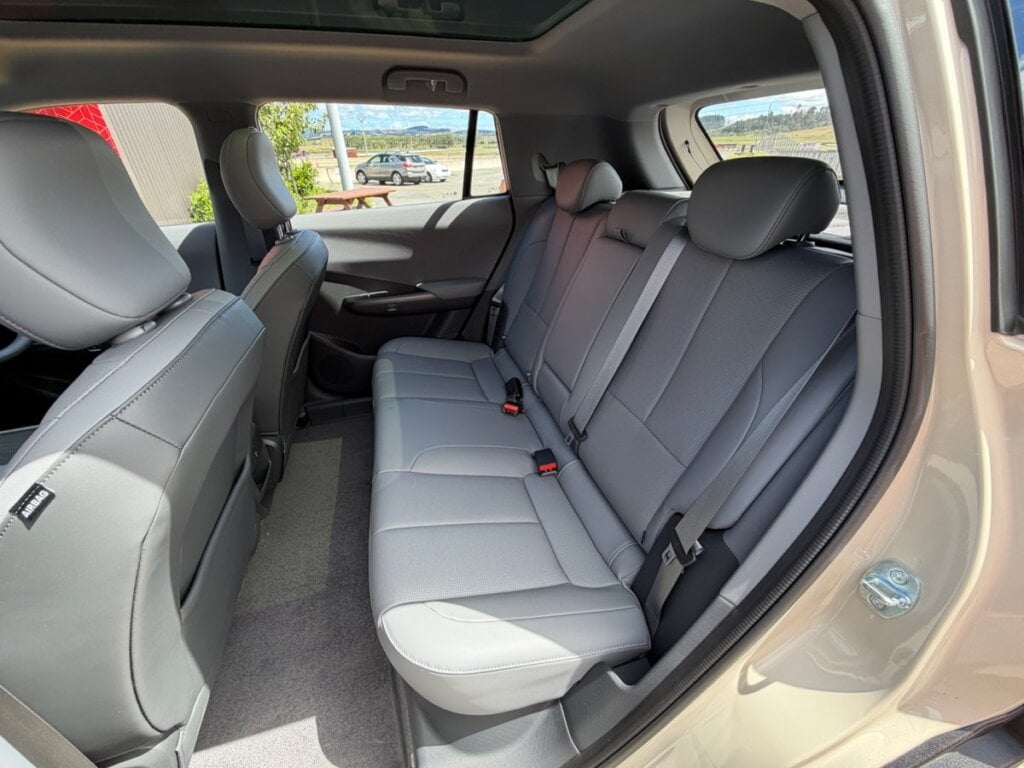
Rear seat space is impressive, arguably second only to the BYD Atto 3 in the compact EV SUV segment. The flat floor helps, and headroom is generous even with the optional panoramic glass roof fitted (included free during the launch period, normally $1,500). The rear does feel a touch cheaper in its finishing than the front, but the speakers are cleverly integrated into the door trim alongside the ambient lighting, which adds a bit of polish. It’s worth noting that all doors use electronic releases, with a manual backup tucked in the door pocket.
Boot space is rated at 500 litres, though it’s divided across three layers: 313 litres in the main compartment, 115 in a second level and 72 underneath. Total capacity expands to 1,040 litres with the rear seats folded flat to create a two-metre load floor. Dongfeng makes much of the split tailgate, with the lower section rated to support 150kg. It’s a neat feature for the occasional picnic or tailgate moment, but we’re not sure it’s quite the selling point the brand thinks it is. You might sit on your tailgate once a month, but you’re loading the shopping once a week, and for that task a standard electric tailgate will always be more practical. The upper half is manual as standard, with an electric option costing $1,690. Towing capacity is 750kg.
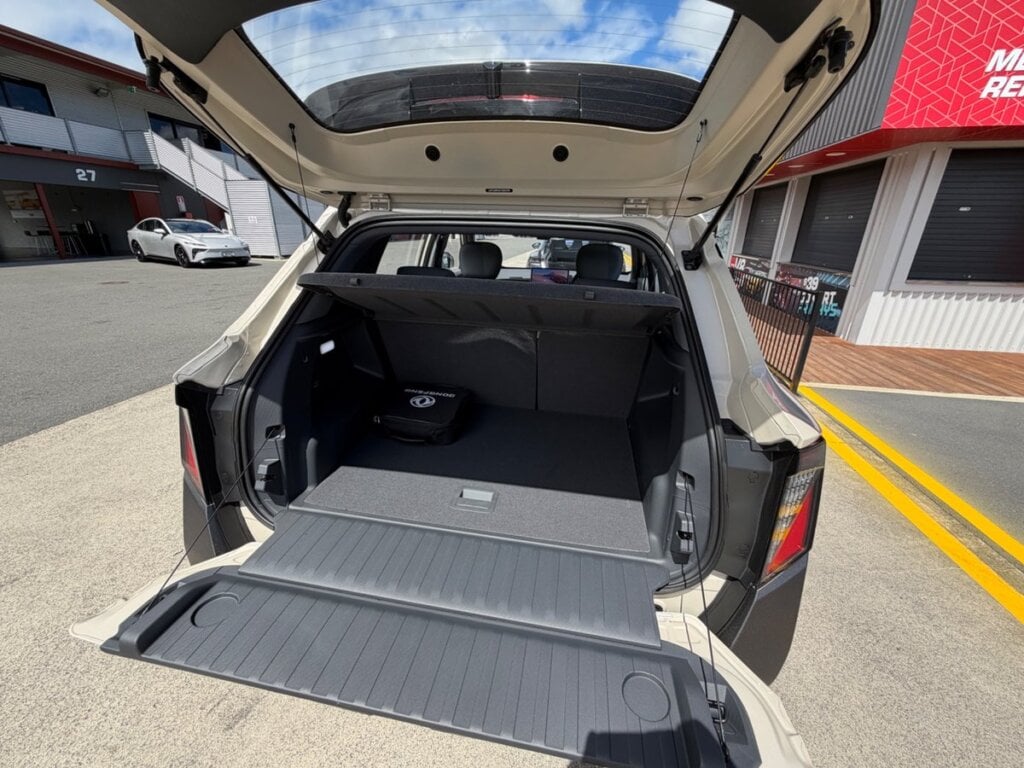
The camping mode is another thoughtful touch, keeping V2L power running and the cabin at 25 degrees even when the car is locked, while the external speaker lets you play music outside the vehicle. Dongfeng is clearly leaning into the lifestyle angle, and with accessories including a custom-fit mattress ($440), boot tent ($250), awning ($250) and roof rack ($570), the intent is clear.
On the road
Our test car had been fitted with a roof box and accessories, so it wasn’t an ideal platform for judging refinement or wind noise. With that caveat, the Vigo makes a solid first impression on the move.
The ride is on the soft side, which suits the lifestyle SUV brief. Put it into a corner and it’s not as wallowy as you might expect. The steering is light but reasonably quick, and the car turns in with enough confidence that you don’t feel like you’re fighting it. It’s not sporty, and it’s not trying to be, but around town it’s likely to be comfortable and relatively composed.
Acceleration is adequate rather than exciting. The 7.8 second 0-100km/h time is fine for the segment, but there’s noticeable wheelspin under hard acceleration from the front-driven wheels, likely not helped by the Wanli tyres. These are an unfamiliar brand to us and it will be interesting to see how they perform in a longer test, particularly in the wet.
Braking is decent. Not dramatic, but predictable. The ADAS suite, which includes adaptive cruise control, traffic jam assist, lane keeping and autonomous emergency braking, wasn’t something we could properly evaluate on our short drive. But if it’s anything like the Box’s system, which was genuinely one of that car’s strong points, it should acquit itself well.
One thing worth noting: there’s no driver monitoring camera, which in 2026 feels like a rarity. Whether that’s a pro or a con depends on your tolerance for being watched and beeped at.
Value and verdict
Context matters here. At $37,990 at launch, the Vigo is just $2,000 more than the top-spec BYD Atto 1 Premium ($35,990), a car that’s significantly smaller and sits in a completely different segment. For that modest premium you get a full-sized compact SUV with more range, more space, a split tailgate, V2L capability and a substantially bigger boot. It’s a compelling step up.
Among its direct EV SUV rivals, the Vigo undercuts the BYD Atto 2 ($39,990), sits close to the Omoda E5 ($36,990) and comes in well under the MG S5 EV ($44,990) and Jaecoo J5 ($42,990). Armstrong’s also claims ICE parity pricing, and while that’s true against some of the more established names, there are now plenty of small petrol SUVs available under $30,000 in New Zealand. The Vigo’s real value argument rests on what you get for the money rather than a straight price comparison with combustion rivals.
Six airbags, a five-star VSRR, 340km of range, electric seats, a split tailgate and more standard features than cars costing significantly more. It’s not perfect: the tyres are an unknown quantity, Android Auto should be standard at this point, and the lower cabin trim could be better. But as a package, it delivers a remarkable amount of car for the money.
The bigger question hanging over the Vigo is the one hanging over the entire Dongfeng brand in New Zealand: can it move past the Box’s safety stumble and earn the trust of Kiwi buyers? On the evidence of this first encounter, it deserves a fair hearing.
Dongfeng Vigo
Price: $37,990 +ORC (launch until end of April); $39,990 +ORC thereafter
Powertrain: Single electric motor, FWD, 120kW/230Nm
Battery: 51.87kWh
Range: 340km (WLTP)
DC charging: 167kW peak; 30-80% in 18 minutes
0-100km/h: 7.8 seconds
Boot: 500L (1,040L seats folded)
Towing: 750kg
Warranty: 6-year/200,000km vehicle; 8-year/200,000km battery
Service interval: 1 year/15,000km