Beijing 2026: GWM confirms diesel hybrids are coming
Words: Richard Edwards
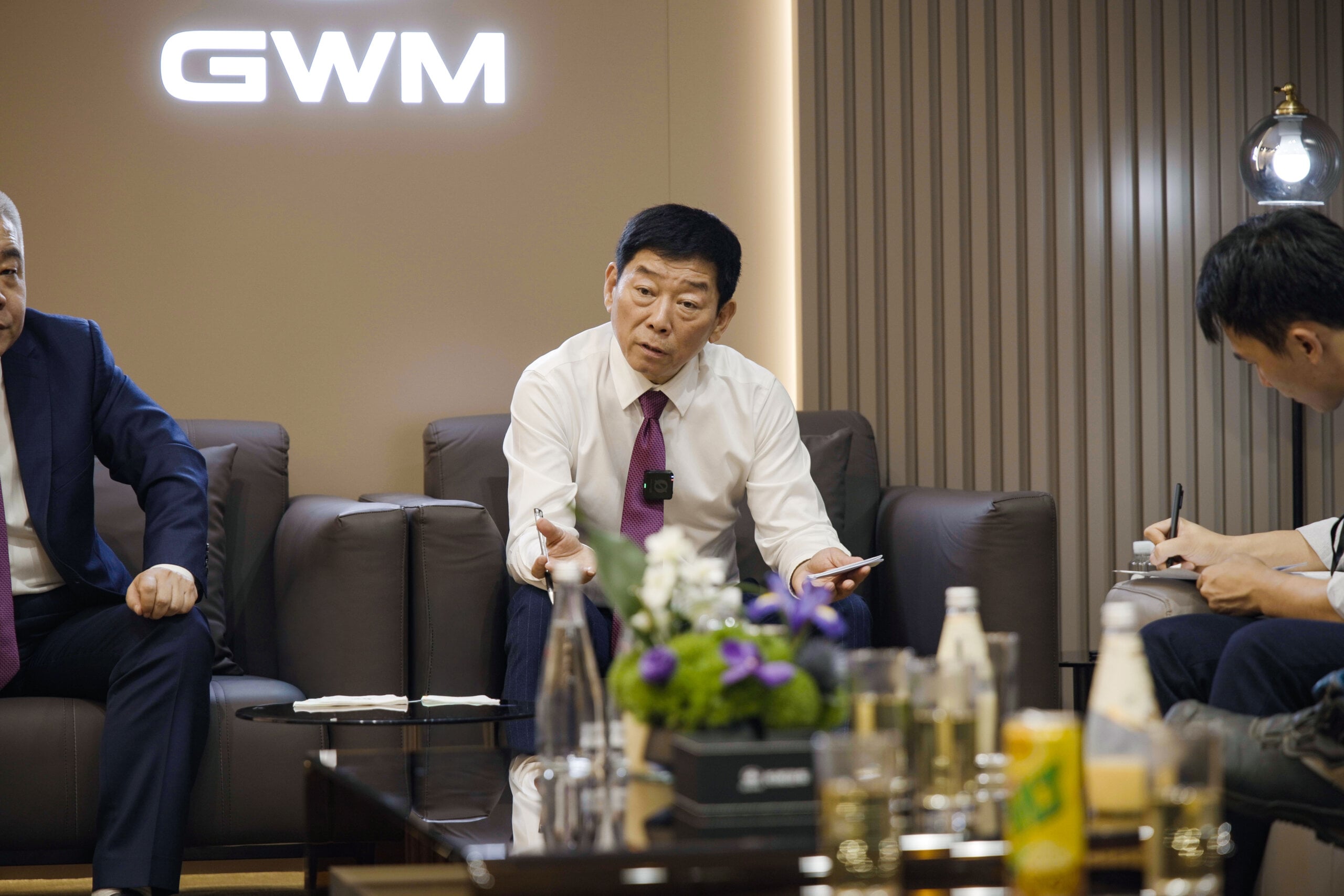
GWM Chairman Jack Wei has confirmed the Chinese automaker will roll out a diesel hybrid powertrain for global markets, including Australasia, with company testing showing fuel savings of up to 30 percent and compliance with Europe’s incoming Euro 7 emissions standards.
Speaking to overseas media at the Beijing Auto Show, including NZ Autocar, Wei said the diesel hybrid system, expected to wear the Hi4-G badge in line with GWM’s existing commercial vehicle hybrid platform, has been in development for around six years.
Testing in commercial vehicles has shown fuel savings of around 15 percent in flat conditions and up to 30 percent in more demanding environments. Wei specifically called out Australia as one of those tougher operating environments, signalling clear intent for the system to land in this part of the world.
Lag and noise addressed
“The traditional weaknesses of diesel, such as lag during acceleration and higher noise, are addressed by electrification,” Wei said via his translator. “Electric assistance removes lag and reduces noise.”
At speeds of around 50 to 60km/h, he says noise levels become comparable to petrol vehicles, with most customers unable to tell the difference.
Euro 7 claim
Wei said GWM’s testing shows diesel paired with hybrid systems can meet Europe’s incoming Euro 7 standards, due to come into force from 29 November 2026 for newly type-approved cars and vans. In some cases, he added, that compliance can be achieved without AdBlue, the urea-based exhaust treatment fluid that has been near-universal on Euro 6 diesel vehicles.
That last point will need independent verification once production vehicles are tested, but if accurate it would represent a meaningful engineering milestone.
Wei used the briefing to push back on the broader characterisation of diesel as a fuel best left behind.
“Diesel does produce higher particulate emissions compared to petrol,” he said. “However, in some markets like the USA there are fewer restrictions, while Europe has moved away from diesel and is now starting to miss it.”
In Wei’s view, regulation has at times been overly restrictive, and diesel should not simply be classified as dirty.
All powertrains, all scenarios

The diesel hybrid forms part of what GWM Chief Technology Officer Nicole Wu calls an “all scenarios, all powertrains” strategy, retaining diesel, petrol, hybrid, plug-in hybrid and battery electric options across the company’s global product lineup. Most Chinese brands exporting to Australasia have focused almost exclusively on petrol PHEV and BEV technology.
“When we go outside from China to overseas markets, we find that powertrain requirements are actually quite different compared with China,” Wu said.
She specifically referenced Australian buyer feedback as a guide for the multi-powertrain approach.
“Last year I spoke with local people, and they told me there is no replacement for displacement. So we have V8, we have V6, we have diesel, and we also have diesel hybrid.”
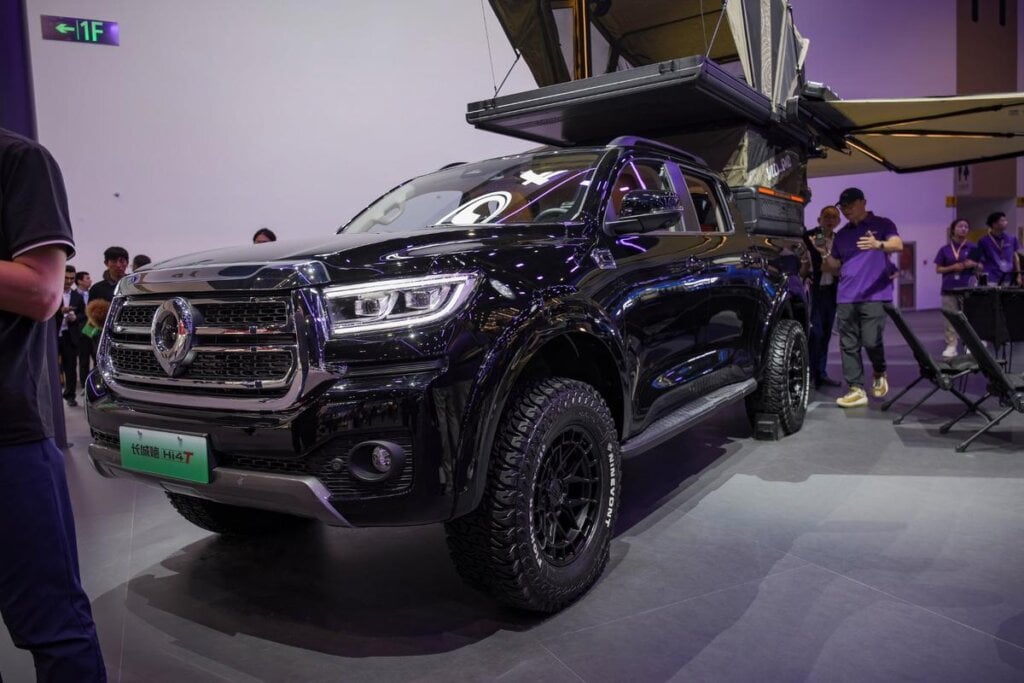
That breadth is already starting to play out in the showroom. Alongside the existing diesel and petrol Cannon variants, GWM has confirmed the standard Cannon will gain a Hi4-T petrol plug-in hybrid drivetrain later this year, sitting beneath the larger Cannon Alpha PHEV that’s already on sale.
Wei cited Russia, where cold climates make EVs impractical, and Brazil, where charging infrastructure remains underdeveloped, as further examples of why a single-powertrain global strategy doesn’t work.
Not the only ones
GWM won’t be alone in bringing a diesel hybrid to market. Chery has confirmed its all-new dual-cab ute, currently codenamed KP31 and due in Australia in the fourth quarter of 2026, will launch with what the brand is billing as the world’s first plug-in hybrid diesel powertrain. Chery’s system pairs a 2.5-litre turbo-diesel with electric motors and a battery, with claimed combined outputs of 260kW and 680Nm. A petrol PHEV version is expected to follow in 2027.
What it means for New Zealand
GWM has not yet confirmed which models will receive the Hi4-G diesel hybrid system, or when it will reach New Zealand showrooms.
The brand has, however, already locked in an all-new 3.0-litre four-cylinder turbo-diesel for global debut in Australia in mid-2026, going into the Tank 500 large SUV and Cannon Alpha ute. Pairing that engine with hybrid hardware would give GWM a direct competitor to Ford’s V6 turbo-diesel offerings, with the added efficiency benefits of electrification.
The current GWM Hi4-T system on sale in Australia and New Zealand, used in the Tank 500 Hi4-T and Cannon Alpha Hi4-T, is a 2.0-litre turbo-petrol plug-in hybrid producing 300kW and 750Nm. Hi4-G would sit alongside it as a parallel diesel-electric option.
GWM’s existing 2026 product rollout for Australia and New Zealand already includes the Cannon Hi4-T petrol PHEV (mid-2026), Tank 300 Hi4-T PHEV (already on sale in Australia), the new 3.0-litre diesel for Tank 500 and Cannon Alpha (mid-2026), the Ora 5 EV, and the Haval Jolion Max with hybrid and BEV options later in 2026.
V8s still in the mix
Wei also confirmed GWM is pushing ahead with V8 development for global markets, including a Tank 700 V8 variant and a Ferrari-benchmarked supercar under the new GWM GF performance brand, expected to be revealed around 2027. Future high-capacity engines will likely include hybrid systems to meet CO₂ requirements, he said.