Restomod Elise sports central driver’s seat and $810k price tag
Words: Kyle Cassidy
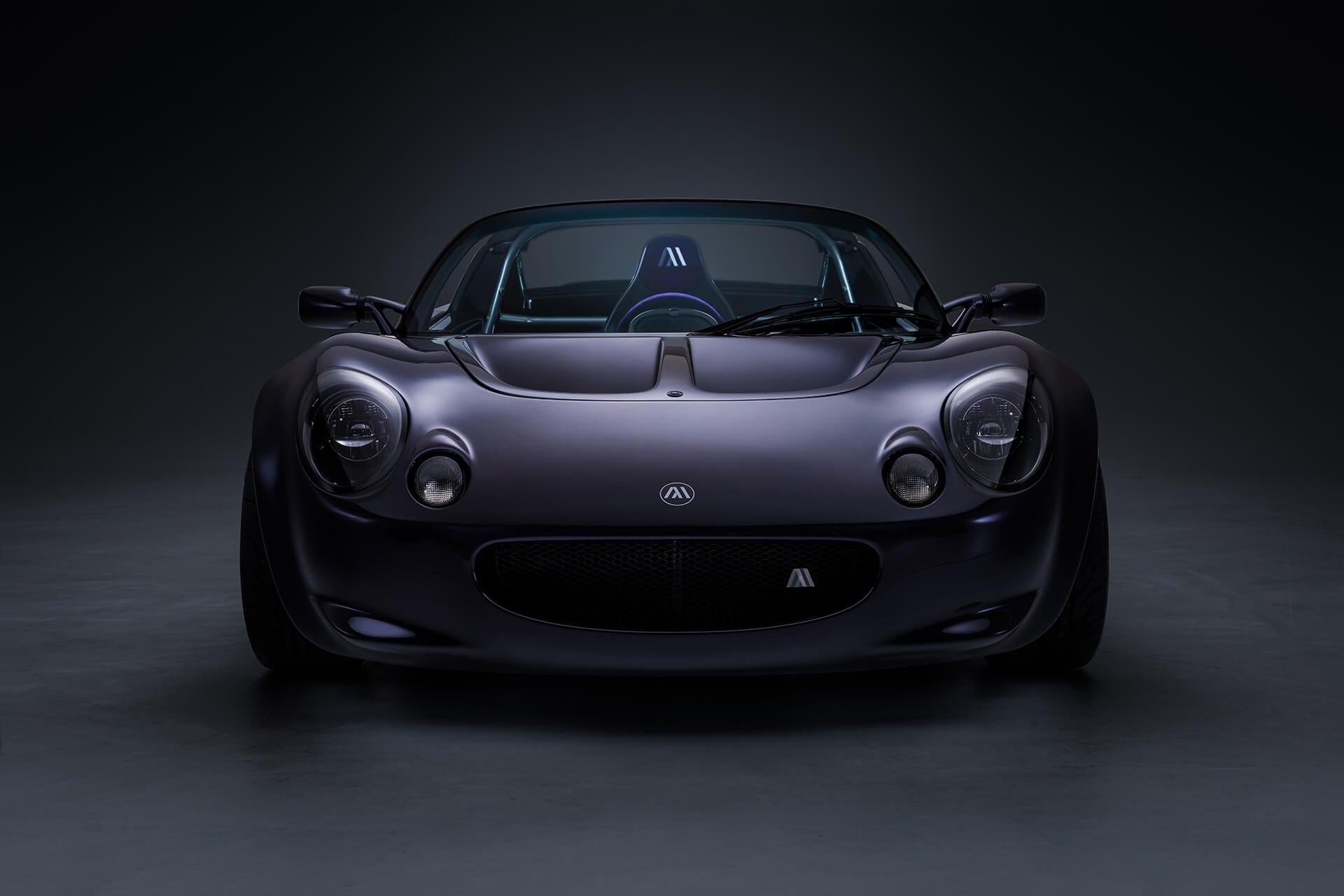
British specialist Analogue Automotive has completed the first customer example of its VHPK, a radically reworked Series 1 Lotus Elise with a central driving position, carbon-fibre body and sub-600kg wet weight.
Only 35 individually numbered examples will be produced, priced from £350,000 plus taxes. That’s around NZ$810,000 at current exchange rates, before adding local taxes, freight and compliance costs. The price does at least include the Series 1 Elise donor vehicle.
First announced in September 2025, the VHPK is intended to take the original Elise’s lightweight philosophy to its logical extreme.
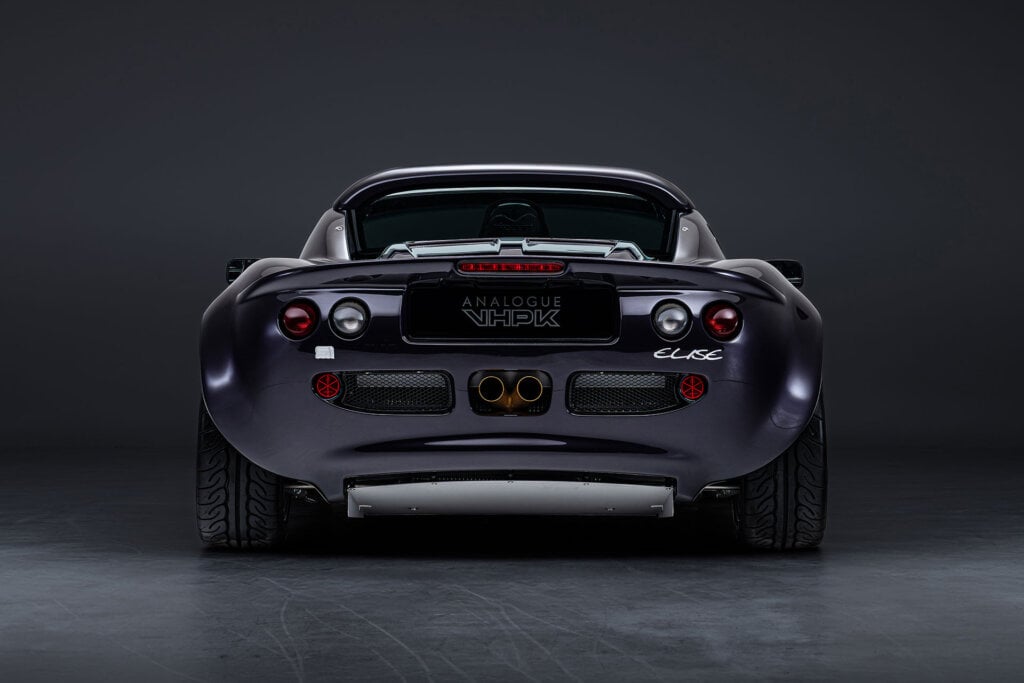
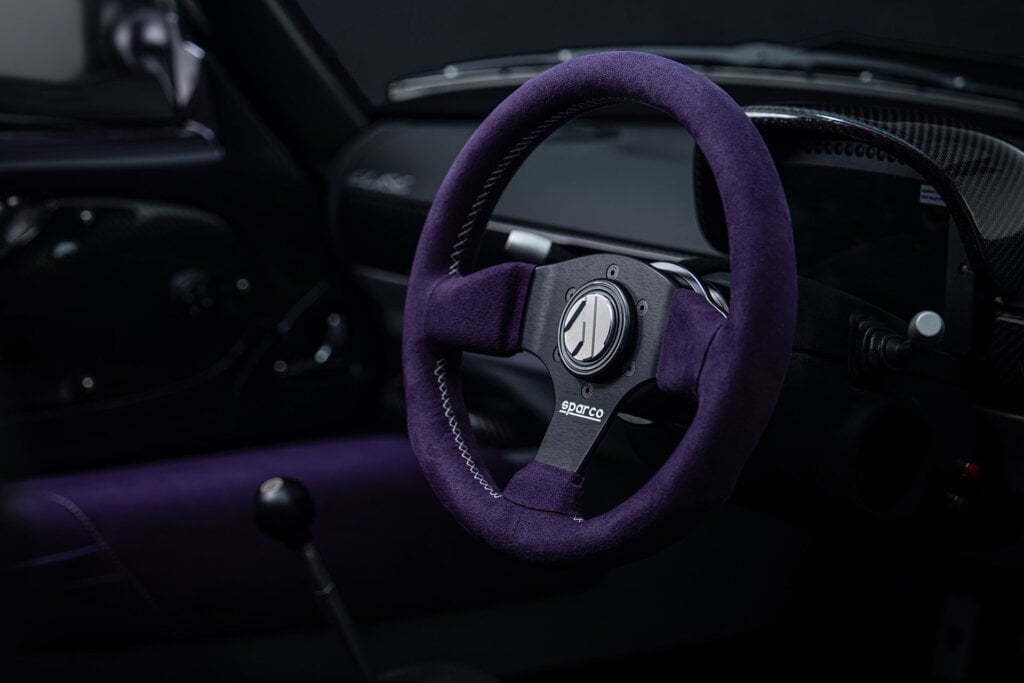
The first customer car is finished in a one-off shade called PK Purple, paired with a matching Alcantara interior and contrasting gold exhaust tips.
Read more – Lotus Elise celebrates 20 years with Anniversary Special Edition
Underneath is a fully restored and lightened Series 1 Elise chassis, but almost everything attached to it has been replaced or extensively modified.
The original fibreglass bodywork makes way for carbon-fibre front and rear clamshells, doors, bonnet and engine cover. Analogue says the panels are manufactured using moulds formed from CNC-milled patterns rather than the less expensive splash-moulding process commonly used for low-volume composite panels.
The result is a wet weight of less than 600kg. For context, the original Series 1 Elise weighed around 725kg and was already considered remarkably light.
More power from the K-series
Rather than replacing the Rover K-series engine or adding forced induction, Analogue has developed its own naturally aspirated version.
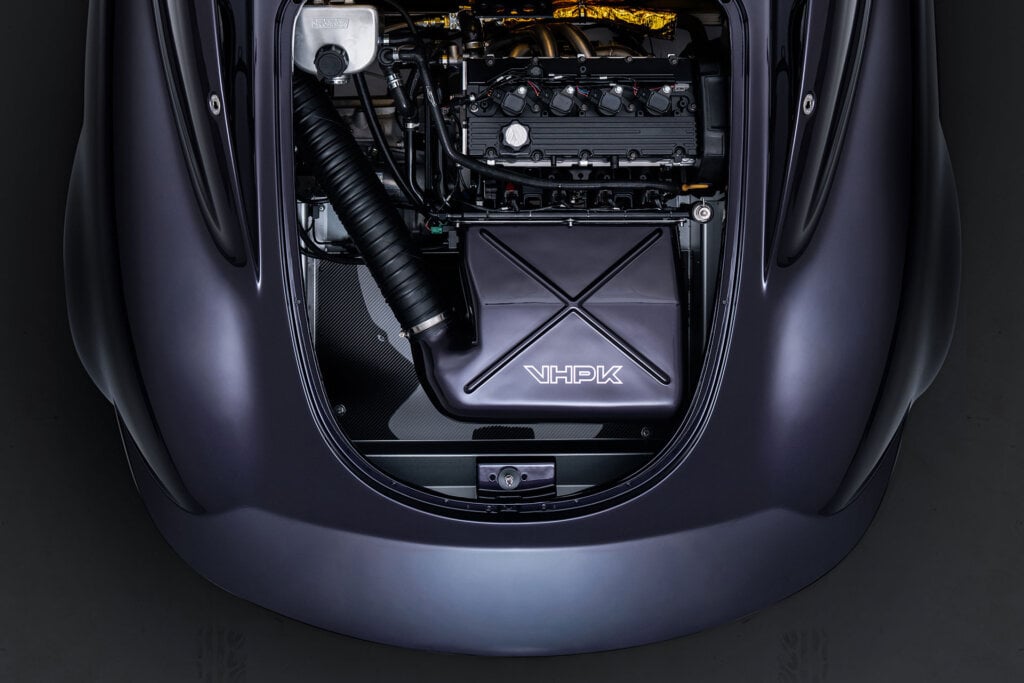
Capacity increases from 1.8 to 1.9 litres, while bespoke billet and forged internal components are used to increase strength and reduce weight.
The engine produces 250bhp, or approximately 186kW, giving the VHPK a claimed power-to-weight ratio of 400bhp per tonne.
Power reaches the rear wheels through an upgraded Quaife PG1 five-speed close-ratio manual gearbox and a limited-slip differential.
The VHPK name references the high-performance VHPD version of the K-series engine used in the Elise Sport 190, Series 1 Exige and Lotus 340R.
“This isn’t simply a restored Elise. It’s a complete reimagining of what’s possible with the original S1 recipe – the legendary combination of the Type 111 chassis with that high-revving, lightweight K-Series engine,” said Analogue Automotive’s Steffen Dobke.
Driver sits in the middle
The most obvious change inside is the single, centrally mounted carbon-fibre bucket seat.
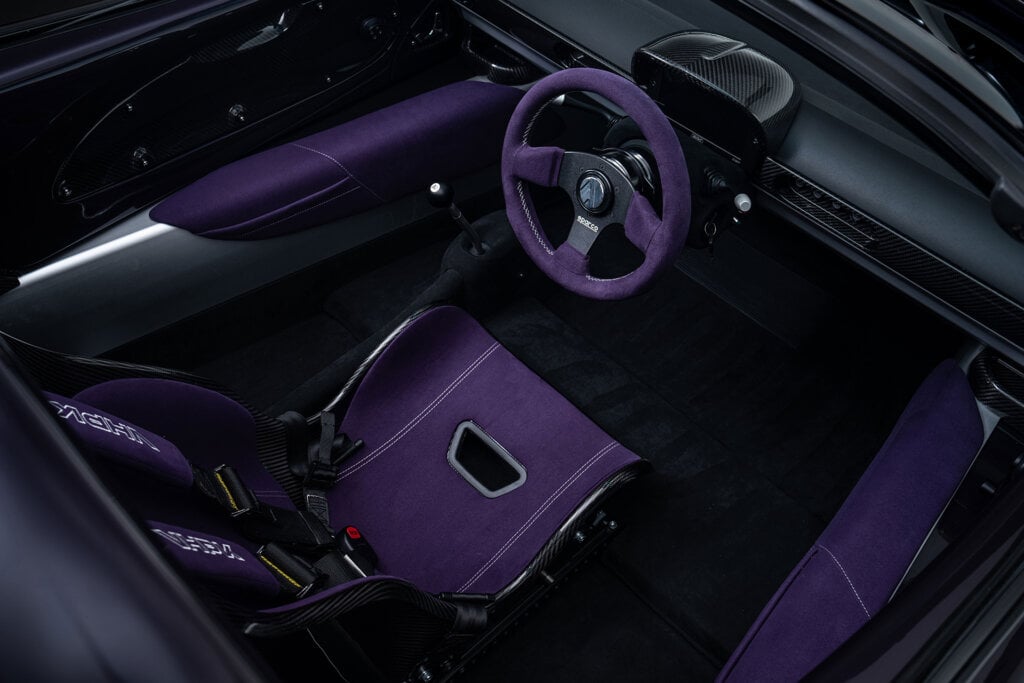
Analogue took inspiration from the single-seat racing Elises that competed in the Autobytel Lotus Championship, a one-make series that supported the British Touring Car Championship around the turn of the millennium.
The cabin also receives a carbon dashboard, door inserts and trim, while a lightweight wiring loom, aluminium 48-litre fuel tank and stainless-steel exhaust help remove further mass.
Buyers can add an Alcantara-trimmed interior, electric air conditioning and a carbon hardtop. Fully exposed carbon bodywork is another option, finished in clear or tinted UV-resistant lacquer.
Carbon brakes and optional carbon wheels
Reducing unsprung mass was another priority. The VHPK uses forged wheels, carbon-ceramic 300mm brake discs and specially developed lightweight hubs.
Customers wanting to go further can specify carbon-fibre wheels, which remove another 12kg.
The wide-track suspension is based on the system used by Analogue’s SuperSport Elise. It includes T45 components, aluminium uprights and steering arms, rose joints and multi-way adjustable passive dampers.
A fully active suspension system is available as an option, along with Motec data logging.
“Every VHPK is rebuilt from the ground-up. We only source the best donor cars, which are then stripped right back to a bare chassis – no component is left untouched. What our customers end up with is a car which is superior in every way to a brand new S1 Elise,” Dobke said.
Analogue hasn’t released acceleration or top-speed figures, although the combination of 186kW and less than 600kg should make it considerably quicker than the original Elise.
Whether that justifies a price approaching twice that of many modern supercars is another question. Still, with only 35 planned and a specification unlike any normal Elise, finding buyers probably won’t be the difficult part.