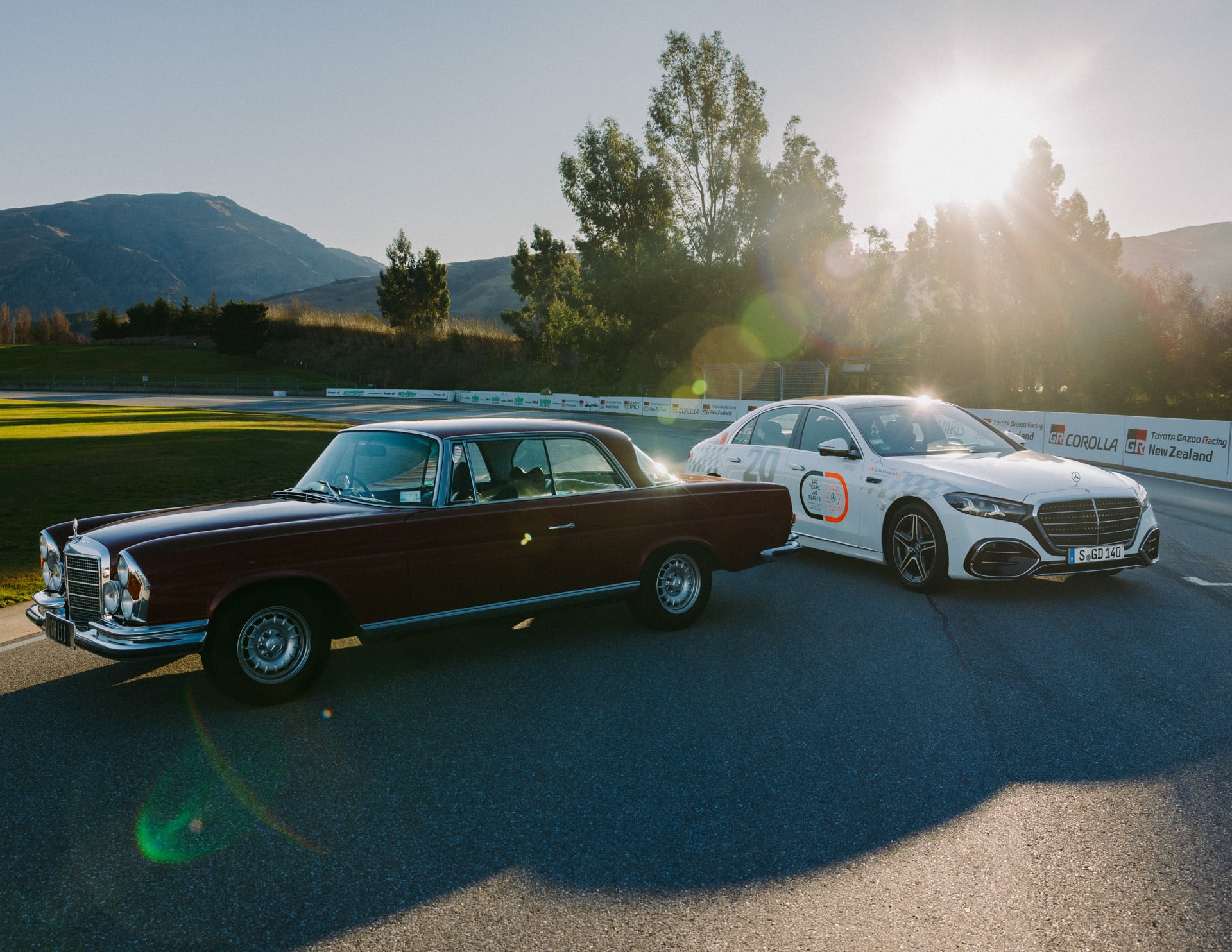
Mercedes-Benz 140 Years, 140 Places
Words: Kyle Cassidy | Photos: Supplied
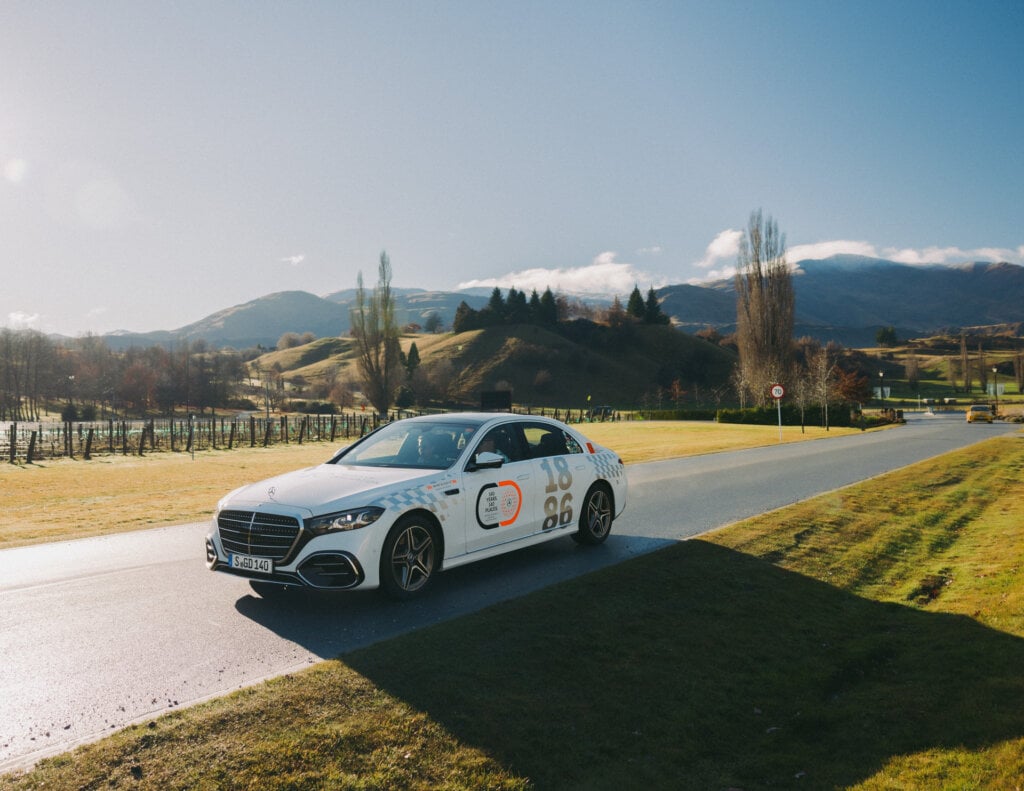
Mercedes-Benz’s 140 Places world tour brought the brand’s newest S-Class to New Zealand, connecting nearly 140 years of automotive innovation with this country’s own motoring history.
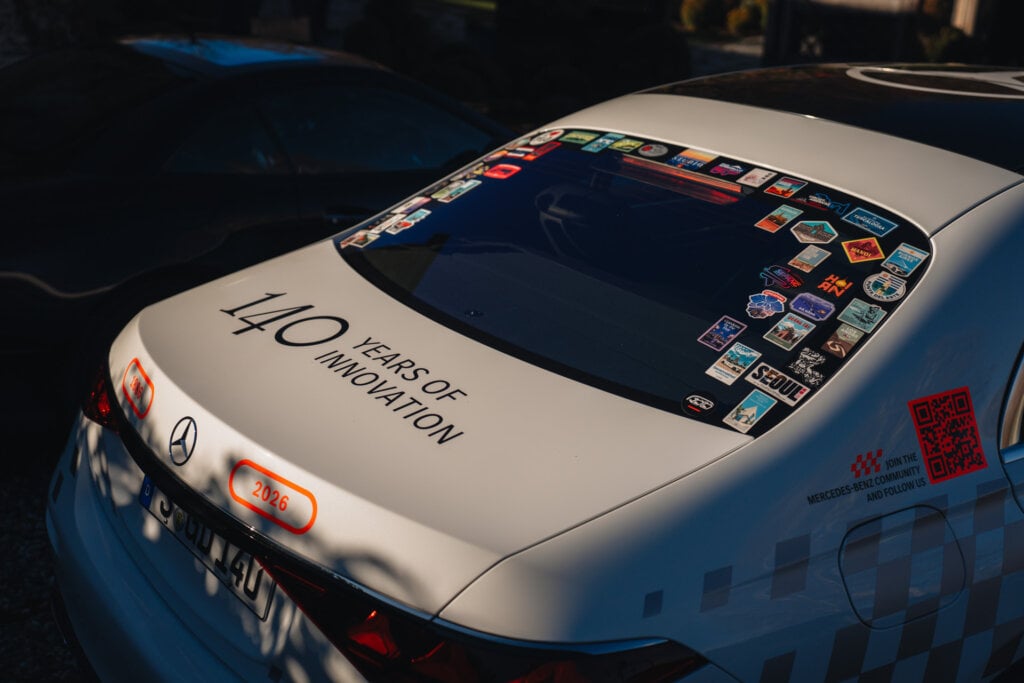
Few manufacturers can claim to have invented the car, but Mercedes-Benz has a legitimate case. The firm’s latest global marketing campaign, 140 Years, 140 Places, marks 140 years since Carl Benz patented what is widely recognised as the world’s first practical automobile in 1886. And so to celebrate, Mercedes-Benz has sent its new S-Class around the world.
The global journey spans more than 50,000 kilometres across six continents, stopping at 140 destinations chosen to represent the company’s heritage, engineering milestones and cultural significance. Three pre-production examples of the new S-Class are being air-freighted between continents, allowing each market an early look at the car before local launches begin. The tour started in Europe following the world premiere of the updated S-Class and will conclude back in Stuttgart later this year.
A country built on driving
The NZ leg of the tour began in Auckland, where around 140 Mercedes-Benz vehicles gathered, ranging from classics through to the latest AMG performance models. From there, the S-Class headed south towards Queenstown, stopping at locations that reflected both New Zealand’s motoring heritage and some of its most scenic driving roads.
One of the most significant stops came at the Southward Car Museum on the Kāpiti Coast. Among its collection sits an 1895 Benz Velo, regarded as the first model of motorcar ever seen on New Zealand roads.
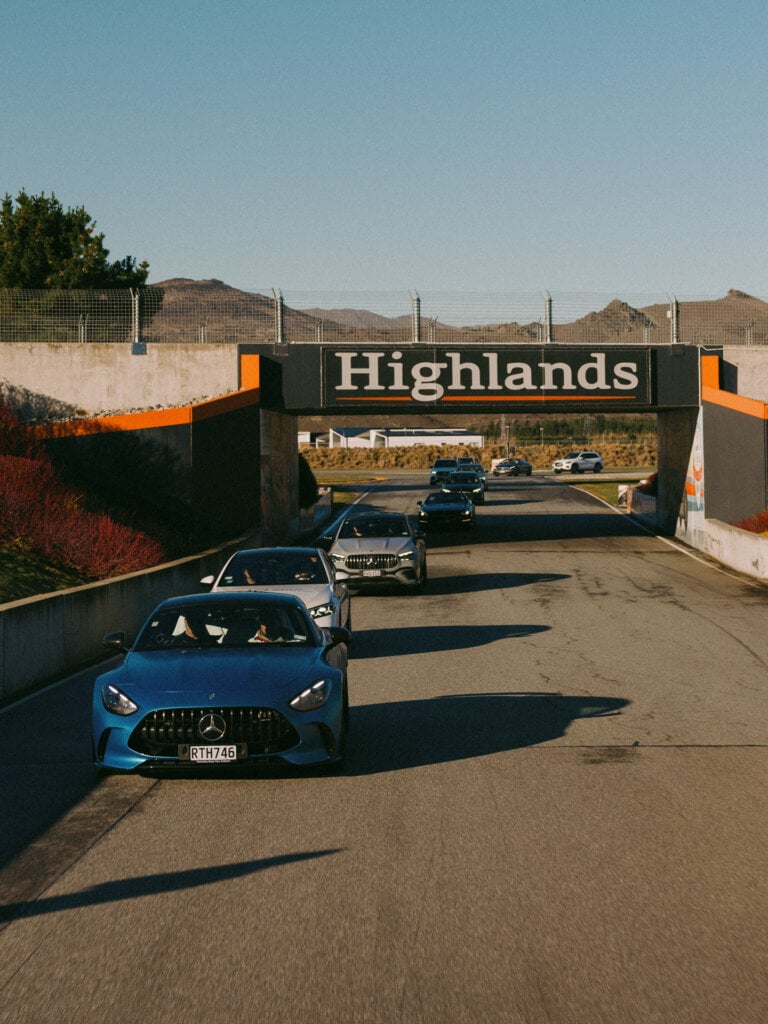
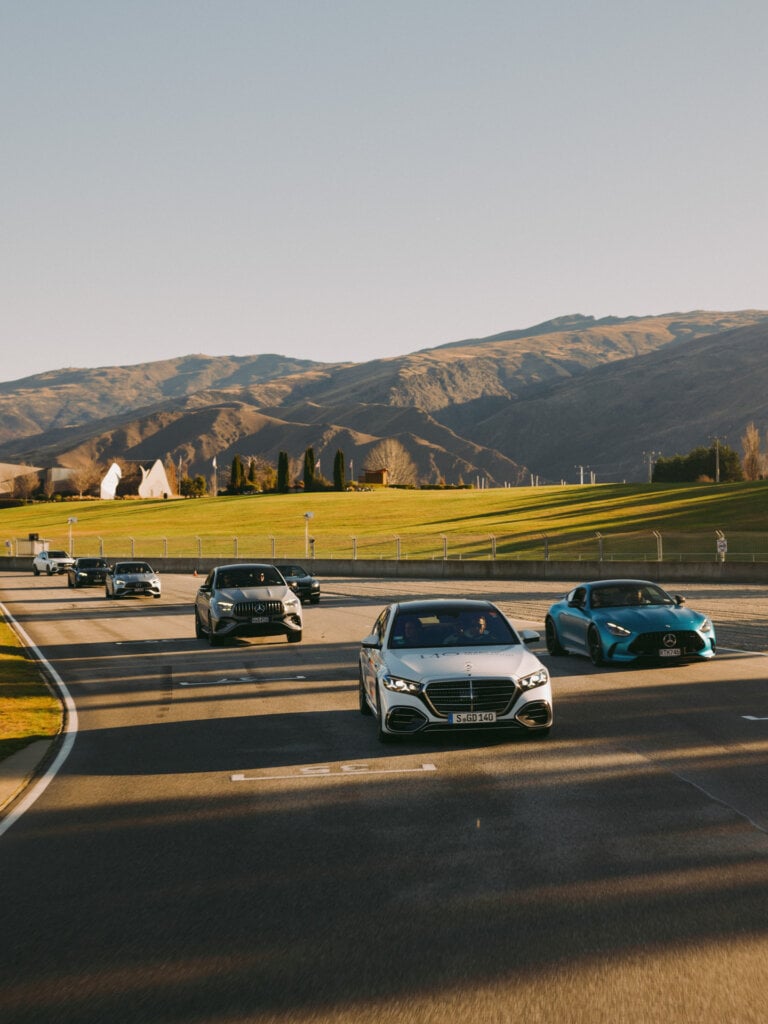
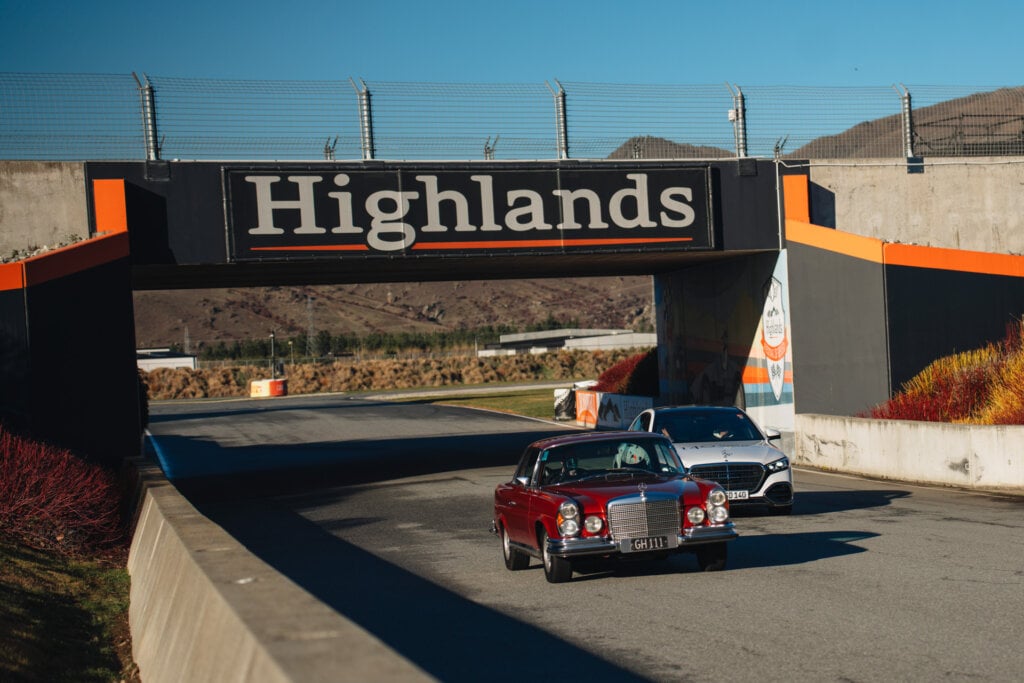
The route eventually crossed Cook Strait before winding through the South Island to Highlands Motorsport Park in Cromwell.
New Zealand’s enthusiasm for motorsport is remarkable considering its size. From the country’s first organised race in 1901 to today’s calendar of grassroots competition and international stars, few nations can match our passion per capita. Mercedes-AMG’s particularly strong market share here reflects that.
Lunch with a collector
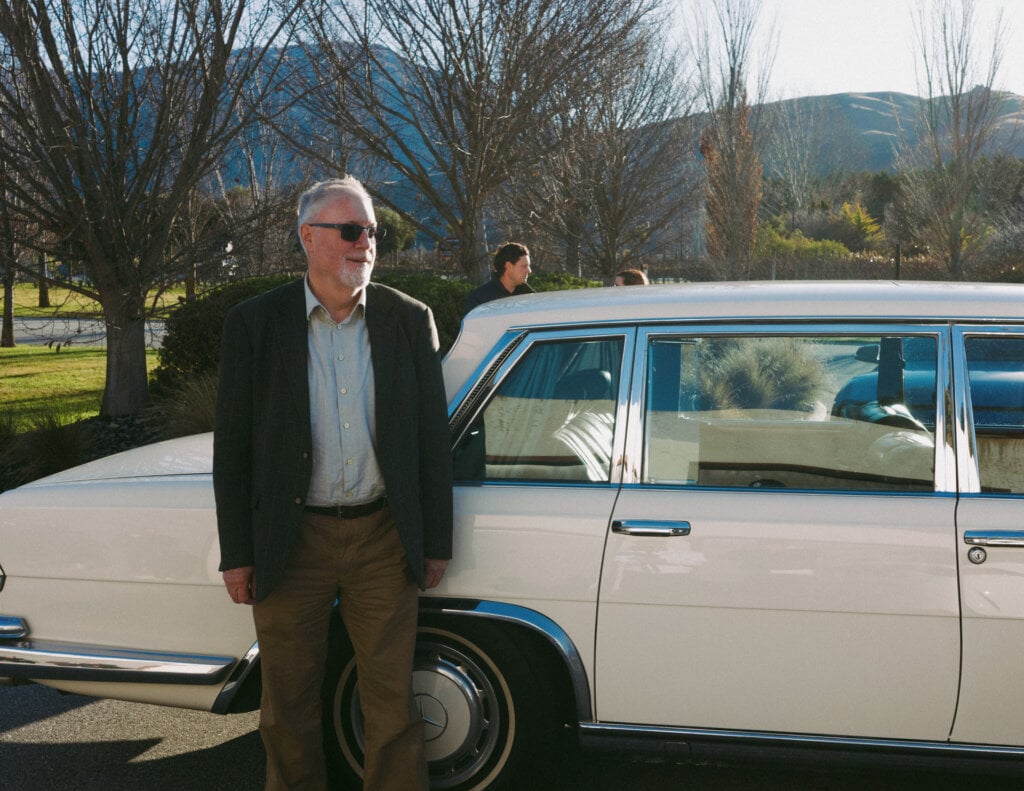
NZ Autocar joined the tour during its Queenstown leg, where one of the highlights had nothing to do with the new S-Class at all. Instead, it came courtesy of long-time Mercedes-Benz collector Chris Willis.
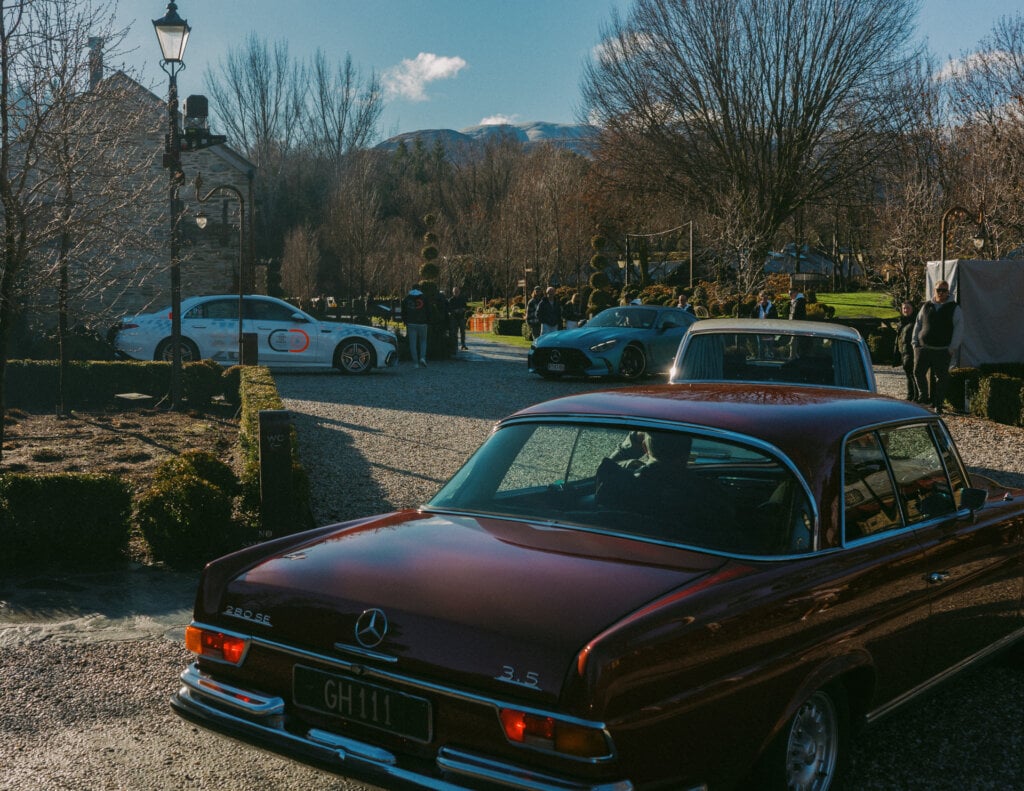
Meeting at Ayrburn after driving up from Dunedin, Chris and his wife arrived in two automotive masterpieces: a 1969 Mercedes-Benz 600 (W100) and a beautifully preserved 280 SE 3.5 Coupe (W111).
For Chris, the fascination with Mercedes-Benz started young.
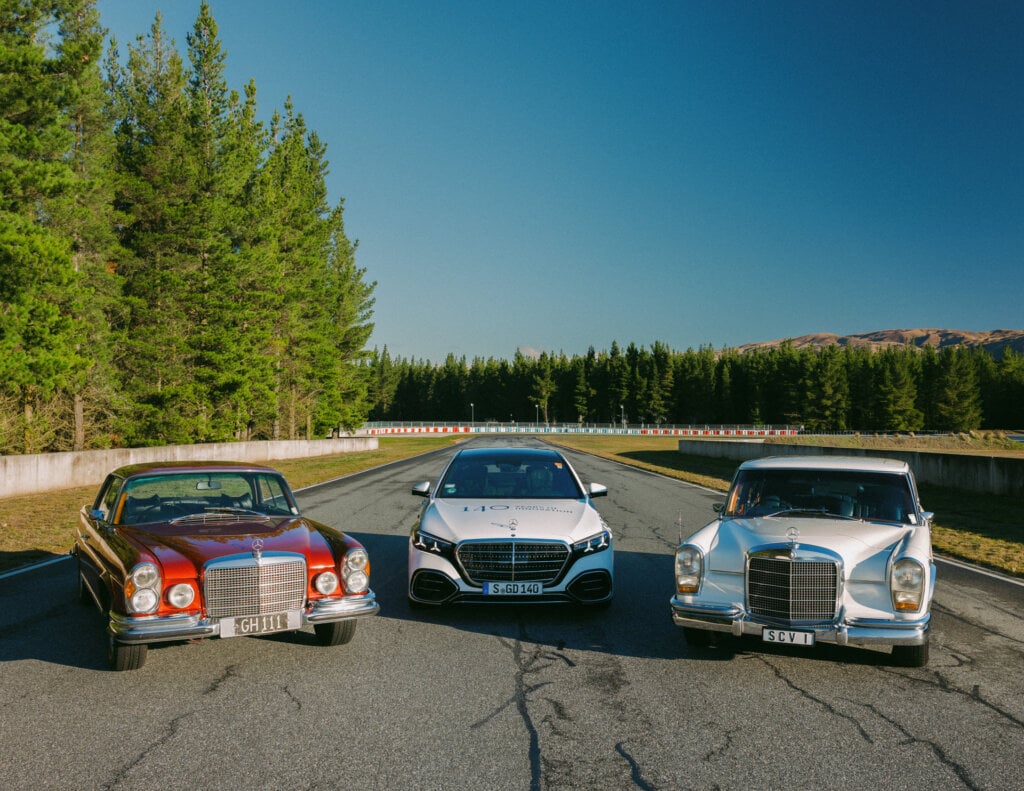
“I’ve had a model 600 since I was a child,” he tells us over lunch. “The first Mercedes I owned was a 1967 300 SEL back in the 1980s.”
Today, his collection reflects decades of enthusiasm, but it’s the engineering rather than simply the prestige that keeps drawing him back.
“I like the way the doors shut, the way the light switch works, the noises everything makes. They’re incredibly engineered cars.”
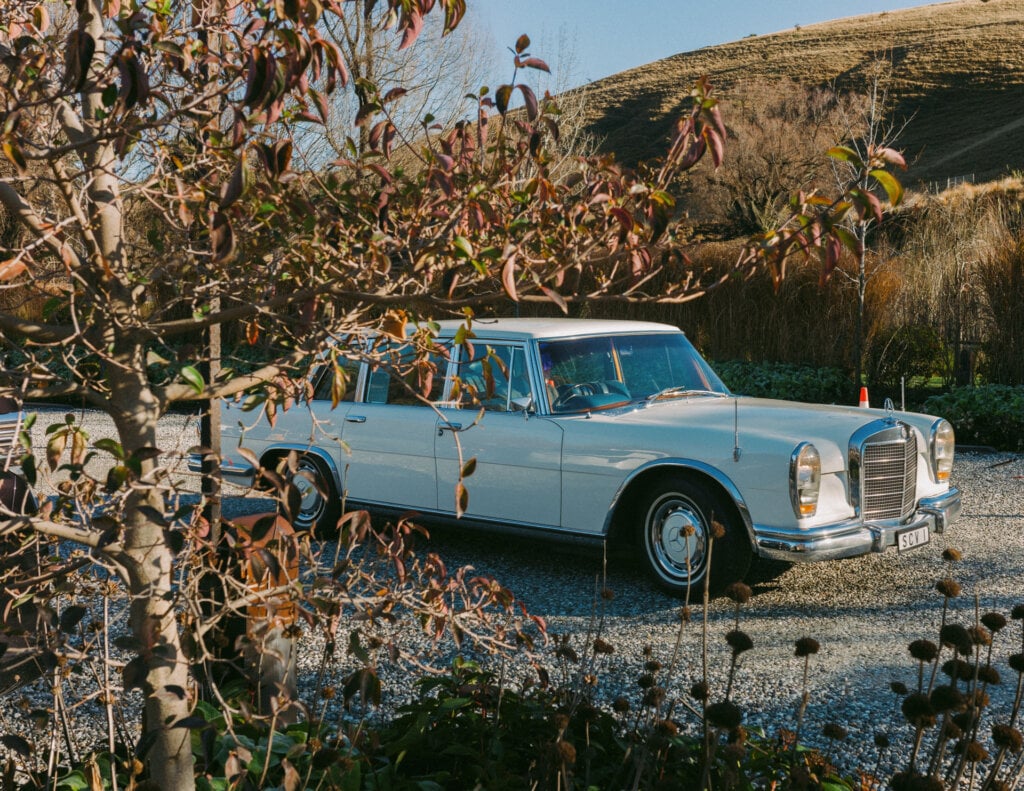
His pride and joy is undoubtedly the imposing 600. Produced in tiny numbers between 1963 and 1981, it remains one of the most technically ambitious luxury cars ever built.
“The 600 is probably the most complex car ever made,” Chris says. “My favourite feature is the altitude compensation on the fuel injection. You could drive over the Swiss mountain passes and it would produce the same power as it did at sea level.”
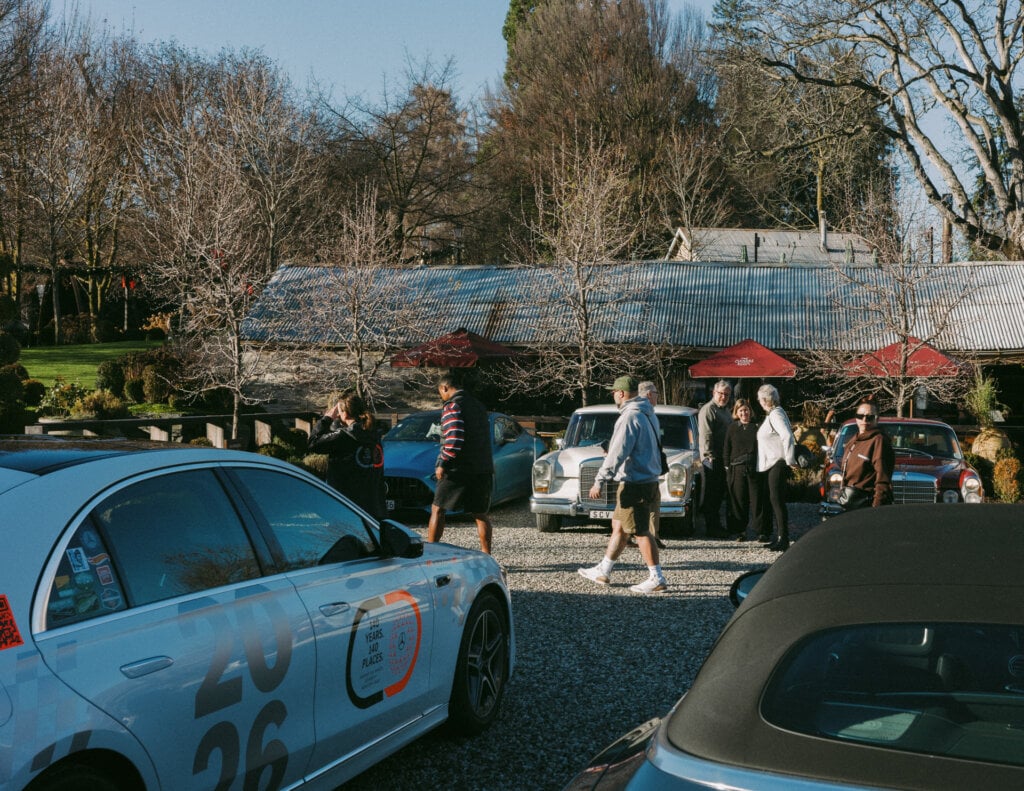
Everything that moves is operated hydraulically. Seats adjust in every conceivable direction. Windows, boot, suspension, soft-close doors, all powered by a high-pressure hydraulic system decades before such technology became commonplace. “This has soft-close doors… in 1963,” he says with pride.
Against contemporaries fitted with pushrod engines and carburettors, Mercedes-Benz was building an overhead-cam V8 limousine with fuel injection, self-levelling suspension and extraordinary refinement.
Remarkably, Chris’s example remains unrestored. “I’ve had it over twenty years. It’s just always been looked after.”
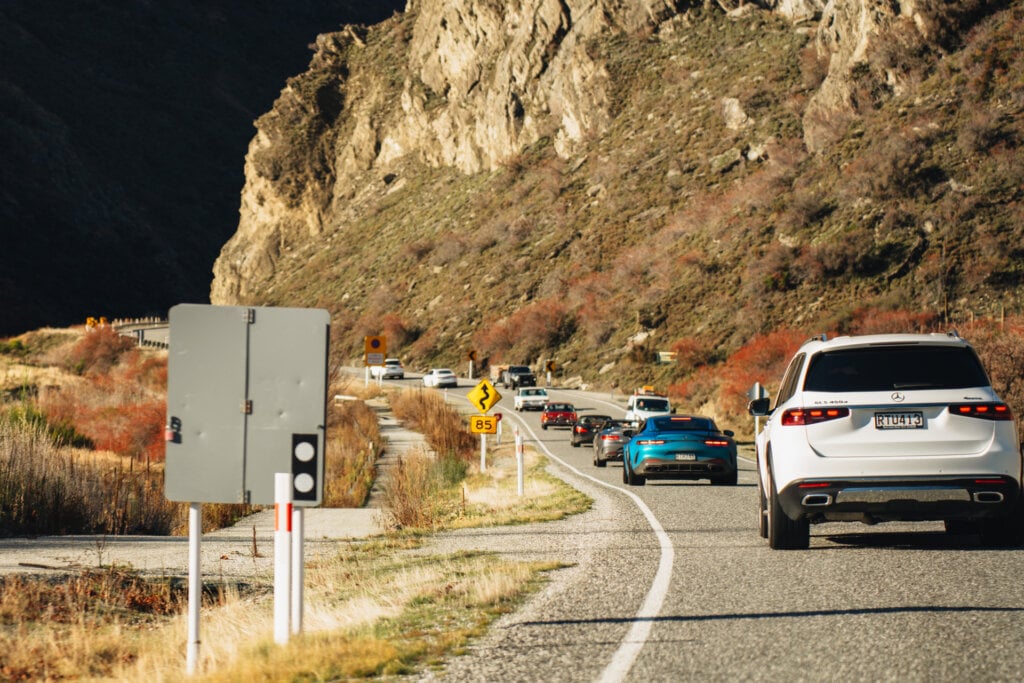
Despite their complexity, he insists they’re dependable if maintained properly. “Of all the cars I own, the Mercedes will always go.”
Perhaps surprisingly, they’re also enjoyable to drive. “The ride is extraordinary,” he says. “People assume it’s made purely for whoever’s sitting in the back, but I absolutely love driving it.”
Alongside it sat his elegant 280 SE 3.5 Coupe. Only 245 right-hand-drive examples were built, and Chris has owned his for more than three decades.
“It was designed by Paul Bracq, who shaped pretty much every Mercedes through the ‘60s and beyond,” he says. “It’s a very glamorous shape.”
Yet even among such company, it’s the 600 that attracts the crowds.
“If we walked outside now,” Chris smiles, “someone would be taking a photo of it.”
It remains a symbol of power, wealth and engineering ambition. “The 600 was Mercedes showing off.”
The modern flagship
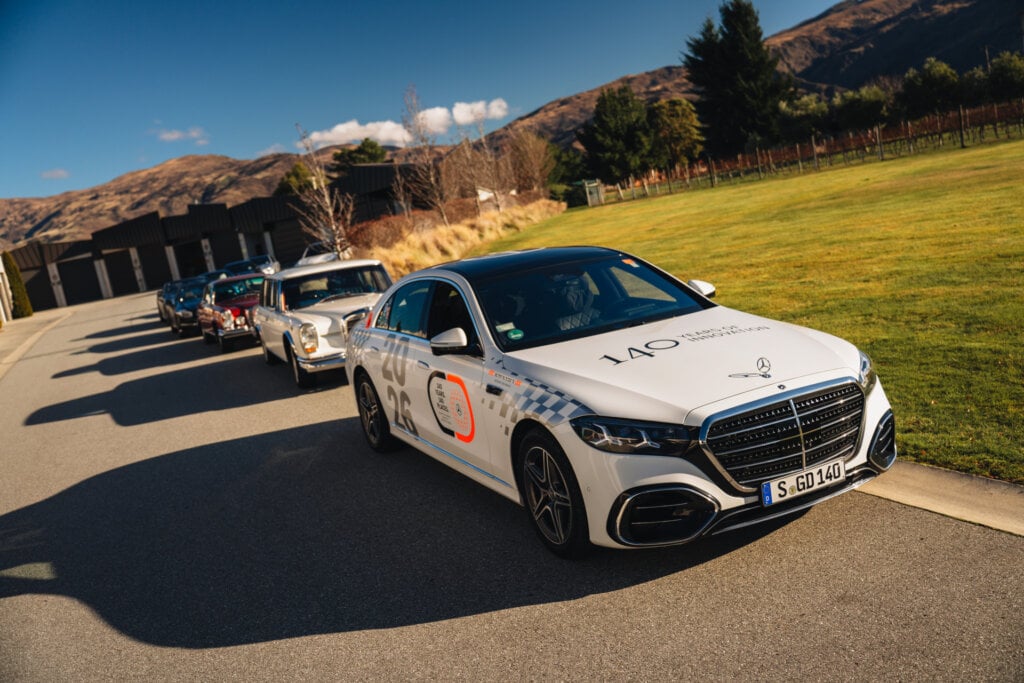
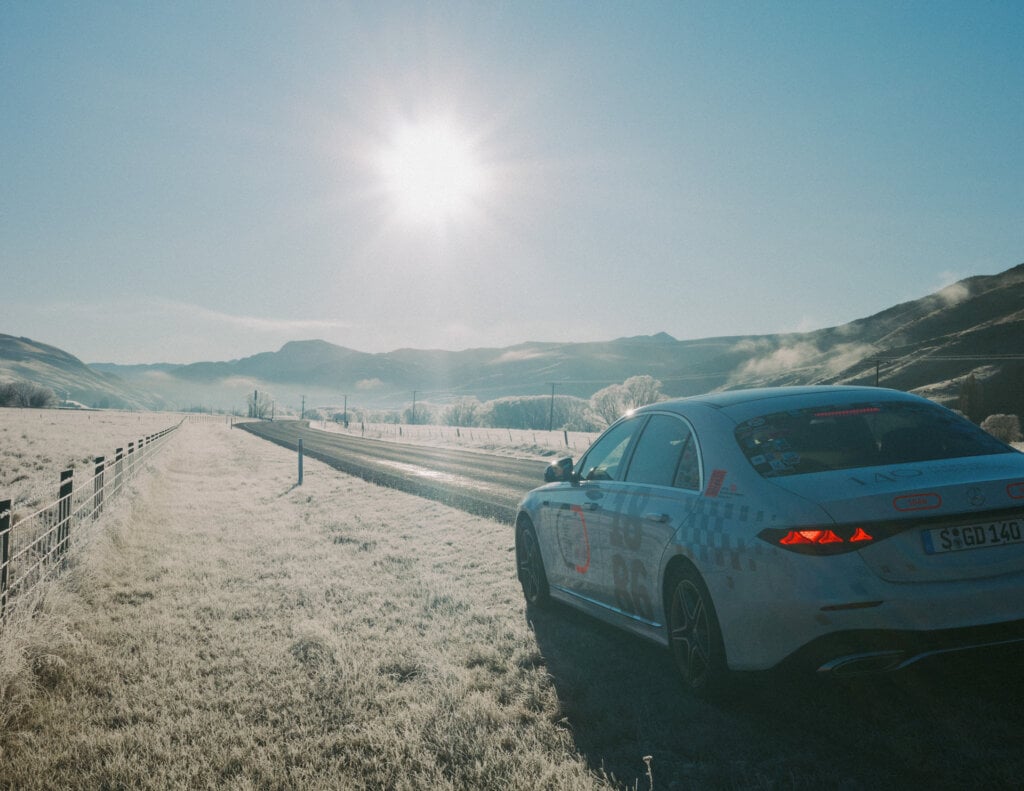
Appropriately enough, the latest S-Class serves much the same purpose. We spent most of our time in the back seat, a perfect place to enjoy the serene ride of the S, and the absolute comfort of the reclining seats. We liked the heated surfaces, not just the seats themselves but armrests too, while you can even get a heated seat belt. It was a comforting countermeasure to the chilly winter climes that provided a suitably epic filter for the numerous photo and video stops. The tour is one large content capture exercise, with progress halted every hour or so for the crew of videographers to get footage along the journey.
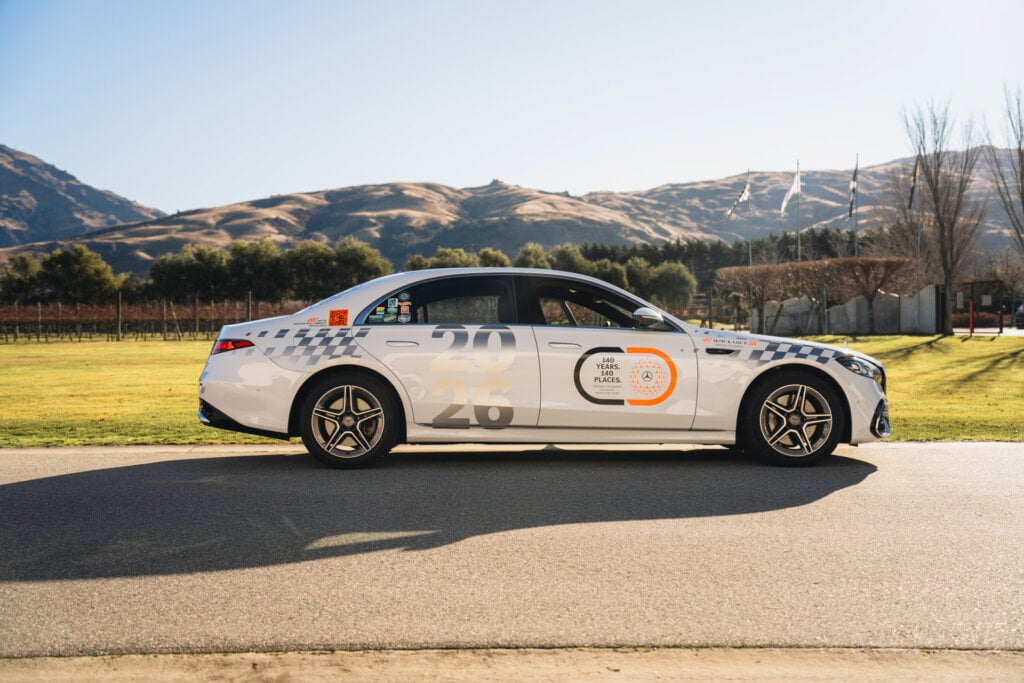
The 2026 S-Class is a major overhaul of the old model, said to be 50 per cent new. It looks familiar but is now covered in three-pointed star motifs. The new Digital light system casts a 40 per cent larger light field, perfect for dark morning starts on the most southerly point of the tour.
The update centres on computing largely, with the new Mercedes-Benz Operating System (MB.OS). This purpose-built supercomputer powers everything from semi-autonomous driving to the MBUX infotainment. The S comes equipped with a wide array of sensors: ten external cameras, five radar sensors and twelve ultrasonic sensors. In some countries, it will be capable of semi-autonomous driving.
The fourth generation of MBUX now integrates a multi-agent AI system featuring ChatGPT-4o, Microsoft Bing, and Google Gemini.
The MBUX Superscreen dominates the dashboard, uniting a 14.4-inch central display and a 12.3-inch passenger display under a single glass surface.
We had a brief stint behind the wheel too, the S 580 4MATIC with its V8 biturbo (M 177 Evo) producing 395kW and 750Nm, making for effortless touring. It’s quiet too, though you get a nice V8 rumble under more assertive acceleration.
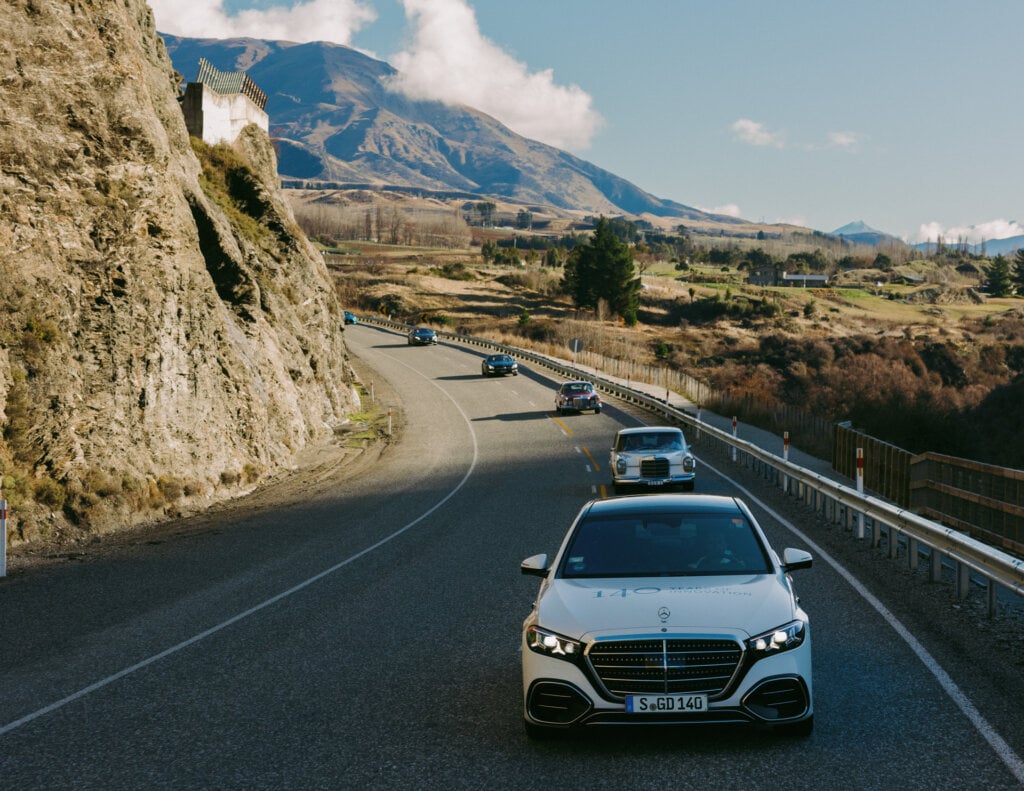
The air suspension soaks up the bumps while active body control keeps it flat through curves, great for cross country travel that keeps everyone inside happy.
New is an “intelligent damping” system that uses cloud-based data to detect and adjust for speed bumps before the car even hits them. It’ll remember where the potholes and big bumps are on your usual routes, and adjust the suspension to iron them out.
From NZ, the car was off to India, the Mercedes-Benz crew off to cover more miles, capture more content and hopefully avoid running over any sacred cows.