Porsche 911 Challenge opens a new route into customer racing
Words: Kyle Cassidy
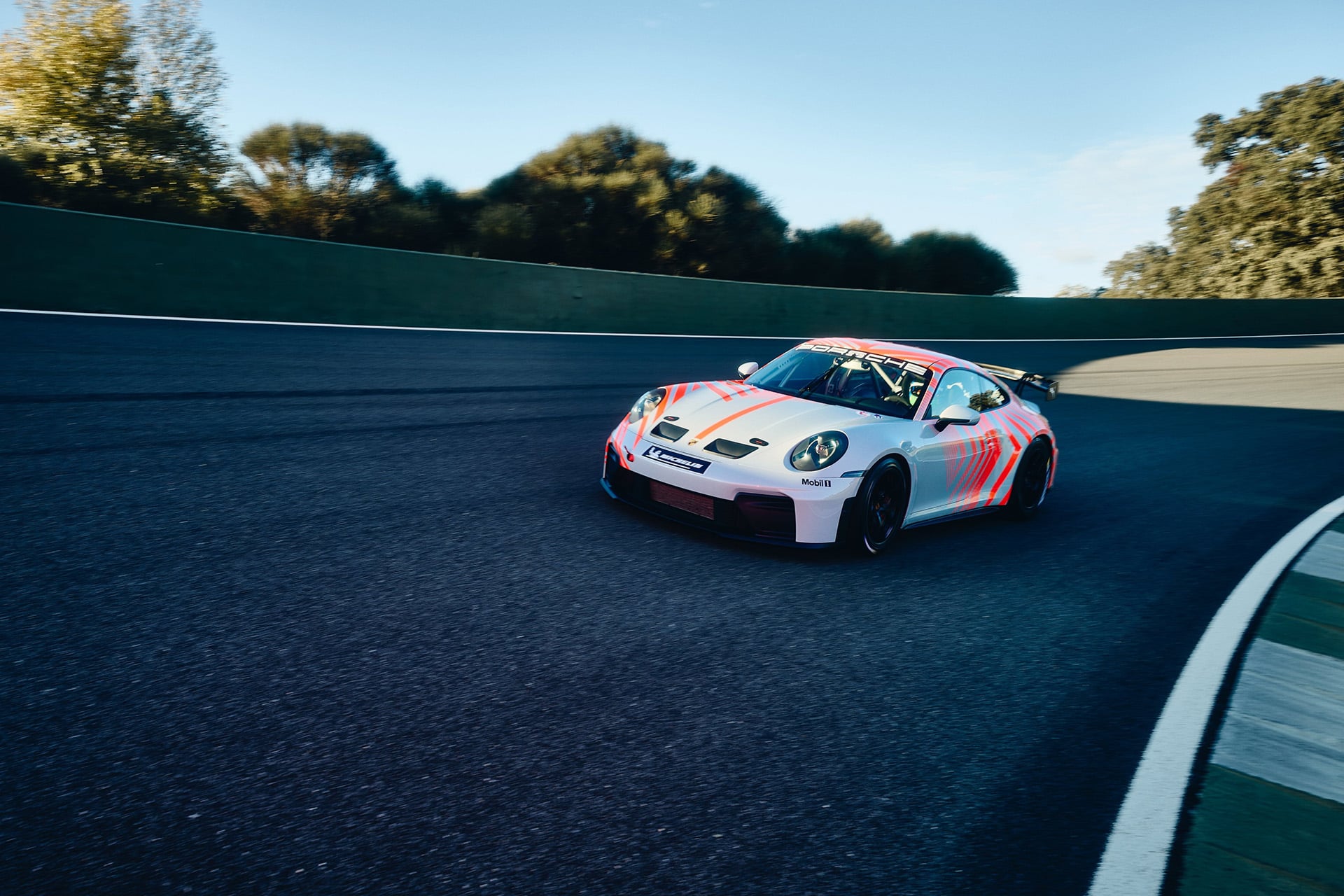
Porsche has revealed the 911 Challenge, a new entry-level competition car designed to make the transition from track days to proper motor racing rather less daunting.
Based heavily on the road-going 911 GT3, the Challenge combines familiar production components with a roll cage, slick tyres and the safety equipment required for competition. It will become eligible for selected Porsche one-make championships from the 2027 season.
Those will include the Porsche Sprint Trophy Thailand and Porsche Sprint Challenge Japan, giving competitors in the Asia-Pacific region a potential place to race it. New Zealand pricing, availability and eligibility for any local series have yet to be announced.
Unlike the more specialised 911 Cup introduced in August 2025, the Challenge retains a significant amount of road-car technology. That should reduce the learning curve for drivers moving into motorsport while also helping to manage servicing and replacement-parts costs.
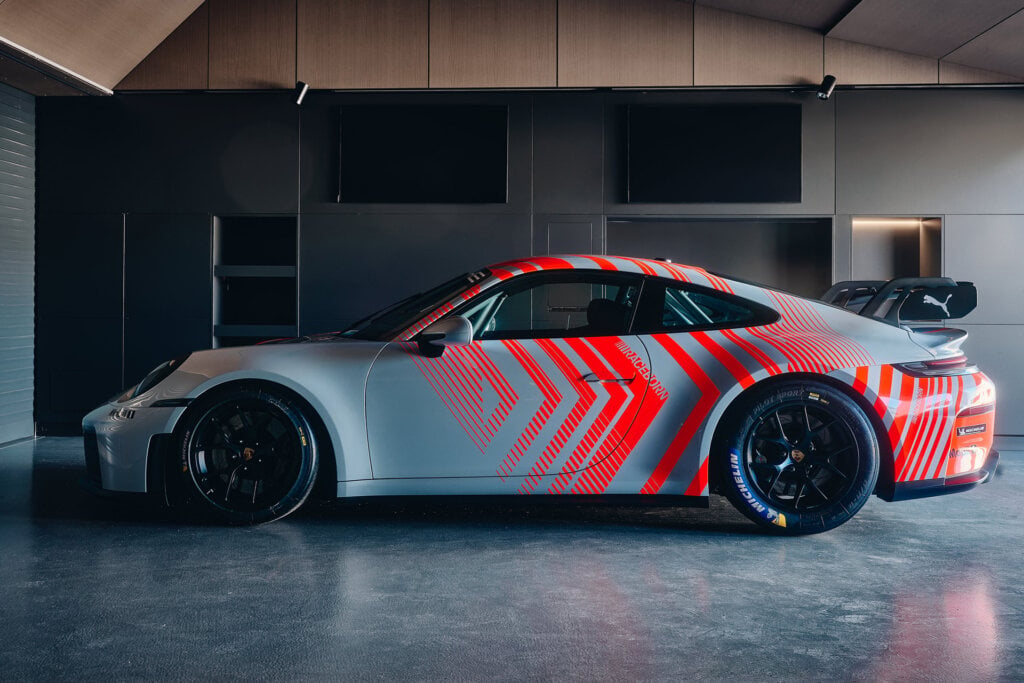
Adjustable ABS, traction control and electronic stability control are retained, along with Porsche Torque Vectoring Plus. The driver can progressively reduce the assistance as confidence and experience build.
“Since their introduction, the GT3 models have shaped Porsche’s identity as a sports car manufacturer like almost no other model range. They are conceived and developed in close collaboration with motorsport,” says Thomas Laudenbach, Vice President Porsche Motorsport. “With the 911 Challenge, this tradition is being expanded to include a model that allows new customer groups to experience the thrill of motorsport in a 911.“
GT3 engine and PDK retained
The Challenge uses a largely standard version of the GT3’s naturally aspirated 4.0-litre flat-six. It produces 379kW at 8500rpm and can rev to 9000rpm.
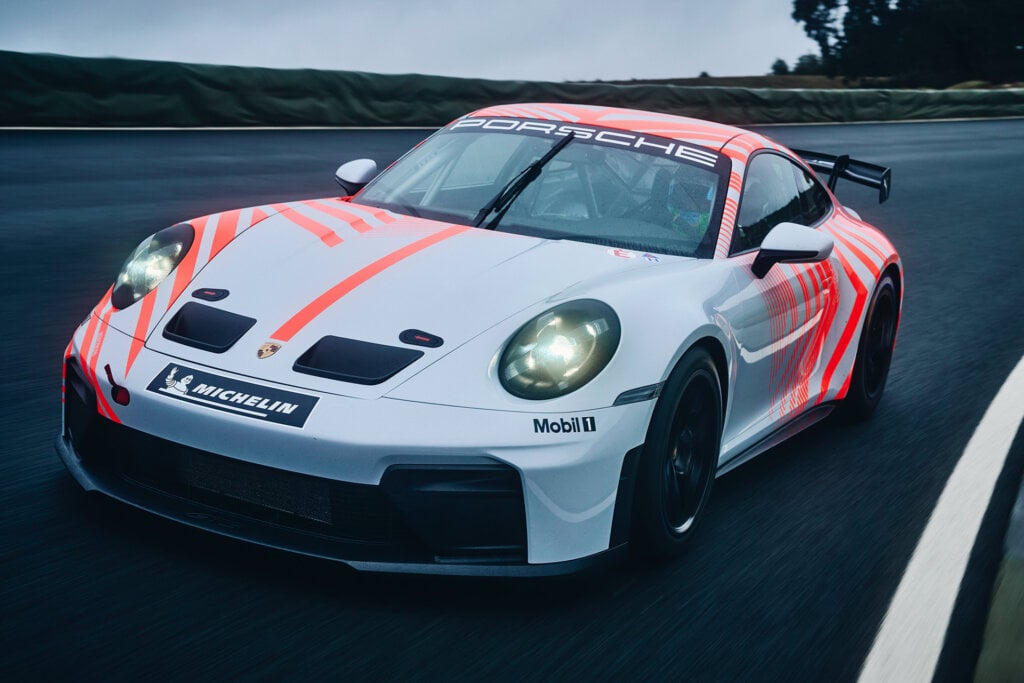
A modified racing silencer and catalytic converter are fitted, although the competition car doesn’t require a particulate filter.
Power is sent to the rear wheels through a seven-speed PDK dual-clutch transmission. Drivers can leave it in automatic mode or select gears manually using the steering-wheel paddles.
The steering wheel itself comes from the GT3 RS but gains additional controls for the racing systems.
Further evidence of the Challenge’s production-based brief comes from its standard air conditioning. It may sound like an indulgence in a competition car, but anyone who has raced while sealed inside a fireproof suit and helmet will understand the appeal.
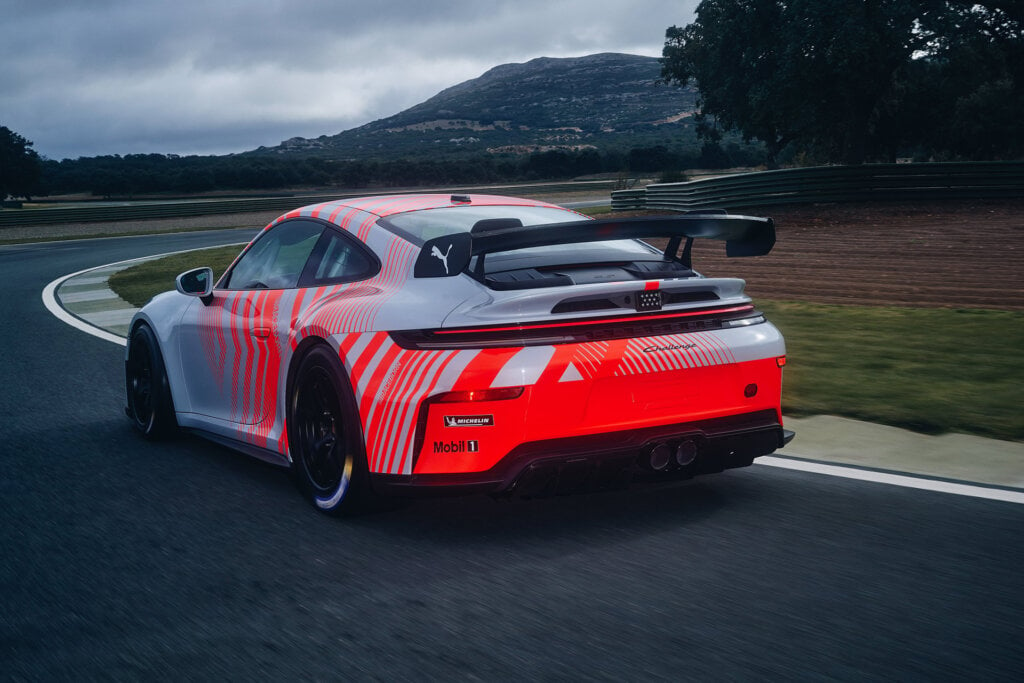
The suspension mixes GT3 foundations with components derived from the 911 Cup. Motorsport-specific dampers are fitted, while the anti-roll bar offers three adjustment positions.
Its slick tyres are mounted on 18-inch wheels using a conventional five-stud pattern rather than centre-locking hubs. Steel racing brakes feature 380mm discs at both ends, sharing their specification with the recently introduced 911 GT4 R.
Road-car trim makes way for racing equipment
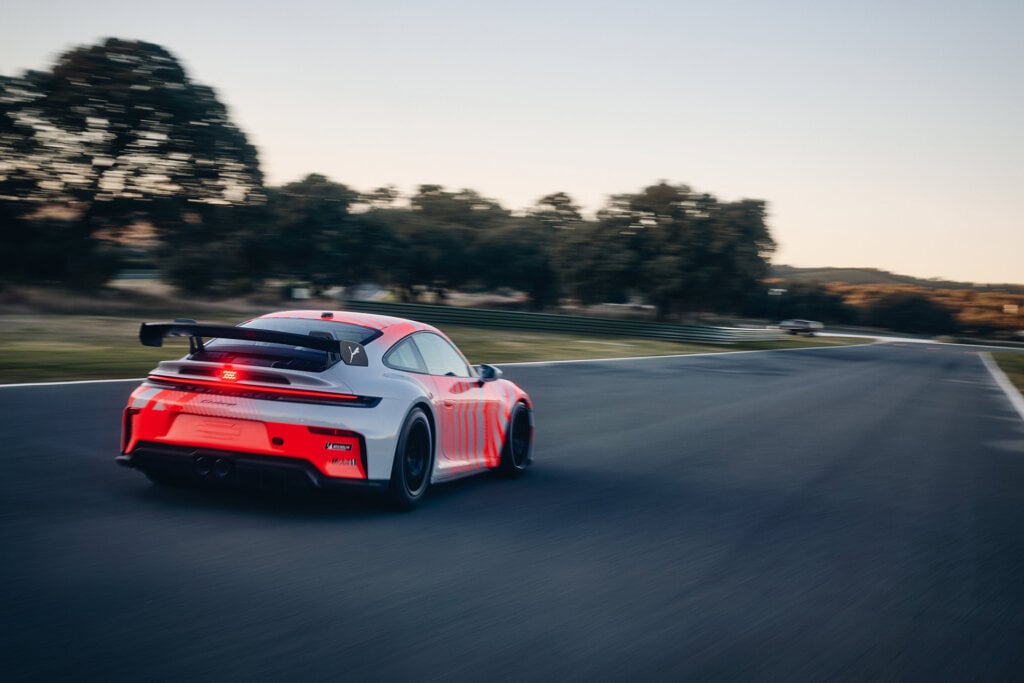
Externally, the Challenge retains the GT3’s major body panels and overall dimensions. The rear wing can be mechanically adjusted through four positions, while bonnet quick-release catches, an FIA-certified rain light and a three-jack pneumatic lifting system are standard.
Inside, there’s considerably less resemblance to a showroom GT3. Porsche has removed the carpets, sound insulation and interior trim before installing a welded roll cage.
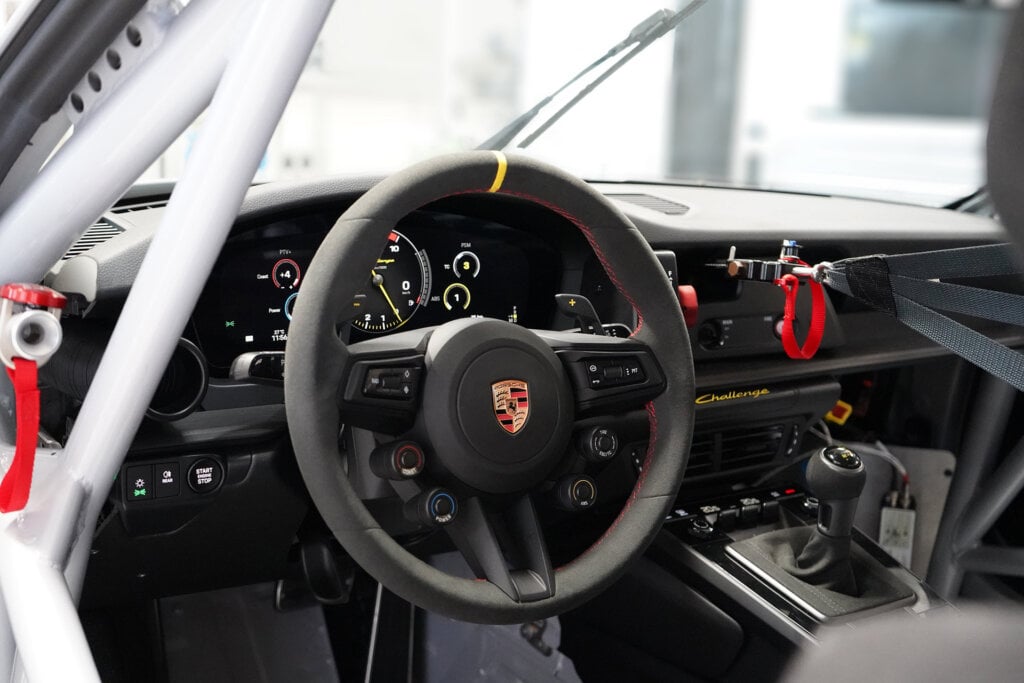
The driver sits in an adjustable racing bucket seat secured by a six-point harness. A fire-extinguishing system is fitted, while the 110-litre FT3 safety fuel tank is designed specifically for motorsport use. Data acquisition hardware, technical documentation and spare-parts support are also included in the programme.
There’s no number plate hiding in the glovebox, either. The Challenge is a dedicated competition car without road approval.
All four racing models now based on the 911
The Challenge replaces the original Cayman GT4 Clubsport and its more recent 718 Cayman GT4 RS Clubsport successor as Porsche’s least expensive customer racing model.
Its arrival means all four cars in Porsche’s GT racing line-up are now based on the 911.
Above it sits the 911 GT4 R for international GT4 competition, followed by the 911 Cup used in Carrera Cup and Porsche Supercup racing. The 911 GT3 R remains the flagship, competing internationally under FIA GT3 regulations.